


- Home
- >
News
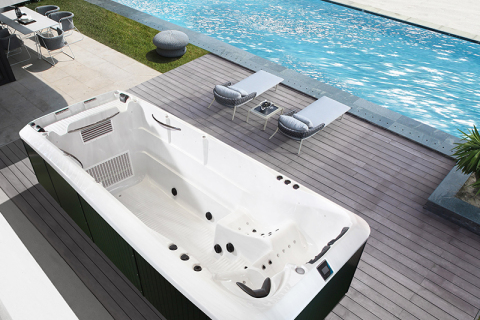
From an industry-standard maintenance perspective, backwashing a swim spa tub is generally recommended to be between 2 and 5 minutes. Different filtration systems have slightly different backwashing requirements, but the backwashing time generally remains within a few minutes, not tens of minutes or longer.

Under most normal operating conditions, swim spa tub pipes do not easily freeze overnight. The main reasons include: • Water circulation is usually present within the system. • Water itself has heat capacity. • Piping is mostly located inside an insulated structure.
Yes, and the effect is usually manifested as an increase in pH and a decrease in total alkalinity. An increase in pH weakens the bactericidal effect of chlorine. Water quality imbalance can trigger a series of chain problems.

Outdoor swim spa tubs are more susceptible to contamination from dust, pollen, insects, etc., thus requiring regular water quality testing. Clear water not only represents visual cleanliness but also indicates that the internal water circulation system of the swim spa tub is functioning properly.

It's important to clarify that swim spa tubs are not medical devices, nor are they a direct treatment for loose skin. Their benefits lie more in: • Improving physical condition during exercise • Optimizing the skin's metabolic environment • Supporting the normal functioning of skin-firming structures
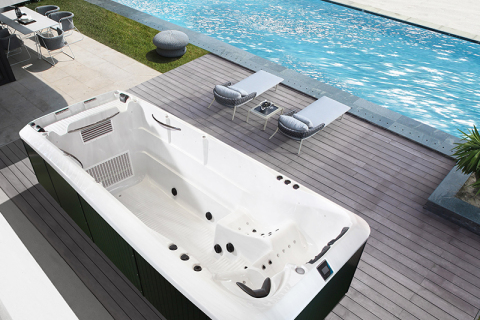
The answer is not just "yes," but "yes." Winter is not a "downtime" for swim spa tubs, but rather a crucial period determining their long-term stable operation.
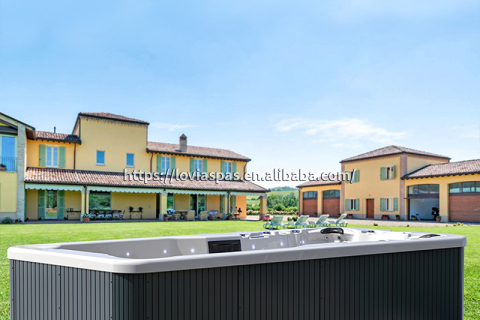
Raising the pH of a swim spa tub does not mean "making the water as alkaline as possible." The core principle is to adjust the pH back to a reasonable range and maintain its stability. This principle includes three key points: 1. The increase must be controllable. 2. The increase must be gradual. 3. The water balance must be monitored after adjustment.
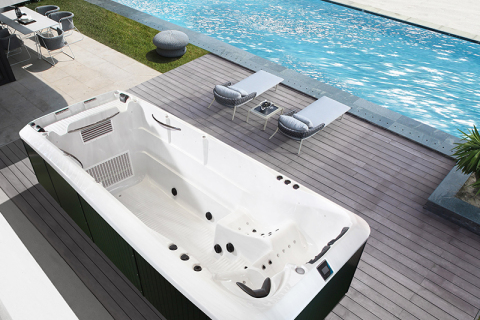
From a professional perspective, whether or not to perform daily chlorination disinfection depends on the usage status of the swim spa tub. If the swim spa tub: • is used that day • is used for a relatively long time • is used by a large number of people Then, daily chlorination disinfection is essential.
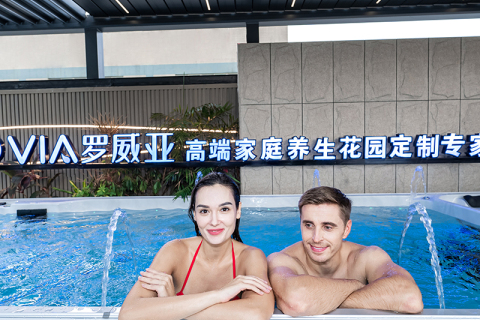
The fundamental difference lies in their initial design goals. • Swim spa tub: The core objective is to support swimming, training, and aquatic sports. • Hot tub: The core objective is to provide a soaking, spa, and relaxation experience.
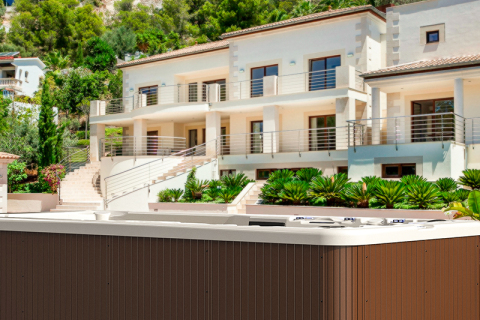
Without water and without users, the dry weight of a standard 7-person swim spa tub is typically between 1400–1600 kg, with a common reference value of approximately 1500 kg.
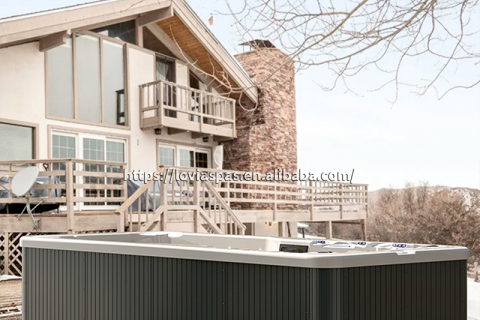
In general, the working principle of a swim spa tub can be summarized as follows: A power system drives water circulation, creating a stable and controllable swimming flow within a limited space, while simultaneously providing independent massage water paths for the spa system.
After infection with the swim spa tub parasite, some people experience varying degrees of vomiting. This typically indicates: • Significant gastrointestinal irritation • The digestive system is responding to an abnormal invasion Vomiting may occur alongside diarrhea or alone, further increasing the risk of dehydration.