


News

Exhibition: THE 140th CANTON FAIR (Phase II) Time: October 23rd - 27th, 2026 Booth: Booth 9.0A07 & 10.1B07 Address: China lmport and Export Fair Exhibition Center LOVIA® Invites You to Phase II of the 140th Canton Fair to Explore New Opportunities in Outdoor Spa Products and Global Markets

Exhibition: Eurexpo France 2026 Dates: November 17th – 20th Booth: Stand 6G64 Address: Eurexpo - Lyon, Boulevard de l'Europe, Chassieu, France 69680 LOVIA® Cordially Invites You to Eurexpo France 2026 to Explore Outdoor Spa and Pool Solutions
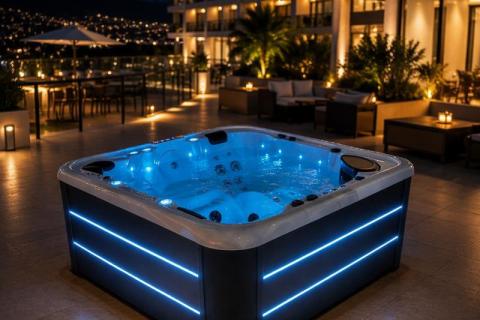
Typically, established outdoor hot tub manufacturers take about 30 to 45 days to produce standard models, and about 45 to 70 days for ordinary OEM customized products. However, deeply customized projects involving new designs, molds, or structural development may require 60–120 days or even longer.
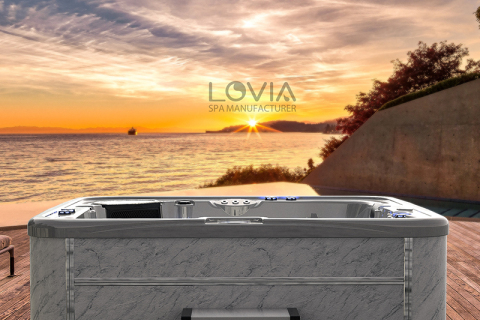
Generally speaking, it is recommended to keep your outdoor hot tub covered whenever it is not in use, even during the summer. A proper cover helps reduce water evaporation, keeps out dust and leaves, minimizes heat loss, and helps maintain stable water quality.
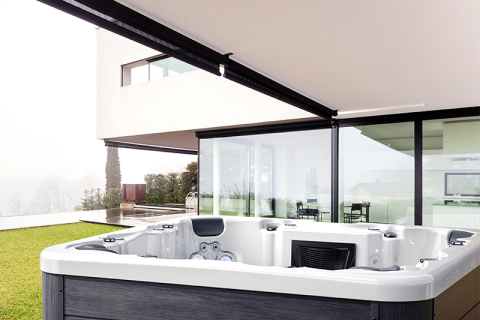
There are three primary scenarios that necessitate a reset for an outdoor hot tub pump: •Thermal protection reset •Control system reset •Electrical protection reset
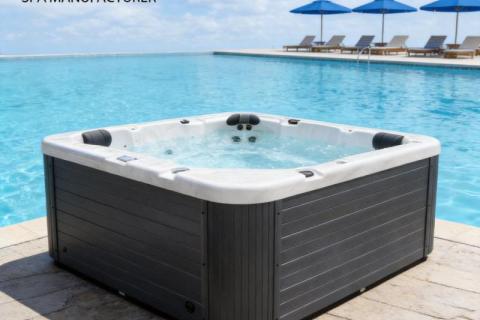
An ODM outdoor hot tub can be understood as a model where "the manufacturer provides product development capabilities, while the client handles branding and market positioning."
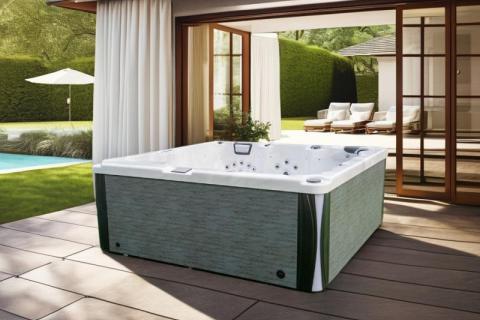
They serve different purposes and target different needs. Acrylic outdoor hot tubs are better suited for permanent, long-term installation, whereas inflatable outdoor hot tubs are ideal for users on a budget, those needing a temporary solution, or those requiring portability.
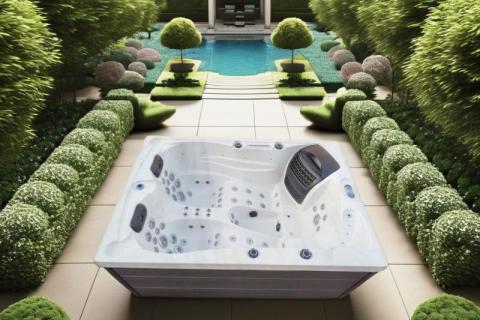
An outdoor hot tub is a complex system comprising the tub structure, pumps, jets, heating, filtration, insulation, and electrical/control systems. A well-configured unit strikes a balance between comfort, energy efficiency, safety, maintenance costs, and longevity.
A hot tub truly suited for hot regions requires more than just faster heating capabilities; it demands a balance of sun protection, heat dissipation, corrosion resistance, energy efficiency, water quality management, and smart control systems.
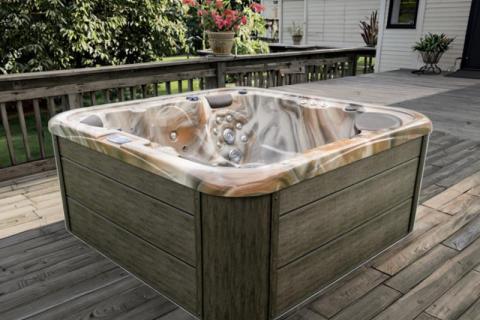
Cyanuric acid is a chemical used to stabilize chlorine and is commonly found in water treatment products for outdoor swimming pools. UV rays from sunlight accelerate the breakdown of free chlorine, reducing the concentration of the active sanitizer in the water.