


Does Rain Affect the pH of Outdoor Swim Spa Tubs?
2026-03-19 15:30For home or commercial users of swim spa tubs, water quality management is always a core issue. pH stability directly affects disinfection effectiveness, equipment lifespan, and user comfort.
Many people wonder: Does rain affect the pH of outdoor swim spa tubs?
The answer is yes, and the impact is often underestimated. This article will systematically analyze how rainwater alters the pH, total alkalinity (TA), and disinfection efficiency of swim spa tubs, starting from water chemistry principles, and help you build a clear and actionable framework for understanding water quality.
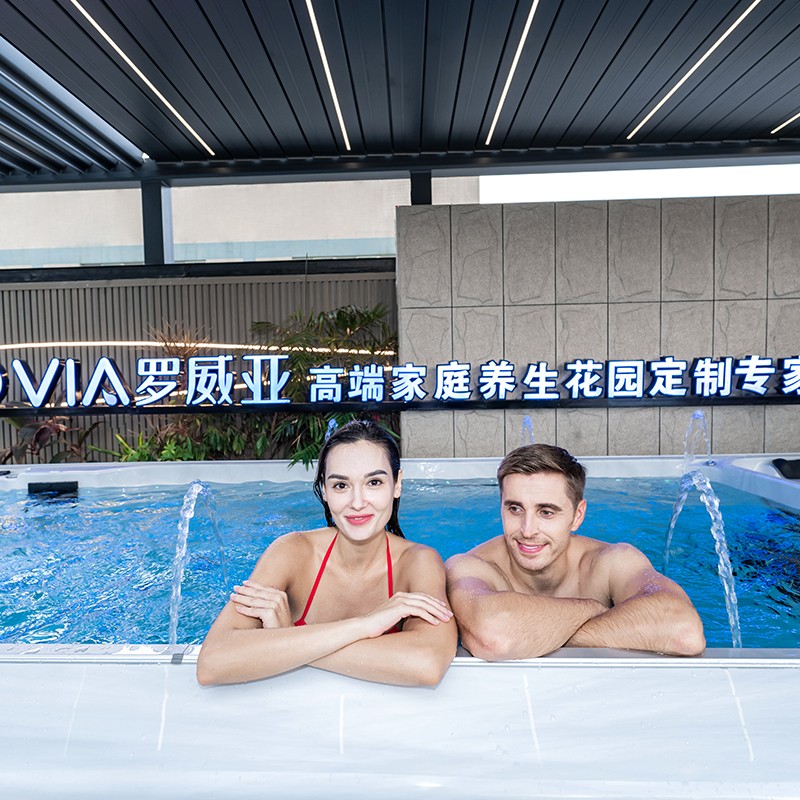
What is pH in Swim Spa Tub Water?
Before discussing the impact of rain, it's essential to understand the role of pH in swim spa tubs.
pH measures the acidity or alkalinity of water, ranging from 0 to 14, with 7 being neutral. For a swim spa tub, the ideal pH range is typically:
• 7.2 – 7.8
Within this range:
• Disinfectants (such as chlorine) are most effective at killing bacteria.
• Water is least irritating to skin and eyes.
• Equipment surfaces and pipes are less prone to corrosion or scaling.
Once the pH deviates from the normal range, a series of chain reactions can occur with the swim spa tub.
Does rain really affect the pH of a swim spa tub?
Yes, almost inevitably.
Rainwater entering a swim spa tub has three direct effects on the water:
1. Diluting the existing water
2. Changing the total alkalinity (TA)
3. Disrupting the pH buffer balance
Although many people intuitively think rainwater is acidic, in a swim spa tub, the actual result is often:
pH increases, and total alkalinity (TA) decreases.
This is the root cause of many users finding reduced disinfection effectiveness and cloudy water after continuous rainfall.
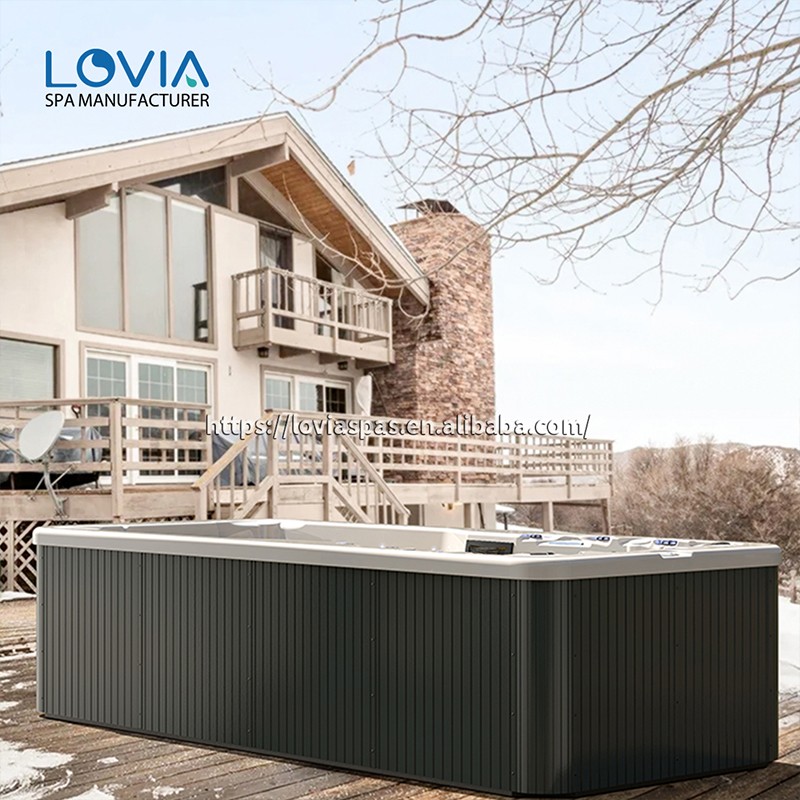
Why does rainwater cause the pH of a swim spa tub to increase?
This is a frequently misunderstood issue.
1. The "dilution effect" of rainwater is more critical than acidity
Rainwater itself has extremely low mineral content and contains almost no buffering agents. When it enters a swim spa tub in large quantities, it will:
• Dilute the carbonate system in the water
• Lower total alkalinity (TA)
• Weaken the water's resistance to pH fluctuations
In this situation, even the presence of small amounts of alkaline substances in the water will more easily push the pH upwards.
2. A decrease in total alkalinity will "indirectly push up" pH
In a swim spa tub, total alkalinity (TA) is a pH "stabilizer."
• Lower TA → pH rises more easily
• Insufficient TA → pH fluctuations are greater
The continuous influx of rainwater into the swim spa tub will significantly lower the TA, causing the water to lose its buffering capacity, thus leading to a higher pH value.
3. Impurities introduced by rainwater accelerate chemical reactions
Rainwater is not just water; it may also carry:
• Dust from the air
• Pollutants from rooftops or surrounding ground
• Organic residues
These substances, once inside the swim spa tub, participate in water chemical reactions, further disrupting pH stability.
What problems arise from an increased pH in the swim spa tub after rain?
1. Significantly reduced chlorine disinfection ability
This is the most critical and dangerous effect.
In the swim spa tub:
• Chlorine's disinfection efficiency is close to optimal at pH 7.2
• Above pH 8.0, chlorine's effectiveness decreases significantly.
This means that even if you maintain a normal residual chlorine level, the actual disinfection effect is significantly insufficient.
2. Swim spa tubs are more prone to bacterial and algal growth
When pH is high and disinfection efficiency decreases, swim spa tubs are more likely to experience:
• Slippery water
• Turbid water
• Algae or biofilm formation
These problems don't appear suddenly, but are a chain reaction following pH imbalance.
3. Unfriendly to skin and equipment
Long-term high pH can lead to:
• Dry, itchy skin
• Eye irritation
• Increased scale buildup on the lining surface
• Reduced efficiency of pipes and nozzles
Therefore, pH management is not just a water quality issue, but an integral part of overall swim spa tub maintenance.
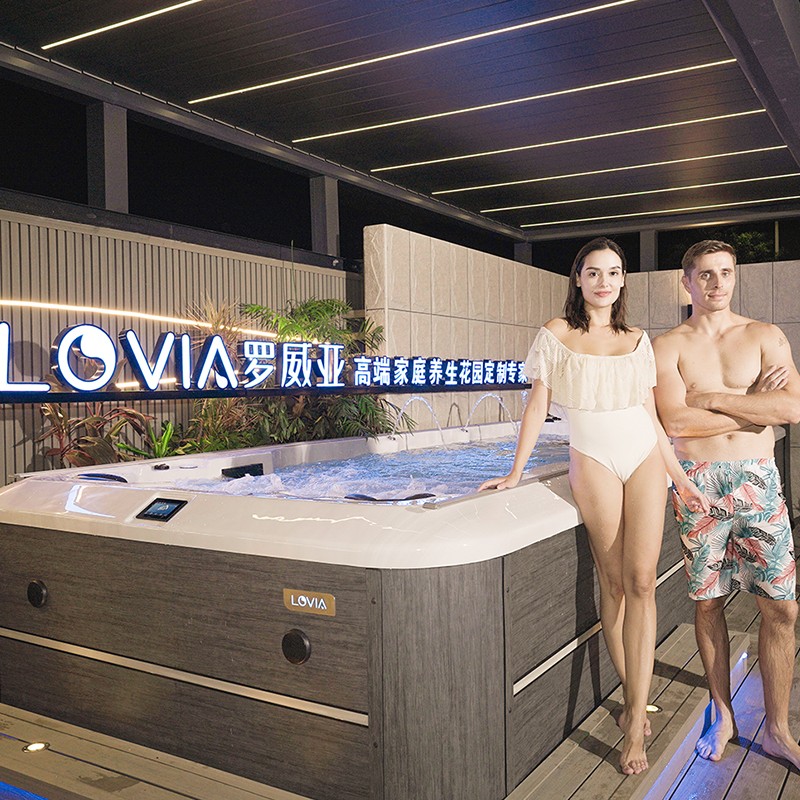
Why are outdoor swim spa tubs more susceptible to rain?
Compared to indoor environments, outdoor swim spa tubs are naturally more vulnerable:
• Completely exposed to natural rainfall
• Difficult to control rainfall
• Frequent evaporation and replenishment
Especially during rainy seasons, pH fluctuations are often not one-off events, but rather recurring.
Should the pH of the swim spa tub be tested immediately after rain?
Yes, and it's absolutely necessary.
Every significant rainfall should be considered a "hidden water replenishment." For swim spa tubs:
• Water level changes ≠ stable water quality
• Normal appearance ≠ normal chemical balance
Timely monitoring of pH and total alkalinity is a crucial step in preventing subsequent problems from escalating.
How much does rain affect the total alkalinity (TA) of a swim spa tub?
Rainwater often has a more direct impact on TA than on pH.
• Rainwater contains almost no alkaline buffers.
• Continuous rainfall rapidly dilutes TA.
• Once TA drops, pH is more difficult to stabilize.
In swim spa tubs, low TA is often the root cause of pH problems, not the result.
Is it feasible to adjust pH without considering TA?
Not recommended.
If you only adjust the pH after rain while ignoring the total alkalinity of the swim spa tub:
• pH will frequently rebound.
• Chemical reagent consumption will increase.
• Water quality management will become uncontrollable.
The scientific approach is to restore TA first, then fine-tune the pH to truly stabilize the water quality.
Does rain change the overall hydrochemical balance of the swim spa tub?
The answer is yes, and the impact is systemic.
Rainwater not only affects pH and TA, but may also indirectly change:
• Disinfectant consumption rate
• Water transparency
• Microbial growth environment
Therefore, rainy days are not a time when "nothing needs to be done," but rather a period when swim spa tubs require more management.

How to fundamentally understand the impact of rainwater on swim spa tubs?
It can be summarized in one sentence:
Rainwater is not simply replenishment, but a "chemical diluent."
It weakens the stability of the swim spa tub water, making the originally balanced system more prone to loss of control. This is why many water quality problems often occur in clusters after rain.
Does rain affect the pH level of outdoor swim spa tubs?
Yes, and the effect is usually manifested as an increase in pH and a decrease in total alkalinity.
An increase in pH weakens the bactericidal effect of chlorine.
Water quality imbalance can trigger a series of chain problems.
For outdoor swim spa tubs, rain is not a trivial matter, but a crucial variable in water quality management.
How Does LOVIA SPA Control Quality for Swim Spa Manufacturing?
LOVIA SPA applies strict quality control systems during swim spa manufacturing. Each swim spa is assembled using standardized procedures and tested before shipment. Certified components and ISO9001 quality management ensure consistent performance. Buyers choosing LOVIA SPA as their swim spa manufacturer gain confidence in long-term durability and stable operation.