


- Home
- >
News
According to industry-recognized water quality standards, the ideal pH value for a swim spa tub is typically controlled between 7.2 and 7.8. pH below 7.2: • Excessively acidic • Easily irritates the eyes pH above 7.8: • Excessively alkaline • Easily causes skin irritation
Specifically, the ideal water temperature range in a swim spa for arthritis patients typically falls between: •84°F and 92°F (Approximately 29°C to 33°C) This specific temperature range provides the relaxing benefits of warmth while avoiding the discomfort that can be caused by excessively high temperatures.
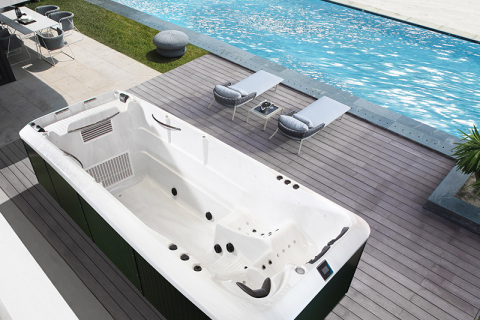
The fundamental reason why a swim spa tub can function as a swimming pool lies in the design of its water current system. Utilizing pumps and jet systems, a swim spa tub generates a continuous, stable, and directional water flow within a fixed space.
The following situations deserve close attention: •The water level drops continuously while the unit is not in use. •The water level continues to decrease slowly even after refilling. •The rate of water level decline remains unaffected by environmental conditions.

If you need to add liquid chlorine or perform a shock treatment, it is best to do so in the evening or early morning—avoiding the hours of most intense sunlight—to ensure the chlorine achieves its maximum sanitizing effectiveness within the swim spa.
The water conditions within a swim spa are not conducive to the long-term survival of Helicobacter pylori; therefore, directly attributing the risk of Helicobacter pylori infection to swim spa tubs lacks both medical and logical foundation.
From the perspective of scientific and athletic principles, the answer is yes: •Regular swimming practice in a swim spa tub •Helps sculpt a lean, strong, and functionally fit physique •Enhances muscle strength and improves muscle definition •Aids in optimizing body fat composition etc.
From an industry-standard maintenance perspective, backwashing a swim spa tub is generally recommended to be between 2 and 5 minutes. Different filtration systems have slightly different backwashing requirements, but the backwashing time generally remains within a few minutes, not tens of minutes or longer.

Under most normal operating conditions, swim spa tub pipes do not easily freeze overnight. The main reasons include: • Water circulation is usually present within the system. • Water itself has heat capacity. • Piping is mostly located inside an insulated structure.
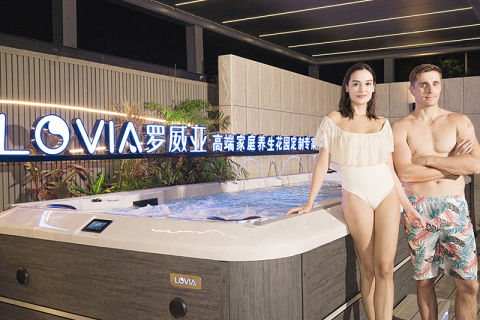
Yes, and the effect is usually manifested as an increase in pH and a decrease in total alkalinity. An increase in pH weakens the bactericidal effect of chlorine. Water quality imbalance can trigger a series of chain problems.

Outdoor swim spa tubs are more susceptible to contamination from dust, pollen, insects, etc., thus requiring regular water quality testing. Clear water not only represents visual cleanliness but also indicates that the internal water circulation system of the swim spa tub is functioning properly.
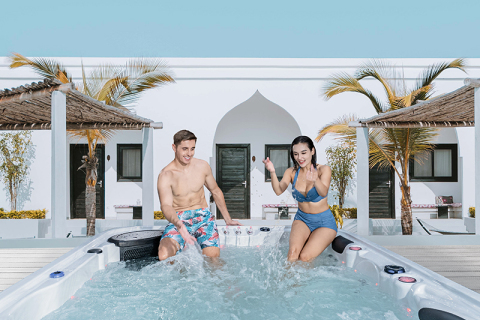
It's important to clarify that swim spa tubs are not medical devices, nor are they a direct treatment for loose skin. Their benefits lie more in: • Improving physical condition during exercise • Optimizing the skin's metabolic environment • Supporting the normal functioning of skin-firming structures