


- Home
- >
News
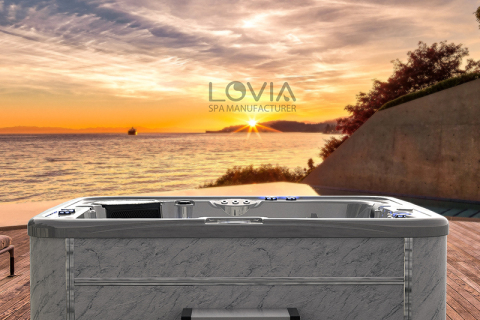
Virtually all spa hot tub manufacturers explicitly state in their installation or user manuals that: •Moving the unit while it is filled with water is strictly prohibited. •Failure to comply may result in the voiding of the product warranty.
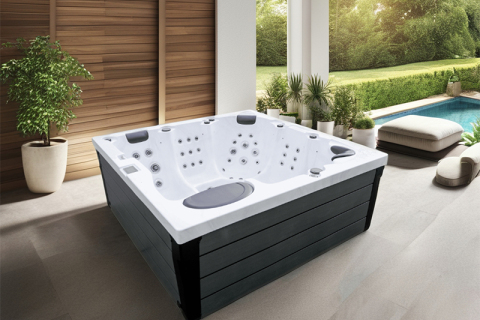
Strictly speaking, an undersized circuit breaker typically won't directly "burn out" a spa hot tub, as the very purpose of a circuit breaker is to "cut off power before a hazard occurs." However, the problem lies in the following issues: •Frequent tripping •Unstable power supply etc.

Yes, both high and low alkalinity in outdoor spa hot tubs are dangerous. This danger is not necessarily immediately visible, but it will gradually manifest itself in the following ways: • Disruption of water quality stability • Reduced disinfection effectiveness • Increased equipment wear and tear • Increased maintenance costs
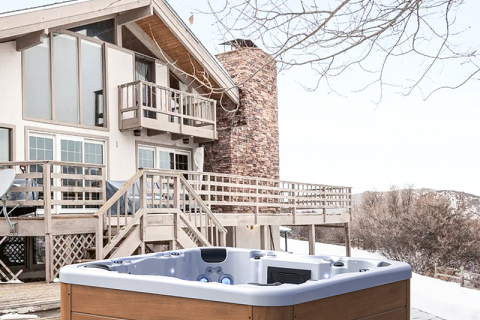
The correct way to fill the spa hot tub is to slowly pour water through the filter chamber. This has three benefits: • It helps expel air from the circulation system, reducing airlocks. • It helps pre-wet the filter system, extending its lifespan. • It allows water to flow naturally into the pipes, rather than filling the surface space first.
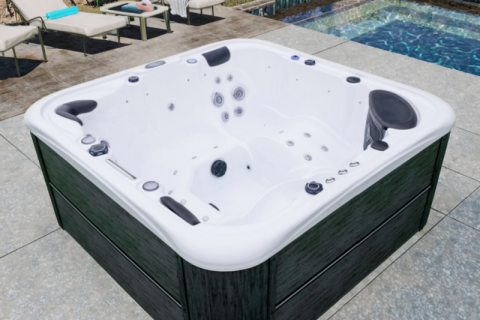
These can be systematically summarized into the following categories: • Disinfecting chemicals (basic necessity) • pH adjusting chemicals • Alkalinity adjusting chemicals • Hardness adjusting chemicals • Shock treatment chemicals • Algae control and clarification auxiliary chemicals
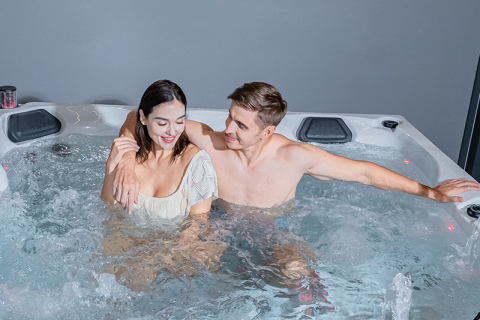
Yes—provided that you select appropriate exercise methods and respect the inherent design characteristics of the spa hot tub. A spa hot tub is not intended to serve as a substitute for a traditional gym, but rather as a space where relaxation and physical activity can be seamlessly integrated.
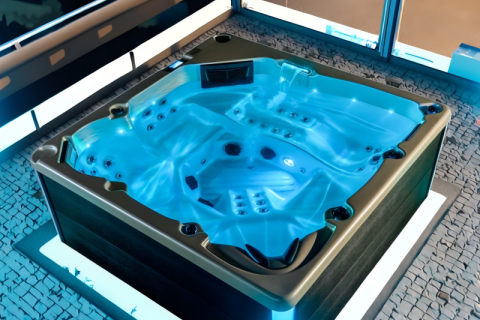
When your outdoor spa hot tub doesn’t produce water, you don’t have to worry about damage to the equipment. In most cases, it is caused by: • Insufficient water level • Filter clogged • Nozzle closed • Air lock • The line is slightly blocked • Wrong control settings
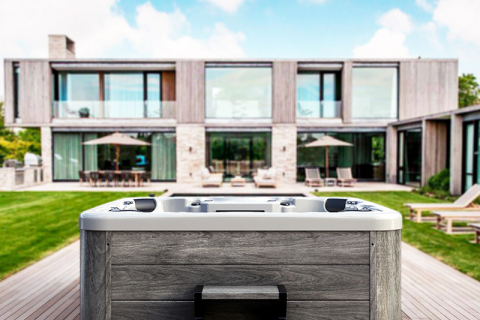
The filtration system is a core component of the spa hot tub, but it's also a high-risk area for odors. Causes of Odors from the Filtration System: • Filter media adsorbing large amounts of organic matter • Prolonged periods of humidity and warmth • Insufficient cleaning frequency
In a spa hot tub, pay close attention to the following signs: • Head feeling hot • Significantly increased heart rate • Mild dizziness • Rapid breathing • Noticeable thirst These are all signs that your body is approaching its comfort limits in the current environment.
The main drain outlet of the spa hot tub should be as close as possible to the lowest point inside the tub, and slightly higher than the ground level. Specifically: • The outlet height is typically 5–15 cm above the bottom of the tub.

Spa hot tub drainage will not necessarily kill lawns, but under certain conditions, it can indeed cause damage. The key factors are: • Chemical components in the drainage • Drainage temperature • Drainage method and frequency • The lawn's own tolerance
To efficiently locate small leaks, the key is to follow a systematic troubleshooting sequence, rather than random checks. A professional and effective troubleshooting logic typically includes: 1. Confirming if the water level drop is abnormal. 2. Observing the stable water level height. 3. Inspecting the external structure at the corresponding height. 4. Inspecting pipes and connections by area. 5. Comparing changes between operating and stationary states.