


Can You Exercise in a Large Outdoor Spa Hot Tub?
2026-04-08 15:30Traditionally, spa hot tubs have been viewed primarily as tools for relaxation, massage, and recovery. However, as hot tubs have grown in size—offering increasingly spacious interiors—a new question has emerged: Is it possible to exercise in a large outdoor spa hot tub?
This is not a simple question; it involves more than just asking, "Is there enough space?" Rather, it is closely intertwined with factors such as water depth, water temperature, water resistance, physical safety during movement, and the structural design of the hot tub itself.
Drawing from a professional perspective, this article will systematically analyze the feasibility of exercising in large outdoor spa hot tubs, identify suitable types of exercises, and highlight key factors to consider, helping you form a scientifically sound and rational understanding of the subject.

What Qualifies as a "Large Outdoor Spa Hot Tub"?
Generally speaking, a large outdoor spa hot tub possesses the following characteristics:
•Spacious interior: Capable of accommodating multiple users simultaneously.
•Significant water depth: Noticeably deeper than that of a standard household bathtub.
•Robust structure: Features a sturdy shell and a strong load-bearing base.
•High-performance circulation system: Ensures powerful water flow and excellent water stability.
From their very inception, these types of spa hot tubs were designed to transcend the mere act of "sitting and soaking," thereby laying the groundwork for a diverse range of physical activities.
Is the Water Environment in a Spa Hot Tub Suitable for Exercise?
Determining whether a setting is suitable for exercise hinges primarily on the water environment itself.
The water within a spa hot tub typically exhibits the following physical properties:
•Buoyancy: Significantly reduces the load placed on joints and the spine.
•Water Resistance: Provides uniform resistance against muscle movements.
•Constant Temperature: Facilitates muscle relaxation and improves joint mobility.
It is precisely these characteristics that endow the water environment within a whirlpool spa hot tub with the inherent advantages of "low-impact exercise." This means that, under the right conditions, a spa hot tub does not hinder exercise; on the contrary, it provides an excellent supportive environment for physical activity.
Is It Safe to Exercise in a Large Spa Hot Tub?
This is one of the questions that concerns people the most. From a professional standpoint, exercising in a large spa hot tub is not inherently dangerous, provided that the following basic conditions are met:
•The water depth is sufficient to cover the primary body parts involved in the exercise.
•The tub features a well-designed, non-slip surface.
•The water temperature is maintained within a range suitable for physical activity.
•The intensity of the workout is appropriate for the environment.
It is important to emphasize that a whirlpool spa hot tub is not a competitive swimming pool; its design prioritizes comfort and stability, making it better suited for low-intensity, controlled aquatic exercises.
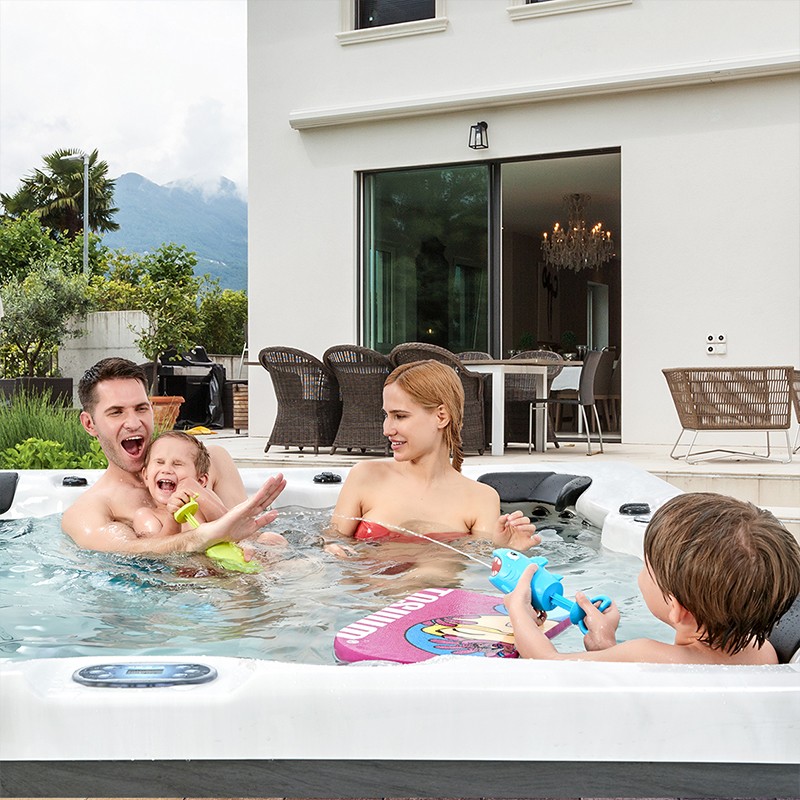
What types of exercises can be performed in a spa hot tub?
In a large outdoor spa hot tub, suitable exercises typically share the following characteristics: moderate range of motion, a controllable pace, and no reliance on rapid, high-speed displacement.
Commonly suitable forms of exercise include:
•Walking or marching in place in the water.
•Aquatic stretching and joint mobility exercises.
•Low-intensity core stabilization training.
•Limb movements utilizing the water's resistance.
These exercise methods allow you to fully leverage the benefits of the whirlpool spa hot tub's water resistance and buoyancy, while avoiding safety risks associated with spatial or structural limitations.
Does the water temperature in a spa hot tub affect the effectiveness of a workout?
Water temperature is a factor that cannot be overlooked.
Generally, the water temperature in a whirlpool spa hot tub is set within a range designed for comfort and relaxation, rather than for high-intensity athletic environments. The impact of water temperature on exercise is primarily manifested in the following ways:
•Warm water helps relax muscles and improves flexibility.
•Excessively high water temperatures may limit the duration of the workout.
•Moderate temperatures are best suited for soothing, therapeutic exercises.
Therefore, when exercising in a whirlpool spa hot tub, the focus should be on improving mobility, enhancing flexibility, and building muscular endurance, rather than pursuing high-intensity calorie expenditure.
How does the water resistance in a spa hot tub aid in exercise?
Water resistance is one of the core advantages of aquatic exercise.
In a large spa hot tub, where the water is stable and flow is controllable, every movement of the human body encounters resistance from the water. This resistance possesses the following characteristics:
•It is distributed evenly, minimizing the risk of creating concentrated pressure points.
•It naturally increases or decreases in proportion to the speed of the movement.
•It helps improve muscular control and body awareness.
Compared to land-based workouts, exercising in a whirlpool spa hot tub places greater emphasis on the quality of movement and muscular coordination, rather than on explosive power.
Will exercising in a spa hot tub cause damage to the equipment itself?
From a structural perspective, large outdoor spa hot tubs typically possess high load-bearing capacity and stability; their design inherently accounts for the varying pressures resulting from multiple users and physical movement.
Provided that the exercise approach is sensible—specifically:
•Avoiding jumping or high-impact movements;
•Refraining from applying excessive external force to the rim of the tub; and
•Ensuring no damage is inflicted upon the internal jets or plumbing—
then engaging in a daily exercise routine within a whirlpool spa hot tub will not have any adverse effects on the equipment.
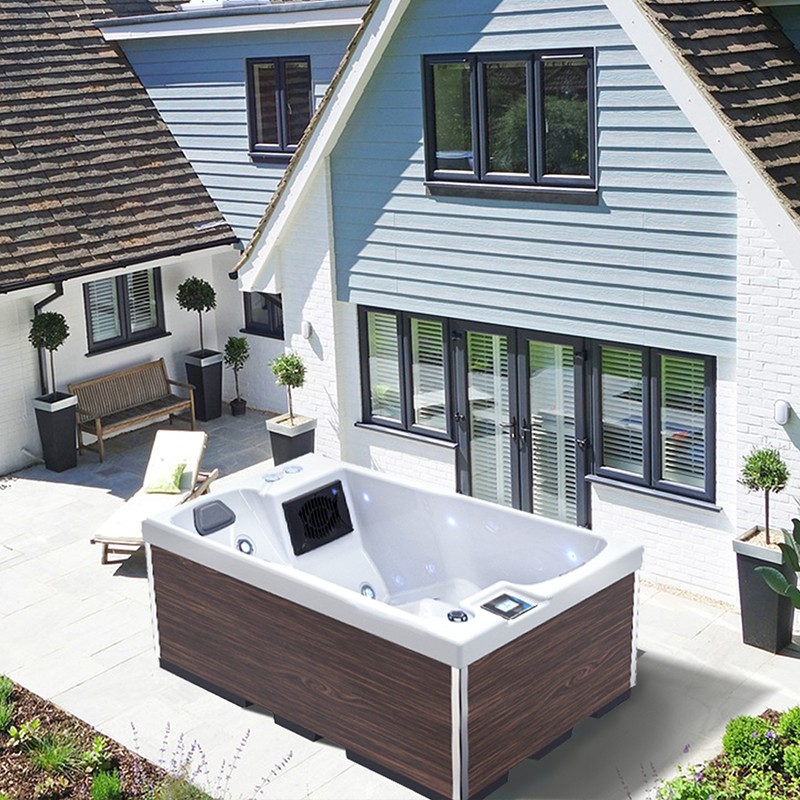
How does exercising in a spa hot tub differ from ordinary swimming?
This is a crucial point of distinction to understand.
A spa hot tub is not a swimming pool; the primary differences between the two lie in their:
•Spatial structure;
•Design objectives regarding water flow; and
•Intended purposes of use.
Exercise performed within a whirlpool spa hot tub more closely resembles aquatic functional training, emphasizing stability, control, and comfort rather than speed or distance.
Why are more and more people taking an interest in the exercise capabilities of spa hot tubs?
This growing interest is not coincidental; rather, it stems naturally from the inherent attributes of the spa hot tub itself.
A spa hot tub provides an exercise environment that is:
•Low-impact;
•Highly inclusive; and
•Easy to sustain over time.
For those seeking to strike a balance between relaxation and physical activity, a large spa hot tub indeed offers unique value.
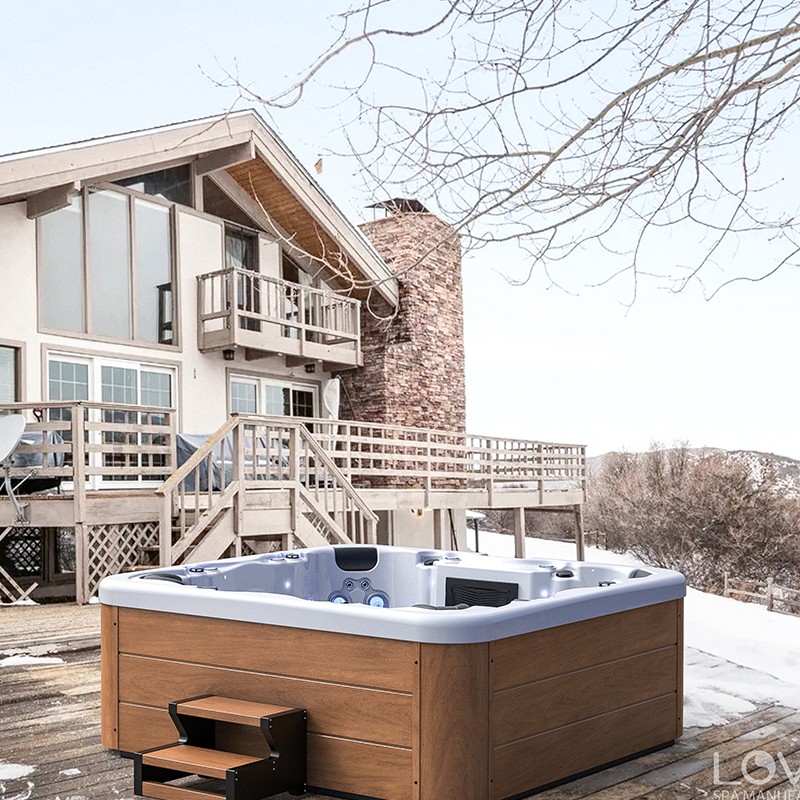
Can you exercise in a large outdoor spa hot tub?
To summarize from a professional standpoint:
•Large spa hot tubs possess the necessary spatial and structural foundations to accommodate exercise;
•The aquatic environment is ideally suited for low-intensity, controlled physical activity;
•Spa hot tubs are best suited for functional and therapeutic forms of exercise; and
•Proper usage will not compromise the safety or structural stability of the equipment.
Therefore, the answer is: Yes—provided that you select appropriate exercise methods and respect the inherent design characteristics of the spa hot tub.
A spa hot tub is not intended to serve as a substitute for a traditional gym, but rather as a space where relaxation and physical activity can be seamlessly integrated. Once this distinction is understood, the true value of the whirlpool spa hot tub becomes even more apparent.