


- Home
- >
News
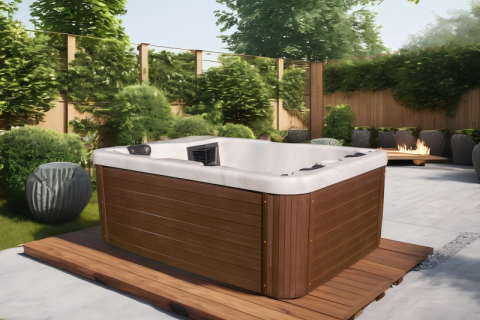
Actually, a well- made outdoor spa hot tub when installed, maintained, and used properly will usually be in a working condition for 10-15 years or more. With the use of high-grade components and an up-to-date and mature manufacturing process a hot tub can even last for more than 20 years.
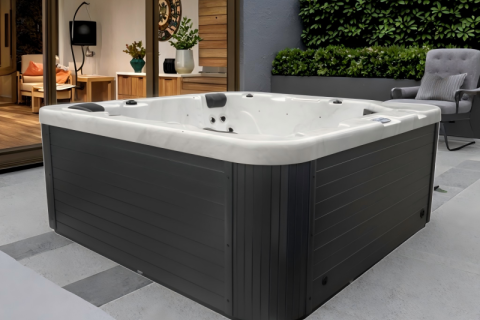
Since its establishment as the leader in R&D and manufacturing of outdoor spa hot tubs LOVIA® has been offering OEM/ODM solutions to clients abroad, helping clients in different countries building competitive brand of outdoor spa hot tub.
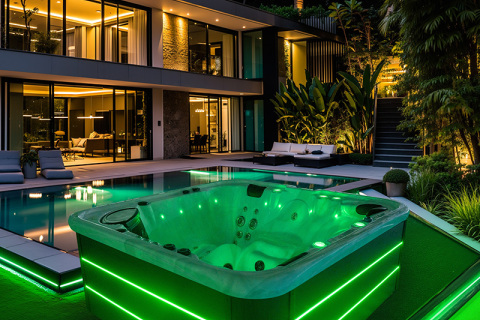
How to store an outdoor hot tub depends first on the "duration of non-use." If it's only a few days or weeks of non-use, there's no need to completely drain the equipment; if it's not used for more than a few months or even the entire winter, more thorough protection is required.
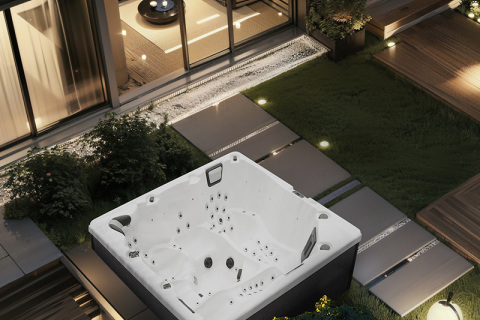
However, in reality, foam does not necessarily indicate bacterial contamination. Foam in outdoor hot tubs is often caused by substances in the water that reduce surface tension, such as body oils, sweat, skincare product residue, detergent components, and organic pollutants.
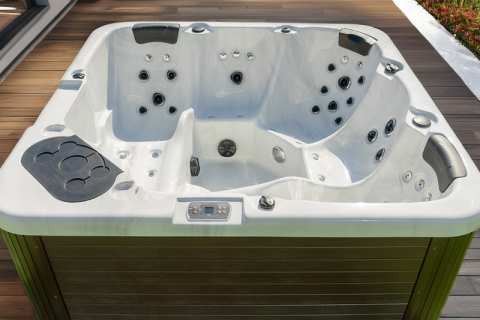
Do not pour boiling water into an outdoor spa hot tub. The correct approach is to rely on the device's own heating system, optimized insulation, and proper control of water temperature changes to ensure the outdoor hot tub operates stably within a safe range.
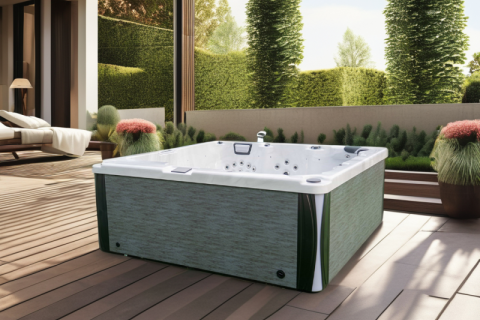
Generally, the production cycle for a standard outdoor spa hot tub is approximately 20-45 working days. Of course, the specific time will still be affected by order quantity, product configuration, production schedule, and raw material supply.
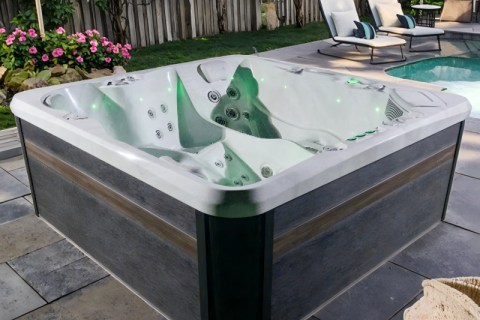
Eye Irritation Symptoms The eyes are among the parts of the body most sensitive to chlorine. When chlorine levels in an outdoor spa hot tub are high, or when irritating chlorine gas is present in the air, many users first experience eye discomfort.
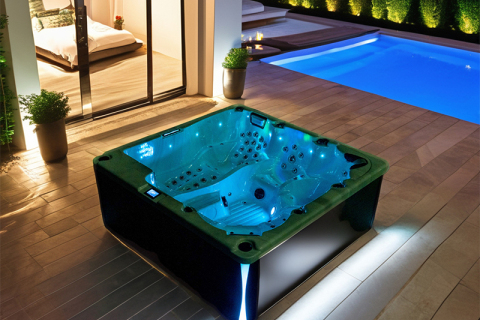
Baking soda is mostly mentioned as one of the ways to take care of outdoor spa hot tub at home. But it should be noted that baking soda's major role is not to remove cloudiness or purify the water in any way but to control alkalinity and pH level.
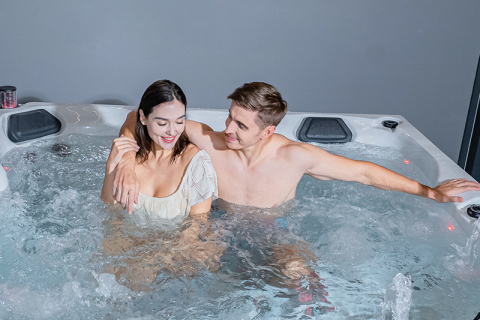
The main reason a spa hot tub tends to accumulate calcium and magnesium scale is the type of hard water supply in the area. International standards identify total hardness below 60 mg/L as soft water and total hardness exceeding 180 mg/L as being in a hard water area.
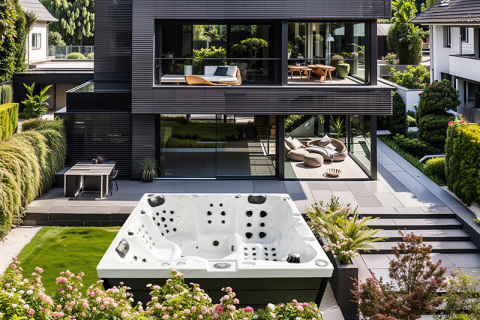
One might be tempted to conclude that the spa hot tub isn't working properly after noticing that it stays at 84°F. To prevent such a mistake it is best to check the operating mode that currently is displayed on the control panel - maybe the economy or the sleep mode has been set by accident.
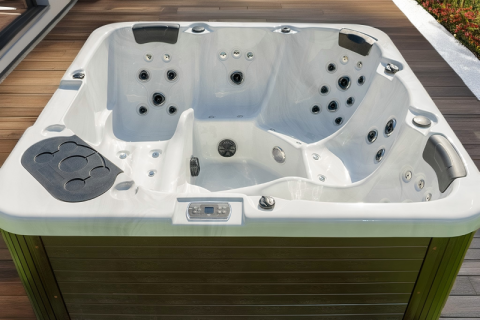
Scientifically speaking, chlorine does not adhere to the skin's surface for long periods. Once a person exits the whirlpool spa hot tub, moisture on the skin evaporates quickly, carrying away the vast majority of free chlorine through volatilization or rinsing.
Based on after-sales maintenance experience, there are many reasons for nozzle pulsation in outdoor hot tubs, but the most common is still insufficient water supply. When the massage pump cannot continuously obtain enough water, a situation similar to "insufficient fuel supply" in a car engine occurs.