


What are the symptoms of chlorine poisoning from outdoor hot tubs?
2026-08-07 15:30Backyard leisure lifestyles are gaining popularity. A lot of people choose to install outdoor spa hot tubs to their yards for a spa-like experience. A spa hot tub compared to a regular bathtub is more enjoyable because it not only provides an open-air setting but also enables one to remain constantly in water, get a massage, and enjoy all of this without worrying about cold weather. Due to their combination of social appeal and health benefits, these hot tubs have gained the consumer market's trust. Any system that stores water and recirculates heat for longer time needs good water quality management. Chlorine disinfection is a common choice for controlling bacteria and is a well-known method for using outdoor spa hot tubs.
Chlorine is an excellent disinfectant that eliminates bacteria, viruses, and fungi. Its effectiveness in maintaining high-quality water and eliminating the threat of microbial transmission is a big deal for public sanitation. Yet, at times, people make wrong choices and increase the amount of chlorine in the belief that "a clean environment is a safe one" or mix incompatible water treatment chemicals. This leads to high concentration of chlorine in the atmosphere or results in far more than the safe limit of active chlorine concentration in the water. The resulting problems can be physical as users experience respiratory discomforts caused by breathing in chlorine gas, prolonged exposure of skin to high chlorine water, or eye problems.
Hence, the issue of whether outdoor whirlpool spa hot tubs can cause 'chlorine poisoning' is raising concern and interest among many users. Nevertheless, it should be noted that true and severe cases of chlorine poisoning are very rare if all conditions are taken into account properly, like, if disinfectants are added according to the instructions and the space is nicely ventilated. On the contrary, there are the actual dangers that come in either of two ways: either high concentration of chlorine or from improperly handled chlorine gas, which is the cause of irritation and other related health problems.
We have prepared this article to help you fully understand the signs, reasons, factors, correct ways of reacting, and how you can avoid chlorine poisoning that may come up due to outdoor whirlpool spa hot tubs. Our goal is to help you enjoy the bath while at same time making sure things don't backfire for you.
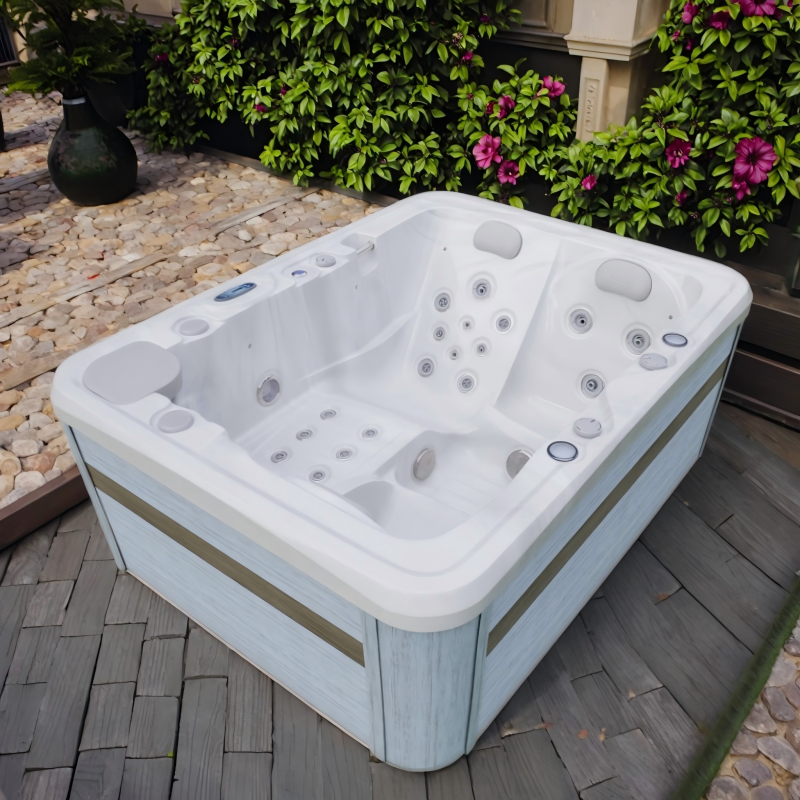
What is "chlorine poisoning" in the context of outdoor whirlpool spa hot tubs?
Search results on "outdoor whirlpool spa hot tub chlorine poisoning" frequently conflate two entirely distinct situations. On one hand, one refers to a person being heavily exposed to either liquid or gaseous chlorine that leads to an acute chemical poisoning. One is on the other hand, a reaction of the body that may involve eye, skin or even airway irritation in the presence of high chlorine concentration levels. Chlorine in either of those cases is the trigger, although one results in a more serious and life-threatening case whereas the other is just a mild irritation with a very different mechanism underlying its occurrence.
The most typical ways of killing off bacteria in the case of outdoor whirlpool spa hot tubs are through the use of chlorine-based disinfectants, bromine-based disinfectants, or systems that use an ultraviolet (UV) light or ozone.
Chlorine-based disinfectants are by far the most frequently utilized as they are relatively economical, efficient against microbes and very easy to maintain. In most cases, a safe and effective disinfection system is achieved when free chlorine levels are controlled and kept relatively stable while the concentrations of disinfectant do not reach levels where they may become harmful to the human body.
For instance, if the person has mistakenly dosed the product too heavily, or has made a wrong combination of two products, it is the production of the highly irritating chlorine gas and the air that is causing the problems. Should the indoor hot tub have been placed in a confined area, the levels of harmful substances in the air may very quickly get out of hand, hence greatly increasing the risks of inhalations related problems.
In the same way, if an outdoor spa hot tub maintains its disinfectant, say, free chlorine or active chlorine, to be effective over time that is way beyond a recommended level or the standard level, for example, it could still result in the body's skin, eyes, and airway tissues to be under continual attack, even without the formation of huge quantities of chlorine gas. Therefore, the so-called "chlorine poisoning" from outdoor spa hot tubs is typically a collection of symptoms from an exposure to the very high levels of chlorinated substances. In other words, it does not imply that the use of chlorine disinfectants would always result in poisoning.
Is the scientific control of chlorine concentration crucial in the case of these outdoor spa hot tubs?
On the contrary of normal swimming pools, the reason why controlling chlorine in outdoor spa hot tubs is so essential mainly comes down to three aspects that have more to do with these specific situations ratherthan general swimming pool situations: water temperature, water storage volume, and frequency of the contact with the human body.
Apart from anything else, the water in spa hot tubs is quite hot: typically from 37°C up to 40°C. Under such conditions, chlorine tends to get evaporated much more quickly and, at the same time, our bodies also react more vigorously with the hot water and the openings, that is, the pores, get opened more widely, so the contact area of skin to water becomes broader and deeper. As a result, if the water level is too high with chlorine, the chances of one developing skin irritation are quite significantly higher as well.
Furthermore, the capacity of whirlpool spa hot tubs is usually 800 to 2000 liters, while those of home swimming pools reach tens of thousands of liters. Consequently, when a spa hot tub is added with a small amount of a disinfecting agent, it will be mixed very quickly to a large degree in the entire volume without it getting evenly diluted. That is why you may accidentally end up with a dangerously high concentration, if it is not properly controlled through dosage calculation according to the volume.
In addition, an outdoor whirlpool spa hot tub being used so frequently leads to depletion of the disinfectant due to the organic matters carried by users that the bathers leave behind, such as sweat, sebum, sunscreen, etc. Some people misinterpret that "without the smell of chlorine, it means that there is a lack of it", therefore, they continue to add the chlorine. Indeed, their act of this kind of adding leads to the level being highly chlorinated. It is quite surprising that the strong "pool smell" that many are used to seeing on the water is not really a result of the existence of free chlorine by itself. Instead, it comes from chloramines - chemical compounds generated when the chlorine reacts with the organic matter. If the situation is only that people think the smell is of chlorine it doesn't make any sense to just add more and that's where chloramines and the other things come up with the idea for a more effective water quality control.
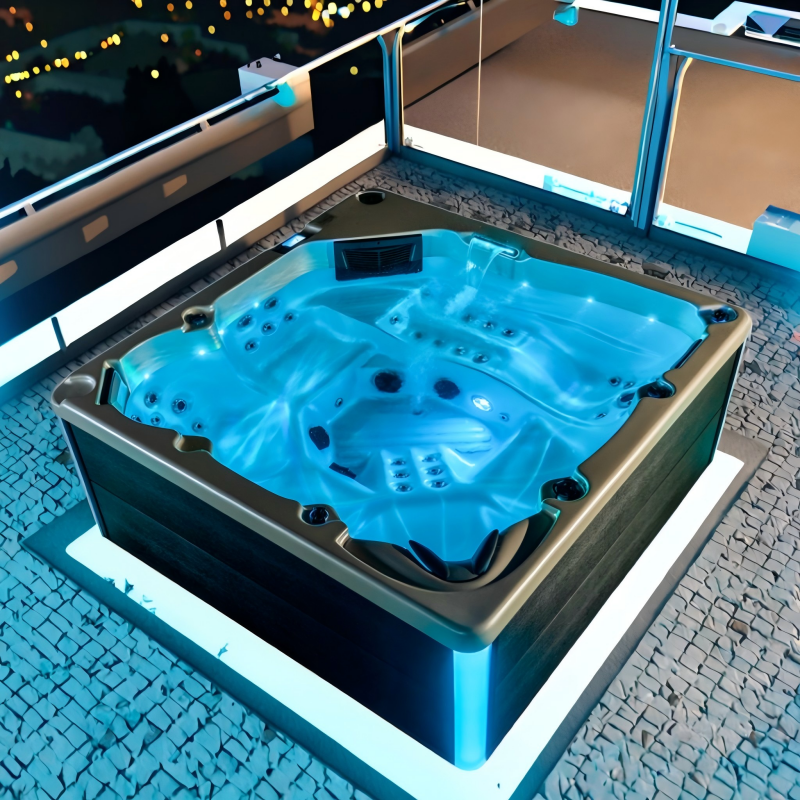
What possible symptoms would one have if exposed to chlorine in an outdoor spa hot tub?
1. Symptoms due to the eye irritation
Out of all the body parts, eyes are the ones that get most of the harm done by being exposed to chlorine. When there is an outdoor whirlpool spa hot tub with very high chlorine concentration or when the user is surrounded by the irritating chlorine gas, they often first notice that the person's eyes are the most affected.
A person's symptoms, when their eyes are irritated to a mild degree, may range from redness and watering to mild itching and the sensation in their eyes of having a foreign object. It can be quite strange as people have a dryness that lingers after a bath which they find very fatiguing when reading or staring at electronic screens.
On a very large extent of exposure the discomfort becomes severe, symptoms might be continuous watering, sensitivity to light (photophobia), and conjunctival congestion (the whit part of the eye being red). Therefore, at once, a person who is being exposed to a whirlpool spa hot tub with a problem should stop, go to wash the eyes and get them fully washed under a running or faucet water. If symptoms are not improved or have even turned worse, then it is time to run for the medical center and hospital without delay.
2. Symptoms due to the irritation of the respiratory tract
It is true that the respiratory system is the most vulnerable point when exposure to chlorine occurs.
Breathing the irritating chlorine gas may trigger symptoms like dry throat, stinging throat, cough, hoarseness, and feeling the chest tight. Some people could be aware that they are struggling to breathe; those who have asthma, chronic bronchitis, or allergic rhinitis as pre-existing conditions are known to be very responsive and get very badly affected by a very small amount of chlorine gas.
In case the outdoor whirlpool spa hot tub gets used in a semi-enclosed with not a good ventilation situation the building up of irritating gas is made much easier and this may lead to the appearance of respiratory symptoms more strongly.
It can be seen that healthy mature adults who get the mild respiratory discomfort in a short interval of exposure can be recovered without medication, however, if one is experiencing a cough which is constant and very intense, a difficulty to breath which is quite serious as a chest tightness in a situation where a breathing is affected, this is the case for the person to leave the area of exposure right on the spot and seek the medical assistance urgently as this can be life-threatening.
3. Symptoms due to skin irritation
One can notice that the skin is a place that has been directly exposed to chlorine. Due to hot water from outdoor whirlpool spa hot tubs leading to dilation of pores, the irritating effects of chlorinated water on the skin with high concentration can be quite severe and very visible even to eyes. Some people could report dry, tense, or itchy skin, or mild flaking, while getting the benefits of a spa hot tub. People with extremely sensitive skin are the ones who are likely to develop redness, a stinging or burning sensation, and eczema-like changes.
Continuously, or at least very frequently, being in water with highly chorinated water without taking care the skin afterwards could weaken the skin barrier and hence lead to the problem getting out of hand. As a result, one should wash off with clean water after the whirlpool spa hot tub session and, of course, use a skin-moisturizing cream to help the skin condition recover and stay in good health.
4. Nose and throat discomfort
Once the outdoor whirlpool spa hot tub area is approached by some users, nose stinging is one of the symptoms that can be very immediately noticeable, accompanied by running nose, sneezing and a sore throat are other ones. These symptoms often point out the presence of highly concentrated and very poisonous airborne molecules.
If symptoms fade within the next few hours to a few hours after going away from the place, then, in most cases, the reason of the occurrence is irritation and nothing else. Nevertheless, when someone is not satisfied by being cured, a medical expert could be the one who checks his/her situation and gives further suggestions for him/her to do and get rid of his/her condition.
5. Symptoms of very strong exposure
Poisoning by chlorine which originates from domestic outdoor whirlpool spa hot tubs does happen in a very limited way but when people have mixed up chemicals in a wrong way producing large amounts of chlorine gas and when they are in an enclosed place, breathing such harmful gases might lead to symptoms as difficulty of breathing, chest pain, strong cough, or feeling giddy. That is a medical emergency; first of all, you need to leave the polluted spot, find a well-ventilated area and consult a specialist as soon as possible.
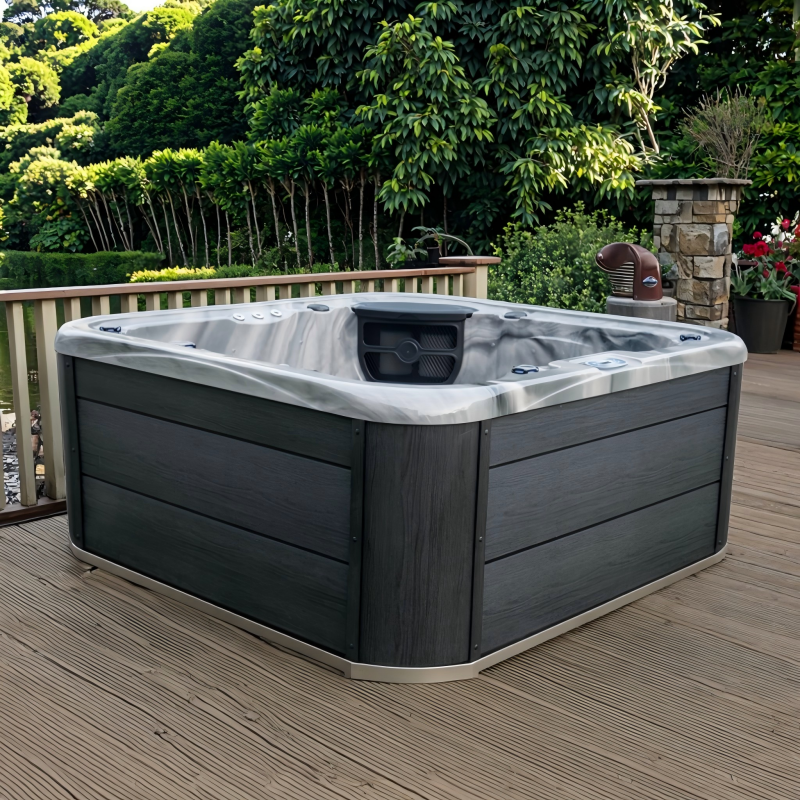
What errors can cause very high chlorine concentration in spa hot tubs?
Practically the most of the issues in spa hot tub operation are a result of improper use, not equipment defects.
The main error is simply overuse of disinfectant at one go. Some people think that they can disinfect water really fast if they pour in several doses of chlorine-based agents right at once. But that's not the case at all and, on the contrary, such method is quite likely to increase irritation of skin and other organs.
Another major error is the mixing of the wrong chemicals. As an example, using chlorine-containing disinfectants along with highly corrosive cleaning agents, descaling agents or with some other kinds of chemical substances might generate very aggressive irritating gas. Such mixing absolutely has to be stopped.
And also not checking water quality can be a factor. A large number of families do not even test the concentration of free chlorine in their water and just go by the assumption that everything's perfectly all right. As a consequence, the chlorine concentration level remains far below or above the recommended value for a long time.
In addition, failing to ventilate is also a very big problem. Although outdoor whirlpool spa hot tubs are generally set outside, some of them have to be in sunrooms or enclosed gazebos or similar places. If the ventilation is not good in such a space, the unpleasant smells might be even felt after the right procedure has been followed.
What steps should one take if he/she suffers from discomfort because of chlorine released from an outdoor spa hot tub?
If one finds themselves with a burning sensation, breathing difficulties, or skin rashes while using an outdoor whirlpool spa hot tub, one should immediately end the spa hot tub use, move away from the source of discomfort, and go somewhere that is ventilated and free of such harmful substances.
If eyes have been affected, one should as swiftly as possible rinse the contaminated eyes with an ample amount of running water for several minutes; never rub or blink the eyes as that will only add insult or, worse, further damage the sensitive parts of one of the most crucial human organs.
In addition, if the skin gets affected by an irritation as a result of chemical exposure, the person should wash their body with clean and mild water, so that one could avoid further exposure to highly chorinated water and then put onto the skin an ordinary, not irritating, moisturizer in order to protect the skin barrier as much as possible.
If you are dealing with a case where the discomfort is of respiratory origin, you may try resting without engaging in any kind of effort or activity. In the case of a mild symptom, one is likely to regain health progressively after moving to a clean place but, if symptoms such as a severe difficulty of breathing, a tight sensation in the chest, or other signs and complaints of serious illnesses, one will have to see a doctor for a diagnosis and possibly other treatments.
Also, do not use the spa hot tub for another time and re-check the spa hot tub water parameters. The only reason you can use the whirlpool spa hot tub again is that free chlorine concentration, pH, among other water quality indicators have been returning to the reference range.
How can one limit the amount of chlorine in the water beyond what is safe in an outdoor spa hot tub?
Poor maintenance can lead to all manner of health and safety problems, so it's important to prevent the release of excessive amounts of chlorine.
One is to use the manufacturer's recommended and stated amounts of free or combined (total) chlorine products - do not just be the reason the water quality goes off track due to excessive chlorine level by not controlling its usage. Different companies manufacture free chlorine products with active ingredients at different concentrations so it's not the same thing to take a "guess" or rely on your memory.
Two: regular water testing is essential for ensuring the safety of the environment. Checking the presence of free chlorine level, pH level, alkaline level and water hardness calcium level, etc. It's really better to base the adjustments of pH and chemistry by the test results than by relying on smell or sight.
Three: good airflow should be maintained around the whirlpool spa hot tub area. While the whirlpool spa hot tub is outdoors it is not possible for everyone to be in the best ventilated location so you need some degree of airflow, not to get into the habit of the same old bad air.
Four: do not combine different types of chemical products; always read the instructions carefully and mix in the correct way, and do not use other types of cleaning agents.
Five: change the whirlpool spa hot tub water regularly. With time, the number of organic contaminants in the water will increase gradually, that, on the other hand, can lead to the degradation of the effectiveness of the disinfection process and the formation of chloramines. Hence, keeping the whirlpool spa hot tub water fresh at regular intervals depending on the usage frequency is among of the most effective and essential ways of ensuring the good quality of outdoor whirlpool spa hot tub water.
Keeping an outdoor spa hot tub clean regularly is a lot more important than just increasing chlorine
Many people assume that the more you throw chlorine into outdoor hot bathtubs, the safer they will be. In fact, keeping the water clean and safe is achieved by the combined action of proper concentration of disinfectant, effective circulation of water, the filtration system, maintaining the level of the chemicals and also making sure that the spa is cleaned and maintained regularly.
An excellently maintained hot tub outdoors will be the one that has a constant filter running, it will frequently clean the filter cartridges, it will maintain very stable water quality readings, and disinfectant levels should be under the recommended range without adding extra from the human body. Some habits, such as showering before entering the spa, prohibiting the getting of excess body products into the spa hot tub, using a cover, etc. can lower the requirements for disinfectants and at the same time result in better quality water stability.
By keeping the maintenance to a satisfactory level all these points will get reduced and a family can not only get rid of the irritation at the end of a hot bath but it is also a great way of keeping the cost of repairs and maintenance lower plus a much more reliable and safe soaking for your loved ones.
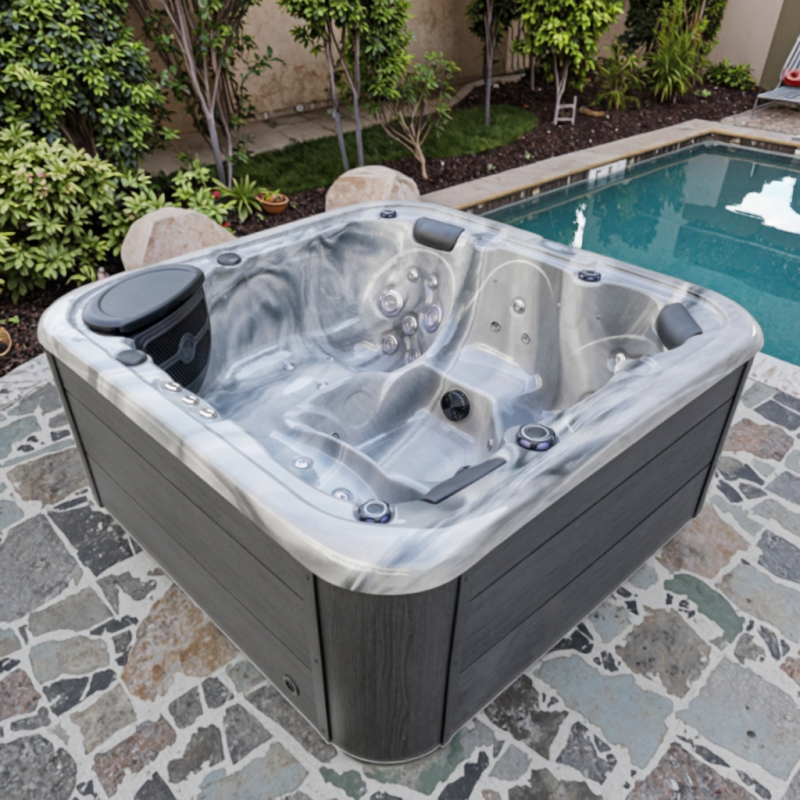
FAQ: A Compilation of Common Issues Regarding Chlorine in Outdoor Hot Tubs
FAQ 1: The outdoor whirlpool spa hot tub smells like a strong chlorine smell; is that a sure sign of effective disinfection?
It is not necessarily. In fact, the pungent smell may have resulted from chloramines, instead of the free chlorines. This is another chemical that arises when free chlorine reacts with organic material (such as sweat and urine). Therefore, instead of simply adding more disinfectant, the person's focus should be on the water quality test results of their water as to how they can further optimize and maintain the water quality at a certain good level.
FAQ 2: If an outdoor whirlpool spa hot tub regularly uses chlorine products to disinfect itself, does it mean the person getting into it every now and then is bound to get poisoned?
No, unless the disinfectant concentration level has reached very harmful levels for human body. It's a fact of the matter that as long as you stick to manufacturer's or supplier's instructions for the usage of chemicals and ventilate the rooms properly, then there wouldn't be a case of chlorine poisoning by use of a residential whirlpool spa hot tub.
FAQ 3: If someone feels that their skin is dry after using an outdoor whirlpool spa hot tub, does that mean that they have been poison by the chlorine?
Not necessarily, dry skin could have just resulted from an excessively prolonged hot bath or high water temperature or mild irritation by the chlorinated water of the skin barrier. If the symptoms are only mild, rinsing with fresh water and using moisturizer helps, however, if the appearance of significant erythema or the swelling of the skin, blisters, or symptoms of discomfort are present, one should see the specialist.
FAQ 4: At what intervals should one check the chlorine concentration in the water of a whirlpool spa hot tub?
For a very frequently used whirlpool spa hot tub, it has been advised to measure water quality parameters in the whirlpool spa hot tub two to three times per week. However, if a few people use a hot tub in succession or even if the hot tub is used only once and then a lot more disinfectant is already added, it is still highly recommended that one check the water parameters again just before going into a hot tub again so that everything is safe to do and the water has a clean and fresh smell.
FAQ 5: Can an outdoor hot tub be sanitized most effectively by the joint use of several disinfectants?
Well, we advise that you do not do so as it very possible that the combination of two disinfectant products might chemically interact, thus making your situation of the whirlpool spa hot tub being dangerous even more a problem. First of all, you should choose from the several disinfectant options, those that are compatible with the whirlpool spa hot tub, as advised by the instruction on the equipment manual and the disinfectant label itself. And do not make chemicals on your own to avoid any unwanted chemical reaction and danger.
FAQ 6: What could be the ways for mitigating the physical discomfort caused by the chlorination process when using an outdoor spa hot tub?
In other words, making sure that water and pool are kept in a good condition, regularly checking water parameters, having functioning filters, showering before going into the water, soaking for only short periods, and getting a nice airflow going in that part of the house should all do wonders in the matter of avoiding the discomfort caused by chlorine as well as enhancing the bathing experience.