


- Home
- >
News
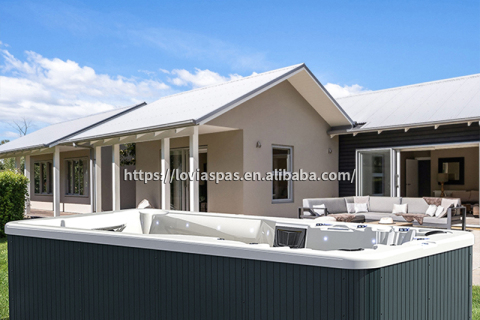
Our current mainstream outdoor spa pool models are typically 4.5 to 6 meters long, with some larger models reaching 5.8 meters or even longer, 2.2 to 2.3 meters wide, and 1.3 to 1.5 meters high.
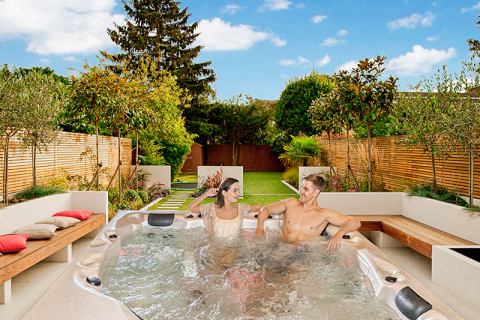
Compared to traditional outdoor hot tubs, the biggest feature of outdoor swim spas is the integration of "swimming training" and "spa massage" functions. Users can use the front pool area for continuous swimming training, or relax their bodies on the other side using massage nozzles, water flow systems, and a warm water environment.
The main reason for developing yellow algae in outdoor swim spas is the lack of a minimum disinfectant level. Be it chlorine, bromine, or other water treating chemical methods, in all cases, keeping the sanitizer levels sufficient to kill germs and the pathogens is vital to the prevention of algae and bacteria growth.
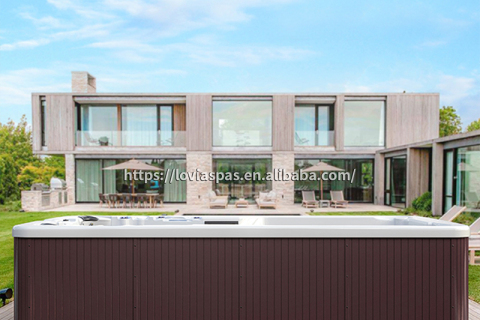
Air movement is a key factor influencing evaporation in swim spa tubs. Outdoor air is constantly in motion; wind continuously strips away the humid air layer above the water, bringing fresh, drier air into contact with the surface. Generally, the faster the air exchange, the higher the rate of evaporation.
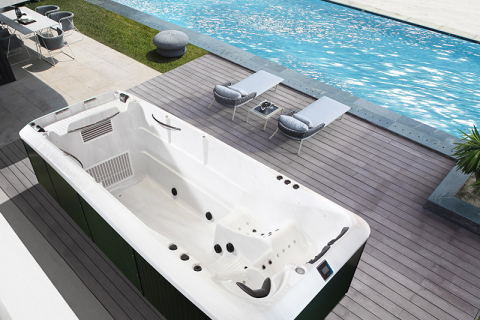
Compared to regular swimming pools, outdoor swim spa tubs are more prone to limescale buildup, primarily due to three characteristics of their operating environment: consistently high water temperature, high circulation frequency, and rapid water evaporation.
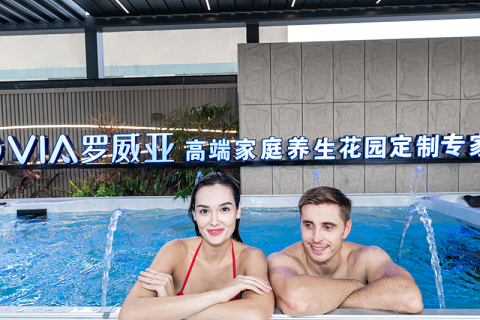
First, the warm environment helps promote blood circulation. When you enter an outdoor swim spa tub, the skin's capillaries gradually dilate, increasing blood flow to the skin's surface, helping the body dissipate heat, and improving circulation in the limbs and superficial tissues.
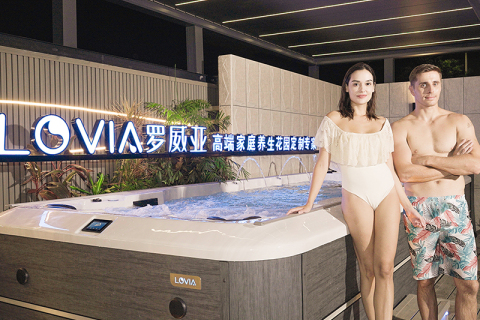
As a company long dedicated to the R&D and manufacturing of spa equipment, LOVIA® provides OEM outdoor swim spa solutions to global clients. Through standardized manufacturing, modular design, and flexible customization, LOVIA® delivers reliable product support tailored to diverse wellness center projects.
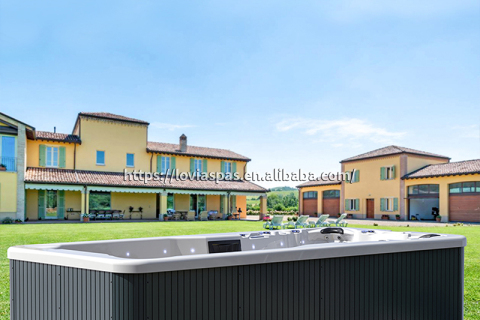
Those new to outdoor swim spas often notice a common phenomenon: almost all brands, manufacturers, and installers provide a long list of prohibitions and safety restrictions. These include bans on diving, glass containers, alcohol consumption, unsupervised use by children, the use of bubble bath products, and prolonged immersion, among others.
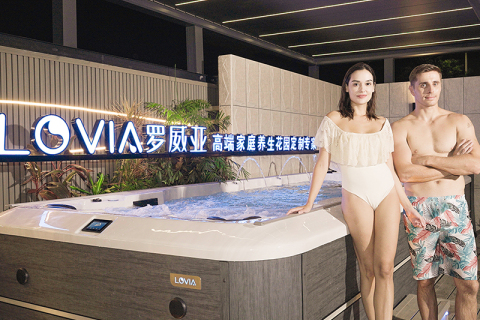
A simple method is to observe the water color. If the swim spa tub water turns green, yellow-green, or develops localized discolored patches, an algae problem is likely. Conversely, if the water is merely cloudy with a white or gray tint, the issue is more likely related to filtration.
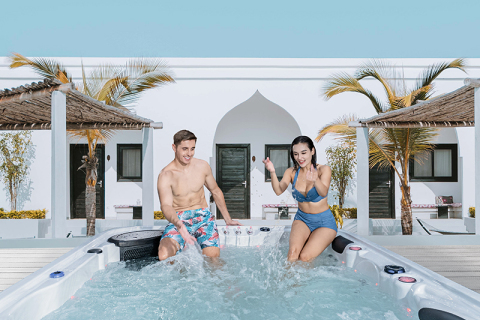
Many consumers assume that because they have purchased a high-end swim spa tub, the water output from every jet should be identical. In reality, from the standpoint of fluid dynamics, achieving perfectly uniform flow is nearly impossible.
Significantly higher user activity levels In a standard outdoor hot tub, most users simply sit, chat, or relax while receiving a massage; the amount of sweat produced per hour is relatively limited. In contrast, users of outdoor swim spas are typically engaged in continuous physical activity.
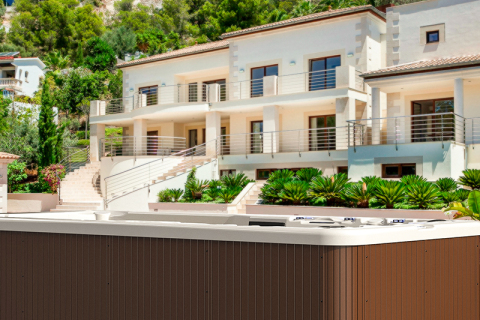
In reality, the vast majority of cases where outdoor swim spa water turns green are linked to algae proliferation, sanitizer failure, chemical imbalances, and the accumulation of contaminants. Rainwater often acts merely as a "trigger" for the problem rather than the root cause.