


What is prohibited in most outdoor swim spa tubs?
2026-07-16 15:30In recent years, driven by the trend of upgrading home wellness and lifestyle choices, outdoor swim spa hot tubs—which combine exercise, rehabilitation, and relaxation—have rapidly become a key feature in high-end residences, villa gardens, resort hotels, and rehabilitation centers. Compared to traditional swimming pools, outdoor swim spas not only require less space and offer easier maintenance but also provide users with a dual-purpose experience—fitness and therapy—thanks to features like constant temperature control, water propulsion systems, and multi-zone massage jets. For many people pursuing a healthy lifestyle, the outdoor swim spa is no longer merely a luxury item; it has increasingly become an essential part of their daily wellness routine.
However, those new to outdoor swim spas often notice a common phenomenon: almost all brands, manufacturers, and installers provide a long list of prohibitions and safety restrictions. These include bans on diving, glass containers, alcohol consumption, unsupervised use by children, the use of bubble bath products, and prolonged immersion, among others. Many users wonder: why does a seemingly simple outdoor swim spa hot tub come with so many rules? Are these regulations truly necessary? What are the consequences of occasionally violating them?
In reality, these restrictions are not manufacturers trying to "make things difficult" for users, nor are they merely perfunctory liability disclaimers. Instead, they are established based on the equipment's structure, water circulation system, electrical safety requirements, and human physiology. In essence, the extensive list of restrictions exists because the outdoor swim spa combines four distinct elements—a swimming pool, a hot tub, a massage system, and an electric heating system—and the convergence of these systems creates more complex safety risks.
This article provides a detailed analysis of what is prohibited in most outdoor swim spa hot tubs, explaining the underlying reasons for these restrictions. It aims to help users understand why the proper use of an outdoor swim spa is crucial not only for the longevity of the equipment but, more importantly, for personal safety.
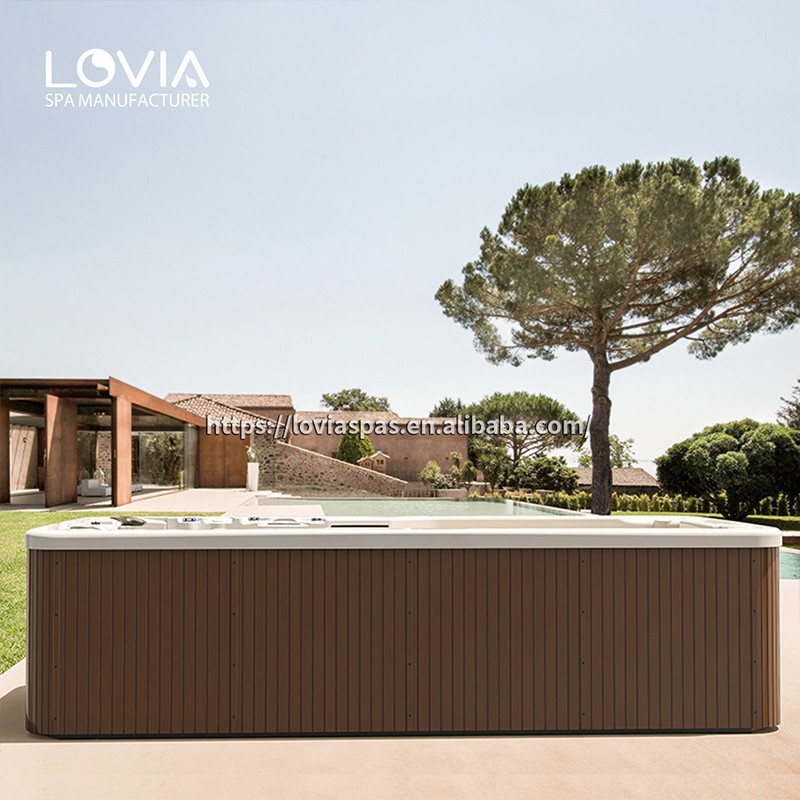
Why are there so many usage restrictions for outdoor swim spas?
While a standard bathtub is merely a water vessel and a typical swimming pool is designed primarily for swimming, an outdoor swim spa hot tub integrates several systems: constant-temperature heating, water circulation and filtration, high-power propulsion pumps, massage jets, electronic controls, and chemical disinfection. A standard residential outdoor swim spa hot tub typically houses dozens of jets, multiple high-power pumps, a heater, and complex control circuitry.
From an engineering perspective, this implies the presence of multiple potential hazards, including high temperatures, water pressure, electricity, chemical agents, and slippery surfaces. Data from the Pool & Hot Tub Alliance indicates that over 60% of accidents involving spas or hot tubs stem from improper use rather than equipment failure. In other words, most accidents could be prevented simply by adhering to usage guidelines.
For this reason, clear boundaries regarding usage must be established to minimize risk.
Diving or jumping into the swim spa from a height is prohibited
This is the most common and critical prohibition.
Many users instinctively view outdoor swim spa hot tubs as miniature swimming pools, leading them to consider diving, jumping in, or engaging in rough play. In reality, however, the depth of most outdoor swim spas is far shallower than that of a standard pool.
While the shallow end of a standard competitive pool is usually over 1.2 meters deep, the effective water depth of many residential swim spas ranges from only 1 to 1.5 meters, with some massage zones being even shallower. This depth is sufficient for floating, counter-current swimming, and hydrotherapy massage, but it is far from adequate for diving.
The primary risk associated with diving is the potential for the head, cervical spine, or spinal cord to strike the bottom. Medical research shows that when the cervical spine sustains a high-speed vertical impact, the instantaneous pressure can reach several times the body's weight, potentially causing permanent spinal cord injury. Consequently, virtually all manufacturers of outdoor swim spa hot tubs explicitly prohibit diving.
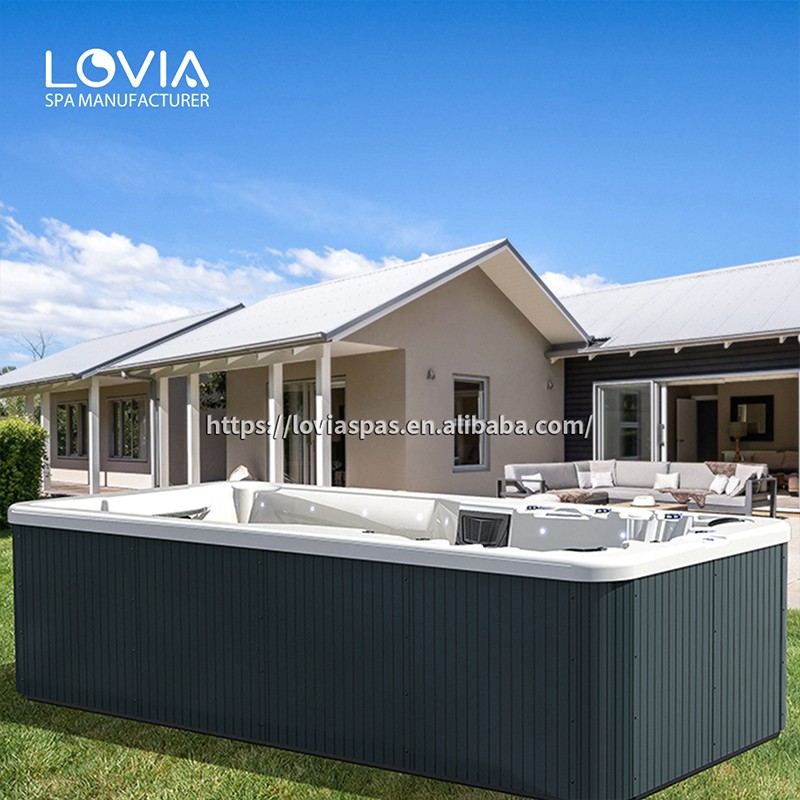
Using the swim spa after consuming alcohol is prohibited
Many people enjoy a drink while relaxing—particularly in a backyard setting, where sipping alcohol while soaking in hot water seems delightful. Yet, this is precisely one of the most dangerous behaviors associated with outdoor swim spa hot tubs. Alcohol causes blood vessels to dilate and impairs the body's ability to respond to environmental changes. Outdoor swim spas typically maintain water temperatures between 34°C and 40°C; this high heat further promotes vasodilation. The combined effect of alcohol and hot water can lead to a drop in blood pressure, dizziness, and even a brief loss of consciousness.
Data indicates that alcohol is one of the most common triggers for fainting incidents associated with hot tubs. The risk is significantly elevated for individuals with cardiovascular disease, hypertension, or hypotension who use outdoor swim spa hot tubs after consuming alcohol. Furthermore, alcohol impairs balance, making users more prone to slipping and falling in wet areas.
Children are generally prohibited from using outdoor swim spas unsupervised
Children constitute a high-risk group when using outdoor swim spa hot tubs.
Many parents mistakenly believe that shallow water eliminates the risk of danger. In reality, the hazards children face in the water extend beyond drowning to include risks from suction inlets, water propulsion systems, and high temperatures.
Children have a weaker capacity for thermoregulation than adults and are more sensitive to heat. In environments exceeding 38°C, a child's core body temperature tends to rise faster than an adult's, making them more susceptible to dehydration, dizziness, or heat stress.
Additionally, outdoor swim spas often feature high-suction water inlets. If a protective cover is damaged or a child gets too close, hair, swimwear, or even limbs can become trapped by the suction.
Consequently, most manufacturers explicitly mandate that children use outdoor swim spas only under adult supervision.
Glassware is generally prohibited in outdoor swim spas
Many users underestimate the importance of this restriction, viewing it merely as a measure to prevent broken cups. In reality, the rule addresses more complex safety concerns.
The area surrounding an outdoor swim spa hot tub is often slippery, and grip strength can be compromised. If a glass, bottle, or other glass item slips, it is highly likely to shatter. Once glass shards fall into the water, they are often extremely difficult to detect due to light refraction and surface ripples.
This poses a significant danger, as users could come into direct contact with the shards while walking, sitting, or moving in the water. Furthermore, glass cuts are more prone to infection in the warm, humid environment of a spa. Therefore, for most outdoor swim spa hot tubs, the following are recommended:
•Plastic cups
•Stainless steel cups
•Silicone containers
...rather than glassware.
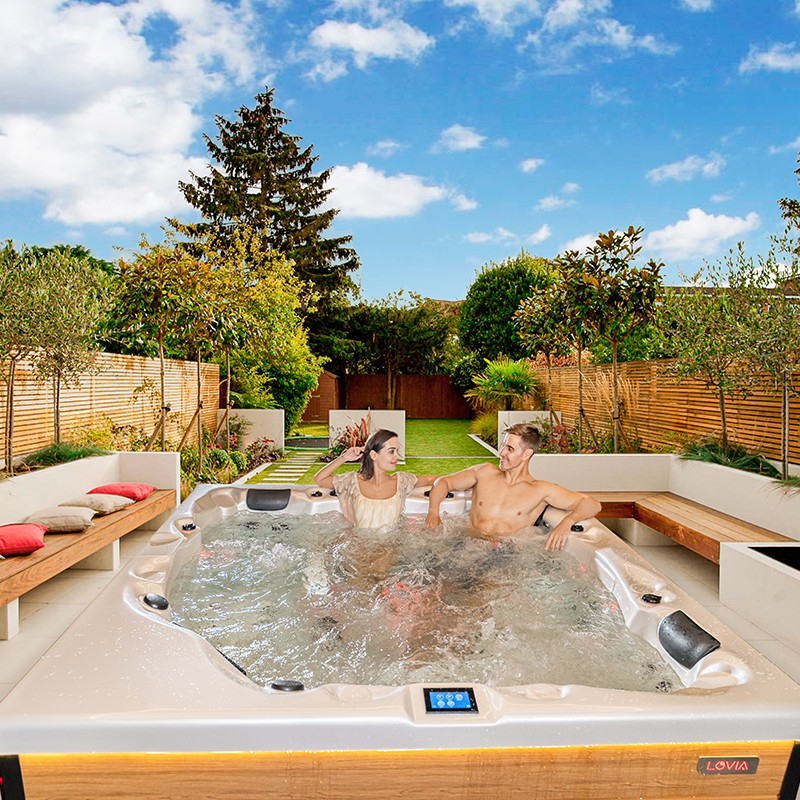
The use of bubble bath products or standard body wash is prohibited in most outdoor swim spas
This is one of the most common mistakes made by new users.
Many people assume that since it is a tub, adding bubble bath will make the experience more enjoyable. However, an outdoor swim spa is not a standard bathtub; it features a complex internal water circulation and filtration system.
Standard bubble bath products contain high levels of surfactants; these ingredients are rapidly agitated by the jet system, creating excessive foam. This not only detracts from the experience but also negatively impacts the equipment.
First, the foam interferes with water level sensors and flow detection. Second, surfactants accelerate filter cartridge contamination, reducing filtration efficiency. More seriously, chemical residues can adhere to the inner walls of the plumbing, promoting biofilm formation.
Studies show that cleaning products unsuitable for spa systems can shorten filter cartridge lifespan by more than 30%.
Consequently, the use of standard bath products is prohibited in the vast majority of outdoor swim spa hot tubs.
Prolonged immersion is prohibited in most outdoor swim spa hot tubs
Many people believe that since it is a relaxation device, the longer one soaks, the better. This is not the case.
The water temperature in outdoor swim spa hot tubs is typically higher than normal human body temperature. Prolonged immersion raises core body temperature, placing a strain on the body.
Medical guidelines suggest that in 40°C water, a single immersion session for adults should not exceed 15 to 20 minutes. If the water temperature is lowered to around 37°C, usage time can be extended, though unlimited use is still not recommended.
Prolonged immersion can lead to:
•Dehydration
•Dizziness
•Abnormal heart rate
•Low blood pressure
•Fatigue
The risks are higher for the elderly and individuals with cardiovascular conditions.
Overcrowding (exceeding the maximum number of users) is prohibited in most outdoor swim spas
Every outdoor swim spa hot tub has a rated capacity limit.
This limit is determined not only by available space but also by structural load-bearing capacity, water level control, and filtration capabilities. Many users focus solely on the size of the unit, assuming that squeezing in extra people is fine; in reality, overloading can compromise multiple systems. First, when people enter the water, they displace a large volume of it; exceeding the occupancy limit can cause the water to overflow. Second, a higher number of users significantly increases the pollution load. Data shows that after just 30 minutes in the water, a single adult can release billions of microorganisms and substantial amounts of organic matter into the water.
This places greater strain on the filtration and disinfection systems, causing the water quality to deteriorate much more rapidly.
Continued use of an outdoor swim spa during equipment malfunction is generally prohibited
This is a point that many users tend to overlook.
If an outdoor swim spa hot tub exhibits any of the following issues, it should not be used:
•Abnormal heating
•Abnormal rise in water temperature
•Loss of jet pressure
•Error codes on the control panel
•Abnormal noise from the circulation pump
The reason is that while many malfunctions may appear minor on the surface, underlying issues could involve:
•Insufficient water flow
•Dry-firing of the heater
•Electrical leakage
•Pump overload
Continued operation could lead to severe damage or even pose safety risks.
Why are these restrictions also crucial for the equipment's lifespan?
Many people assume these restrictions are solely for safety, but they also significantly impact the equipment's longevity.
A high-end outdoor swim spa hot tub contains:
•Multiple pumps
•A heating system
•Dozens of meters of piping
•Control circuitry
•A multi-stage filtration system
These components operate in high-temperature, high-humidity environments and are already subject to significant stress. Frequent improper use—such as adding unsuitable chemicals, prolonged overloading, neglecting cleaning, or operating while malfunctioning—will drastically shorten the unit's lifespan.
Industry experience shows that a well-maintained outdoor swim spa hot tub typically lasts 10 to 15 years, whereas units subjected to prolonged improper use may show signs of severe aging within just 5 to 7 years.
Why is strict adherence to usage guidelines essential for outdoor swim spas?
Ultimately, the reason outdoor swim spa hot tubs come with so many usage restrictions is that they are not merely recreational devices; they are complex systems integrating exercise, rehabilitation, physical therapy, electrical equipment, and water treatment systems.
While they resemble both swimming pools and bathtubs, they are not exactly equivalent to either. It is precisely this multifunctional nature that necessitates stricter safety parameters for outdoor swim spa hot tubs. These restrictions exist for a single purpose: to ensure personal safety while extending the lifespan of the equipment.
FAQ
Can I consume alcohol in the outdoor swim spa hot tub?
It is not recommended. The combination of alcohol and hot water can cause dizziness, low blood pressure, or even fainting.
Can I add bubble bath products to the outdoor swim spa hot tub?
Generally, no. Standard bubble bath products can interfere with the filtration system and generate excessive foam.
What is the recommended duration for a soak in the outdoor swim spa?
Typically, 15 to 30 minutes is recommended, depending on the water temperature and your physical condition.
Can children use the outdoor swim spa hot tub unsupervised?
No. Children must be supervised by an adult at all times while using the spa.
Why is diving into the outdoor swim spa hot tub prohibited?
Because the water is usually not deep enough; diving poses a risk of serious head and spinal injuries.