


What is the structural design of an acrylic spa hot tub's base?
2026-07-15 15:35As home lifestyles evolve to place greater emphasis on outdoor living, more consumers are paying attention to the selection and user experience of outdoor spa hot tubs. Beyond factors like brand, massage systems, thermal insulation, and aesthetics, there is a crucial yet often overlooked aspect: the material and structural design of the tub shell itself. When researching products, consumers frequently ask similar questions: "What exactly is the structure of an acrylic spa hot tub's base?" "Will standing inside damage the bottom?" "Why do most high-end outdoor hot tubs use acrylic instead of stainless steel, fiberglass, or other materials?"
While these questions may seem simple, the answers involve material engineering, structural design, mechanics, and long-term safety. Upon first encountering an acrylic hot tub, consumers might mistake the entire unit for a thin layer of plastic due to its smooth surface and the hollow sound it makes when tapped, leading to concerns about load-bearing capacity. In reality, this is a common misconception. Modern, high-quality acrylic spa hot tubs do not rely solely on a single sheet of acrylic to support a person's weight; instead, they utilize a combination of composite materials, structural reinforcements, base support systems, and an integrated frame to distribute the load. This ensures the spa hot tub offers both comfort and the durability required for long-term use.
Trends in the global spa industry show that the vast majority of mid-to-high-end outdoor spa hot tubs utilize an acrylic composite structure for the tub shell. Acrylic is favored for its excellent visual appeal and pleasant tactile feel. Furthermore, it offers significant advantages in terms of weather resistance, corrosion resistance, thermal insulation, and ease of manufacturing, making it the mainstream material in modern outdoor hot tub production.
This article provides a detailed analysis of acrylic spa hot tub base structures, the safety of standing inside them, the advantages of acrylic material, and the reasons behind its widespread use in outdoor spa hot tubs. The goal is to help consumers gain a comprehensive understanding of the product's structure, serving as a helpful guide for future purchasing and usage decisions.
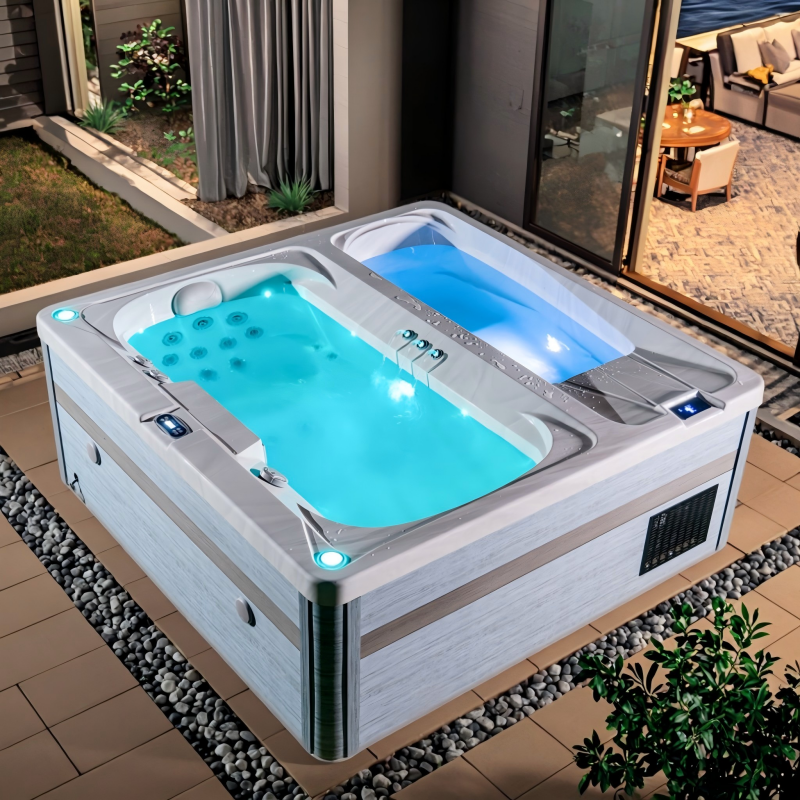
What exactly is the material used in acrylic spa hot tubs? It is not just "a layer of plastic."
When many people first see an acrylic hot tub, they mistakenly assume the entire unit is made from a single thick sheet of acrylic, leading to concerns about its structural strength. In reality, this understanding is inaccurate.
Modern acrylic hot tubs typically feature a composite layered structure rather than relying on acrylic alone. The outermost layer consists of high-quality, sanitary-grade acrylic. As the surface that comes into direct contact with the user, it must be smooth, easy to clean, resistant to stains and chemicals, and aesthetically pleasing. Acrylic also offers excellent thermal insulation properties; unlike metal, it does not feel cold to the touch, ensuring a comfortable experience even when entering an outdoor spa hot tub in winter.
However, the acrylic layer is not solely responsible for structural integrity. Manufacturers typically apply multiple layers of fiberglass-reinforced plastic (FRP) and resin to the back of the acrylic, using a composite process to create a unified, integrated structure. These reinforcement layers significantly enhance overall rigidity and flexural strength, allowing the spa hot tub to remain lightweight while supporting substantial weight.
Some high-end outdoor spa hot tub brands incorporate additional localized reinforcement layers based on product design. These are applied to high-stress areas—such as the base, seats, and footwells—to further boost structural strength and accommodate simultaneous use by multiple people.
What is the structure of an acrylic spa hot tub's base?
If you were to cut open the base of a high-quality acrylic spa hot tub, you would discover a structure far more complex than imagined.
The base is not merely a single flat panel but an assembly of multiple systems, including the acrylic shell, fiberglass reinforcement layers, a load-bearing base plate, support structures, and an outer frame.
The uppermost layer is the acrylic shell that comes into direct contact with the user. Although typically only a few millimeters thick, the thermoforming process shapes it into seats, footwells, and massage zones of varying depths. These curved structural elements provide inherent mechanical advantages, enhancing overall rigidity rather than relying solely on material thickness.
The underside of the acrylic is coated with several layers of fiberglass and resin composite material. These reinforcement layers bond tightly together, turning the entire shell into a cohesive unit that resists cracking or localized deformation.
Most outdoor hot tubs also feature a solid, high-strength load-bearing base panel at the bottom. Typically made from waterproof composite board, high-density engineered board, or other moisture-resistant materials, this panel serves to evenly distribute the weight of the occupants and transfer the load to the surrounding frame.
The frame acts as the "skeleton" of the outdoor spa hot tub. Common framing materials include treated wood, galvanized steel, aluminum alloy, and polymer composites. High-quality products increasingly favor corrosion-resistant metal or composite frames, as they offer superior long-term stability and are better suited for outdoor environments.
Additionally, multiple support points or beams are positioned beneath the base to ensure the load is distributed evenly, preventing stress concentration when someone stands inside. This structural design is a key reason why modern acrylic spa hot tubs can withstand repeated use by multiple people over the long term.
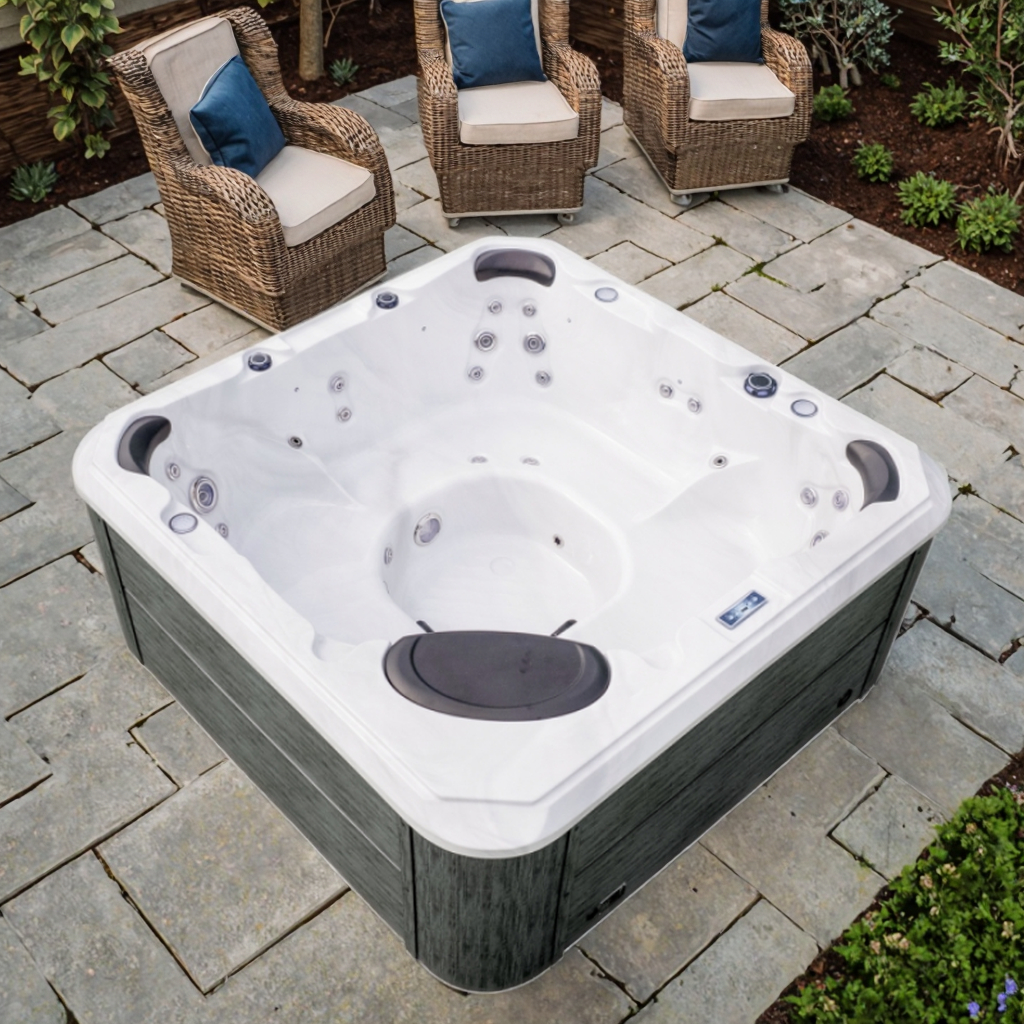
Can I stand inside an acrylic spa hot tub?
Yes, under normal usage conditions—provided you do so correctly.
Acrylic spa hot tubs manufactured by reputable companies to standard specifications are designed to support human weight. Generally, an adult standing on the bottom of the tub will not damage the base panel under normal weight conditions.
In fact, technicians often need to step inside the spa hot tub during installation, maintenance, cleaning, and repairs; consequently, manufacturers fully account for the load of a person standing inside during the design process.
However, it is important to note that while standing is permissible, this does not mean the tub can withstand high-impact actions. Activities such as jumping, stomping, moving heavy equipment into the tub, or placing sharp, hard objects directly on the bottom can exceed design limits and cause unnecessary damage to the acrylic surface or internal structure.
Furthermore, it is recommended to stand barefoot and avoid entering the spa hot tub wearing shoes with soles containing sharp stones or debris, thereby minimizing the risk of scratching the acrylic surface.
How can an acrylic spa hot tub support human weight?
Many users wonder: since the acrylic material itself doesn't look particularly thick, how is it able to support weights of several hundred kilograms or more? This is primarily due to the integrated structural design of modern outdoor spa hot tubs.
First, a person's weight is not concentrated on a single point but is distributed across a larger contact area through the feet.
Second, the acrylic shell is not a suspended structure; instead, it is tightly bonded to a fiberglass reinforcement layer and supported by both a load-bearing base plate and a structural frame. Consequently, when a person stands in the tub, the load is transferred layer by layer rather than being concentrated entirely on the acrylic material itself.
Additionally, when the spa hot tub is filled with water, the water itself provides uniform support to the shell, optimizing the distribution of structural stress. Therefore, under normal operating conditions, acrylic spa hot tubs demonstrate excellent overall load-bearing capacity.
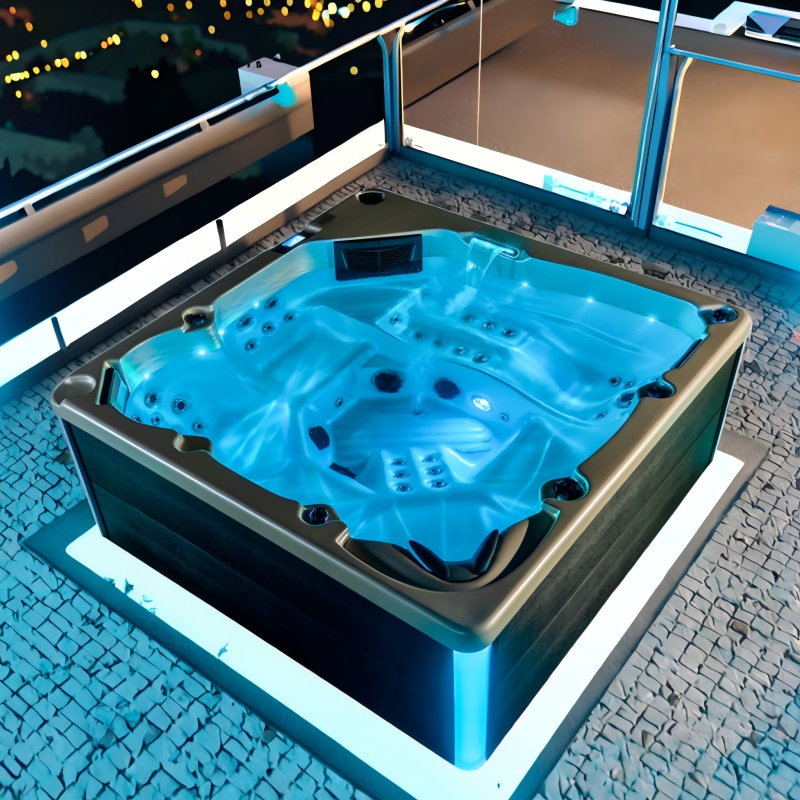
Why are so many outdoor spa hot tubs on the market made of acrylic?
In the global market for outdoor spa hot tubs, acrylic has become the standard material for mid-to-high-end products. This is no coincidence; it is the result of its superior overall performance.
First, acrylic offers an outstanding aesthetic appeal. It produces a high-gloss finish and can be thermoformed into complex, ergonomic seating shapes, resulting in a sleek and attractive design. In contrast, while stainless steel is strong, it offers limited design flexibility and can feel cold to the touch; standard fiberglass, meanwhile, struggles to match the smooth finish and premium texture of acrylic.
Second, acrylic provides excellent thermal insulation. Due to its relatively low thermal conductivity, an acrylic spa hot tub does not lose heat as rapidly as metal, allowing it to maintain water temperature more effectively in outdoor environments. This not only enhances bathing comfort but also helps reduce the energy consumption of the heating system.
Third, acrylic is highly resistant to corrosion. Outdoor spa hot tubs are frequently exposed to disinfectants, water treatment chemicals, and high temperatures; acrylic withstands these factors well and is not prone to rusting or significant chemical corrosion.
Fourth, acrylic is pleasant to the touch. In winter, the surface does not feel ice-cold like metal; its smooth, refined texture ensures a superior user experience.
Fifth, acrylic is relatively easy to repair. Minor scratches or localized loss of sheen can usually be fixed through professional polishing—a much simpler process than repairing ceramic or metal surfaces. Thanks to these advantages, acrylic spa hot tubs have increasingly become a preferred choice for residential outdoor use, hotel spas, guesthouses, and commercial hot spring facilities.
What other advantages do acrylic spa hot tubs offer?
Beyond their structural reliability, acrylic spa hot tubs offer numerous practical benefits for daily use.
For instance, they are highly stain-resistant, making routine cleaning relatively simple. With proper water quality management and regular cleaning of the waterline and interior walls, most stains can be easily removed.
Acrylic also boasts excellent color stability. High-quality acrylic materials treated for UV stability retain their color and luster even during long-term outdoor installation, resisting significant fading.
Furthermore, acrylic's excellent thermoforming properties allow designers to create seats that better conform to the human body. This enables the inclusion of massage seats with varying depths and angles, further enhancing the soaking experience.
For manufacturers, acrylic allows for high-precision processing, making it easier to incorporate complex jet layouts, cup holders, backrests, and ergonomic designs; consequently, almost all modern high-end outdoor spa hot tubs rely on acrylic materials.
How can you use an acrylic spa hot tub correctly to avoid damaging the bottom?
Although acrylic spa hot tubs have excellent load-bearing capacity, correct usage remains crucial.
First, ensure the spa hot tub is installed on a level, solid foundation that meets the manufacturer's load-bearing specifications—such as a reinforced concrete platform, a specialized spa base, or another stable foundation. An uneven base can lead to long-term uneven stress distribution, potentially shortening the tub's lifespan, even if the structure itself is robust.
Second, avoid dragging metal tools, large furniture, or sharp objects inside the tub to prevent scratching the acrylic surface.
During routine cleaning, use a soft sponge or microfiber cloth along with a cleaner specifically designed for acrylic spa hot tubs. Avoid steel wool, sandpaper, or highly abrasive tools, as these can damage the surface finish.
Additionally, maintain proper water quality by controlling pH levels, calcium hardness, and total alkalinity. This prevents heavy limescale buildup on the acrylic surface; long-term mineral deposits not only detract from the tub's appearance but can also make cleaning more difficult.
How can you determine if an acrylic spa hot tub is of high quality?
Consumers can evaluate the product based on several factors.
First, observe whether the acrylic surface is smooth and uniform, checking for noticeable ripples, air bubbles, or color inconsistencies.
Second, gently press down on the seat and the bottom of the tub; a high-quality acrylic spa hot tub should not feel noticeably soft or saggy.
Additionally, checking whether the product features a multi-layer fiberglass-reinforced structure, an integrated load-bearing base, and a high-quality frame is crucial for assessing quality.
Furthermore, factors such as the brand's manufacturing craftsmanship, warranty policies, certifications, and after-sales service are just as important as the acrylic material itself when evaluating the quality of an outdoor hot tub.
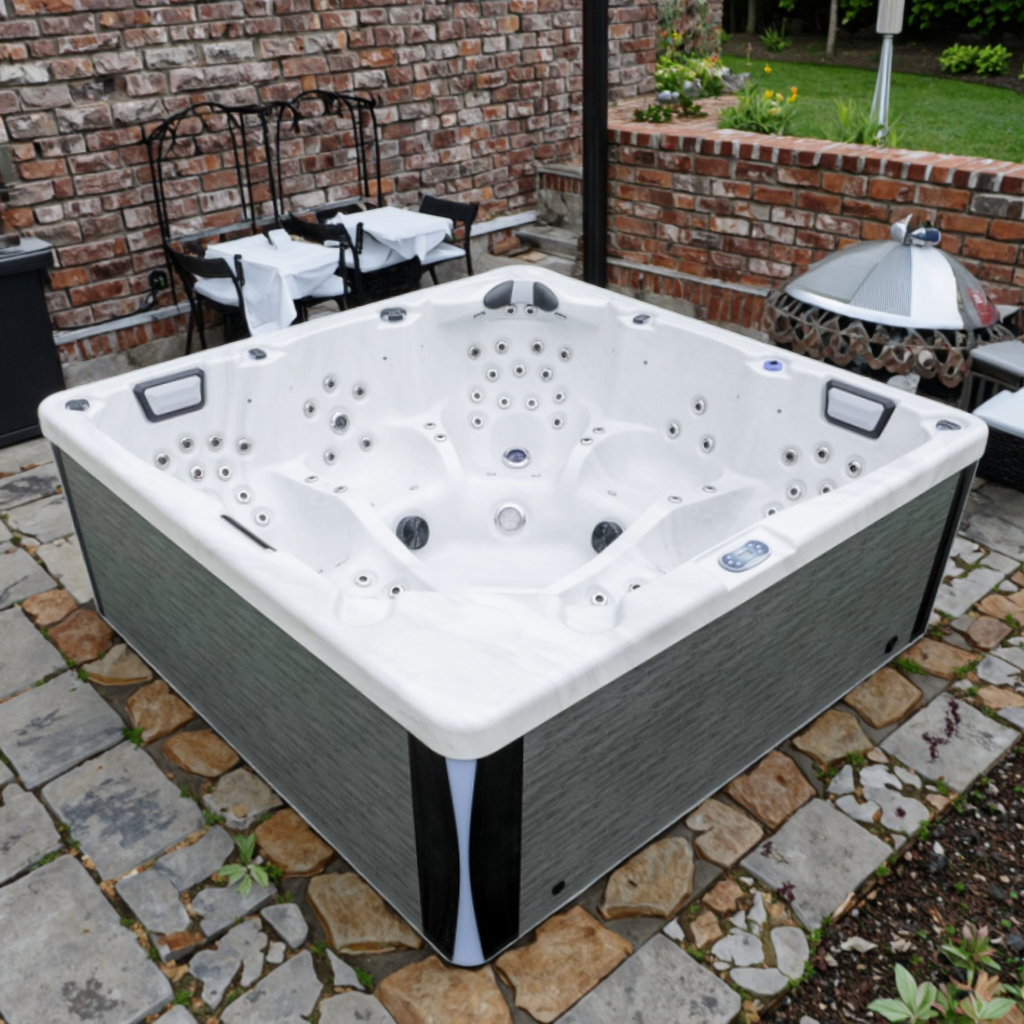
FAQ (Frequently Asked Questions)
Can the bottom of an acrylic spa hot tub crack under a person's weight?
Acrylic spa hot tubs from reputable brands feature an integrated load-bearing design; under normal use, the bottom will not crack when an adult stands on it. However, users should avoid jumping, impacts from heavy objects, or concentrated pressure from sharp items.
Why aren't outdoor spa hot tubs made of stainless steel?
Although stainless steel offers high strength, it conducts heat rapidly, feels cold to the touch, and is complex to fabricate; furthermore, it falls short of acrylic in terms of user comfort and aesthetic design. When considering thermal insulation, aesthetics, manufacturing processes, and the overall user experience, acrylic is the superior choice for the spa hot tub shell.
How many people can use an acrylic hot tub at once?
Load capacity depends on the specific product design and specifications. Most residential outdoor spa hot tubs accommodate 3 to 7 people, while some large spa models can hold 8 or more. As long as the tub is used according to the manufacturer's occupancy guidelines, the structure will meet all design requirements.
Are acrylic spa hot tubs prone to aging?
High-quality acrylic materials are treated for UV resistance, offering excellent weatherability. With proper maintenance and reasonable use, they retain their luster and color over the long term. Avoiding highly corrosive cleaners and maintaining proper water chemistry helps further extend the tub's lifespan.
How can I keep the acrylic spa hot tub smooth over the long term?
It is recommended to regularly clean the acrylic surface, control water quality parameters (pH, total alkalinity, and calcium hardness), and promptly remove limescale and mineral deposits. Avoid using highly abrasive tools like steel wool and follow the manufacturer's routine maintenance guidelines; these steps will ensure the acrylic spa hot tub remains smooth and attractive while delivering a consistently excellent user experience over the long term.