


Are the filtration and jet systems in Balboa spa hot tubs the same?
2026-07-15 15:30When purchasing or using outdoor spa equipment, consumers often focus on heating performance, the massage experience, and water maintenance capabilities. Yet, behind these core functions, the true determinant of the unit's operational efficiency is its internal water circulation system. This is particularly true for equipment utilizing the Balboa Water Group control platform, where the design of the filtration and jet systems directly impacts the daily user experience.
Many users encountering Balboa spa hot tubs for the first time share a common question: Are the filtration system and the jet system the same thing? Do they operate using the same pump? Is the filtered water sprayed directly out of the jets?
This question arises because, on the surface, both filtration and jetting involve the intake and output of water, leading many to mistakenly believe they are simply different stages of the same circulation process. In reality, however, while both systems are part of the overall water circulation architecture in most Balboa spa hot tubs, they perform distinct roles; there are significant differences in their operational logic, running parameters, energy consumption, and maintenance requirements.
Understanding the distinction between these two systems goes beyond mere technical knowledge; it directly influences how users maintain their equipment. Mistaking a filtration issue for a jetting problem—or attributing reduced jet performance to a filtration anomaly—can lead to incorrect repairs, unnecessary costs, and even a shortened equipment lifespan.
This article examines the overall structure of Balboa outdoor hot tubs and provides an in-depth analysis of the working principles, key differences, common malfunctions, and maintenance strategies for both the filtration and jet systems, helping you gain a true understanding of these two core circulation systems.
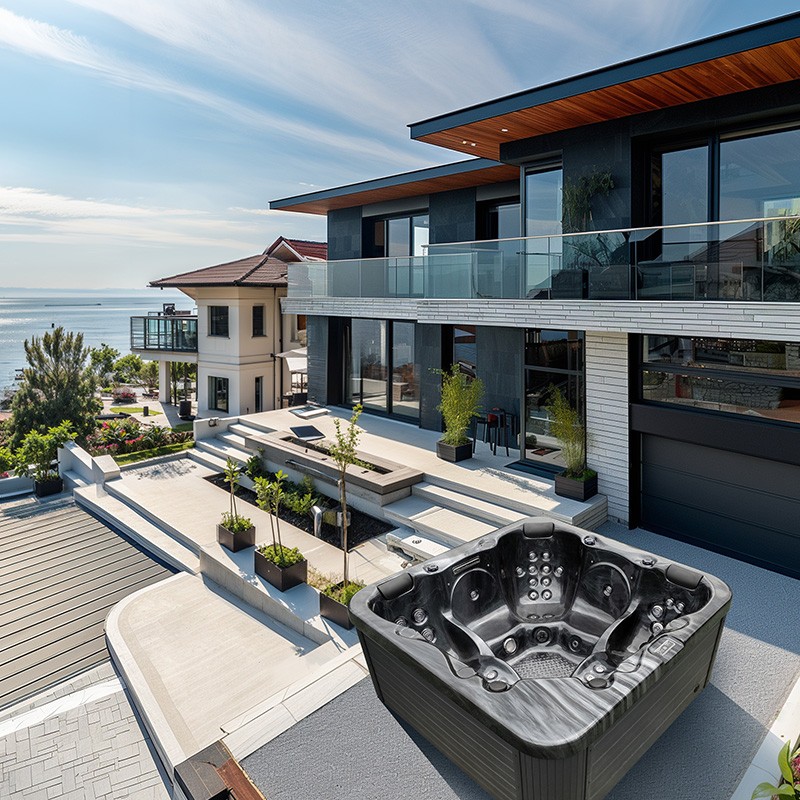
Are the filtration system and the jet system in Balboa hot tubs the same?
No, the filtration system and the jet system in Balboa outdoor hot tubs are not the same.
Although both rely on pumps to drive water flow and are integral to the jacuzzi hot tub's water circulation, they are designed with completely different objectives. The core task of the filtration system is to continuously purify the water, ensuring it remains clean and hygienic while providing a steady flow for the heating process. Meanwhile, the jet system is primarily responsible for hydrotherapy massage; it creates impact through a mixture of high-pressure water and air, offering users a relaxing experience for the shoulders, neck, back, and waist.
Simply put, the filtration system addresses the question of water cleanliness, whereas the jet system addresses the quality and comfort of the massage. Although some Balboa jacuzzi hot tub models may utilize a shared pump design—resulting in some hardware overlap between the two systems—they remain distinct functional systems in terms of their operational modes.
Overall Water Circulation Structure of Balboa Outdoor Hot Tubs
To understand the distinction between filtration and jetting, one must first grasp the overall plumbing structure of a Balboa jacuzzi hot tub. Typically, the internal circulation path comprises suction intakes, filters, circulation or jet pumps, heaters, piping, and jets or return outlets.
Water first enters the internal plumbing through the suction intakes and subsequently follows different paths depending on the current operating mode. In filtration mode, water is directed through the filter cartridge to remove particulates and impurities, flows through the heater, and finally returns to the tub at a low flow rate. In jet mode, a high volume of water is pressurized by the jet pump and expelled at high speed through the jets; air is mixed in during this process to create the massage effect.
From an engineering perspective, the internal plumbing of a Balboa jacuzzi hot tub is designed around three core objectives: maintaining water cleanliness, ensuring temperature stability, and providing a high-quality hydrotherapy experience. These objectives dictate that the filtration and jet systems cannot be identical, as their operational requirements differ significantly.

Working Principles of the Balboa Filtration System
The Balboa filtration system is characterized by low-speed, long-duration operation. Its core philosophy is not to process a massive volume of water instantly, but rather to purify the water gradually through continuous circulation, ensuring the water in the jacuzzi tub consistently remains within safe quality parameters.
1. Suction and Pre-filtration Process
When the filtration cycle begins, water from the jacuzzi tub enters the filtration compartment through the suction intakes. Due to their exposure to the outdoor environment, hot tub water often accumulates significant contaminants, including dust, leaf debris, skin oils, hair, and microorganisms. Data shows that after a family of four uses a spa for 30 minutes, the water can gain millions of suspended particles, alongside substantial amounts of skin oils and organic matter.
If these impurities are not removed promptly, water quality deteriorates rapidly, increasing the risk of bacterial growth. Consequently, Balboa jacuzzi hot tubs typically feature automatic filtration cycles running 4 to 12 hours daily, with high-end models supporting 24-hour micro-circulation filtration.
2. The Filter Cartridge Process
Once water enters the filter housing, it undergoes mechanical filtration via the filter cartridge. Standard Balboa filter cartridges typically offer a filtration precision of 20 to 50 microns, effectively capturing particles often invisible to the naked eye. For comparison, a human hair is approximately 70 microns in diameter; thus, high-quality cartridges can remove the vast majority of common contaminants.
In addition to mechanical filtration, modern spa systems often incorporate ozone sterilization, UV disinfection, or chlorine/bromine chemical treatments to further reduce microbial levels. Industry data indicates that high-quality filtration systems can remove approximately 80% of suspended particles and significantly reduce oil-based contamination.
3. Synergistic Heating and Circulation
In Balboa hot tubs, the filtration system often plays a synergistic role in heating. Filtered water typically passes through the heater to reach the desired temperature before returning to the tub. This is why insufficient flow in the filtration system often triggers error codes such as FLO, DR, or OH.
The reason is that the heater relies on steady water flow to dissipate heat. Without adequate flow, the heating element risks localized overheating or even "dry firing" (heating without water). Balboa control systems monitor this status in real-time using flow sensors or pressure switches to ensure safe heating operation.
How the Balboa Jet System Works
Unlike the filtration system, the Balboa jet system is designed for high power, high flow rates, and short-duration operation. Its primary function is not water purification, but rather delivering a powerful hydrotherapy massage experience.
1. Jet Pumps Provide High-Pressure Water Flow
The jet system is powered by jet pumps. Compared to the low-power pumps used for filtration circulation, jet pumps operate at significantly higher power levels. Balboa hot tub jet pumps typically range from 2 to 5 horsepower, far exceeding the power output of circulation pumps, which generally operate in the range of tens to hundreds of watts.
This difference in power results in a significant disparity in flow rates. While filtration circulation flows typically range from 30 to 80 liters per minute, jet systems can deliver flow rates exceeding 500 to 1,100 liters per minute—often a more than tenfold difference.
It is precisely this high-volume output that enables the jets to generate sufficient impact force.
2. The Venturi Effect and Air Mixing
Users of Balboa hot tubs often notice that the water exiting the jets is not merely a solid stream but is infused with numerous air bubbles, creating a distinct sensation of impact. The key principle behind this is the Venturi effect.
As high-speed water passes through a narrow nozzle, local pressure drops, creating a zone of negative pressure near the jet outlet. This negative pressure draws in air, mixing it with the water to create an air-water mixture. The result is a hydrotherapy massage experience that combines water pressure with the invigorating sensation of bubbles.
This design significantly enhances the massage experience, allowing the jet system to not only target surface muscles but also provide deeper relaxation.

Balboa Filtration Systems vs. Jet Systems: What Are the Key Differences?
Although both are integral parts of the Balboa jacuzzi hot tub's water circulation architecture, they differ significantly in several respects.
1. Different Operational Objectives
The filtration system aims to maintain water quality. It prioritizes continuity and stability, requiring prolonged operation to prevent the water from becoming cloudy, harboring bacteria, or developing unpleasant odors.
In contrast, the jet system aims to enhance the massage experience. It focuses on delivering high-pressure, high-velocity water flow over short periods to provide users with intense hydrotherapy stimulation.
2. Differences in Power and Energy Consumption
In a typical Balboa spa hot tub, a circulation pump might consume only around 100 watts, whereas a jet pump can draw 2,200 watts or more. In other words, the instantaneous power consumption of the jet system can be more than 20 times that of the filtration system. For instance, if the filtration system runs for 8 hours a day, it consumes approximately 0.8 kWh of electricity; conversely, the jet system might consume over 1 kWh in just 30 minutes. This demonstrates that while the jet system operates for a shorter duration, its energy consumption rate is extremely high.
3. Differences in Water Pressure and Flow Rate
Filtration systems require a steady, low-pressure flow to protect the filter cartridge and heater from excessive impact. Jet systems operate in the exact opposite manner; they must deliver high-pressure, high-volume water flow to provide an effective massage.
This explains why water flow is typically quiet during filtration, whereas users feel a powerful impact once the jets are activated.
4. Differences in Noise Levels
Filtration systems are designed for quiet operation, typically ranging from 30 to 45 decibels—comparable to a quiet indoor environment. Due to their high-power pumps, jet systems often generate noise levels between 60 and 80 decibels, similar to a hairdryer or vacuum cleaner.
Why do some Balboa jacuzzi hot tubs appear to share the same system?
This is a common source of confusion for users.
Some Balboa spa hot tubs utilize a dual-speed pump design, where a single pump supports both low-speed and high-speed modes. The low-speed mode handles filtration and heating circulation, while the high-speed mode powers the jet massage.
Consequently, users may notice a gentle flow from certain jets during filtration mode, which becomes a powerful stream once the massage function is activated. This phenomenon can easily lead to the misconception that filtration and jet functions rely on the same system.
In reality, sharing a pump does not mean sharing the same operational logic. Even with the same pump, the tasks performed at different speeds differ significantly: the low-speed mode prioritizes stability and energy efficiency, whereas the high-speed mode focuses on pressure and massage performance.
Common Issues with Balboa Hot Tub Filtration Systems
One of the most frequent issues with filtration systems is insufficient flow. This is usually caused by a clogged filter cartridge, low water levels, or an airlock in the plumbing. When flow drops, the Balboa controller often displays an error code to alert the user to check the system.
Another common problem is cloudy water. In most cases, this indicates inadequate filtration time, an aging filter cartridge, or low sanitizer levels. If left unaddressed, this can not only compromise the user experience but also damage the heating system.
Additionally, slow heating is often linked to issues within the filtration system. When a clogged filter cartridge causes a drop in flow rate, heat exchange efficiency also decreases significantly.
Common Issues with Balboa Hot Tub Jet Systems
Common jet system malfunctions include insufficient jet pressure, reduced air bubbles, and the failure of specific jets.
A drop in jet pressure could indicate declining pump performance, a closed air valve, or a blocked pipe. If air bubble output decreases, the air intake passage should be checked for blockages.
Limescale buildup inside the jets is particularly common in areas with hard water. Accumulated minerals can interfere with the rotating mechanism of the jets, causing some to lose their massage function.
How do I maintain Balboa filtration and jet systems?
For the filtration system, it is recommended to clean the filter cartridge weekly, perform a deep degreasing clean monthly, and replace the cartridge every 12 to 18 months. Industry data shows that an aging filter cartridge can reduce flow rate by 20% to 40%.
For the jet system, it is recommended to run the jets at full power for 10–15 minutes at least once a week to minimize biofilm and mineral deposits. During periods of prolonged disuse, a pipe cleaner should be used for a deep clean to prevent bacterial growth inside the plumbing.
Studies indicate that an initial layer of biofilm can form in spa plumbing within just 72 hours, making regular flushing essential.
FAQ
Can I run the jets on a Balboa spa hot tub without running the filtration system?
You can do so for short periods, but skipping filtration for an extended time will cause water quality to deteriorate rapidly and increase the risk of bacterial growth.
Does low jet pressure in a Balboa jacuzzi hot tub always mean the pump is broken?
Not necessarily; it could also be caused by a clogged filter cartridge, limescale buildup in the jets, a closed air valve, or a blocked pipe.
What is the ideal daily filtration duration for a Balboa spa hot tub?
Generally, 4 to 8 hours is recommended; for households with high usage, 8 to 12 hours is advised.
Why does water continue to flow in the Balboa spa hot tub after the jets are turned off?
This is usually because the filtration cycle is still running, which is normal.
How often should the Balboa spa hot tub filter cartridge be replaced?
Replacement is generally recommended every 12 to 18 months, though this interval may be shortened to 6 to 12 months with frequent use.