


- Home
- >
News
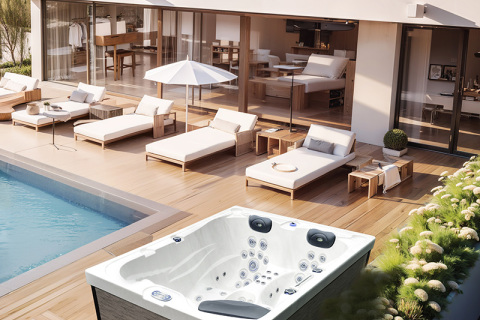
Recent research into hydrotherapy has grown significantly; many medical institutions and rehabilitation centers now use water therapy as an adjunct treatment to relieve muscle fatigue, improve joint mobility, boost blood circulation, and reduce mental stress.
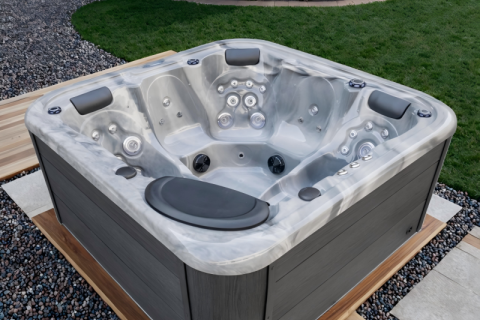
Circulation piping is the primary hiding place for biofilm. If one were to identify the location most prone to biofilm formation in an outdoor spa hot tub, circulation piping would undoubtedly rank first.

In some instances, adding just a few dozen milliliters of ordinary bath gel causes foam to cover the entire surface of the tub—and even spill over the edges—within minutes of activating the massage system. This not only detracts from the user experience but also complicates cleaning and maintenance.

Sodium Thiosulfate: The most common bromine neutralizer In the pool and spa industry, sodium thiosulfate is widely used to neutralize both chlorine and bromine. It works through a reduction reaction, converting active bromine into bromide ions, which lack disinfecting capabilities.
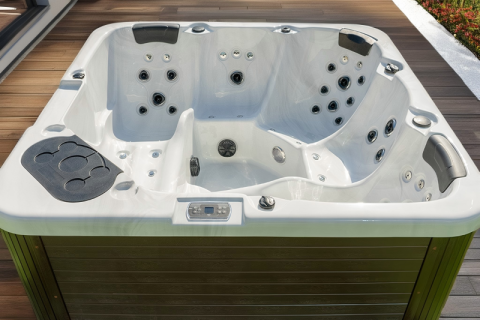
Replacing Aging Seals The rubber O-rings used in most outdoor spa hot tubs have a lifespan of approximately 3 to 5 years. Beyond this period, their elasticity and sealing performance deteriorate significantly, even if there is no visible damage.
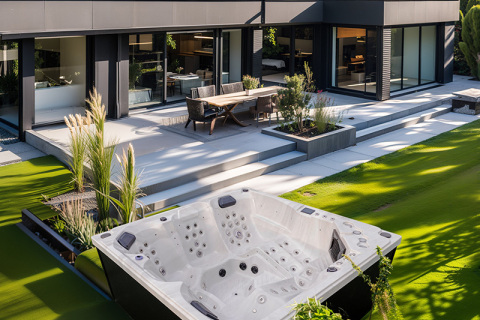
Many spa jacuzzi hot tub jets feature a built-in rotary adjustment function. By rotating the jet, users can: • Adjust the direction of the water flow • Change the spray coverage area • Control the volume of water output for a specific area • Regulate the jet intensity
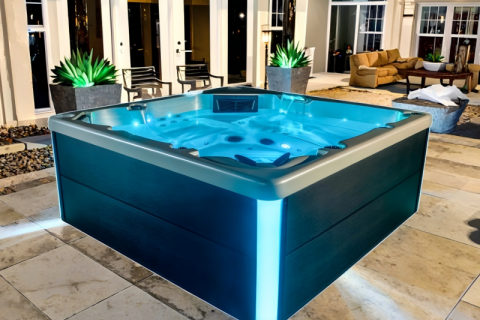
In many cases, a leaking jet in a spa hot tub does not result in water spraying directly outward; instead, the water slowly seeps inward into the insulation layer, making it difficult for users to detect the problem immediately. Eventually, the water will trickle down to the bottom of the unit.
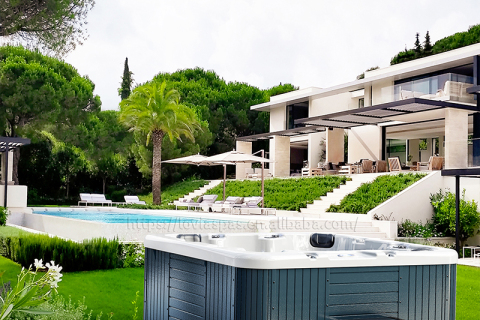
To maintain water quality, hydro-massage bathtubs typically require the use of specific water treatment methods. This is why women often perceive changes in water quality more acutely when using a hydro-massage bathtub.

In fact, the issue of limescale in spa hot tubs is not merely a simple matter of "cleanliness"; rather, it involves a complex interplay of factors such as water hardness, mineral content, temperature fluctuations, chemical balance, and equipment maintenance.
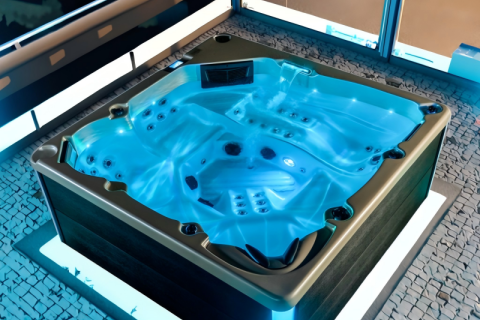
In many spa jacuzzi hot tub system designs, FL2 usually represents "Flow 2 Error," or a secondary flow error message. Its core meaning is: The spa jacuzzi tub detects an abnormal water flow in the circulation system or an inconsistent flow switch state.
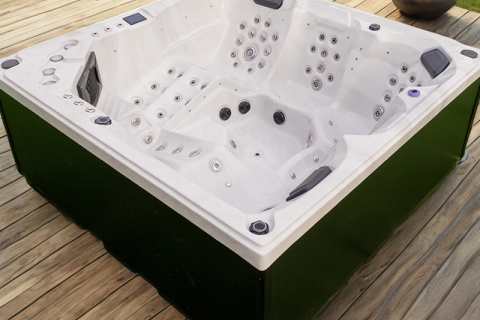
Most spa jacuzzi tubs have a preset upper temperature limit, typically between 100°F and 104°F (approximately 37.7°C–40°C), with 103°F being the most common sustained water temperature. Because: 1. Excessively high water temperatures can pose safety risks 2. Controller firmware sets a limit

Below the outer side panel of the spa jacuzzi hot tub Many hot tubs have a product nameplate or label affixed below the outer panel. If your spa jacuzzi hot tub has an openable side panel, this is usually the easiest place to find the model number.