


why is my spa jacuzzi hot tub stuck at 103°F?
2026-01-06 15:35Many users encounter a seemingly strange but very common problem when using spa jacuzzi tubs: the water temperature never seems to exceed 103°F (approximately 39.4°C). No matter how the control panel is adjusted, or how high the target temperature is set, the temperature seems to remain around this number, neither rising further nor dropping significantly.
For users who want to enjoy higher water temperatures, this can be confusing and even worrying, potentially indicating a malfunction. However, the spa jacuzzi tub maintaining 103°F is not accidental; it is often related to safety design, temperature control structure, and system functionality.
This article will systematically answer this core question, "Why is my spa jacuzzi hot tub temperature stuck at 103 degrees Celsius?", providing a professional analysis from structural perspectives, control logic, possible limiting factors, and whether this is a normal phenomenon.
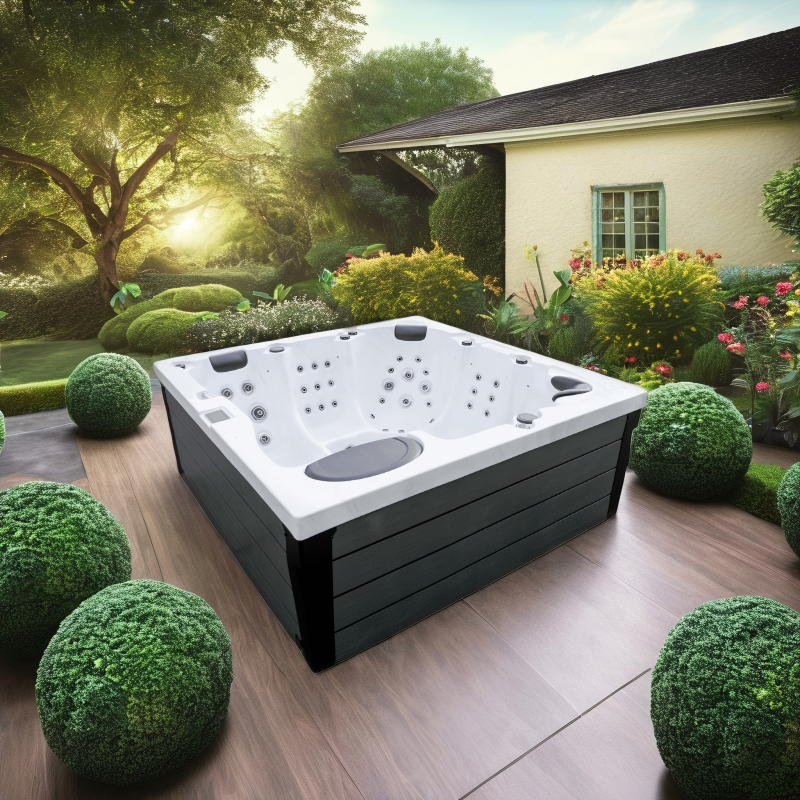
Why are spa jacuzzi tubs generally set to a maximum temperature of approximately 103°F?
To understand why spa jacuzzi tubs maintain a temperature of 103°F, we must first understand their design principles and safety regulations.
Most spa jacuzzi tubs have a preset upper temperature limit, typically between 100°F and 104°F (approximately 37.7°C–40°C), with 103°F being the most common sustained water temperature. This design is not accidental but based on the following reasons:
1. Excessively high water temperatures can pose safety risks
Prolonged immersion in hot water can lead to:
• Rapid rise in body temperature
• Increased burden on the circulatory system
• Dizziness and discomfort
• Dehydration
• Fluctuations in blood pressure
Especially with spa jacuzzi tubs, where the nozzle continuously applies pressure to the body, body temperature changes can be more significant.
Therefore, manufacturers typically set a safe upper temperature limit; 103°F is a commonly used safety threshold within the industry.
2. Controller Firmware Setting Limits
Many spa jacuzzi tub control systems have a factory-set maximum temperature threshold, preventing users from manually setting temperatures outside this range.
Common settings in the control board program:
• Upper Limit: 103°F or 104°F
• Temperature Tolerance: ±1°F
This means that even if the displayed temperature is 103°F, the actual temperature may be slightly higher or lower, but it will not exceed the upper limit.
3. Temperature Probe and Heating System Calibration Causes the "Holding Point" to Stabilize at 103°F
The temperature sensor detects the water temperature and determines whether to continue heating. Probe calibration typically stabilizes the water temperature slightly below the maximum setting to prevent overheating.
Therefore, the temperature sensor automatically stops heating the spa jacuzzi tub at around 103°F.
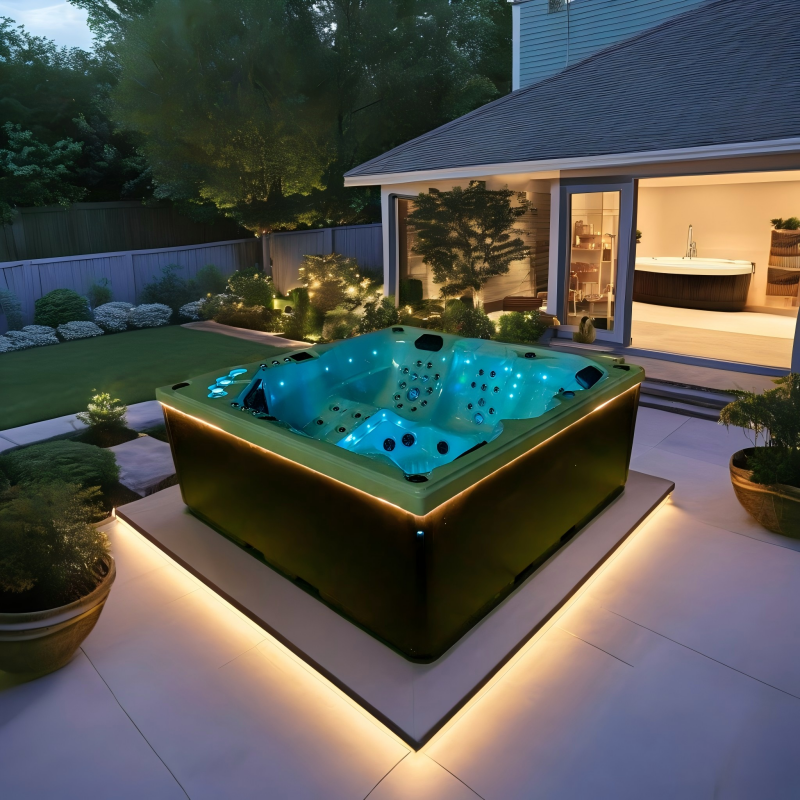
Can my spa jacuzzi tub really not heat above 103°F?
Users who want the water temperature to exceed this point often suspect some kind of "limiting mechanism." In fact, this temperature limit is designed as an insurmountable safety constraint in the vast majority of spa jacuzzi hot tubs.
1. From a heater structure perspective, exceeding this limit carries extremely high risks
Heater assemblies typically limit their maximum output temperature through a thermostatic control system. Allowing the water temperature to rise unchecked would:
• Increased heater load
• Increased pipe pressure
• Shortened lifespan of internal components
• Potential triggering of overheat protection shutdown
Therefore, setting a design limit is crucial for both safety and equipment lifespan.
2. Regulations in some countries or regions
To prevent scalding of children or accidents involving individuals with cardiovascular disease, some regions require that bathtub water temperatures not exceed approximately 40°C.
Therefore, 103°F is an "industry-standard upper limit" that complies with multiple safety standards.
Is the temperature of a spa jacuzzi tub truly locked at this point?
Many users ask, "My spa jacuzzi hot tub is advertised to have a maximum temperature of 104°F, but why does it only reach 103°F?"
Key reasons include:
1. Temperature sensor has a measurement error of ±1°F
That is:
• You set it to 104°F
• The system detects approximately 103°F
• The heater thinks the temperature is close to the upper limit and stops heating.
This is perfectly normal.
2. Water temperature is affected by the environment
If the bathtub doesn't have insulation or a lid, the rate of heat loss will prevent the temperature from rising to the set value.
3. Heating efficiency cannot exceed a "balance point."
When heat loss is close to the heating power, the temperature will remain constant at a certain value, usually around 103°F.
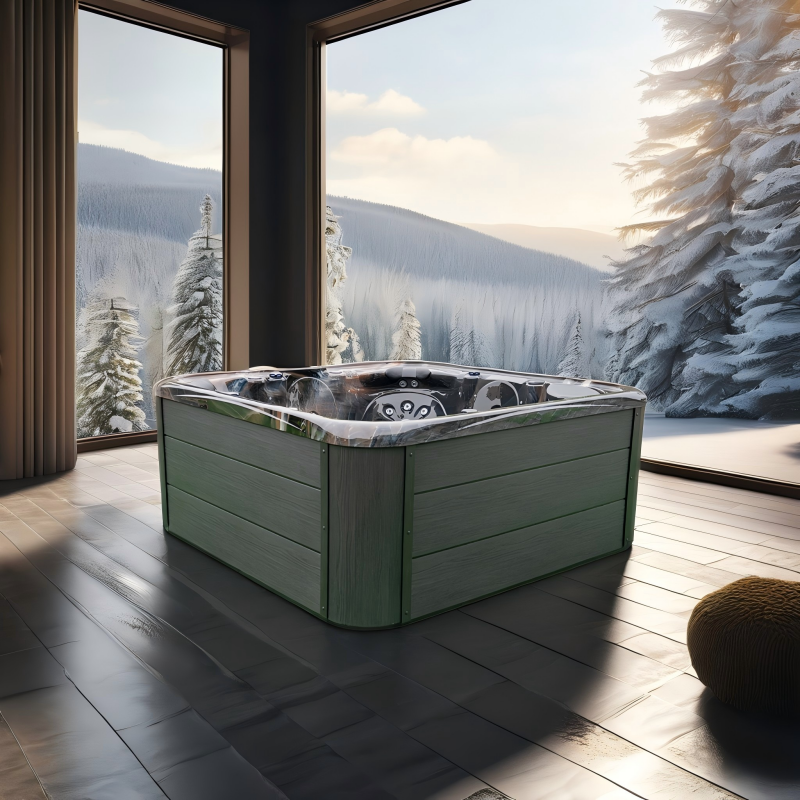
Is it possible for the spa jacuzzi tub's heating system to have temperature control issues?
While 103°F is normal, if you set a lower temperature but the water temperature remains at 103°F, it may indicate the following problems:
1. Inaccurate temperature probe calibration
Aging probes may cause:
• Higher readings
• Lower readings
• Abnormal heating commands
This results in the water temperature remaining at a constant point.
2. Control panel misinterprets target temperature
Chip aging or damp wiring may cause the control system to mistakenly believe the target temperature has been reached.
3. Heater overcompensation
If the thermostat inside the heater is faulty, it may overheat to near the upper limit temperature.
4. Clogged filter system
Poor water flow can cause the heater to repeatedly start and stop, resulting in an abnormally stable temperature.
Do environmental factors affect the upper temperature limit of a spa jacuzzi tub?
Many people don't know that the ambient temperature is closely related to the stable water temperature in the tub.
1. Low Indoor Temperature
Cold environments accelerate heat loss, causing the heater to work continuously to maintain the temperature, eventually stabilizing at near its maximum capacity.
2. Lack of a Heat Cover or Insulation Cover
Heat evaporation from surfaces is the primary source of energy loss. Without a cover, the temperature is difficult to rise.
3. Air Vent or Air Outlet Directly Facing the Bathtub
Airflow carries away a significant amount of heat, resulting in insufficient water temperature increase.
Under these conditions, the bathtub temperature is likely to remain at the "just-capable maximum," typically 102–103°F.
Is my spa jacuzzi tub always stuck at 103°F a malfunction?
Not necessarily.
Normal conditions include:
• Your spa jacuzzi hot tub's factory-set maximum temperature is 103–104°F
• You set the temperature above 103°F
• The thermostat is working properly
• The water temperature remains stable and does not continue to rise
In these cases, maintaining a temperature of 103°F is perfectly normal.
Possible abnormal situations include:
• You set the temperature to 96–100°F, but the water temperature remains at 103°F.
• Thermostat readings are noticeably inaccurate.
• Water temperature fluctuates wildly.
• The heater frequently starts and stops.
• The control system displays error codes.
If any of these occur, you may need to check if the temperature sensor, heating system, or control panel is malfunctioning.
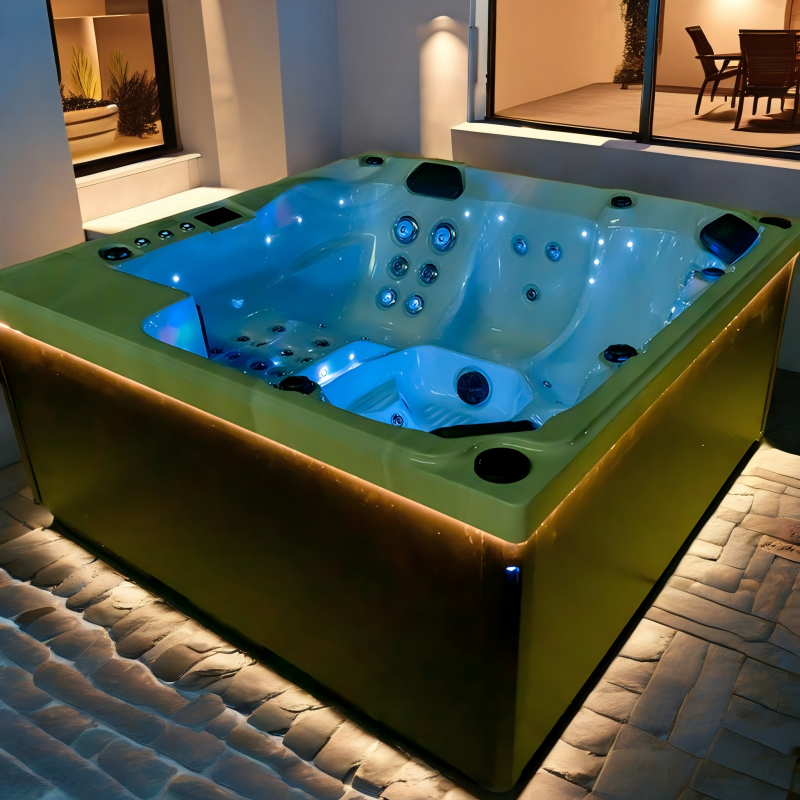
Is it normal for the spa jacuzzi tub temperature to remain at 103°F?
The answer is: Yes, in most cases it is perfectly normal.
The spa jacuzzi tub's stability at 103°F is mainly due to:
• The factory-set safe upper temperature limit.
• Controller firmware limitations.
• Temperature probe calibration method.
• Industry and regional safety standards.
• The heater's maximum effective output capacity.
Unless you set a temperature below 103°F and the water temperature fails to decrease, there is no need to worry about equipment malfunction.