



- Home
- >
News
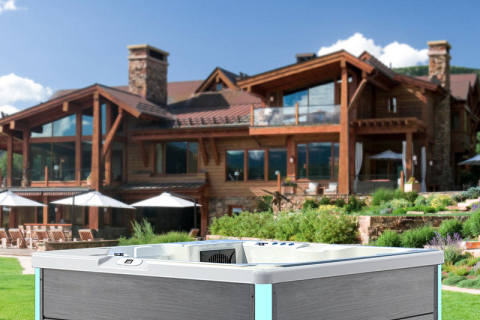
If you need an economical, lightweight bathtub for occasional use, a fiberglass bathtub is indeed a viable option. However, if you value the bathing experience, durability, aesthetics, and long-term energy efficiency, then an acrylic hot tub is more suitable for everyday use.
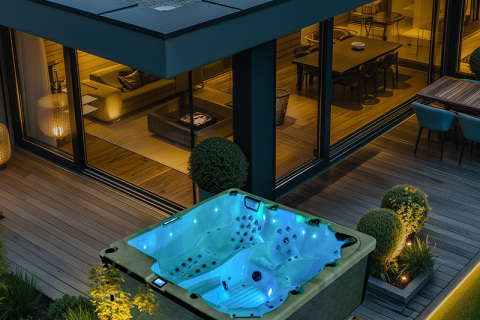
In actual manufacturing and testing practices, acrylic spa hot tubs typically reference the UL94 fire safety rating standard (which is widely applied to plastics and polymer materials).

Given identical dimensions (e.g., 150–180 cm) and comparable thickness: •An acrylic bathtub typically weighs between 20 and 35 kg. •A fiberglass bathtub typically weighs between 30 and 50 kg. Clearly, acrylic holds the advantage in terms of weight—a distinction that becomes even more pronounced in high-specification models, such as luxury hot tubs.
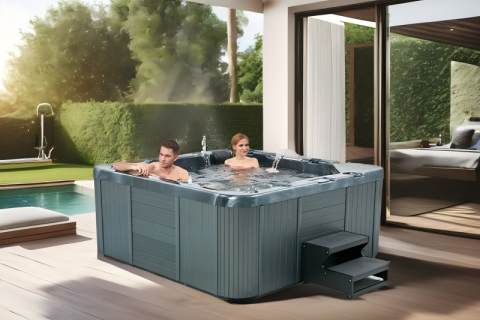
• Acrylic material is significantly lighter than traditional bathtub materials such as ceramic or cast iron. • Facilitates easier installation and transportation. • Places lower demands on floor load-bearing capacity. • Allows for easy placement in both indoor and outdoor settings.
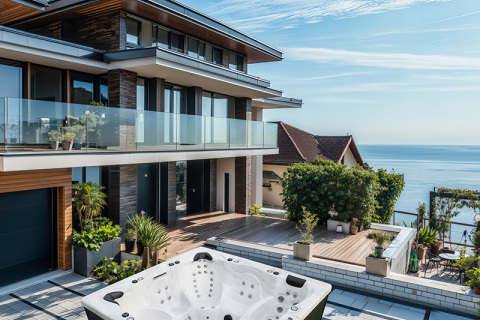
Acrylic (PMMA) is a polymer material that is highly sensitive to strong acids. Muriatic acid disrupts its molecular chain structure, leading to the following material degradation: •Surface corrosion •Material softening •Formation of micro-cracks •Discoloration and clouding
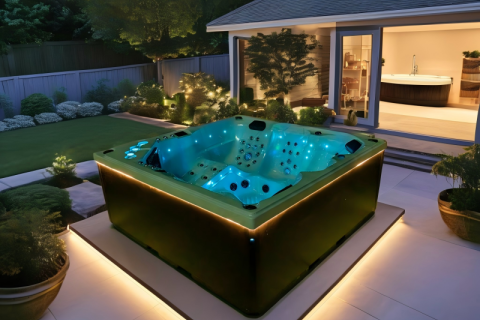
Many people believe that acrylic spa hot tubs are easy to scratch because acrylic is indeed softer than hard materials such as ceramic and stainless steel. However, this does not mean that normal cleaning will damage it.
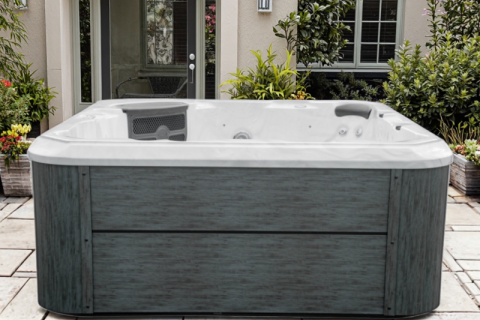
PMMA (Polymethyl methacrylate) – commonly known as "acrylic sheet" or "acrylic material". It is a thermoplastic with high transparency, high strength, and excellent weather resistance. In the bathtub industry, it is often found in the form of acrylic sheets.
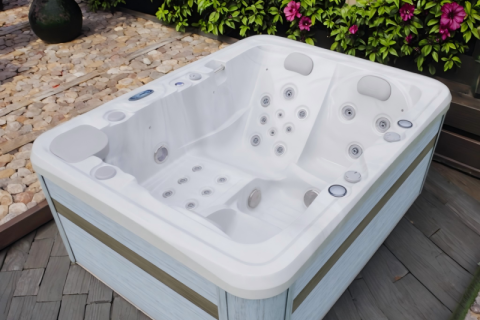
—Under normal circumstances, no. • Acrylic spa hot tubs will not easily yellow due to normal UV exposure. • Concerns about "yellowing" stem more from misunderstandings about the materials. • Acrylic spa hot tubs have a mature and reliable foundation in terms of color stability.
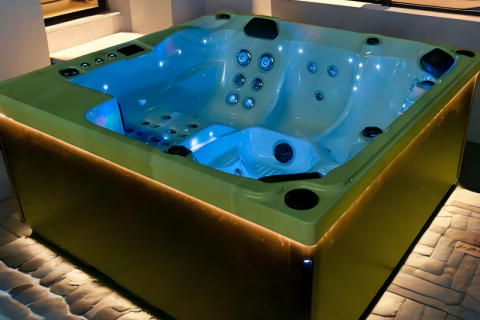
PMMA has extremely low water absorption, making it a truly non-absorbent material. From a materials science perspective, the surface of an acrylic spa hot tub is "functionally non-porous," making it ideal for contact with water, detergents, and various water treatment chemicals.
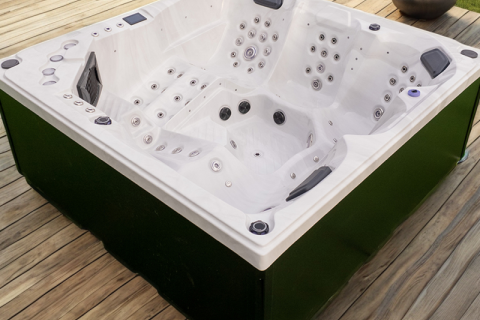
✔ Some "clear bubbles" are perfectly normal When you turn on the jet system of your acrylic spa hot tub, many small, clear bubbles will appear at the bottom. ❗ However, if the foam is excessive, has an abnormal color, or doesn't dissipate easily, it's not normal.
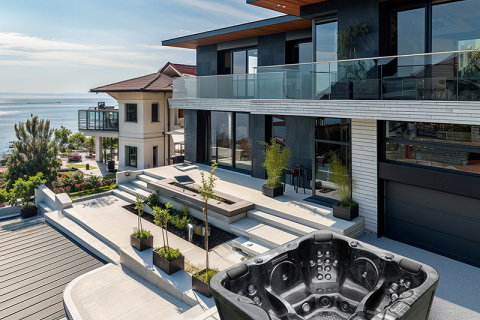
Water hardness mainly comes from calcium and magnesium ions. When water is heated, calcium and magnesium will: 1. precipitate from the solution 2. combine with carbonate ions to form white deposits 3. adhere to the surface of the bathtub, nozzles, and edges The high contrast of a black surface makes the deposits particularly noticeable.
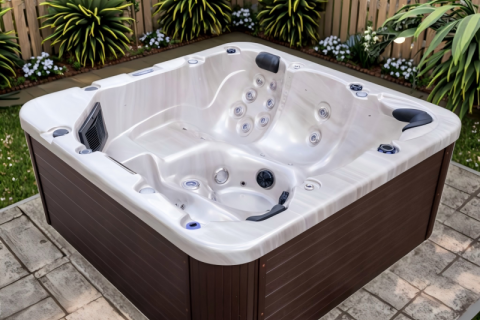
Acrylic is a high-molecular-weight plastic material with a naturally smooth surface structure. High-quality sanitary-grade acrylic sheets, after polishing, have a very high degree of surface flatness, without any roughness or graininess.