


Can caulk remover be used to repair acrylic spa hot tubs?
2026-02-06 15:35During home maintenance or bathroom renovations, many users ask a core question: When acrylic spa hot tubs have scratches, crevices, glue residue, or seam problems, can "caulk remover" be used for repairs?
On the surface, caulk remover works by breaking down old silicone, putty, or sealant, so it seems like it could be used to treat glue residue around the tub or on its surface. However, when it comes to acrylic spa hot tubs, we must carefully assess whether this chemical is compatible with the acrylic material.
This article will provide an in-depth analysis from a professional perspective:
• The composition and mechanism of action of caulk remover
• The sensitivity of acrylic (PMMA) surfaces to chemicals
• Why most caulk removers are not recommended for acrylic spa hot tubs
• Safer alternative repair methods
• How to properly maintain an acrylic spa hot tub to avoid damage
If you are looking for a comprehensive, authoritative, and logically clear answer, please read on.
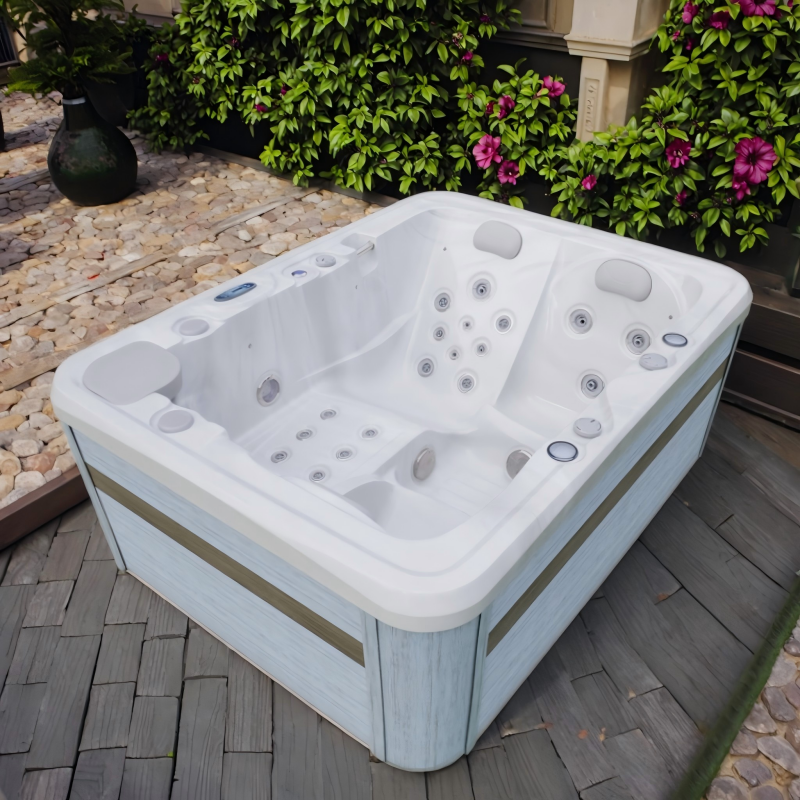
What is caulk remover? How does it work?
Caulk remover (also known as sealant remover) is a type of product specifically designed to soften or break down:
• Silicone
• Polyurethane sealant
• Putty-based caulk
• Residue from old sealant strips
The composition varies depending on the product, but typically includes:
• Strong solvents (such as alcohols, esters, ketones)
• Chemical degrading agents
• Surfactants
• High-penetration additives
These substances share the following characteristics:
✔ They can break down organic polymers
✔ They can penetrate material surfaces
✔ They can soften, swell, and even dissolve certain plastics
Because of this, they pose a potential hazard to acrylic spa hot tub surfaces.
Why are acrylic spa hot tub surfaces sensitive to solvents?
To understand why caulk remover is unsafe for acrylic spa hot tubs, it's essential to understand the properties of acrylic itself.
Acrylic (PMMA) has the following properties:
✔ High gloss
✔ High transparency
✔ Very smooth, non-porous surface
✔ Good mechanical strength
✔ Strong chemical stability, but sensitive to certain solvents
However, it is very fragile to the following substances:
• Acetone
• Methanol
• Dichloromethane
• Methyl ethyl ketone (MEK)
• Certain strong acids and alkalis
• Highly corrosive solvents
Many grout removers are based on these solvent chemistry systems.
When these components come into contact with the surface of an acrylic spa hot tub, it may cause:
• Loss of gloss
• Hazing
• Material softening
• Microcracks (stress cracks)
• Permanent chemical etching
• In severe cases, even surface cracking
Therefore, chemical compatibility must be clearly understood before use.
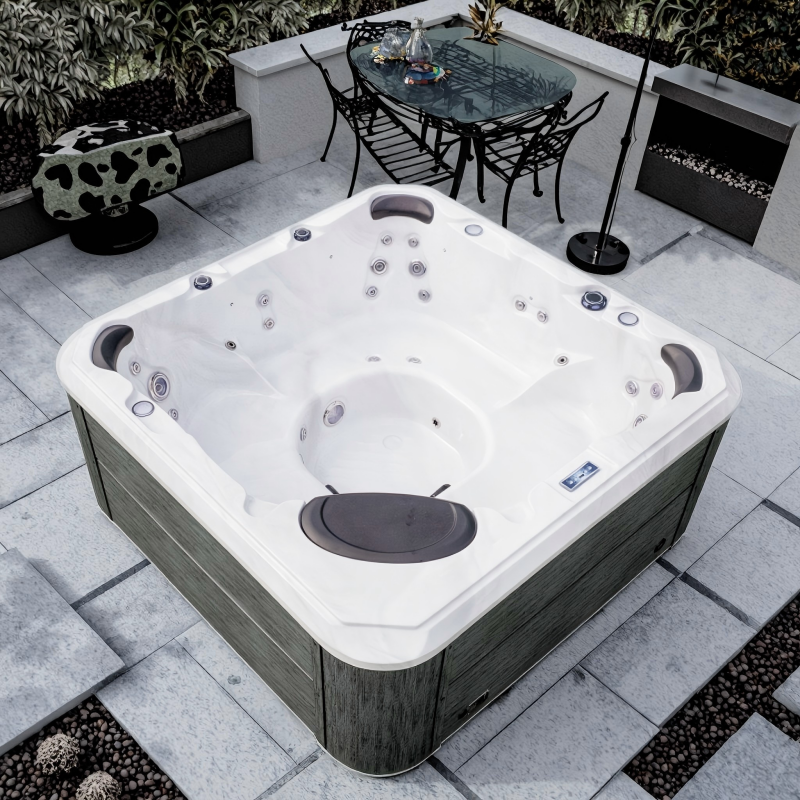
Can grout removers be safely used on acrylic spa hot tubs?
Answer: In most cases, use is not recommended and should be avoided entirely.
Reasons include:
1. Grout removers often contain swollen PMMA
Even if the ingredients aren't explicitly listed on the packaging, "can break down silicone" means it has high chemical reactivity.
Acrylic spa hot tubs have limited tolerance to solvents, especially:
• Ketones
• Ethers
• Esters
• Highly penetrating solvents
Grout removers are generally rich in these substances, making them highly likely to damage the bathtub surface.
2. Acrylic surfaces are non-porous, and damage is irreversible
The shine of an acrylic spa hot tub comes from its hard, transparent surface layer. Once corroded by chemicals:
• It cannot be "repolished back to its original state"
• Internal cracks will continue to spread
• It will affect the overall appearance and lifespan
Therefore, the risk is extremely high.
3. Cement removers often cause hazy damage
Many users who have used solvent removers experience the following:
• Localized milky white areas
• Loss of surface gloss
• Tiny cracks
This is a typical manifestation of solvent erosion of the acrylic chain structure, and once it occurs, it cannot be reversed.
4. It can also damage the fiberglass reinforcement layer
The structure of an acrylic spa hot tub is:
• Outer layer: Acrylic
• Inner layer: Fiberglass Reinforced Polymer (FRP)
Chemical penetration can affect the bond structure, causing more serious problems.
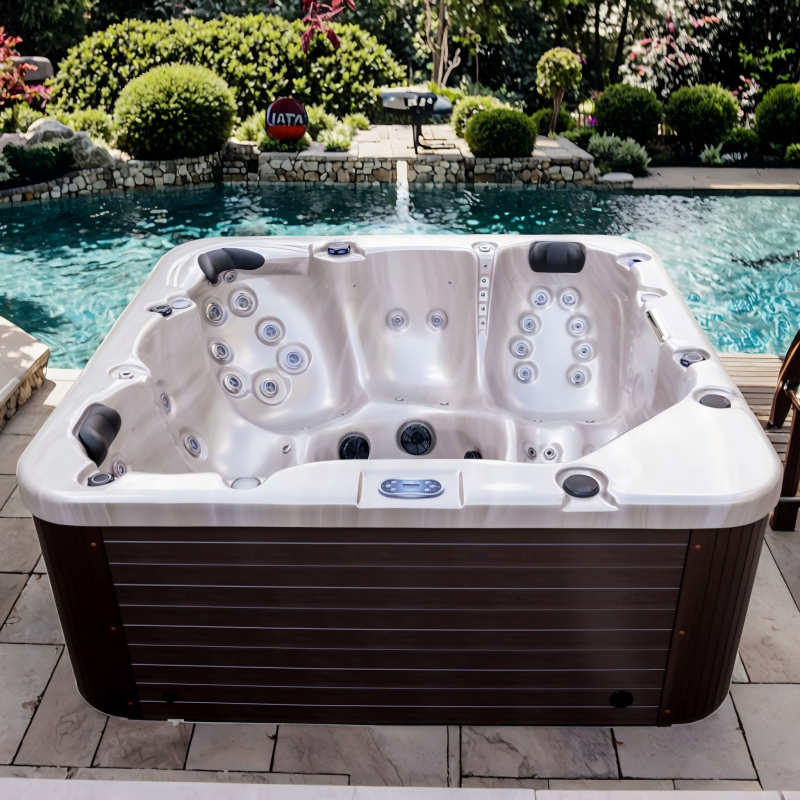
Are there cement removers that are "safe for use on acrylic spa hot tubs"?
Theoretically, very few products are specifically designed for acrylic.
Even products labeled "suitable for plastic surfaces" can still be damaged.
Therefore, the only criterion for selection should be: Whether it clearly states "compatible with PMMA/Acrylic/Lucite" and has been verified by a third party.
If not clearly stated, it is considered "unsafe".
How to repair an acrylic spa hot tub if grout remover cannot be used?
Here are safer, more professional methods that won't damage the acrylic spa hot tub surface.
How to safely remove old grout from an acrylic spa hot tub?
1. Manually scrape it off using a plastic scraper
Recommended materials:
• Plastic scraper
• Nylon scraper
• Credit card-shaped tool
These tools are hard but won't scratch the acrylic surface.
2. Use a mild surface cleaner
Cleaners suitable for softening grout residue include:
• Mild liquid soap
• Neutral bathroom cleaner
• Diluted baby shampoo
These will not damage the surface.
3. Use isopropanol (do not use acetone) for residue cleaning
For use only:
✔ Isopropanol (70%–91%)
Avoid:
✘ Acetone
✘ MEK
✘ Methanol
✘ Strong solvents
Isopropanol is relatively safe for acrylic when used in limited quantities.
4. Heat softening method (moderate heating)
Use:
• Hair dryer on warm air
• Low-temperature heat gun (use with caution)
This softens the silicone, making it easier to remove.
Never use high temperatures to avoid deforming the acrylic.
5. Thoroughly degrease with a neutral detergent before re-sealing
Ensure the new grout adheres firmly to the bathtub edge.
Which chemicals should be absolutely avoided during acrylic spa hot tub repairs?
To protect the acrylic surface, keep away from:
1. Acetone
It will immediately cause fogging and cracking.
2. Bleach (high chlorine concentration)
Long-term use will cause surface aging.
3. MEK (methyl ethyl ketone)
Highly corrosive to PMMA.
4. Methanol
Can rapidly swell the acrylic surface.
5. Dichloromethane
Causes deep decomposition.
6. Industrial-grade solvent cleaners
Contains mixed solvents, posing a very high risk.
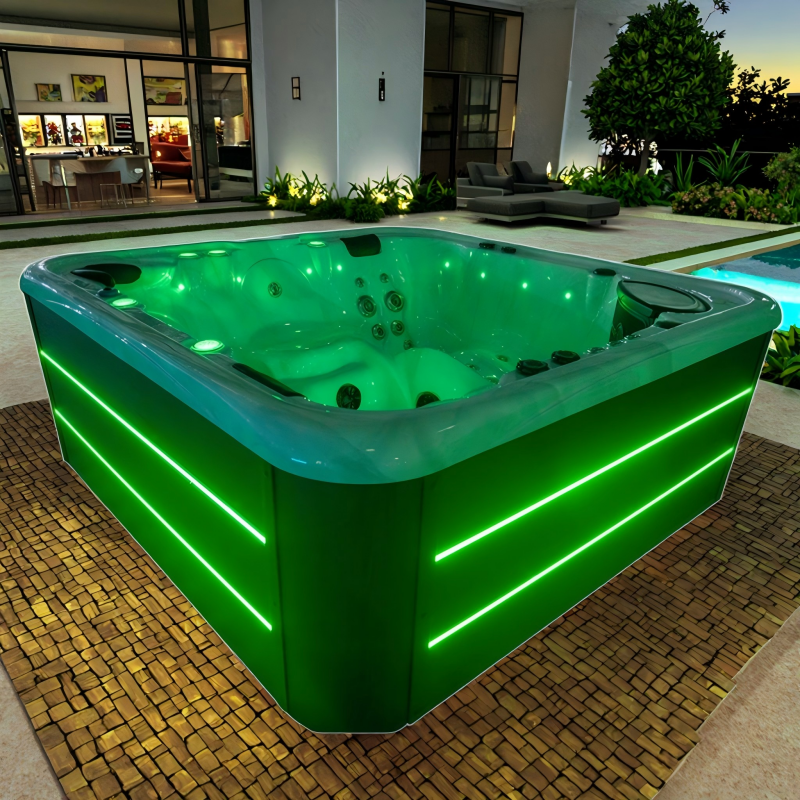
Why are acrylic spa hot tubs more sensitive to solvents?
1. Structural characteristics: Highly transparent PMMA is susceptible to stress
Internal stress is generated during the thermoforming process of the bathtub, and solvents amplify these stress points.
2. Once the "hardened layer" of the acrylic surface is damaged, it cannot be restored
Solvents not only corrode the surface but also affect the depth of the gloss layer.
3. The non-porous surface prevents chemicals from penetrating, but can damage the surface chain structure
This damage is irreversible once it occurs.
What are the correct maintenance principles for acrylic spa hot tubs?
To protect your bathtub in the long term, follow these principles:
1. Use a neutral (pH 6–8) cleaner
Avoid any strong acids, alkalis, or solvents.
2. Use non-abrasive tools
Avoid steel wool, abrasive cloths, or rough sponges.
3. Regularly maintain surface cleanliness to reduce the adhesion of hard adhesives
The less stubborn residue, the less need for risky chemicals.
4. Prioritize mechanical methods over chemical methods for repairs
Safer for acrylic spa hot tubs.
Can grout remover be used to repair acrylic spa hot tubs?
The final answer is very clear:
It is not recommended, and it is not safe. Most grout removers will permanently damage the surface of acrylic spa hot tubs.
Reasons include:
• Solvents containing substances that corrode PMMA
• Causes acrylic fogging and microcracks
• May cause irreversible cosmetic damage
• Potentially damages the inner fiberglass structure
The correct approach is to use:
• Plastic scraper
• Mild cleaner
• Isopropyl alcohol
• Neutral cleaning tools
• Low-temperature heat softening
Avoiding strong chemicals to ensure the long-term shine and structural safety of the acrylic spa hot tub.
Does LOVIA SPA provide flexibility in product configuration for different price levels?
Yes. LOVIA SPA offers multiple configuration tiers for the same base model, allowing buyers to target different customer segments. Options may include pump upgrades, control systems, insulation levels, or lighting features. Wholesale clients can buy entry-level or premium versions at different prices while maintaining consistent quality. This flexibility helps distributors expand their product range and respond to varied purchasing power in their markets.