


Why don't the jets work when I am filling my outdoor spa with water?
2026-06-25 15:35For many homeowners, an outdoor spa is more than just a piece of leisure equipment; it is a significant investment in improving their quality of life. Whether it is for relaxing muscles after a busy day or enjoying the therapeutic benefits of hot water during colder seasons, an outdoor spa offers a unique, comfortable experience. Modern high-end models, in particular, integrate features such as constant-temperature heating, circulation filtration, bubble massage, hydro-massage jets, and smart control systems, elevating their functionality far beyond that of a traditional bathtub.
According to global spa industry data, the market for residential outdoor spa equipment exceeded $6 billion by 2025, with outdoor spa hot tubs accounting for more than half of that market share—making them a key symbol of upgraded outdoor living.
However, even with high-quality equipment, users may occasionally encounter puzzling issues. One very common problem that often causes anxiety for new owners is: "Why aren't the jets working while I'm filling the spa hot tub?" Many users find that while the tub is filling and the control panel appears to be powered on, the jets remain unresponsive—producing neither water flow nor massage action.
This situation frequently arises after initial installation, refilling the water, restarting the unit after a long period of inactivity, or completing maintenance work.
When faced with this issue, many people immediately suspect equipment damage—such as broken jets or a faulty pump—or even fear that the entire spa has a serious quality defect. In reality, however, the jets failing to operate during the filling process rarely indicates hardware damage. Instead, the issue is usually related to the system's design logic, startup requirements, water level, an "air lock," or control settings.
To truly understand this issue, we must first grasp a key fact: the jet system in an outdoor spa hot tub is not designed to operate the moment water begins to fill the tub. Its operation depends on several conditions being met—conditions that are often not yet satisfied during the filling process.
Therefore, the fact that the jets do not work while filling is usually the result of system protection mechanisms or operational logic, rather than a simple equipment malfunction.
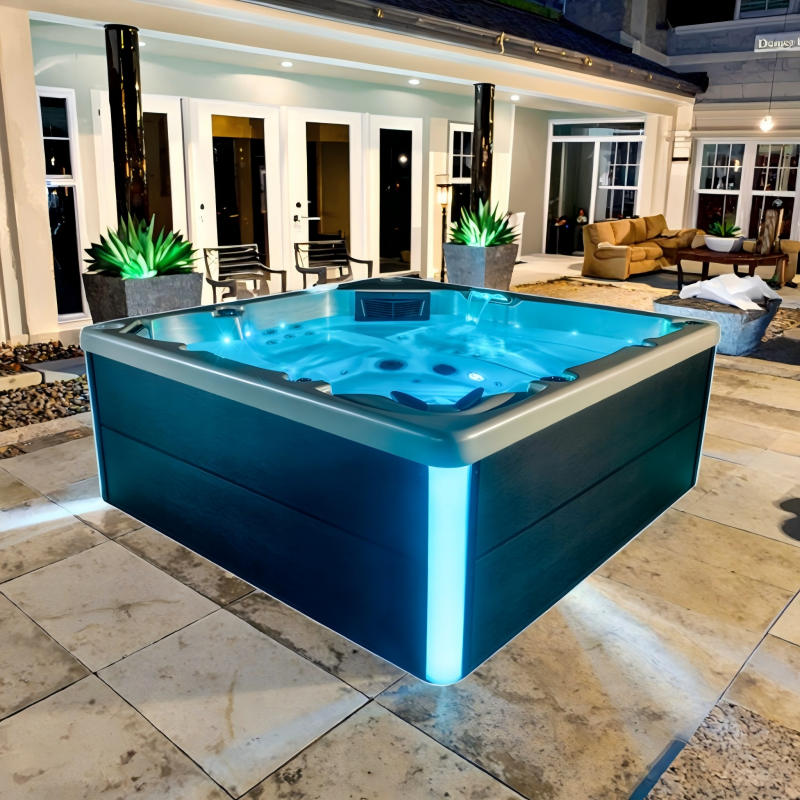
How exactly do the jets in an outdoor spa hot tub work?
Many users mistakenly believe that the jet itself is the source of power, but that is not the case. The jet is merely the outlet for the water flow; the actual power is generated by the circulation pump or the massage pump.
The jet system in a modern outdoor spa hot tub typically consists of the following components:
•Massage pump (Jet Pump)
•Suction intake
•Piping system
•Jets
•Air control valve
•Control panel
The operating logic is as follows: water first enters the circulation system through the suction intake, is pressurized by the massage pump, travels through the piping to the jets, and finally exits the nozzles as a high-speed stream. Some high-end outdoor spa hot tubs also mix air into the water flow to enhance the massage sensation. This is why the experience provided by the jets is not merely a stream of water, but a mixture of water and air that delivers a distinct pulsing sensation and impact.
Industry data shows that the flow rate of jet systems in medium-sized (four- to six-person) outdoor spa hot tubs typically ranges from 150 to 400 liters per minute, while high-performance models can exceed 500 liters per minute. Such high flow rates mean the jet system requires a fully established water circulation loop to operate stably.
This explains an important point: the jets usually do not start working immediately while the spa jacuzzi tub is being filled with water.
It Is Often Perfectly Normal for the Jets Not to Operate While the Outdoor Spa Jacuzzi Is Being Filled
When you are filling the outdoor spa hot tub, the water level may not yet meet the system's minimum operating requirements. The vast majority of outdoor spa hot tubs have a minimum safe water level; typically, the water must be at least 2 to 5 centimeters above the highest jet, and some models even require the water to cover the filter intake.
Why is it designed this way? Because water pumps cannot run dry.
If a water pump operates without sufficient water, the following problems can occur:
•High-speed impeller spinning without load
•Heat buildup due to friction
•Damage to seals from dry friction
•Motor overload
•Pump burnout
Repair data indicates that approximately 18% of pump failures in outdoor spa hot tubs are related to dry running. Therefore, manufacturers typically implement a safety mechanism: the jets will not activate if the system detects insufficient water levels.
In other words, if the jets fail to respond while you are filling the tub, it is likely simply because the water level is too low.
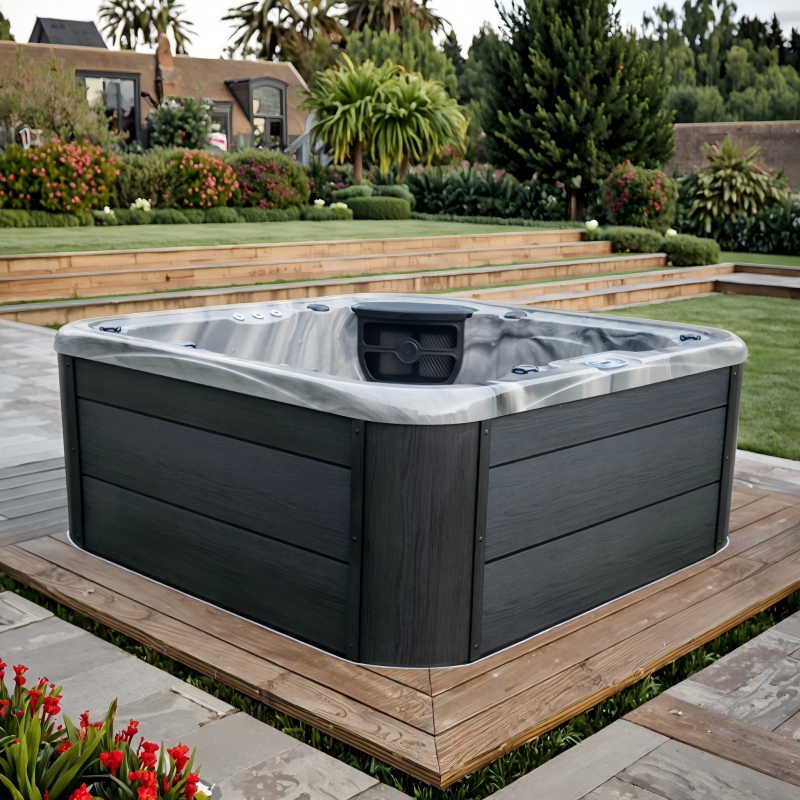
Reason 1: The water level is below the minimum startup line
This is the most common cause.
Many users judge by eye that there is "plenty of water," yet the level may still fall below the minimum operating requirement. Visual estimation is particularly prone to error in large outdoor spa hot tubs due to significant height differences between internal seats.
It is generally recommended to check the following:
Is the water level above the highest jet?
Most outdoor spa hot tub manufacturers recommend a water level at least 2 to 5 centimeters above the highest jet.
Does it cover the filter intake?
If the filter intake is exposed above the water surface, the system may fail to establish stable circulation.
Does it meet the manual's requirements?
Minimum water level requirements can vary between different spa models.
Experience shows that over 30% of cases involving "non-functional jets" are ultimately caused simply by insufficient water levels.
Reason 2: The system has an air lock
If you have just refilled the spa, this is the most likely culprit.
Air locks are among the most common startup issues for outdoor spa hot tubs. An air lock occurs when air becomes trapped inside the plumbing or pump housing, preventing normal water flow from being established.
How do air locks form?
When the spa is drained, a significant amount of air remains in the internal plumbing. During refilling, if the water entry path does not properly cover the circulation intake, air can become trapped in the following areas:
•Circulation pump
•Massage pump
•Heater housing
•Pipe elbows
Since air is compressible while water is not, the pump may simply "push air" after starting, failing to generate effective water flow.
Typical symptoms include:
•No water coming from the jets
•Audible pump operation
•A humming sound but no flow
•Occasional spurts of water followed by a stop
Industry repair statistics indicate that air locks account for over 40% of jet malfunctions occurring after a spa refill.
How can air locks be prevented?
When filling your outdoor spa hot tub, it is recommended to fill it directly through the filter compartment rather than simply pouring water into the tub from above.
This allows water to enter the circulation system first, minimizing trapped air.
Reason 3: The jets are turned off
Many new users are unaware that the jets themselves can be manually turned off.
Some outdoor spa hot tubs feature individually adjustable jets. Users can control them by rotating the nozzle to:
•Turn them on
•Turn them off
•Adjust the direction
•Change the pressure
If a jet nozzle is fully closed, it may appear as though the jet isn't working, even if the pump is operating normally.
How to check?
Inspect each jet nozzle individually:
•Check if it has been rotated to the "off" position
•Check if it is stuck
•Check for obvious blockages
Children or first-time users, in particular, often accidentally close the nozzles.
Reason 4: The massage pump hasn't actually started
Sometimes the issue lies not with the jets, but with the power source.
The jets rely on the massage pump for pressure; if the pump doesn't start, the jets naturally won't work.
Common causes include:
The control panel isn't set to "Jets" mode
Some outdoor spas have multiple operating modes:
•Filter
•Heat
•Jets Low
•Jets High
•Sleep Mode
If the spa isn't switched to "Jets" mode after filling, the jets will not activate.
Timer protection is still active
Some spa systems perform a self-test upon startup.
The jet function may be temporarily unavailable during this self-test.
The circuit breaker hasn't been reset
If the power supply to the spa is unstable, the pump may not be receiving full power.
Reason 5: Insufficient flow due to a clogged filter
Filter issues are also very common.
With prolonged use, filters can accumulate:
•Hair
•Dust
•Oils/Grease
•Limescale
•Chemical residues
Once clogged, circulation resistance increases, causing the jet flow rate to drop.
Severe cases may manifest as:
•Weak jet pressure
•Intermittent jet spray
•Jets stopping completely
Data shows that approximately 25% of flow-related issues are linked to a clogged filtration system. It is recommended to clean the outdoor spa jacuzzi tub filter every 2 to 4 weeks.
Reason 6: Pump impeller jammed or damaged
If the issues above have been ruled out, consider hardware problems.
The impeller inside the massage pump is responsible for driving water flow. If the impeller malfunctions, the jet system cannot operate correctly.
Possible causes include:
•Debris jamming the mechanism
•Limescale buildup
•Seizure due to prolonged inactivity
•Bearing wear
Typical symptoms:
•Motor makes noise
•No water flow
•Pump body overheats
•Abnormal vibration
Maintenance data shows that pump-related issues account for approximately 20% of major malfunction cases.
Reason 7: Internal jet blockage
The jets themselves can also become clogged.
Especially in outdoor spa jacuzzi tubs that haven't been cleaned for a long time, the following may accumulate inside the jets:
•Calcium deposits
•Biofilm
•Limescale
•Fine debris
This is particularly common in areas with hard water.
When jets are partially blocked:
•Jet direction becomes erratic
•Water stream narrows
•Some jets stop working
•Massage effectiveness decreases
This is a common issue with older equipment.
Reason 8: Control board enters protection mode
Modern outdoor spa jacuzzi tubs are becoming increasingly intelligent.
The control board continuously monitors:
•Water temperature
•Electric current
•Water level
•Flow rate
•Overheating risk
If an anomaly is detected, the system may automatically disable the jets.
Common triggers:
Overheat Protection
System temperature rises abnormally.
Flow Error
Insufficient flow detected.
Low Water
Water level is too low.
Sensor Fault
Sensor malfunction.
In these cases, check the control panel for error codes.
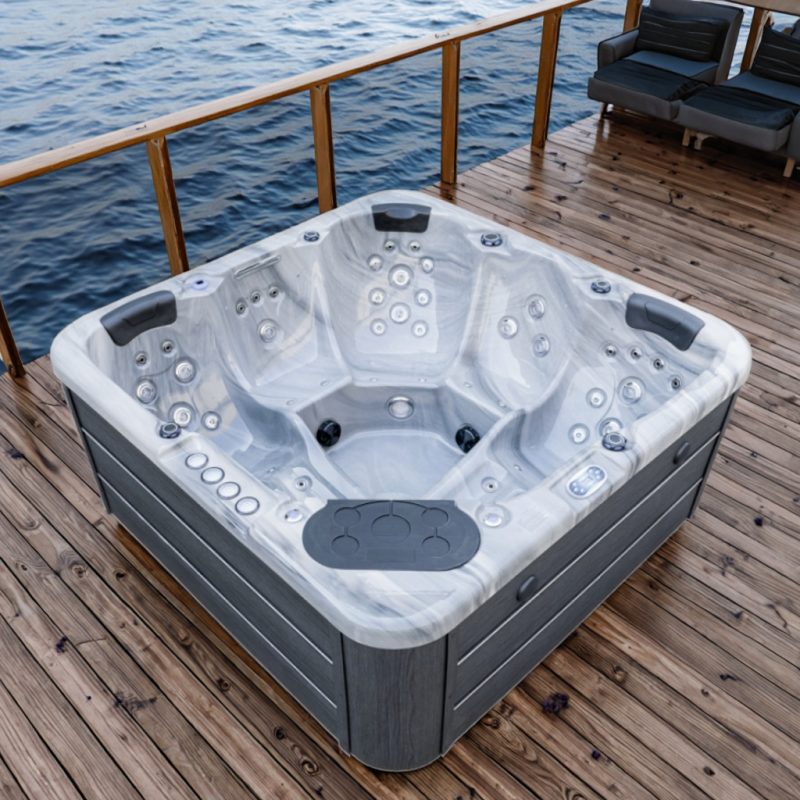
How to properly fill an outdoor spa jacuzzi tub?
To prevent jet malfunction, the correct filling procedure is crucial.
Steps for properly filling an outdoor sspa jacuzzi tub
Step 1: Turn off the power
Cut off the power supply before filling to prevent the pump from starting accidentally.
Step 2: Fill via the filter compartment
This is the most effective way to minimize airlocks.
Step 3: Fill above the standard water line
Ensure the water level is higher than the highest jet.
Step 4: Restore power
Allow the system to complete its initialization process.
Step 5: Activate Jet mode for testing
Check that the jets are dispensing water properly.
Following this procedure can significantly reduce the likelihood of startup issues.
When should you contact a professional technician?
It is recommended to stop troubleshooting yourself if you encounter the following:
•The pump makes no sound at all
•There is a smell of burning
•The circuit breaker trips repeatedly
•Water is leaking
•Error codes persist
These signs usually indicate a problem beyond the scope of standard user troubleshooting.
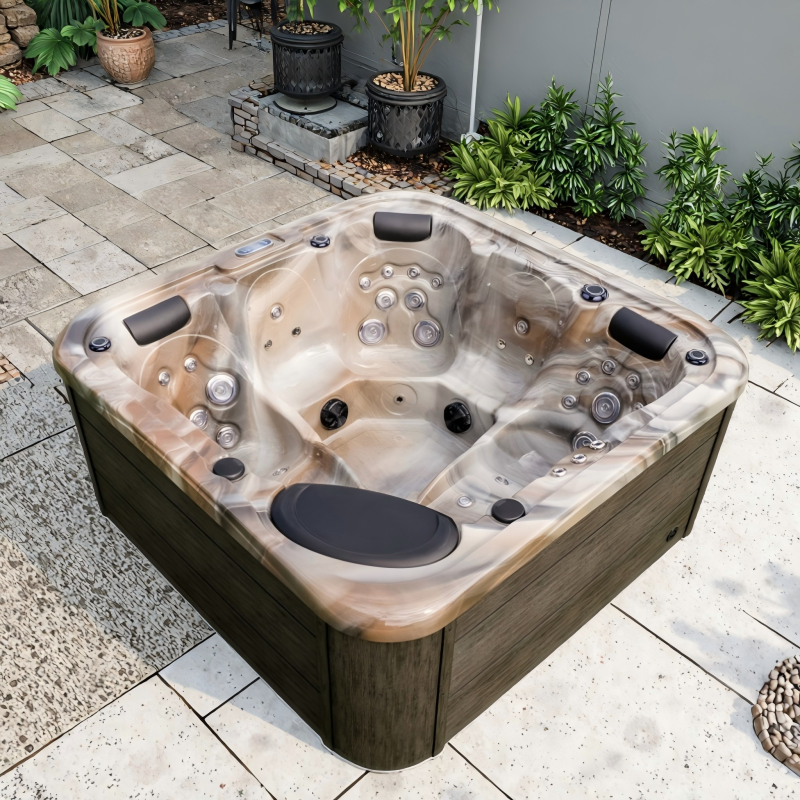
FAQ
Is it normal for the jets to show no reaction while filling the outdoor spa jacuzzi tub?
This is often normal, especially if the water level has not yet reached the minimum operating requirement.
Why can I hear the pump running but see no water flow?
This usually indicates an airlock or a jammed impeller.
What is the best way to fill the outdoor spa jacuzzi tub?
It is recommended to fill the spa jacuzzi tub through the filter compartment; this is the best way to prevent airlocks.
Does it mean the spa jacuzzi tub is broken if none of the jets are working?
Not necessarily. In most cases, the issue relates to water supply, settings, or circulation rather than damage to the jets themselves.