


Are outdoor swim spa tubs dangerous to use?
2026-06-27 15:30With the growing popularity of healthy living concepts and the expansion of the home and garden market, outdoor swim spa tubs are becoming a key feature in an increasing number of private homes, vacation villas, boutique guesthouses, and wellness centers. Compared to traditional swimming pools, swim spa tubs offer a versatile range of functions, including swim training, hydrotherapy massage, leisure, and rehabilitation. Compared to standard hot tubs, they provide more space, greater fitness capabilities, and a wider range of use cases. Consequently, the global swim spa market has seen steady growth over the past decade, with many consumers viewing them as a significant investment in their quality of life.
However, as their adoption has increased, so has the focus on safety. Prospective buyers often ask: Are swim spa tubs truly safe? Do they pose long-term health risks? Are they suitable for children, the elderly, and pregnant women? Could the electrical, heating, or water flow systems present hazards?
In reality, no piece of equipment involving water, electricity, temperature, and physical activity can be entirely risk-free; swim spas are no exception. Yet, it is important to distinguish between "having risks" and being "dangerous." From the perspective of modern engineering and industry standards, swim spas from reputable brands undergo rigorous safety certification and incorporate multiple protective design features. When properly installed, maintained, and used, swim spa tubs are actually safe, high-quality leisure and fitness devices with manageable risks.
To view this issue objectively, we cannot simply label them as "dangerous" or "safe." Instead, we must conduct a comprehensive analysis covering structural integrity, electrical safety, water quality, usage habits, and suitability for specific user groups.
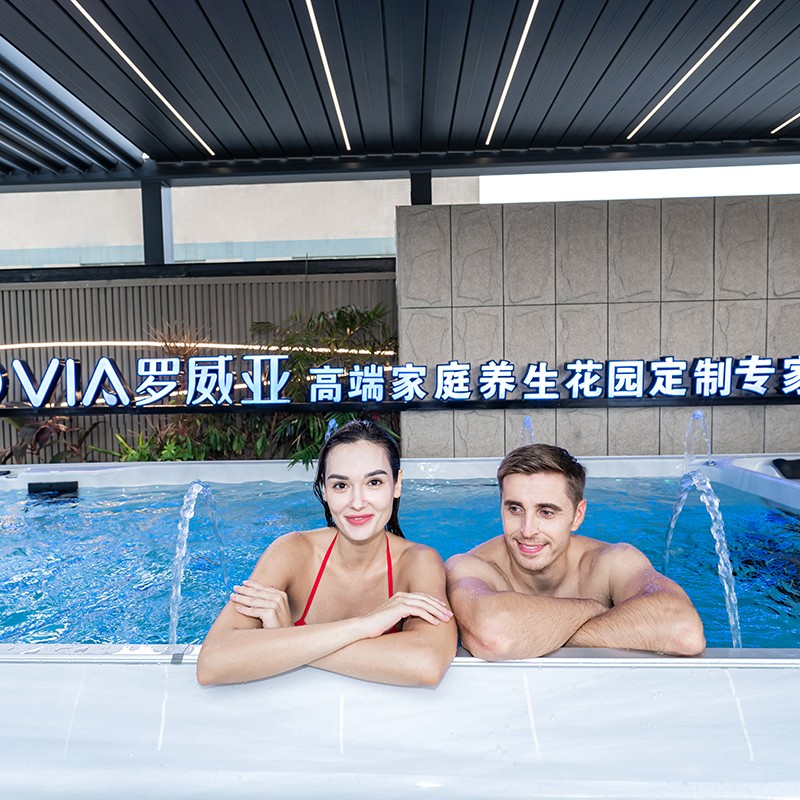
Why do so many people worry about swim spa tub safety?
Such concerns are not unfounded.
For one thing, swim spa tubs inherently combine several potential risk factors. They integrate water circulation, electrical, heating, and high-pressure massage systems—each of which could pose certain risks on its own. Secondly, outdoor swim spa tubs are typically installed in courtyards, on terraces, or in other outdoor areas, exposing them to sunlight, rain, temperature fluctuations, and the elements over the long term. Compared to indoor equipment, the outdoor environment presents greater unpredictability, naturally leading users to pay closer attention to safety.
Furthermore, occasional media reports regarding drowning, electric shock, or bacterial infection incidents can lead some consumers to harbor misconceptions about outdoor swim spas. In reality, the vast majority of such incidents are not caused by inherent design flaws in the equipment itself, but rather by improper installation, inadequate maintenance, or incorrect usage.
According to publicly available data from North American pool and spa industry associations, over 80% of incidents involving residential spa equipment are linked to human factors, while the proportion of accidents directly caused by manufacturing defects is relatively low.
In terms of equipment structure, are outdoor swim spas safe?
From a product design perspective, modern outdoor swim spa tubs have reached a high level of maturity.
Leading brands adhere to rigorous safety standards during the design phase, covering aspects such as electrical insulation, leakage protection, slip-resistant design, and structural integrity testing.
A standard outdoor swim spa comprises several core structural components:
•Shell and frame system;
•Insulation system;
•Circulation and filtration system;
•Pump and jet system;
•Heating control system;
•Electrical control system.
These components have been proven reliable through long-term market use.
High-end outdoor swim spas, in particular, are designed for a lifespan of 10 to over 20 years and are built to withstand continuous outdoor operation.
Multiple safety protection features have become industry standards.
Modern outdoor swim spas typically feature:
•Ground Fault Circuit Interrupter (GFCI) protection;
•Automatic power-off protection;
•Overheat protection;
•Water level monitoring;
•Dry-run protection;
•Temperature limiting systems.
For instance, the maximum temperature setting for most outdoor swim spa tubs sold in the US and Canadian markets is capped at approximately 40°C. This design effectively mitigates health risks associated with high temperatures.
From an engineering standpoint, the safety standards of modern outdoor swim spa tubs far exceed what many consumers might imagine.

Does the electrical system of a swim spa pose a risk of electric shock?
This is one of the questions consumers ask most frequently.
After all, outdoor swim spa tubs involve both significant electrical components and a large volume of water.
Theoretically, any electrical equipment used in or near water carries a risk of electric shock. However, modern equipment minimizes this risk to an extremely low level through multiple safety measures.
How does the swim spa's electrical leakage protection system work?
Modern outdoor swim spa tubs typically utilize GFCI (Ground Fault Circuit Interrupter) protection.
It works as follows:
When a minute leakage current is detected, the system automatically cuts off the power supply within a fraction of a second.
Many high-quality units have a response time of less than 0.1 seconds.
This speed is fast enough to provide protection well before serious injury could occur to the human body.
Therefore, provided the unit is installed correctly, the likelihood of a serious electric shock accident involving an outdoor swim spa is extremely low.
Improper installation is the real source of risk.
It is worth noting that most electrical accidents do not stem from the equipment itself.
Instead, they result from:
•Unauthorized wiring modifications;
•Poor grounding;
•Use of non-professional installation teams;
•Long-term neglect of equipment inspections.
Consequently, choosing a qualified installation service provider is a crucial prerequisite for ensuring the safe operation of an outdoor swim spa tub.
Can the water temperature of a swim spa pose a danger to the human body?
A major reason many users purchase outdoor swim spa tubs is to enjoy the experience of warm hydrotherapy.
However, excessively high temperatures can indeed pose health risks.
Prolonged immersion in high temperatures can cause physical discomfort.
The human body's core temperature is typically maintained at around 37°C.
When exposed to hot water above 39°C for an extended period:
•Heart rate increases;
•Blood vessels dilate;
•Blood pressure fluctuates;
•Sweating increases.
For healthy adults, short-term use of a swim spa tub generally causes no issues.
However, if immersion continues for more than 30 minutes, some individuals may experience:
•Dizziness;
•Fatigue;
•Dehydration;
•Abnormal heart rate.
Therefore, the industry generally recommends:
Maintaining the water temperature of outdoor swim spa tubs between 36°C and 39°C. Limit each soaking session to approximately 15–30 minutes.
Special considerations for certain groups
Pregnant women, individuals with cardiovascular conditions, and those with certain chronic illnesses should consult a doctor before using an outdoor swim spa tub.
Particular caution regarding duration and temperature is advised when using the spa's high-temperature settings.
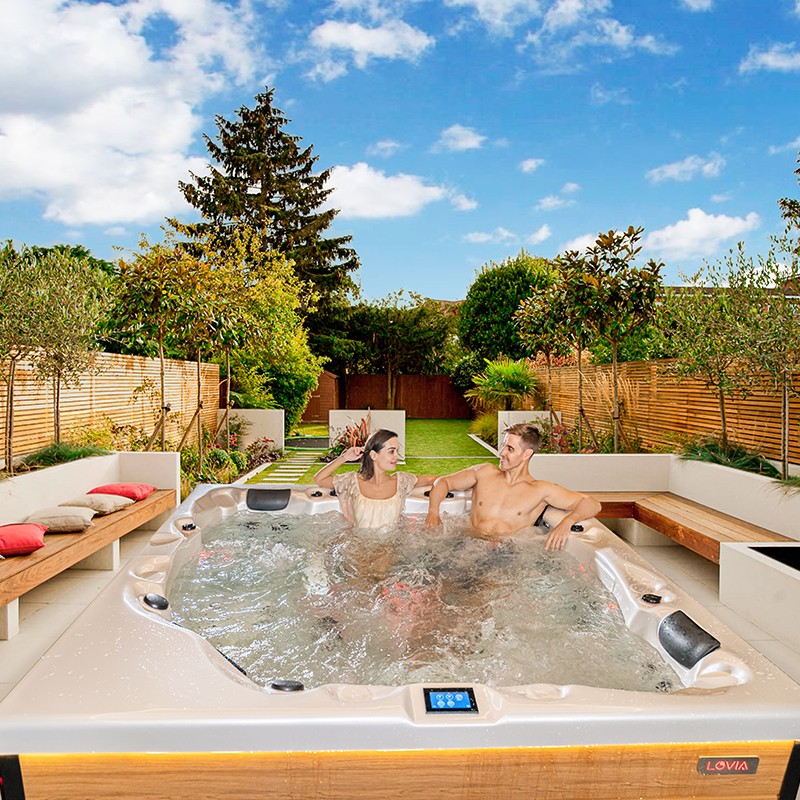
Is water quality a greater concern than the swim spa unit itself?
In reality, water quality management can have a greater impact on safety than equipment malfunction.
Even the most advanced outdoor swim spa relies on the user for routine maintenance.
Inadequate disinfection can lead to microbial issues
Warm water environments naturally foster microbial growth.
If:
•chlorine levels are insufficient;
•bromine levels are unbalanced;
•or the filtration system is underutilized;
...bacteria and algae can multiply rapidly.
Studies show that in still water above 30°C, bacterial populations can increase significantly within just a few hours.
Therefore, maintaining consistent disinfection levels is fundamental to the safe operation of an outdoor swim spa tub.
Neglecting maintenance increases risk
Many water quality issues stem from maintenance habits rather than the swim spa tub unit itself.
Examples include:
•failing to clean filter cartridges regularly;
•not changing the water frequently enough;
•failing to monitor pH levels;
•or neglecting to replenish disinfectants.
Such actions increase the risk of water quality deterioration.
Improper maintenance is often a more common source of problems than equipment failure.
Is it safe for children and the elderly to use outdoor swim spas?
This is a crucial topic for home users.
Generally, outdoor swim spa tubs are suitable for people of all ages, provided that safety guidelines are followed.
Children require constant supervision
Most global pool safety organizations emphasize that:
Children should never be left unsupervised near any body of water.
Risks cannot be entirely ruled out, even in shallow water.
This is especially important given that large outdoor swim spa tubs often feature powerful water jet systems.
When children use the spa, pay close attention to:
•duration of use;
•water temperature control;
•and safe entry and exit.
The elderly should pay attention to temperature and physical condition
Moderate use of an outdoor swim spa can help improve blood circulation and joint comfort. However, older adults are more sensitive to high temperatures and dehydration.
Therefore, it is recommended to:
•Limit the duration of use;
•Stay well-hydrated;
•Avoid using it alone.
Do outdoor environments increase the safety risks associated with swim spas?
In a sense, yes.
However, most of these risks can be mitigated through proper management.
For example:
Rain can make the ground slippery;
Winter conditions can cause ice to form in entry and exit areas;
Strong winds can affect the use of the thermal cover.
Therefore:
•Maintaining non-slip surfaces;
•Installing lighting systems;
•Regularly inspecting the surrounding area;
...are all important components of safety management for outdoor swim spa tubs.
How can the risks of using an outdoor swim spa be minimized?
Industry experience shows that most issues can be prevented through proper management.
Key measures include:
•Choosing a reputable brand;
•Professional installation;
•Regular maintenance;
•Maintaining water quality balance;
•Controlling the temperature at a reasonable level;
•Avoiding use after consuming alcohol;
•Supervising children at all times;
•Regularly inspecting the electrical system.
While these measures may seem simple, they can significantly reduce the vast majority of potential risks.
FAQ
Can an outdoor swim spa leak electricity?
The probability of an electrical leak in a properly installed outdoor swim spa tub equipped with a leakage protection system is extremely low; however, regular inspection of the electrical system is still recommended.
Is it suitable to use an outdoor swim spa tub every day?
Generally, daily use is acceptable, but it is recommended to control the temperature and duration of use, and to maintain good water quality.
Can children use an outdoor swim spa tub alone?
It is not recommended. Children should be supervised by an adult at all times when in or near any body of water.
Is there a risk of bacterial infection from using an outdoor swim spa tub?
Theoretically, there is a risk if water quality is not properly maintained. Therefore, disinfectant levels should be checked regularly, and the filtration system should be maintained.
Is it safe for older adults to use an outdoor swim spa tub?
Most healthy older adults can use them safely, but they should avoid excessively high water temperatures and prolonged soaking times; consulting a doctor is recommended if necessary.