


Can you use small stones in an outdoor spa jacuzzi tub?
2026-06-23 15:30For many consumers, an outdoor spa hot tub is far more than just a vessel for holding water; it is a comprehensive spa system integrating various technologies such as circulation filtration, constant-temperature heating, hydro-massage, air-bubble jets, and ergonomic design. According to global spa industry reports, the market for residential spa equipment exceeded $6 billion by 2025, with outdoor spa hot tubs accounting for over 55% of that share and continuing to show steady growth.
As users increasingly seek immersive experiences, new usage habits and personalized preferences have emerged. For instance, in pursuit of the sensation of a "natural hot spring" or a "foot massage," some users ask a seemingly reasonable question: Can small stones be placed inside the hot tub? Some believe stones mimic the bed of a natural hot spring and provide foot stimulation, while others feel that river stones, volcanic rocks, or massage stones enhance the visual atmosphere, making the tub feel more like a Japanese *onsen* or a natural therapeutic retreat.
On the surface, this appears to be a harmless modification—perhaps even one that adds a touch of aesthetic appeal. However, when considering the equipment's structure, water circulation system, safety, and long-term maintenance, the answer is unequivocal: No. Outdoor spa jacuzzi tubs are not suitable for small stones. This is not merely a conservative recommendation intended to restrict user behavior; it is a conclusion drawn from numerous equipment failure cases, repair data, and engineering design principles. In short, small stones and outdoor spa hot tubs are fundamentally incompatible.
Why do seemingly ordinary small stones have such a significant impact on outdoor spa hot tubs? What exactly are the consequences? Are all types of stones prohibited? If users desire a "natural hot spring" experience, what safer alternatives exist? This article provides an in-depth analysis of why small stones should not be used in outdoor spa jacuzzi tubs, examining factors such as structural design, fluid dynamics, equipment safety, maintenance costs, and user experience.
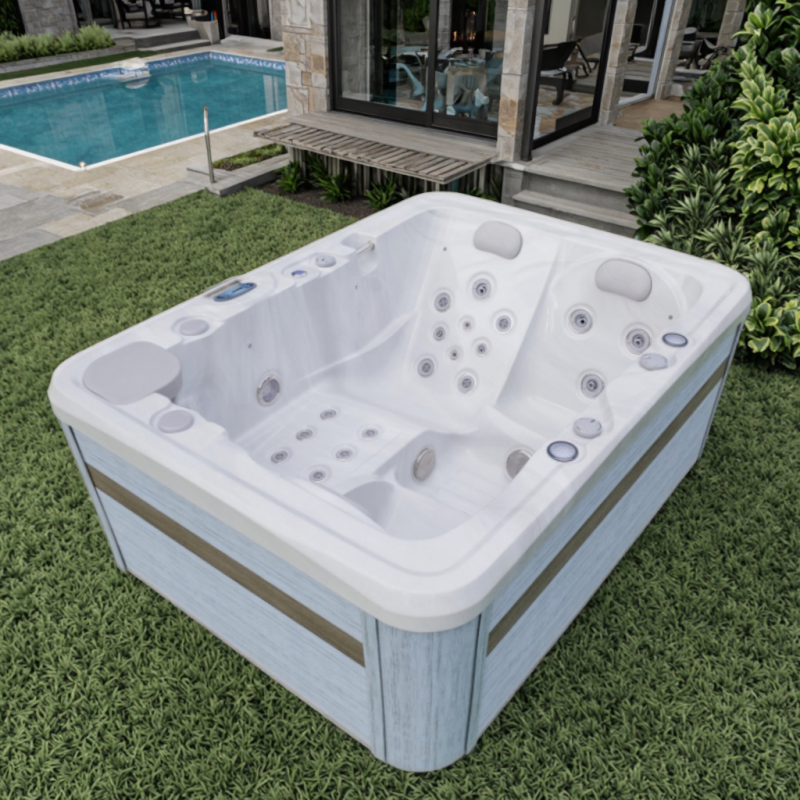
Why do some people want to put small stones in their outdoor spa hot tub?
From an aesthetic perspective, small stones certainly possess a strong natural quality. Stone elements are commonly found in Japanese hot springs, natural mineral baths, and high-end spas alike. Materials such as pebbles, volcanic rock, and river stones are frequently used for walkways, landscape pools, or reflexology areas. This leads consumers to wonder: if natural hot spring pools feature stones, why not incorporate small stones into an outdoor spa hot tub?
A second reason stems from the concept of foot reflexology. Many people are familiar with the idea of walking on cobblestone paths, believing that stones stimulate acupoints on the soles of the feet and promote blood circulation. Consequently, some users imagine that lining the bottom of an outdoor spa hot tub with small stones might allow for a massage while soaking.
A third reason relates to aesthetics. Some users find the interior of outdoor spa hot tubs too smooth or overly industrial in appearance, and they hope to create a more natural look by adding small stones.
While these ideas are understandable from visual and sensory standpoints, the issue is that natural hot spring pools and outdoor spa hot tubs are fundamentally different types of systems.
The Operating Mechanism of Outdoor Spa Hot Tubs Precludes the Use of Stones
Many users simply view an outdoor spa hot tub as a "bathtub with hot water," but in reality, it functions more like a compact water circulation and treatment system. Modern outdoor spa hot tubs typically consist of the following core components:
•Circulation pump
•Massage jet system
•Filter
•Heater
•Piping network
•Control system
•Chemical water treatment module
These components work in precise coordination to provide constant temperature control and massage functions. The water is not static; instead, it circulates continuously within the system. Take a medium-sized, four-person outdoor spa hot tub, for example: the circulation pump typically has a flow rate of 150 to 300 liters per minute, with high-performance models reaching over 500 liters per minute.
This means that any foreign object inside the tub—including small stones—is subject to the impact of continuous water flow and potential displacement. Once a small stone is drawn into the negative-pressure zone near the intake, it risks entering the system's most vulnerable area: the circulation mechanism. This is precisely why the answer is so clear: an outdoor spa jacuzzi tub is not a static pool but a dynamic circulation system, and small stones can disrupt the entire setup.
1. Small stones can clog the filtration system
The filtration system is the part of an outdoor spa jacuzzi tub most vulnerable to small stones.
The filter's primary job is to remove:
•Hair
•Skin cells
•Dust
•Fine debris
•Chemical residues
Standard filtration systems are designed to handle soft or fine particles, not hard stones. Even a stone with a diameter of just 5 millimeters is enough to cause serious issues.
Industry repair data shows that filter clogs account for nearly 31% of outdoor spa jacuzzi tub repairs caused by foreign objects. Notably, repairs for damage caused by hard foreign objects often cost two to four times more than those for standard clogs.
Once a small stone gets lodged in the filter compartment, the following problems may occur:
•Reduced water flow
•Decreased circulation efficiency
•Slower heating
•Deteriorated water quality
•System shutdown due to error alerts
Many users initially add a few stones for decoration, but as the stones shift, they often eventually find their way into the filtration path.
2. Small stones can damage the water pump
If clogging the filter is a "minor issue," then a stone entering the water pump can cause genuine equipment damage.
The circulation pump is the core power unit of an outdoor spa jacuzzi tub. It relies on a high-speed rotating impeller to drive water flow. Impeller speeds often exceed 2,900 revolutions per minute.
Just imagine what happens when a small stone enters the area of that high-speed impeller.
The results often include:
•Impeller jamming
•Broken impeller blades
•Motor overload
•Bearing damage
Such damage often cannot be fixed by simple cleaning. According to industry repair quotes, the cost of replacing a single water pump typically ranges from 8% to 20% of the entire spa jacuzzi tub's price.
In other words, a seemingly harmless handful of small stones could lead to repair bills amounting to hundreds or even thousands of dollars.
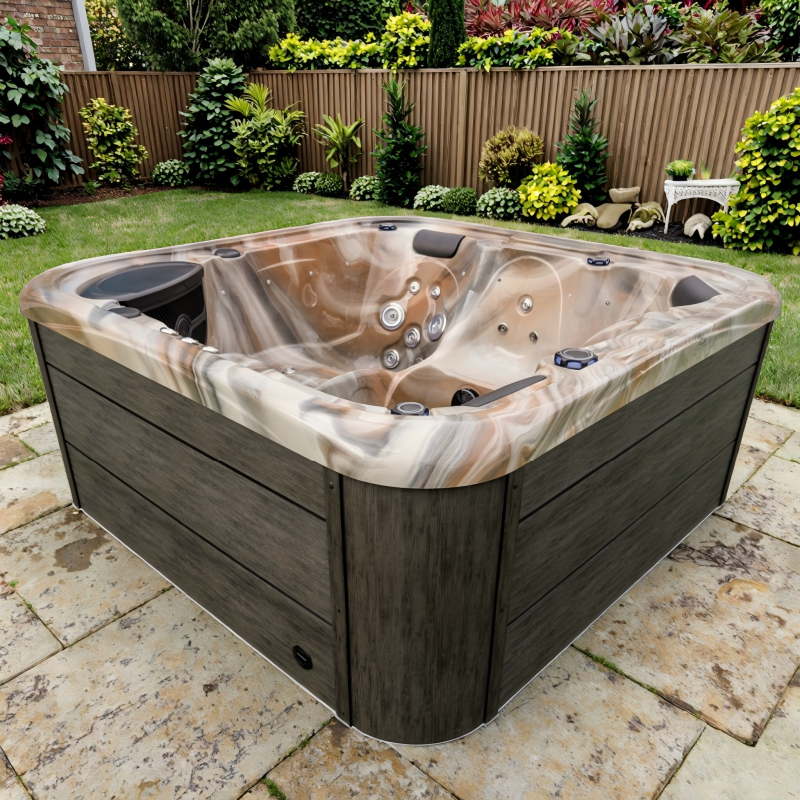
3. Small stones can scratch the interior surface of the spa
Most outdoor spas are constructed using the following materials:
•Acrylic
•Composite resin
•Fiberglass-reinforced structures
Acrylic liners are the most common choice. While acrylic surfaces are durable and robust, they are not impervious to scratches.
When small stones shift—whether due to a user sitting down or standing up, water currents, the impact of massage jets, or cleaning and scrubbing—they repeatedly rub against the spa's surface.
Over time, this causes:
•Fine scratches
•Loss of surface luster
•Wear on the acrylic
•Formation of micro-cracks
Studies show that continuous friction from hard objects on an acrylic surface can increase surface micro-roughness by more than 30% within a few months.
This not only detracts from the spa's appearance but also makes it easier for dirt and bacteria to adhere to the surface.
4. Small stones can compromise massage jet performance
One of the core experiences of an outdoor spa jacuzzi tub is the hydro-massage provided by the jets.
Jet systems are precision-engineered with careful attention to:
•Water flow angles
•Pressure distribution
•Spray coverage
•Points of contact with the body
Designers typically optimize jet placement to target the shoulders, back, lower back, and legs.
Introducing small stones to the bottom of the spa alters the user's seating posture and points of contact. While seemingly minor, these changes can significantly impact the massage experience.
For example:
•The body cannot fit snugly against the seat
•Pressure points on the back and lower back shift
•Foot positioning becomes unnatural
The result is a disruption of the intended, balanced massage experience.
In other words, rather than enhancing the massage, small stones can actually diminish the carefully engineered hydro-massage effects of the spa.
5. Small stones increase safety risks
Safety is a critical factor that cannot be overlooked.
In a wet environment, small stones significantly increase the risk of slipping, particularly when:
•A user stands up
•Elderly individuals use the spa
•Children enter the tub
•Lighting is poor (e.g., at night)
Stones can act as rolling points on the smooth surface. Home safety data indicates that loose, hard particles in a wet environment increase the risk of slipping and falling by approximately 22% to 35%.
Furthermore, the edges of small stones can:
•Scratch the skin
•Apply pressure to the soles of the feet
•Cause localized pain
Skin becomes softer after prolonged soaking, making it more susceptible to scratches from hard objects.
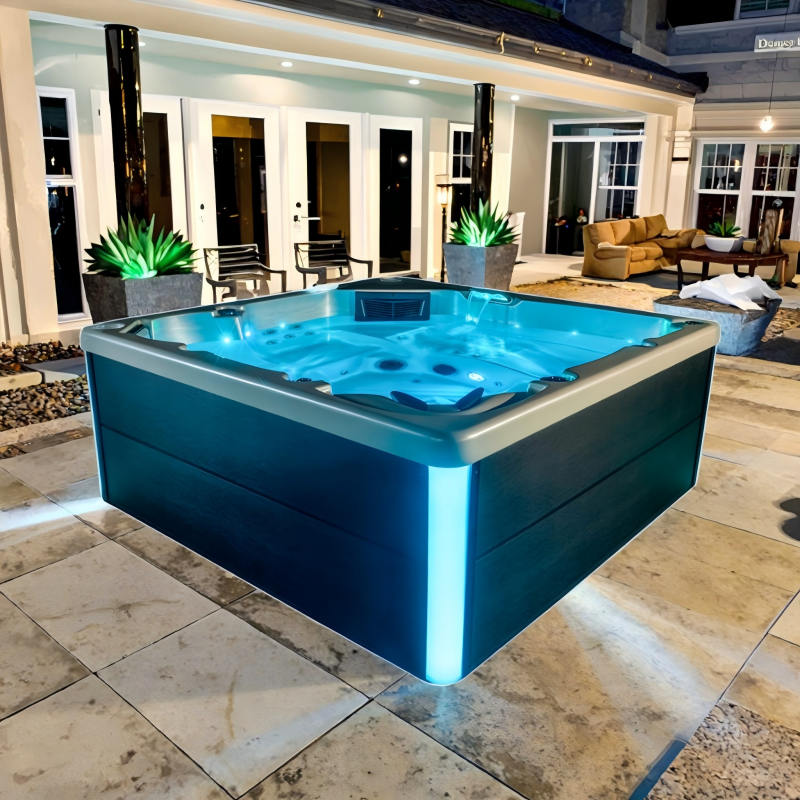
Why doesn't the "natural hot springs have stones" logic apply to outdoor spa hot tubs?
While stone features are common in natural hot springs, there are fundamental differences between natural springs and outdoor spa jacuzzi tubs.
Natural hot springs:
•Lack high-speed circulation pumps
•Lack precision jets
•Lack complex filtration systems
•Feature stones that are usually fixed within the structure
Outdoor spa hot tubs:
•Feature high-speed circulation systems
•Feature precision jet structures
•Include filtration components
•Include heating systems
The two cannot be directly compared.
Elements suitable for natural hot springs are not necessarily suitable for outdoor spa hot tubs.
What are the alternatives for creating a natural atmosphere?
While placing small stones inside the spa hot tub isn't an option, you can still create a natural spa ambiance.
Safer alternatives include:
1. Laying decorative stones around the exterior of the spa jacuzzi tub
This is the most recommended approach. Place pebbles around the perimeter of the spa jacuzzi tub rather than inside it.
Advantages:
•Preserves the natural style
•Does not interfere with equipment operation
•Enhances landscape aesthetics
2. Using waterproof massage mats
Massage mats designed specifically for spas provide stimulation for the soles of the feet without damaging the equipment.
3. Adding wood or stone landscape elements
Examples include:
•Stone lanterns
•Volcanic rock features
•Wooden decking
•Bamboo fencing
These elements help enhance the outdoor hot spring atmosphere.
FAQ
Can't I just put a few small stones inside the spa jacuzzi tub?
It is not recommended. Even a small number of stones can be swept by the water flow into the filtration system or pump.
Can I place secured stones inside the spa jacuzzi tub?
Theoretically, the risk is lower, but it can still interfere with cleaning and the maintenance of the interior walls; therefore, it is not recommended.
Can I use plastic decorative stones?
Placing it inside the spa jacuzzi tub is also not recommended, as it could still interfere with the circulation system.
How can an outdoor spa jacuzzi tub be made to feel more like a natural hot spring?
This can be achieved through surrounding landscape design, such as stone paving, wooden decking, and natural lighting.