


Can I fill holes in an outdoor acrylic hot tub?
2026-06-23 15:30With the growing popularity of outdoor leisure lifestyles, hot tubs are no longer exclusive to high-end hotels or vacation villas. More and more households are installing hot tubs in their backyards, on terraces, by pools, or at vacation rentals to enhance their quality of life and wellness experience. Among the options available, outdoor acrylic spa hot tubs have become one of the most popular product types on the market, thanks to their excellent heat retention, elegant design, and comfortable tactile feel.
According to global market research on bathroom and spa equipment, acrylic models account for over 65% of the mid-to-high-end outdoor hot tub market—a figure that approaches 75% in some North American markets. This means that the vast majority of outdoor spa hot tubs encountered by consumers are essentially constructed from acrylic.
However, even the highest-quality equipment is not immune to wear and tear over time. As the years go by, some users may notice cracks, scratches, or even holes appearing on the surface of their outdoor acrylic hot tubs. These holes can result from accidental impacts, installation modifications, jet removal, the expansion of stress cracks due to aging, or secondary damage caused by improper repairs. This raises a very practical question for users: Can I fill the holes in my outdoor acrylic spa hot tub?
The answer to this question is not a simple "yes" or "no." From a technical standpoint, most holes in outdoor acrylic hot tubs can indeed be repaired; in some cases, the appearance and functionality can be restored to a state nearly identical to the original factory condition. However, not all holes are suitable for DIY filling, and not all repair materials are compatible with acrylic structures. Incorrect repair methods can exacerbate leaks, compromise the tub's structural integrity, and shorten its overall lifespan.
Therefore, to truly answer whether holes in an outdoor acrylic hot tub can be filled, we must conduct a comprehensive analysis covering the causes of the holes, the nature of acrylic structures, repair materials, the repair process, and potential risks.
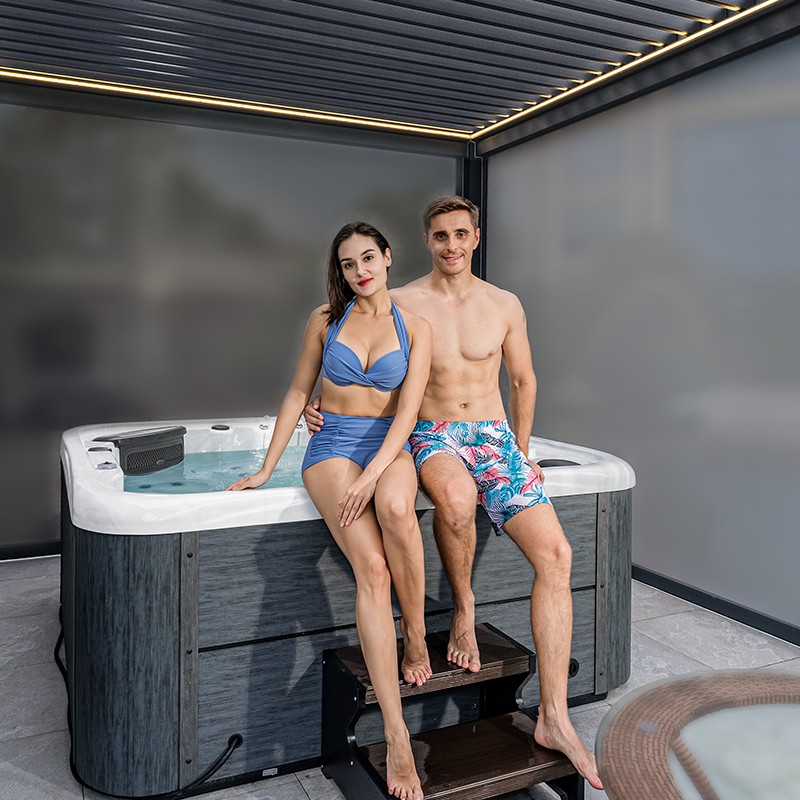
Why do holes appear in outdoor acrylic hot tubs?
Although outdoor acrylic spa hot tubs offer excellent weather and aging resistance, they are ultimately composite structures rather than indestructible, rigid materials. Modern outdoor acrylic hot tubs typically consist of a two-layer core structure: an outermost acrylic layer that provides the finish, tactile feel, and waterproofing, and an underlying fiberglass-reinforced layer that ensures load-bearing capacity and structural stability. While this composite structure balances aesthetics with strength, it remains susceptible to damage from external impacts or prolonged stress.
External impact is the most common cause of holes. Examples include a sharp tool striking the tub body during transport or a metal object dropping onto the surface during outdoor use. Studies indicate that over 35% of damage cases involving outdoor acrylic hot tubs are linked to mechanical impact.
A second cause is the propagation of cracks due to aging. Although high-quality acrylic is UV-resistant, prolonged exposure to ultraviolet rays, thermal cycling, and fluctuating water pressure can lead to micro-cracks in areas of localized stress concentration. If left untreated, these micro-cracks can gradually expand into holes.
A third cause involves equipment modification or disassembly. Many users replace massage jets, install LED lights, or remove old components; improper handling during drilling or sealing can directly damage the hot tub's acrylic surface.
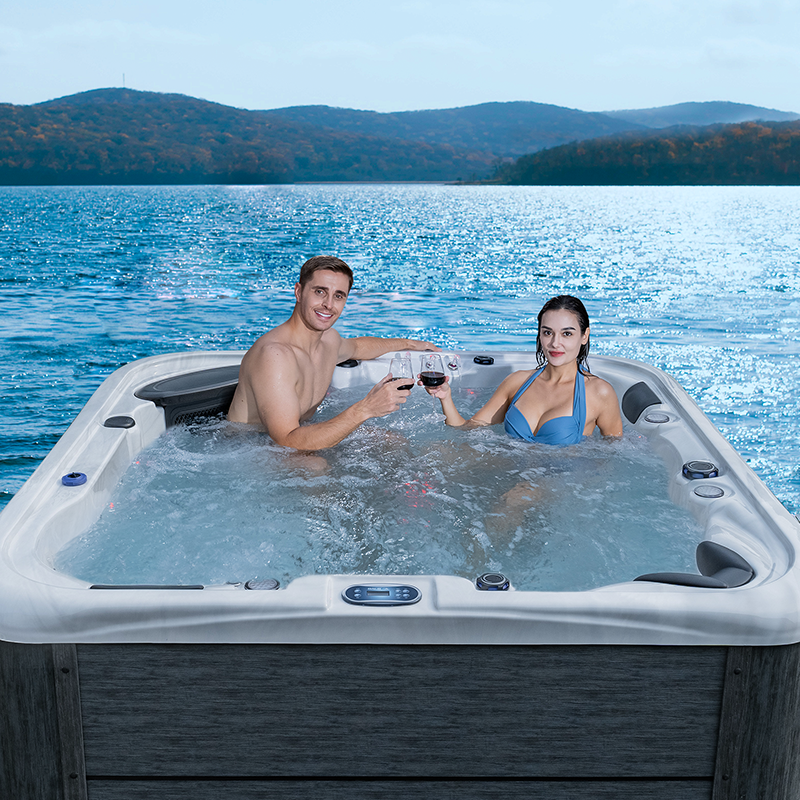
Can holes in outdoor jacuzzi acrylic tubs be repaired?
Most can, though it depends on the specific situation.
Not all holes fall into the same category of damage. According to industry repair standards, holes are generally classified into three types: small holes, medium-sized structural damage, and large, full-penetration breaches.
1. Small holes: Usually repairable
Holes with a diameter of less than 5 millimeters are typically classified as minor damage. These often result from screw holes, slight impacts, or small cracks.
The success rate for repairing minor damage is very high. Professional repair data shows a success rate of over 90% for small holes, and the repair generally does not affect the hot tub's normal operation.
2. Medium-sized holes: Repairable, but more challenging
Holes with diameters between 5 millimeters and 50 millimeters usually require structural repair. In these cases, it is necessary to address not only the surface layer but also the fiberglass-reinforced backing. This type of repair involves:
•Filling material
•Backing reinforcement
•Surface sanding
•Polishing and coloring
If handled correctly, an outdoor acrylic spa hot tub can remain in use for many more years.
3. Large holes: Assessing whether repair is worthwhile
If a hole exceeds 50mm in diameter, or if visible cracks are spreading from the edges, the issue goes beyond the hole itself to the overall structural stability.
In such cases, even if repair is technically feasible, the cost could approach 40% to 70% of the price of a replacement unit. Therefore, large-scale damage usually requires a professional assessment.

Why shouldn't you just use any adhesive to repair an outdoor acrylic hot tub?
This is a common mistake made by DIY enthusiasts. Upon discovering a hole, many people's first instinct is to fill it with silicone, glazing sealant, epoxy, or even construction adhesive. However, for outdoor acrylic spa hot tubs, these methods often provide only a temporary fix for leaks without truly restoring structural integrity.
The reason lies in the demanding environment these hot tubs endure. They must withstand not only static water pressure but also dynamic loads. A water-filled, four-person outdoor jacuzzi acrylic tub can have a total weight of 1,500 to 2,500 kilograms.
This means the repair material must possess the following properties:
•Waterproofing
•Heat resistance
•UV resistance
•Resistance to expansion and contraction
•Compatibility with acrylic
Standard adhesives often meet only some of these requirements.
For instance, while silicone is waterproof, it lacks sufficient strength; ordinary epoxy is hard but prone to cracking due to thermal expansion and contraction. Consequently, repairing an outdoor jacuzzi acrylic tub requires more than just relying on general-purpose adhesives.
What materials are commonly used to repair outdoor acrylic hot tubs?
Professional repairs typically utilize the following types of materials:
1. Acrylic repair paste
This is the most common material for surface repairs. Its advantages include good compatibility with the original acrylic material and ease of sanding and polishing after application.
Suitable for:
•Small holes
•Scratches
•Surface chips
2. Two-component epoxy resin
Suitable for repairing deeper holes. Two-component epoxy materials offer high strength after curing, providing robust structural support.
However, it is crucial to select a product specifically designed for high-temperature and humid environments.
3. Fiberglass Reinforcement Layer
If the hole extends all the way through to the structural layer, simply filling the surface is insufficient. In such cases, a fiberglass layer is typically added to the back to restore structural integrity.
This step is particularly important for large holes.
How do you repair a hole in an outdoor acrylic hot tub?
The repair process for acrylic spa hot tubs is far more complex than most people realize. Professional repairs generally follow the procedure outlined below.
Detailed Repair Steps
Step 1: Drain and Dry Completely
Before starting the repair, the outdoor acrylic spa hot tub must be completely drained, and the damaged area must be thoroughly dried.
Residual moisture can significantly compromise the bond strength.
Step 2: Clean the Edges of the Hole
Use fine-grit sandpaper or a sanding tool to clean the edges of the hole and remove any loose material.
The goal of this step is to ensure a strong bond between the repair material and the original structure.
Step 3: Structural Reinforcement
If the hole in the acrylic spa hot tub is deep, fiberglass reinforcement should first be applied to the back of the shell.
Many repair failures occur because the work was limited to the surface, neglecting the internal structure.
Step 4: Fill the Hole
Fill the hole using acrylic repair compound or professional-grade resin, ensuring no air bubbles remain trapped inside.
The filler is usually applied so that it sits slightly higher than the surrounding surface, making subsequent sanding easier.
Step 5: Sanding and Polishing
Once the material has fully cured, sand the area progressively using different grits of sandpaper, followed by polishing.
With a high-quality repair, the patched area can become virtually invisible to the naked eye.
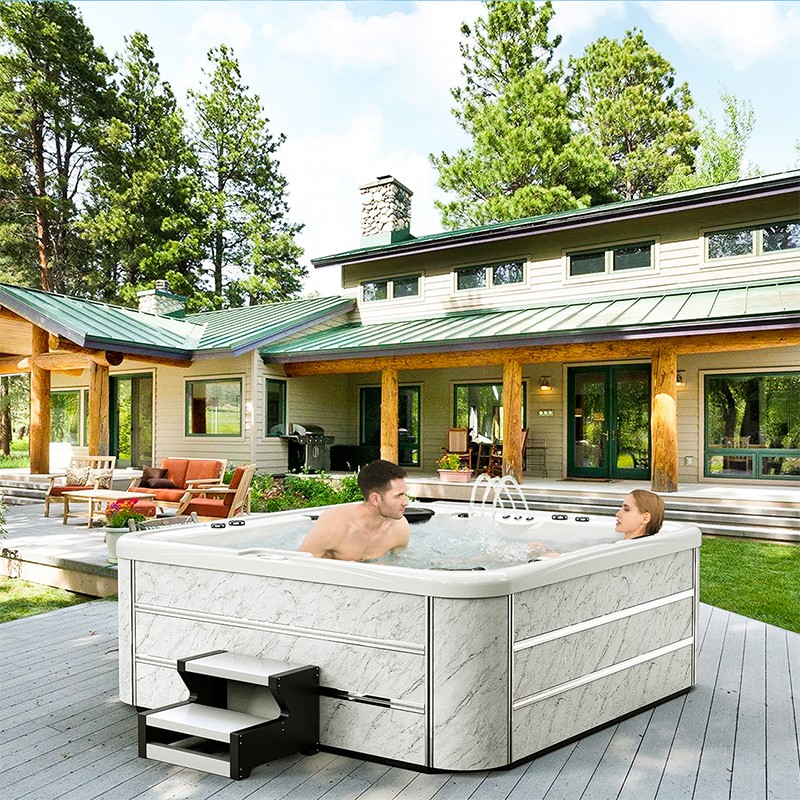
DIY Repair or Professional Service?
This depends on the extent of the damage.
For minor holes, users with some DIY skills can certainly attempt the repair themselves. However, industry statistics indicate a failure rate of approximately 42% for first-time DIY repairs. Common causes of failure include:
•Inadequate surface preparation
•Incorrect material selection
•Insufficient curing time
•Neglecting structural reinforcement
If your outdoor acrylic hot tub exhibits any of the following issues, it is recommended to contact a professional repair team directly:
•Large holes
•Existing leaks
•Damage near jets
•Damage near load-bearing areas
•Spreading cracks
While professional repair costs more upfront, it is usually more cost-effective in the long run.
How long will an outdoor acrylic hot tub last after repair?
This is one of the questions users care about most.
The lifespan of the repair depends primarily on:
•The size of the hole
•The quality of repair materials
•The quality of workmanship
•Subsequent maintenance
Industry experience shows that a high-quality repair can extend the usable life of an outdoor acrylic spa hot tub by 3 to 8 years, with some top-tier repairs lasting over 10 years.
For small holes, the impact on the tub's overall lifespan is usually minimal.
How can you prevent new holes from forming in your outdoor acrylic hot tub?
Prevention is always more economical than repair.
To reduce the risk of damage to your outdoor acrylic hot tub, consider the following measures:
First, avoid heavy impacts on the tub shell.
Second, do not use abrasive or hard cleaning tools.
Third, regularly inspect the area around the jets for cracks.
Fourth, prevent water from freezing and expanding during winter.
Fifth, conduct a structural inspection at least once a year.
Data shows that regular maintenance can reduce the probability of major damage to outdoor acrylic spa hot tubs by approximately 40%.
FAQ
What happens if small holes in a jacuzzi acrylic tub are left unrepaired?
Small holes can gradually enlarge due to thermal cycling and water pressure, eventually leading to leaks.
Can standard silicone sealant be used to repair an acrylic hot tub?
It is not recommended. Standard silicone lacks sufficient structural strength and usually only provides a temporary fix for leaks.
Will repairing an acrylic hot tub affect its appearance?
With high-quality repair work, the repaired area on many outdoor jacuzzi acrylic tubs is barely noticeable.
Is it expensive to repair an acrylic spa hot tub?
Small repairs usually cost less; the cost of major structural repairs depends on the extent of the damage and labor costs.