


What filtration systems are used in high-end spa jacuzzi outdoors?
2026-10-08 15:30When purchasing an outdoor spa hot tub, many consumers prioritize factors such as the number of massage jets, aesthetic design, thermal insulation, and smart control features. However, the internal water treatment system is often what truly determines long-term maintenance costs, water quality stability, and user comfort. Without a comprehensive filtration solution, even a high-end spa hot tub with luxurious features can suffer from issues like cloudy water, unpleasant odors, bacterial growth, and pipe contamination over time. Therefore, the filtration system is not merely an auxiliary feature but a crucial benchmark for product quality.
High-end outdoor hot tubs typically employ multi-stage, integrated water treatment solutions tailored to water circulation patterns, sources of contamination, and user needs, rather than relying on a single filtration method. Common configurations include cartridge filtration, micro-filtration, sand filtration, ozone purification, UV sterilization, and smart water quality management systems. Each technology plays a specific role, working in concert through physical filtration, chemical oxidation, and intelligent monitoring to maintain stable water quality.

Why do high-end outdoor hot tubs require professional filtration systems?
The primary difference between an outdoor spa hot tub and a standard indoor bathtub is that the former must maintain a large volume of warm water over extended periods while remaining directly exposed to the outdoor environment. Typically, these tubs operate at temperatures between 36°C and 40°C; while this warmth is ideal for relaxation, it also complicates water quality management.
First, the outdoor environment introduces constant external contamination. For instance, hot tubs installed in courtyards or on terraces are susceptible to airborne dust, pollen, leaf debris, insects, and other suspended particles. Without effective filtration, these contaminants accumulate, reducing water clarity and placing an increased burden on the disinfection system.
Second, use by bathers generates significant organic contamination. When people enter the hot tub, substances such as skin oils, sweat, skincare products, sunscreen, and dead skin cells are released into the water. Although often invisible to the naked eye, these substances serve as nutrients for microbial growth; long-term accumulation can lead to issues like oily surface films, unpleasant odors, and excessive foaming.
Furthermore, the high-temperature water environment places greater demands on water treatment capabilities. Compared to cold water environments, warm circulating water is more prone to microbial proliferation; therefore, outdoor spa hot tubs require continuous filtration and purification rather than relying solely on periodic water changes.
Consequently, a robust spa jacuzzi outdoor filtration system must address three core issues:
First, the rapid removal of suspended impurities; second, the reduction of organic pollutant concentrations; and third, the control of bacterial and microbial growth. High-end products typically achieve consistent water quality management through a combination of multiple filtration technologies.

What are the common filtration systems found in high-end outdoor hot tubs?
Current high-end outdoor hot tub filtration systems primarily utilize six types of technologies: cartridge filtration systems, micro-filtration systems, sand filter systems, ozone purification systems, UV sterilization systems, and intelligent water quality management systems. Among these, the first few are primarily responsible for water purification, while intelligent systems enhance the level of automated management.
The appropriate combination of systems depends on the specific type of spa jacuzzi outdoor, considering factors such as capacity, usage frequency, installation environment, and maintenance requirements. For instance, a "cartridge plus ozone" setup may be suitable for typical residential backyard use, whereas high-traffic environments like hotels and resorts require more comprehensive circulation filtration and automatic disinfection systems.
1. Cartridge Filtration Systems: The Fundamental Physical Filtration Method for Outdoor Hot Tubs
Cartridge filtration is currently the most widely used filtration technology for outdoor spa hot tubs and serves as a standard feature in most residential models. It operates by using a circulation pump to continuously draw water from the tub into a filtration chamber, where the filter cartridge material traps impurities before the treated water is returned to the tub.
Common cartridge materials include polyester fiber, pleated paper, polypropylene (PP), and high-density foam. Pleated cartridges, in particular, are frequently used in high-end outdoor hot tubs due to their large filtration surface area; the pleated design maximizes surface area within a compact space, thereby enhancing the capacity to capture impurities.
For example, a standard-sized pleated cartridge may offer an unfolded filtration area of 1 to 2 square meters, effectively capturing hair, dust, skin flakes, and various suspended particles. High-quality cartridges typically offer filtration precision in the 20–50 micron range, playing a significant role in maintaining water clarity. However, cartridge filtration has certain limitations. It primarily targets physical impurities and cannot fully eliminate dissolved organic pollutants or microorganisms. Consequently, high-end outdoor hot tubs rarely rely solely on cartridges; instead, they often incorporate ozone, UV, or other purification methods to enhance overall water treatment effectiveness.
Regarding routine maintenance, filter cartridges require periodic rinsing or replacement. High usage frequency—such as when multiple people use the tub weekly—significantly accelerates cartridge clogging. Therefore, selecting models with larger filtration surface areas and superior circulation capabilities can effectively reduce maintenance frequency.
2. Micro-filtration Systems: Enhancing Water Clarity in Outdoor Hot Tubs
As consumer demand for high-quality spa experiences grows, micro-filtration technology is increasingly being adopted in premium outdoor spa hot tubs. Compared to traditional cartridges, micro-filtration systems can capture much finer suspended particles, maintaining superior water clarity.
While standard filtration systems primarily target larger particles, micro-filtration technology captures minute impurities such as tiny skin flakes, organic particles, and certain colloidal substances. Some high-performance micro-filtration units offer filtration precision in the 5–20 micron range.
Micro-filtration systems offer distinct advantages for private villas, luxury hotels, and commercial spa environments, where maintaining long-term visual water clarity is a priority.
However, higher filtration precision inevitably increases flow resistance; thus, the hot tub's design must ensure the circulation pump is properly matched to the system. Insufficient filtration surface area—even with high precision—can reduce circulation efficiency, thereby compromising massage jet pressure and the overall user experience.
For instance, an outdoor spa hot tub with a capacity of approximately 1,500 liters, equipped with a circulation pump delivering 40–60 liters per minute and running for several hours daily, can effectively increase water turnover rates and ensure stable filtration system performance.
3. Sand Filter Systems: Suitable for Large Outdoor Hot Tubs and Commercial Spa Environments
Sand filtration systems were originally widely used in swimming pool water treatment but have recently been adopted for large spa jacuzzi outdoors and commercial spa systems.
The principle behind sand filtration involves passing water through a bed of quartz sand or glass filter media, which traps impurities as the water flows through. Compared to standard cartridge filters, sand filters offer greater filtration capacity, longer maintenance intervals, and suitability for high-volume water circulation.
For large-capacity spa jacuzzi outdoors—such as modular spa units exceeding 3,000 liters—sand filtration alleviates the burden of frequent filter replacements. High-capacity filtration equipment enhances system stability, particularly in settings with high daily usage, such as hotels and resorts.
However, sand filter systems are relatively bulky. Since they require additional equipment space, they are not utilized in all residential modern outdoor spa tub models.
Some high-end projects now employ glass filter media instead of traditional quartz sand; glass media offers superior resistance to contamination, inhibits bacterial adhesion, and improves long-term operational performance.
4. Ozone Purification Systems: A Key Auxiliary Technology for High-End Outdoor Hot Tubs
Ozone purification is a widely adopted water treatment technology in high-end outdoor hot tubs. As a powerful oxidizing agent, ozone decomposes organic contaminants in the water through oxidation and reduces the activity of certain microorganisms.
The process typically involves an ozone generator producing ozone, which is injected into the circulation piping and thoroughly mixed with the water to complete the oxidation treatment.
The primary value of ozone systems for outdoor spa hot tubs lies in their ability to treat organic contaminants introduced by bathers. Substances such as sweat, sebum, and sunscreen place a load on water quality; ozone helps break down these pollutants, thereby reducing odors and foam formation.
Additionally, ozone systems can reduce the required dosage of traditional disinfectants, enhancing the overall bathing experience.
It is important to note, however, that ozone does not entirely replace other disinfection methods. Because ozone has a limited lifespan in water, high-end outdoor hot tubs often combine ozone with cartridge filtration and UV technologies to ensure more stable water quality control.
5. UV Sterilization Systems: A Physical Disinfection Solution for Enhanced Water Safety
UV sterilization systems utilize ultraviolet light at specific wavelengths to disrupt the DNA structure of microorganisms, thereby inhibiting bacterial reproduction.
Compared to traditional chemical disinfection, UV technology leaves no chemical residues and produces no noticeable odor, making it increasingly popular among users of high-end outdoor hot tubs. UV systems are typically installed within the circulation piping; as water flows through the UV treatment zone, ultraviolet light inactivates any microorganisms present.
However, UV systems have operational limitations. Since they only treat the water flowing through the device itself, they cannot independently resolve all contamination issues within the entire hot tub environment. Consequently, in professional spa jacuzzi outdoor systems, UV technology is usually combined with physical filtration and ozone treatment.
A common, well-established combination involves:
Cartridge filtration + Ozone purification + UV sterilization.
This combination simultaneously addresses particulate contamination, organic pollutants, and microbial risks, making it a standard water treatment solution for high-end outdoor hot tubs.
6. Smart Water Quality Management Systems: The Future of Outdoor Hot Tubs
With the advancement of smart home technology, high-end outdoor hot tubs are increasingly incorporating smart water quality management features.
Traditional water treatment requires manual monitoring of water color and quality, as well as manual adjustment of maintenance schedules. In contrast, smart systems utilize sensors to monitor key indicators—such as water temperature, pH levels, and oxidation-reduction potential (ORP)—in real time.
When the system detects changes in water quality, it can automatically alert the user to perform maintenance; some high-end models can even automatically adjust circulation times and purification modes.
The advantages of smart technology lie not only in convenience but also in reduced maintenance costs. For hot tubs installed outdoors for long periods, automated management minimizes human error and enhances equipment stability.
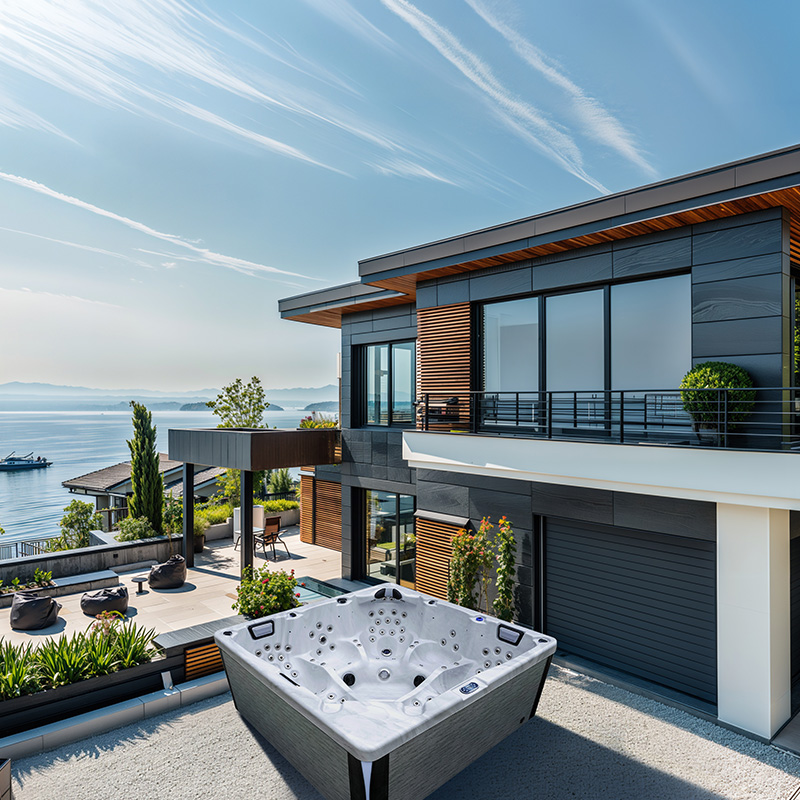
Current Industry Challenges Facing Outdoor Hot Tub Filtration Systems
Despite continuous upgrades in filtration technology, the spa jacuzzi outdoor industry still faces several practical issues.
First, some products overemphasize aesthetics and massage features while neglecting water treatment capabilities. Consumers often focus on the number of jets, lighting effects, and smart features during purchase, overlooking the adequacy of the filtration system. In reality, long-term water quality management is often more critical than simply adding more massage features.
Second, a lack of transparency regarding filtration specifications is another industry issue. Some manufacturers advertise "advanced filtration systems" without clearly disclosing key data—such as filtration precision, circulation flow rate, ozone output, and UV power—making it difficult for consumers to assess the product's true performance.
Additionally, maintenance costs are often overlooked by users. Although spa jacuzzi outdoors feature automatic circulation systems, this does not mean they are entirely maintenance-free. Filter cartridge cleaning, water quality testing, and pipeline disinfection remain crucial aspects of long-term operation.
Therefore, when selecting a spa jacuzzi outdoor, one should focus not merely on the equipment price, but on the total lifecycle operating costs and ease of maintenance.
How do you choose the right filtration system for your outdoor hot tub?
Different usage environments require different filtration systems.
For standard residential modern outdoor spa tubs, a combination of filter cartridges, a circulation pump, and ozone purification is recommended. This setup is well-proven, easy to maintain, and meets daily household needs.
For high-end villa owners with frequent usage, adding UV sterilization and an intelligent water quality monitoring system can enhance water quality stability.
Commercial environments like hotels and resorts require more robust circulation and filtration capabilities; they typically employ a combination of sand filters, high-flow circulation pumps, ozone, UV, and automated control systems to handle high-frequency use by multiple people.
When selecting a filtration system for an outdoor hot tub, consider the following key parameters:
First, circulation capacity. The circulation speed determines the efficiency of water turnover.
Second, filtration precision. Higher precision means a greater ability to remove fine contaminants.
Third, purification method. Does it utilize supplementary technologies like ozone or UV?
Fourth, maintenance costs. Are the filter cartridges easy to replace, and is the system convenient to service?
Only when these factors are well-balanced can the spa jacuzzi outdoor deliver its full value.
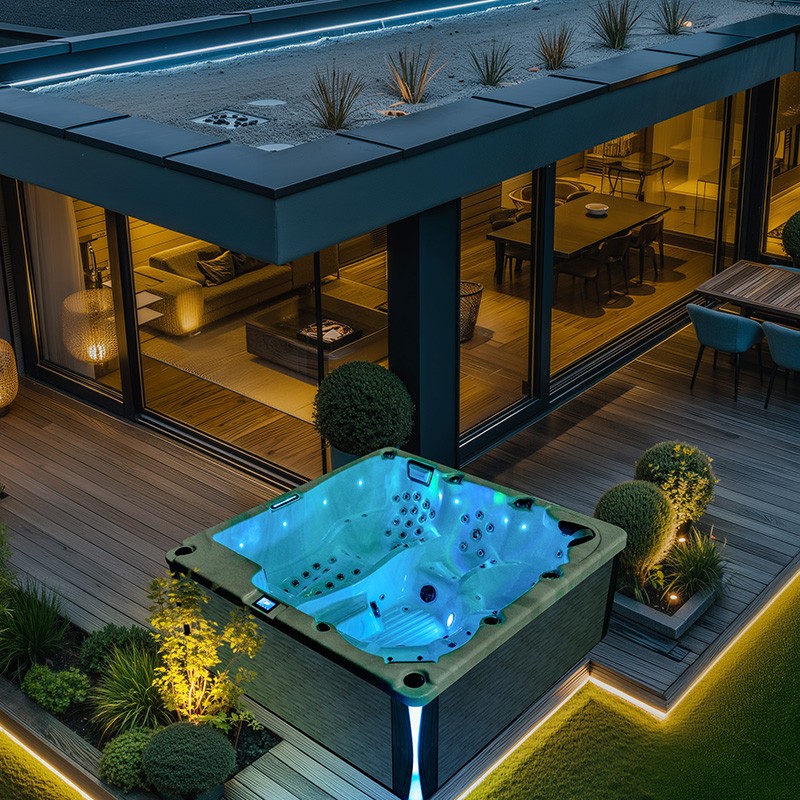
FAQ: Frequently Asked Questions about High-End Outdoor Hot Tub Filtration Systems
Q1: How often does an outdoor hot water bath filtration system need to be cleaned?
The specific schedule depends on usage frequency and environmental conditions. For typical household use, it is generally recommended to check and clean the filter cartridge every 1–2 weeks; however, frequent use by multiple people requires more frequent maintenance.
Q2: Is a filter cartridge system alone sufficient for a modern outdoor spa tub?
It meets basic needs, but for consistently stable water quality over the long term, adding an ozone or UV auxiliary system is recommended. Filter cartridges primarily remove particulates and have limited effectiveness against microorganisms and dissolved contaminants.
Q3: Is a larger ozone system better for a modern outdoor spa tub?
Not necessarily. Ozone output must be matched to the hot tub's capacity and water circulation speed. Insufficient output fails to provide effective treatment, while excessive output can disrupt the water's chemical balance.
Q4: Can the UV sterilization system in a modern outdoor spa tub completely replace chemical sanitizers?
Generally, no. UV is primarily used to help reduce microbial risks; high-end outdoor hot tubs typically employ a combination of water treatment methods.
Q5: What key specifications of the filtration system should be prioritized when purchasing a high-end outdoor hot tub?
It is recommended to focus on the circulation pump flow rate, filtration precision, filter cartridge capacity, the inclusion of ozone and UV systems, and the presence of smart water quality management features. These factors directly impact the long-term user experience.