


Do I Need to Run the Water Pump When Using an Outdoor Spa Hot Tub?
2026-11-23 15:35Outdoor spa hot tubs have become a common leisure feature in residential backyards, on patios, and at hotels and resorts. Beyond simply providing a relaxing soak in warm water, they offer an enhanced outdoor spa experience through massage jets, water circulation, and thermostatic heating systems.
However, many users often wonder: "Do I need to keep the water pump running while using the hot tub?" If the pump is turned off, will it affect water temperature, filtration, or safety? Conversely, will leaving it on constantly lead to higher electricity bills or shorten the equipment's lifespan?
These questions, while seemingly straightforward, actually touch upon several integrated components of an outdoor spa hot tub, including its water circulation, heating, filtration, and massage systems. For first-time owners, a lack of understanding regarding how these pumps function can easily lead to improper operation, reduced filtration efficiency, equipment malfunctions, or even issues with water quality.
This article provides a detailed analysis—covering the core functions of water pumps, various usage scenarios, optimal run times, energy consumption, safety precautions, and equipment maintenance—to help you master the proper use of your outdoor whirlpool spa hot tub’s pump system.
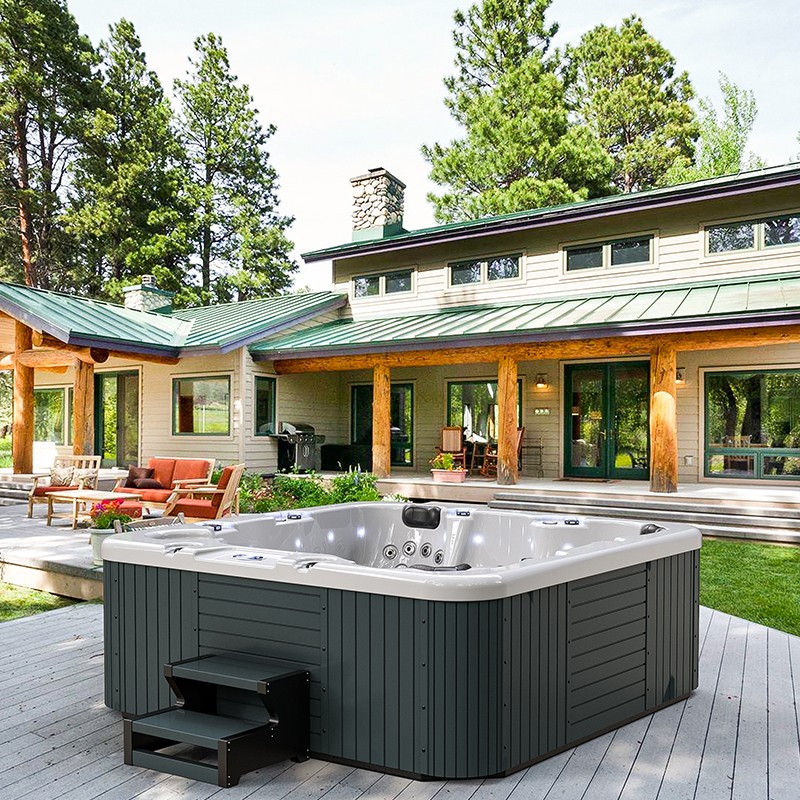
Do you actually need to run the water pump when using an outdoor hot tub?
The answer is: You must ensure that the system’s required water circulation functions remain active; however, this does not mean that the massage jet pumps need to be running throughout your entire soak.
Understanding this distinction is key to grasping how an outdoor spa hot tub’s pump system operates.
Many users assume that simply powering on the whirlpool spa hot tub is enough to trigger the heating system, without needing to consider the water pump. In reality, most electrically heated outdoor hot tubs rely on a pump to circulate water—pushing it through the filtration system and the heater before returning it to the tub.
If the pump stops running, the specific consequences depend on the unit's design: some models may cease heating and trigger a "low-flow" protection mode, while others may utilize a separate, dedicated circulation pump to keep the water moving.
First, it is necessary to distinguish between two different types of pumps for outdoor hot tubs:
1. Circulation Pump
The circulation pump is primarily responsible for keeping the water in the spa hot tub in constant motion, directing it through the filter, heater, and other water treatment components. It typically operates at a lower power level and produces relatively little noise.
Its main functions include maintaining water circulation, facilitating filtration, ensuring even heat distribution, and helping to thoroughly mix sanitizing agents into the water.
Some high-end outdoor whirlpool spa hot tubs are equipped with a dedicated, independent circulation pump that can run automatically according to the control system’s settings, eliminating the need for the user to manually turn it on before every soak.
2. Jet Pump (Therapy Pump)
The jet pump is designed to provide water pressure to the massage jets. By forcing water through these jets, it creates streams of varying intensity, which can be used to massage specific areas of the body, such as the shoulders, back, waist, and legs.
These pumps generally have a higher power rating than circulation pumps; some models even feature both low-speed and high-speed operating modes.
Users can activate the jet pump via the control panel when they wish to enjoy a water massage; however, if one simply wants a quiet soak, the massage function does not necessarily need to be turned on.
It is important to note that not all outdoor spa hot tubs are equipped with a separate, independent circulation pump. Some models utilize a "dual-speed" main pump: it operates at a low speed for circulation, filtration, and heating, and at a high speed to provide the pressure for the massage jets.
Consequently, you cannot determine whether a pump needs to be activated solely by looking at the "Pump" or "Jets" buttons on the control panel; you must first understand the specific pump configuration of your particular hot tub.
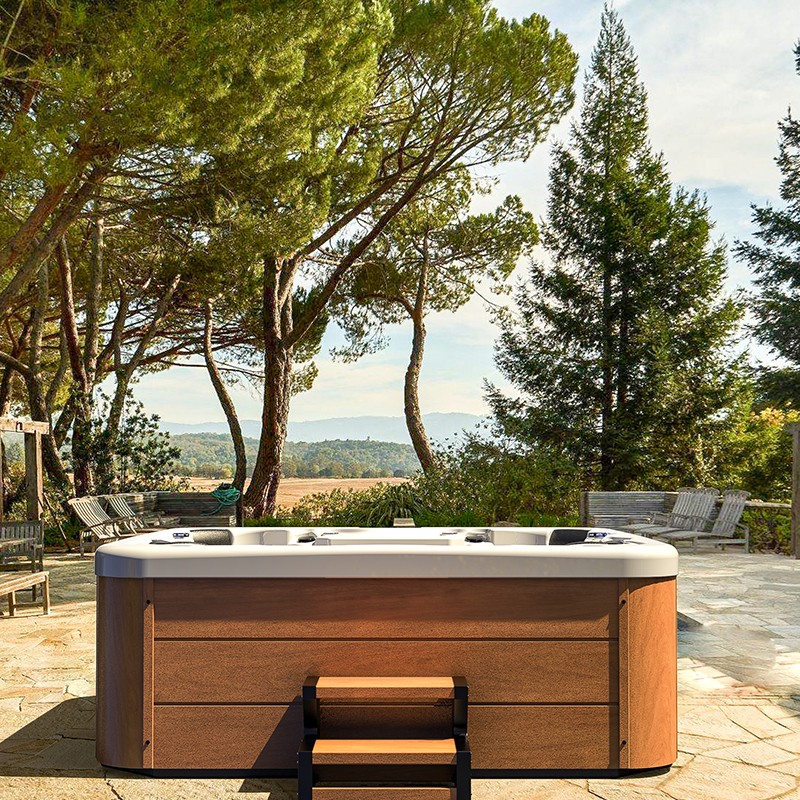
How should the pumps in an outdoor hot tub operate in different scenarios?
Hot tub pumps are not limited to simple "on" or "off" states. Different usage scenarios—such as routine filtration, heating, or massage—have varying requirements for water circulation. Properly configuring the pump operating modes not only ensures an optimal soaking experience but also helps minimize unnecessary energy consumption.
1. During Normal Use: Ensure Proper Water Circulation; Activate Massage Pumps as Needed
When entering an outdoor spa hot tub, first verify that the water level is correct, the heating system is functioning properly, and the water circulation system is operating according to the manufacturer’s specifications.
If the hot tub is equipped with a dedicated circulation pump, its operation is typically managed automatically by the control system, requiring no manual intervention. If the unit utilizes a dual-speed primary pump, circulation and filtration may be handled via the low-speed setting.
If you wish to use the massage features, you can activate the massage pumps. Some outdoor whirlpool spa hot tubs offer independent control for different massage zones—such as back, leg, or full-body hydrotherapy—allowing you to customize your experience.
Please note that massage pumps do not need to run at high speed continuously. Prolonged use at high speed can lead to increased motor temperatures and higher energy consumption. Many units include an automatic shut-off feature—such as a 15-minute high-speed run timer—to protect the system; please refer to your specific equipment manual for details.
2. During Heating: Water Pumps Must Work in Tandem with the Heating System
Outdoor spa hot tubs typically use an electric heater to raise the water temperature to a set value (e.g., 37°C, 38°C, or 39°C).
However, the heater does not operate in isolation. The water pump must circulate water from the tub through the heater, ensuring that the heated water is returned to the tub.
If the water flow is insufficient, the heating system may fail to dissipate heat effectively, leading to localized overheating—which could trigger safety mechanisms like an "overheat" or "low-flow" error.
Therefore, during the heating process, the circulation pump (or the primary pump responsible for the heating loop) must operate as required by the control system.
For outdoor spa hot tubs equipped with an automated control system, manual intervention is generally unnecessary; the unit will automatically activate the pump and heater based on readings from the water temperature sensor.
3. When the Hot Tub Is Not in Use: Do Not Simply Turn Off All Pumps
This is a common point of confusion for many users.
Some may assume that if the whirlpool spa hot tub is not currently in use, the pumps should be turned off to save on electricity. In reality, stopping all water circulation for an extended period can lead to inadequate water turnover, insufficient filtration, and an uneven distribution of sanitizing agents. In outdoor spa hot tubs, where water temperatures are typically kept high, a lack of effective, long-term water circulation can make maintaining proper hygiene more challenging.
Therefore, even when the whirlpool spa hot tub is not in use, it should continue to operate according to the filtration cycles and circulation programs established for the equipment. Some outdoor hot tubs perform one or more filtration cycles daily, while other models utilize a low-power circulation pump designed for continuous operation.
For instance, certain control systems support a 24-hour circulation mode, though they may automatically pause for periods based on the water temperature. This means the circulation pump does not necessarily need to run non-stop; its actual operating time depends on the equipment's specific control logic.
4. Winter and Low-Temperature Environments: The Pump’s Role in Freeze Protection
Unlike indoor hot tubs, outdoor units are constantly exposed to the elements, facing challenges such as low temperatures, cold weather, and the risk of freezing.
If the water temperature inside the tub drops too low due to cold ambient conditions, the plumbing and internal components could freeze and sustain damage.
To address this, many outdoor spa hot tubs are equipped with an automatic freeze-protection system. When temperature sensors detect a risk of freezing, the control system may automatically activate the water pump to keep the water moving; some units may also engage the heater.
For example, some control systems trigger a freeze-protection cycle when the temperature near the heater drops to approximately 6.7°C (44°F), and they conclude the protection sequence once the temperature rises back to about 7.2°C (45°F). These specific thresholds vary by control system and manufacturer; therefore, these figures should not be considered a universal standard for all outdoor whirlpool spa hot tubs.
Important Note: When using an outdoor whirlpool spa hot tub during the winter, it is not advisable to simply cut off the power supply in an attempt to save on electricity costs. If you intend to stop using the unit for an extended period, you should follow the manufacturer’s specific procedures for winter drainage and freeze protection.
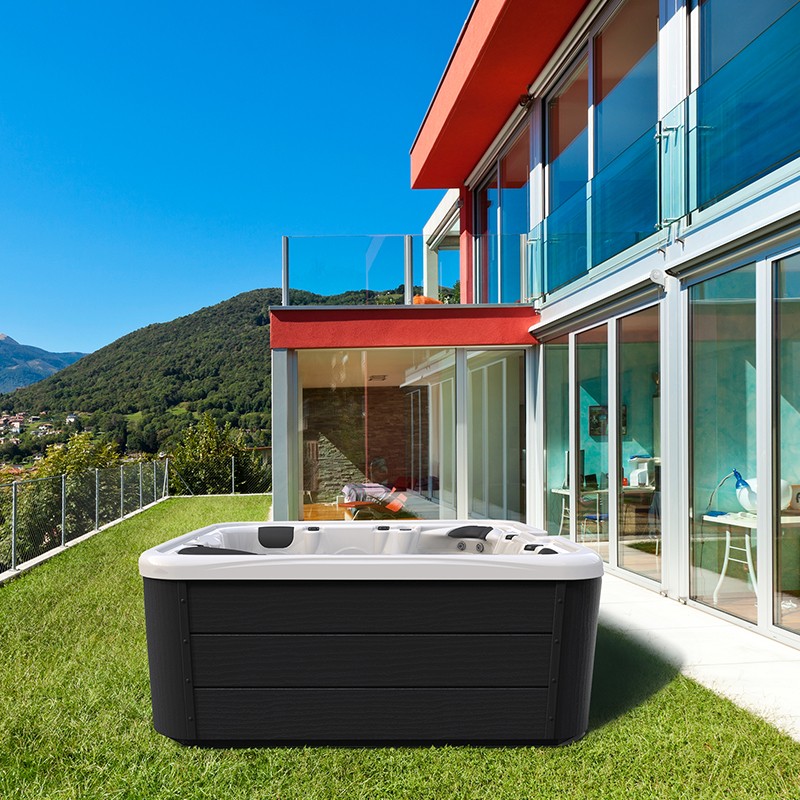
Does the continuous operation of an outdoor hot tub pump increase electricity costs?
Energy consumption is a major concern for consumers, especially for households that use their outdoor spa hot tub daily.
In reality, a pump’s electricity consumption depends on its power rating, duration of operation, working mode, and overall equipment efficiency. There is typically a significant difference in power consumption between a circulation pump and a massage (jet) pump. Circulation pumps are primarily used for low-flow water circulation and typically have a lower power rating, whereas massage pumps are designed to provide high water pressure and therefore have a relatively higher power rating.
The power consumption of a pump can be estimated using the following formula:
Power Consumption (kWh) = Pump Power (kW) × Operating Time (hours)
For example, if a circulation pump with a rated power of 0.15 kW runs for a total of 12 hours per day, its theoretical power consumption would be:
0.15 × 12 = 1.8 kWh.
If a massage pump with a power rating of 1.5 kW runs for 1 hour per day, its theoretical power consumption would be:
1.5 × 1 = 1.5 kWh.
As this example illustrates, a low-power circulation pump—even when running for a longer duration—does not necessarily consume more electricity than a high-power massage pump running for a shorter period.
Below is an estimation table provided for user reference:
| Pump Type | Assumed Power | Daily Runtime | Daily Energy |
| Circulation Pump | 0.15 kW | 12 hours | 1.8 kWh |
| Massage Pump | 1.5 kW | 1 hour | 1.5 kWh |
| Massage Pump | 1.5 kW | 2 hours | 3.0 kWh |
The figures above are for calculation purposes only and do not represent the actual power specifications for all outdoor whirlpool spa hot tubs. For precise power consumption, please refer to the product nameplate or actual measured data.
Furthermore, the total electricity consumption of an outdoor spa hot tub includes the heater, control system, lighting, and other auxiliary equipment. In colder regions, in particular, the heater is often a major factor influencing total electricity costs.
Therefore, users should not rely solely on reducing pump operating time to manage electricity costs; instead, they should consider factors such as the quality of the thermal cover, the tub’s insulation structure, pump efficiency, and heating settings.
What happens if an outdoor hot tub is used without running the pump?
If the system requires a pump for water circulation but operates for an extended period without water flow, several issues may arise:
1. Reduced filtration effectiveness. The filtration system relies on the pump to circulate water, carrying hair, skin cells, and other suspended impurities into the filter. If the pump stops, filtration efficiency suffers, making it easier for impurities to accumulate inside the tub.
2. Uneven water temperature distribution. The pump circulates heated water throughout the tub, ensuring a more uniform temperature across different areas. Without proper circulation, temperature variations may occur in certain areas, compromising the comfort of your soak.
3. Disinfectant distribution may become uneven. Chlorine or bromine-based disinfectants require thorough mixing throughout the water to be effective. Inadequate circulation can lead to reduced sanitization in some parts of the tub.
4. The heating system may trigger a safety shutdown. If the heater relies on a water pump for flow, the system may detect low flow once the pump stops and subsequently disable heating to protect the heating element.
It is important to note: If you simply turn off the massage jets while the dedicated circulation pump continues to operate normally, this does *not* constitute the "inadequate circulation" mentioned above.
What you must avoid is shutting down all pumps responsible for water circulation and heating while the system requires water to be circulating.
Frequently Asked Questions (FAQ) About Outdoor Hot Tub Pumps
Q1: Do I have to turn on the massage pumps when using an outdoor spa hot tub?
No. Massage pumps are primarily designed to power the massage jets and only need to be activated when you want to use the massage function. However, if your unit uses a single main pump for circulation, filtration, and heating, you must ensure that the appropriate circulation mode remains active.
Q2: Should an outdoor whirlpool spa hot tub pump run 24 hours a day?
Not necessarily. Some systems utilize a 24-hour low-power circulation mode, while others operate according to preset filtration cycles. This depends on the specific pump configuration and control system; it is not recommended to alter the operating programs established by the manufacturer.
Q3: Why does the whirlpool spa hot tub pump sometimes start automatically?
This is generally normal. Automatic activation can be triggered by filtration cycles, temperature monitoring, heating requirements, automated cleaning routines, or freeze-protection protocols during winter. The specific logic for these activations varies by control system.
Q4: What should I do if the whirlpool spa hot tub pump fails to start?
First, check the power supply, control panel, water level, and filter. If a "low flow" alarm appears, inspect the filter cartridge for clogs or check if the water intake is obstructed by debris. If the pump still fails to start, contact a professional technician; do not attempt to disassemble electrical components yourself.
Q5: Can I turn off the pump if I am not using the outdoor spa hot tub during the winter?
If the bathtub remains filled with water and is located in a cold environment, it is not advisable to simply switch off the power, as the automatic anti-freeze system may require the water pump to operate. If you intend to keep the unit out of service for an extended period, you should follow the manufacturer’s instructions to drain it completely, clean the plumbing lines, and carry out the necessary winterization procedures.