


Why Do Outdoor Spa Hot Tubs Develop High Phosphate Levels?
2026-11-23 15:30Many outdoor whirlpool spa hot tub owners encounter a persistent water quality issue: phosphate levels in their tubs continue to rise, often leading to problems such as green water, algae growth, clogged filters, and difficulty in maintaining stable water chemistry.
Why do phosphate levels become too high in outdoor spa hot tubs? Where do these phosphates come from? How do they affect water quality and equipment? And if testing reveals excessive phosphate levels, how should they be addressed effectively?
This article explores the issue through the lenses of water chemistry, environmental contamination, and daily usage habits, helping owners understand the primary causes of rising phosphate levels and providing practical solutions.
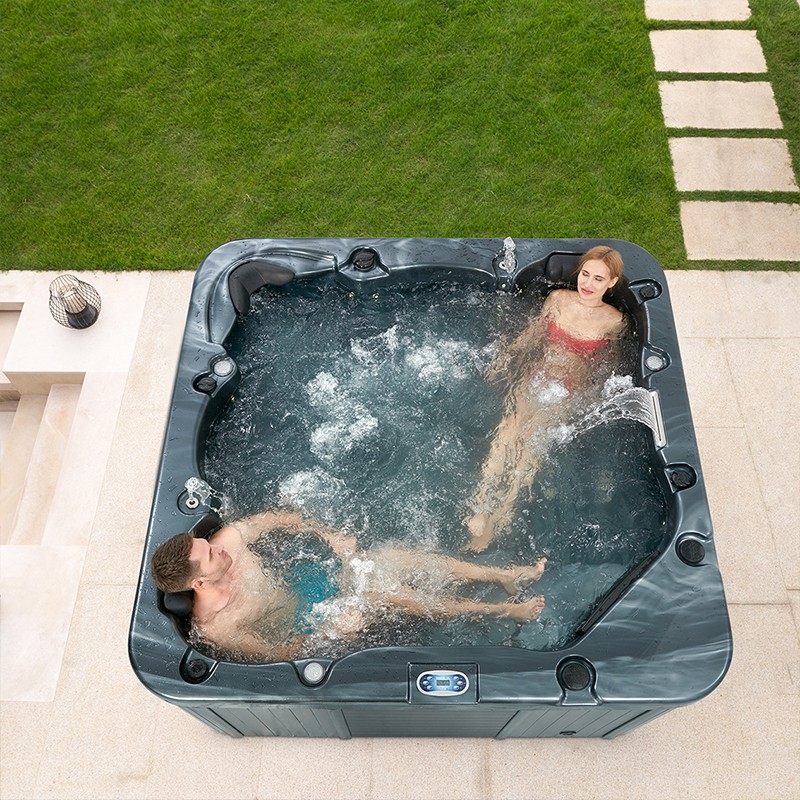
What Are Phosphates, and Why Should Outdoor Hot Tub Owners Care?
Phosphates are phosphorus-containing compounds commonly found in natural water sources, soil, cleaning products, and certain water treatment chemicals. Phosphorus is an essential nutrient for the growth of plants, algae, and various microorganisms.
In the context of an outdoor spa hot tub, phosphates are not inherently toxic, nor do they directly neutralize sanitizers. However, when phosphate concentrations are high—combined with favorable temperatures, light exposure, and other nutrients—they create an ideal environment for algae to thrive.
Compared to standard swimming pools, outdoor spa hot tubs typically hold less water, operate at higher temperatures, and experience more concentrated usage. Substances such as human sweat, skincare products, environmental dust, and other pollutants can easily accumulate within the limited volume of water.
Consequently, while phosphate levels are not the primary metric for determining the sanitary safety of a whirlpool spa hot tub, they serve as a valuable indicator when investigating the sources of water contamination.
Six Major Causes of High Phosphate Levels in Outdoor Hot Tubs
1. The Source Water Itself Contains Phosphates
This is one of the most frequently overlooked causes of rising phosphate levels in outdoor whirlpool spa hot tubs. Tap water, groundwater, and well water can vary significantly in their chemical composition depending on the region. Some water supply systems may use phosphorus-containing compounds for corrosion control, while certain water sources may also be affected by agricultural runoff or environmental pollution.
If an outdoor whirlpool spa hot tub is consistently refilled using the same water source, phosphates present in that water can accumulate in the tub.
For example, in a 1,500-liter outdoor spa hot tub, if the refill water has a phosphate concentration of 0.5 mg/L, filling the tub would theoretically introduce 750 mg of phosphates.
Solution: Before the initial fill, it is recommended to test the water source for phosphate levels, pH, total alkalinity, and calcium hardness. If high phosphate levels are detected, appropriate pre-treatment methods should be applied based on the test results.
2. Human sweat, skin oils, and other bodily contaminants
Human-derived contaminants are a persistent source of pollution in outdoor spa hot tubs.
When people use a hot tub, sweat, shed skin cells, oils, and other bodily secretions enter the water. Some of these contaminants—particularly urine and other phosphorus-containing organic matter—may contain phosphorus.
If an outdoor whirlpool spa hot tub is used frequently by multiple people who do not shower beforehand, these contaminants will accumulate over time.
Such organic matter not only increases the phosphorus load but also raises the demand for sanitization, causing disinfectants to be consumed more rapidly.
Solution: Shower before using the outdoor spa hot tub to minimize the introduction of sweat, skin oils, and bodily grime into the water. After use by multiple people, promptly check the disinfectant concentration and the overall condition of the water.
3. Residues from shampoos, body washes, and detergents
Some detergents and personal care products contain phosphates or other phosphorus-based ingredients. If users do not rinse thoroughly before entering the hot tub, residues from shampoos, body washes, conditioners, or laundry detergents may end up in the water. It should be noted that while not all cleaning products contain phosphates, the surfactants and other chemical components they contain can still increase the organic contamination load in an outdoor jacuzzi spa hot tub.
Solution: Rinse your body thoroughly with clean water before entering the hot tub. Avoid wearing swimwear that may retain detergent residues, and minimize the direct contact of cleaning products with the whirlpool spa hot tub water.
4. Contamination from Sunscreen, Body Lotions, and Skincare Products
Outdoor whirlpool spa hot tubs are often located in yards, on patios, or near swimming pools; users may have already applied sunscreen, body lotion, or skincare oils before getting in.
These products may contain oils, emulsifiers, surfactants, and other additives. Some specialized formulations may contain phosphorus-based substances, though not all sunscreens will directly cause an increase in phosphate levels.
More commonly, they lead to issues such as oily films on the water surface, increased foaming, filter contamination, and the accumulation of organic matter.
Solution: Avoid soaking in the spa hot tub immediately after applying large amounts of skincare products. For households that frequently use an outdoor spa hot tub, showering before entry is a simple and effective way to prevent contamination.
5. Environmental Contamination: Fallen Leaves, Soil, and Rainwater
Because outdoor whirlpool spa hot tubs are exposed to the natural environment, they are susceptible to fallen leaves, pollen, grass clippings, dust, bird droppings, and rainwater.
Plant debris and soil may contain naturally occurring organic phosphorus. Once these substances enter the spa hot tub, some phosphorus-containing components may gradually be released into the water.
During spring and autumn, in particular, there is a higher volume of fallen leaves and pollen; if the spa hot tub is not covered promptly, these contaminants can easily enter the water.
Solution: Keep the whirlpool spa hot tub covered with an insulating cover when it is not in use. Regularly remove debris floating on the water surface and clean the area surrounding the hot tub to prevent significant amounts of rainwater, soil, and plant debris from entering the water.
6. Improper Use of Water Treatment Products and Failure to Change Water Regularly
Certain specialized water treatment products, cleaning agents, and descalers may contain phosphorus-based ingredients. If users are unfamiliar with product formulations and frequently mix chemical agents from different brands, they may inadvertently increase the phosphorus load in the water.
Furthermore, failing to replace the water over an extended period is a major cause of phosphate accumulation.
Water in an outdoor spa hot tub evaporates continuously, yet non-volatile substances—such as phosphates—remain behind. If a user only tops up the water level without ever replacing the water, these dissolved substances will gradually become more concentrated.
Solution: Choose water treatment products that clearly list their ingredients and are specifically designed for outdoor spa hot tubs. Additionally, drain and replace the water periodically according to the manufacturer’s requirements. Do not attempt to substitute regular water replacement with simple top-ups.
What are the effects of high phosphate levels in an outdoor hot tub?
High phosphate concentrations do not automatically guarantee water quality issues; however, if other water conditions are suboptimal, they can lead to the following problems:
First, it increases the risk of algae growth. Phosphorus is a key nutrient for algae. If the water is also warm, exposed to ample light, and inadequately sanitized, algae can proliferate rapidly, turning the water green and reducing its clarity.
Second, it places greater strain on the filtration system. As the levels of algae, suspended particles, and other contaminants rise, the filter must process more debris. This causes filter cartridges to clog more easily, which in turn impairs circulation efficiency.
Third, it indirectly increases the consumption of sanitizers. While phosphates themselves do not directly consume large amounts of chlorine, the resulting increase in algae and organic pollutants raises the overall demand for sanitization, making it difficult to maintain stable sanitizer levels.
Finally, it leads to higher long-term maintenance costs. If the source of the contamination is not addressed, users may find themselves repeatedly purchasing phosphate removers, filter cleaners, and sanitizing agents—without ever achieving a permanent solution to their water quality issues.
Therefore, the key to managing phosphate levels in an outdoor spa hot tub lies in identifying and controlling the source of contamination, rather than relying solely on chemical additives.

What phosphate level is considered "high" for an outdoor hot tub?
Currently, there is no universally established legal limit for phosphate concentrations that applies to all outdoor jacuzzi spa hot tubs. Different testing products and water treatment solutions may employ varying management targets; therefore, it is recommended to follow the technical requirements provided by the equipment manufacturer or the water treatment product supplier.
During routine testing, pay close attention to the units of measurement for phosphates:
•1 mg/L ≈ 1 ppm
•1 mg/L = 1000 μg/L
•1 ppm = 1000 ppb
Furthermore, some test products report values as PO₄ (phosphate), while others report them as P (elemental phosphorus); these two units are not directly comparable.
To convert a value expressed as PO₄ to one expressed as P, multiply by approximately 0.326.
For outdoor jacuzzi spa hot tubs, it is advisable to record the initial phosphate concentration after each water change and to perform additional tests whenever water quality issues arise. By comparing these data points, you can determine whether phosphates are accumulating over time and whether the source of contamination has been brought under control.
Professional Solutions for High Phosphate Levels in Outdoor Hot Tubs
If you discover that phosphate levels are too high, do not simply add a phosphate remover without further assessment. The correct approach is to test, analyze, and then treat.
1. Comprehensive Water Quality Testing
Begin by using professional test kits designed for spas or hot tubs to measure phosphate levels, while also checking pH, sanitizer concentration, total alkalinity, and calcium hardness.
The following are key reference parameters for routine water quality management in outdoor hot tubs:
| Parameter | Recommended Range |
| pH | 7.0–7.8 |
| Free Chlorine | At least 3 ppm |
| Total Bromine | 4–8 ppm |
| Water Temperature | Maximum 40°C |
| Phosphate | Follow product and manufacturer guidelines |
| Total Alkalinity | Follow manufacturer guidelines |
| Calcium Hardness | Follow manufacturer guidelines |
The sanitizer and pH parameters listed above are based on recommendations for whirlpool spa hot tub water quality from the U.S. Centers for Disease Control and Prevention (CDC). There is no universally mandated upper limit for phosphates, and these levels should not be conflated with standards for sanitizers.
2. Using Professional Phosphate Removers
If high phosphate concentrations are confirmed, you may consider using a specialized phosphate-removing product.
Some phosphate removers are formulated with lanthanum salts; these trigger a chemical reaction that converts dissolved phosphates into insoluble compounds, which can then be removed through sedimentation or filtration.
However, because outdoor jacuzzi spa hot tubs contain a relatively small volume of water, the dosage of any phosphate remover must be strictly controlled. Excessive dosing may lead to cloudy water, increased sedimentation, or an added burden on the filtration system.
Therefore, you should select products specifically designed for whirlpool spa hot tubs and calculate the required dosage strictly according to the manufacturer’s instructions and the actual volume of water in the tub.
3. Reducing Phosphate Concentration via Partial Water Replacement
If phosphate levels are high—especially when accompanied by issues such as foaming, unpleasant odors, or organic contamination—consider a partial or complete water change.
The phosphate concentration after a water change can be estimated using the following formula:
New Concentration = Original Concentration × (1 - Replacement Ratio) + Source Water Concentration × Replacement Ratio
For example, if an outdoor spa hot tub has a phosphate concentration of 1000 ppb and the replacement water source has a concentration of 100 ppb, replacing 50% of the water would result in:
1000 × 50% + 100 × 50% = 550 ppb.
In other words, under ideal conditions, a partial water change can reduce the phosphate concentration to 550 ppb.
However, if the replacement water source itself has a high phosphate content, the effectiveness of the water change will be diminished.
4. Cleaning the Filter and Internal Plumbing
If an outdoor jacuzzi spa hot tub has not undergone thorough maintenance for an extended period, contaminants may accumulate on the filter, jets, and within the circulation plumbing, forming a biofilm.
Even after replacing the water, these residual contaminants can re-enter the system.
Therefore, before performing a complete water change, it is recommended to use a specialized plumbing cleaner—following the equipment manufacturer’s instructions—to clean the circulation system. Additionally, check whether the filter cartridge requires cleaning or replacement.
Once cleaning is complete, refill the tub with an appropriate water source, adjust the water quality parameters, and resume standard sanitization.

FAQ: Phosphates in Outdoor Hot Tubs
Q1: Can I continue using my outdoor jacuzzi spa hot tub if the phosphate level is high?
Phosphate levels are not the primary indicator for determining whether a hot tub is safe to use. Instead, prioritize checking sanitizer concentrations, pH levels, and the overall condition of the water. If sanitizer levels are insufficient, the water is cloudy, or there is visible contamination, stop using the jacuzzi spa hot tub and resume only after the water has been properly treated.
Q2: Can high phosphate levels cause the water in an outdoor hot tub to turn green?
Not necessarily. While phosphates can provide nutrients that promote algae growth, green water is also influenced by factors such as temperature, light exposure, and sanitizer concentration. If the water turns green, inspect both the sanitization system and the filtration system.
Q3: Will adding chlorine-based sanitizers to an outdoor hot tub reduce phosphate levels?
No. Chlorine-based sanitizers are primarily used to control microorganisms and are not effective at directly removing dissolved phosphates. To lower phosphate concentrations, you must use appropriate phosphate-removal products, specialized treatment media, or perform a water change.
Q4: Is it necessary to test for phosphates in an outdoor jacuzzi spa hot tub every day?
Generally, no. For daily maintenance, prioritize testing pH levels and sanitizer concentrations. Phosphate testing should be performed when the tub is first filled, if water quality issues arise, or when troubleshooting for algae.
Q5: Can the filter in an outdoor jacuzzi spa hot tub remove phosphates?
Standard mechanical filters primarily remove suspended particles, hair, and skin flakes; they are ineffective at removing phosphates that have already dissolved in the water. When necessary, specialized phosphorus-removal methods must be employed.