


What Distinguishes a High-Quality Outdoor Swim Spa from Standard Models?
2026-11-25 15:30With the growing demand for home fitness, backyard leisure, and year-round aquatic activity, outdoor swim spas have emerged as a popular alternative to traditional swimming pools and hot tubs. By integrating features such as counter-current swimming, temperature control, hydrotherapy, and water filtration, they cater to both daily swim training and family relaxation.
However, the market offers a wide range of outdoor swim spas that vary significantly in price, configuration, and user experience. Some lower-priced models may present long-term issues, such as inconsistent water flow, poor thermal insulation, and high maintenance costs. Therefore, when selecting an outdoor swim spa hot tub combo, one should look beyond mere appearance, dimensions, or price, focusing instead on core systems, material quality, energy efficiency, and after-sales support.
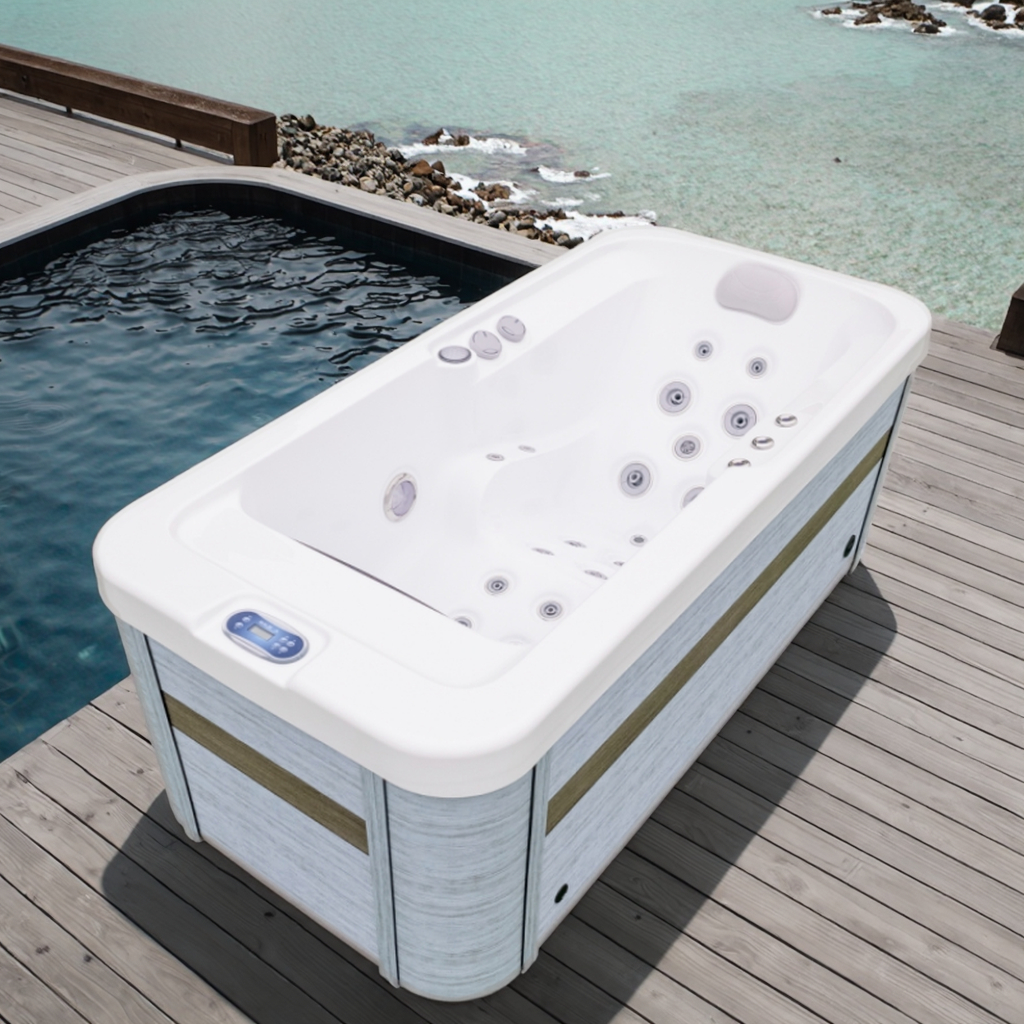
Key Differences: High-Quality vs. Standard Outdoor Swim Spas
The advantage of a high-quality outdoor swim spa lies not just in having more features, but in the superior integration of its various systems—ensuring a stable, safe, and comfortable experience over the long term.
| Comparison Factor | High-Quality Outdoor Swim Spa | Standard Product |
| Swim Current | Stable, adjustable and suitable for different swimming levels | May offer limited adjustment or uneven water flow |
| Insulation | Integrated insulation for reduced heat loss | Basic insulation with potentially higher heat loss |
| Shell and Frame | Durable materials and reinforced structure | Material quality and structural support vary |
| Filtration | Efficient circulation and convenient filter maintenance | Basic filtration with potentially limited flexibility |
| Heating | Matched to water volume and operating conditions | Heating performance may be less consistent |
| Controls | Clear, integrated and user-friendly controls | More basic functions and settings |
| Maintenance | Accessible components and clear service procedures | Some components may be difficult to inspect or repair |
| Warranty | Clearly defined coverage and service support | Coverage and parts availability may be limited |
The points above serve as a guide for comparison; please note that not all standard products necessarily suffer from the same drawbacks. The final assessment should always be based on the specific technical specifications, test data, and warranty terms of the individual model.
The Counter-Current System: Defining the Swimming Experience
The counter-current system is one of the most critical components of an outdoor swim spa hot tub combo. Given the limited length of the unit, the system generates a continuous current that allows the user to swim in a relatively fixed position. Consequently, the stability, coverage, and adjustability of this current directly impact the effectiveness of one’s training.
Some products emphasize pump power or the number of jets, but these metrics alone do not guarantee a high-quality swimming experience. If the jets are poorly positioned—resulting in overly concentrated flow or the formation of eddies—a user may struggle to stay centered in the pool, even if the equipment is powerful. This can disrupt swimming form and hinder continuous training.
High-quality outdoor swim spas prioritize uniform water flow and precise directional control. They typically offer multiple intensity settings, allowing the system to be tailored to the specific needs of different users. Beginners may require a gentler current for adaptive training, while experienced swimmers might need a stronger, more consistent flow.
When purchasing an outdoor swim spa, focus on three key aspects:
First, can the current intensity be adjusted to match your training level? Second, does the system allow you to maintain a relatively stable body position while swimming? Third, are the transitions between different intensity settings well-calibrated and logical? Whenever possible, try the unit out in person rather than basing your decision solely on individual specifications like pump horsepower or the number of jets.
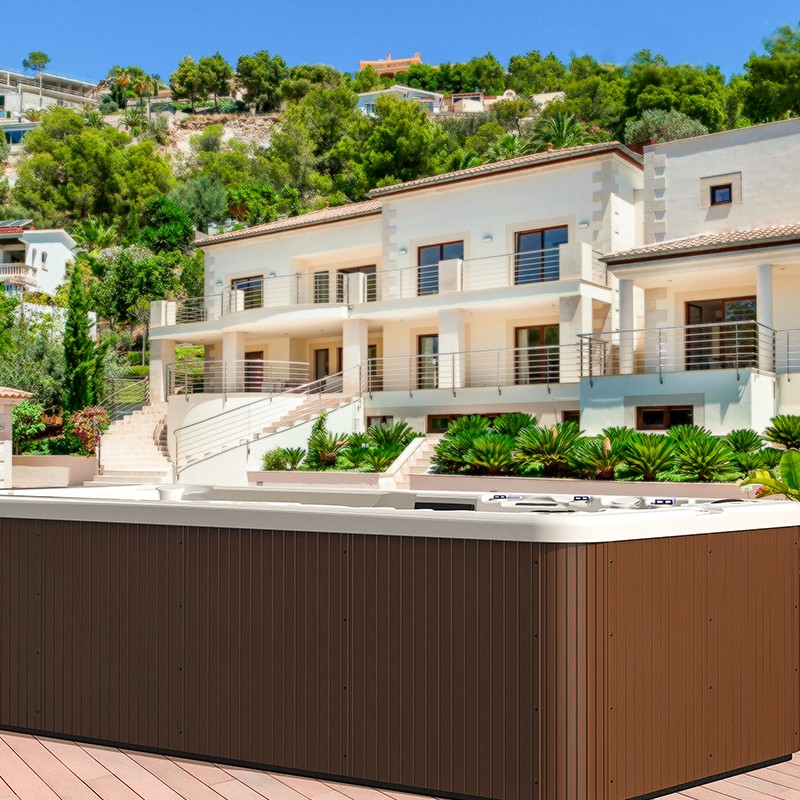
Insulation and Heating Systems for Outdoor Swim Spas: Impact on Energy Consumption and Year-Round Usability
Outdoor swim spas require a consistent, comfortable water temperature. Compared to indoor units, outdoor installations are subject to factors like ambient air temperature, wind speed, and diurnal temperature fluctuations, all of which accelerate heat loss. Consequently, the quality of the insulation and heating system is a primary differentiator between high-end products and standard models.
1. Insulation Design and Long-Term Operating Costs
High-quality outdoor swim spas feature comprehensive insulation—including shell insulation, base thermal barriers, well-sealed equipment compartments, and insulated plumbing—to minimize heat loss to the surrounding environment. Products with inferior or basic insulation may require more frequent heating, especially in cold weather, leading to higher energy consumption.
It is important to note that thicker insulation does not automatically guarantee better overall performance. The quality of the materials, the integrity of the seams, the sealing of the equipment bay, and the layout of the plumbing are equally critical. Consumers should inquire about the specific insulation methods used and ask whether the manufacturer provides data on actual energy consumption or thermal performance.
2. Heating Speed Is Not the Sole Indicator of Performance
Heating speed is influenced by the volume of water, heater wattage, initial and target temperatures, and environmental conditions. For instance, raising the temperature of approximately 6,000 liters of water by 10°C theoretically requires about 69.8 kWh of energy; in practice, one must also account for equipment efficiency and heat loss. Therefore, heater wattage alone is not an accurate metric for predicting heat-up times or annual electricity costs.
When shopping, ask the supplier for heating performance data based on specific test conditions, and verify the unit’s operational capability in the context of your local winter climate. For users in cold regions, it is also essential to inquire about requirements regarding freeze protection for plumbing, equipment shutdown procedures, and long-term operation in low-temperature environments.
3. Reducing Energy Consumption Through Proper Usage
While high-quality equipment can improve thermal insulation, user habits are equally important. Utilizing appropriate thermal covers, minimizing unnecessary high-temperature standby periods, regularly checking the integrity of seals, and scheduling operation times based on actual usage frequency can all help reduce heat loss. When comparing different models, evaluate long-term costs by considering local climate conditions and electricity rates, rather than focusing solely on the energy-saving percentages advertised.
Materials and Structural Construction of Outdoor Swim Spas: The Key to Durability
Outdoor swim spas are subject to the weight of the water, the movement of users, and vibrations generated by equipment operation over the long term. Consequently, the quality of the shell materials, base support, and plumbing connections is critical. An attractive appearance at the time of installation does not guarantee stable, long-term performance.
1. Shell Materials and Manufacturing Processes
Outdoor swim spa hot tubs typically utilize acrylic composite structures, fiberglass-reinforced materials, or other polymer composites. Each material has its own distinct characteristics; when making a selection, focus on factors such as water resistance, weather resistance, impact resistance, and surface stain resistance, rather than judging quality based on the material name alone.
High-quality products generally prioritize consistency in molding and rigorous quality control, minimizing issues such as air bubbles, localized weak points, surface defects, and faulty seams. For units exposed to prolonged sunlight, it is also important to consider the material's UV resistance and its stability when subjected to temperature fluctuations.
2. Base Support and Load-Bearing Capacity
The weight of an outdoor swim spa hot tub combo far exceeds that of typical patio furniture. For a model with a water capacity of approximately 6,000 liters, the water alone weighs about 6 tons—not including the weight of the spa shell, equipment, and users. Therefore, the installation foundation must be designed based on the unit's fully loaded weight and the manufacturer’s specifications.
High-quality products usually provide clear details regarding support structures and installation instructions, enabling installers to prepare an appropriate concrete foundation or other load-bearing platform. Before purchasing, verify the unit's fully loaded weight, support point locations, requirements for foundation flatness, and the space needed for maintenance access. If you plan to install the unit in-ground, you must also account for drainage, moisture protection, and equipment accessibility. Proper planning prevents issues such as water accumulation or insufficient space, which could otherwise complicate future repairs.
3. Plumbing Connections and Leak-Proof Design
Outdoor swim spa hot tubs incorporate multiple water circuits, including those for circulation, heating, filtration, and counter-current swimming. The layout of the plumbing, the sealing of joints, and the methods used to secure the pipes all influence the long-term stability of the system. High-quality products typically prioritize robust pipe support, secure, leak-proof connections, and easy access for maintenance, thereby minimizing the risk of leaks and simplifying repairs.
When purchasing, inquire about the materials used for the plumbing, the leak-testing procedures for critical components, and the specific warranty terms for the spa shell, piping, and connection fittings. Do not judge product quality solely based on marketing claims like "leak-proof design."
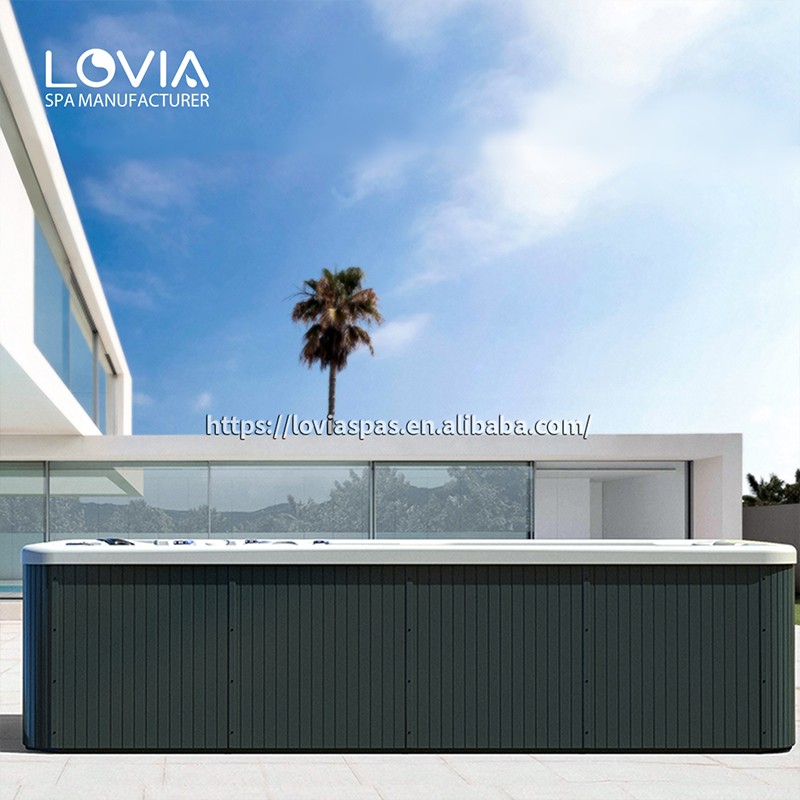
Water Circulation and Filtration Systems: Impact on Water Quality and Maintenance Costs
Outdoor swim spas often operate at relatively high temperatures. During use, the water accumulates sweat, skin oils, and other organic matter; therefore, an effective system for circulation, filtration, and sanitization is essential. High-quality products excel by ensuring that these various systems are well-integrated and designed for convenient routine maintenance.
1. Circulation and Filtration Capacity
The circulation pump drives water through the filtration system. If the circulation path is poorly designed, some areas may experience inadequate water flow, which hinders the efficient removal of contaminants. Filtration performance also depends on the type of filter element, the total filtration surface area, the duration of operation, and the maintenance status.
Consumers should ask about the rated circulation flow rate, recommended filtration duration, filter cleaning frequency, and the cost of replacing filter elements. It is important to note that the rated flow rate is not equivalent to actual filtration performance; one must also consider factors such as plumbing resistance and the overall design of the filtration system.
2. Sanitization Systems and Water Quality Management
Different outdoor swim spas may utilize various water treatment methods, such as chlorine, bromine, ozone-assisted treatment, or other alternatives. Technologies like ozone and ultraviolet (UV) light can assist in managing water quality, but they cannot entirely replace a comprehensive sanitization and testing regimen.
High-quality products should come with clear instructions for water quality maintenance, covering the use of sanitizers, pH level monitoring, filter cleaning, and the compatibility of various chemical agents. Claims of "self-cleaning" or "maintenance-free" do not mean that the equipment requires no management at all. Users should continue to test water quality regularly, in accordance with the manufacturer’s requirements, to prevent inadequate disinfection or the improper use of chemicals.
Control Systems, Safety, and User Experience
Outdoor swim spa hot tubs typically integrate features such as water temperature regulation, counter-current flow control, circulation pumps, filtration, hydrotherapy (massage) jets, and lighting. If the control logic is not intuitive, users may find themselves frequently toggling between settings, which can detract from the daily user experience.
High-quality products generally prioritize user-friendly control panels and clear status indicators, allowing users to easily monitor water temperature, adjust flow intensity, and stay informed about the equipment's operating status. Some models offer mobile app integration or remote control capabilities; however, more "smart" features do not necessarily equate to a better product. The priority should be stable connectivity, intuitive operation, and the assurance that core functions remain operational even if the network connection is lost.
Regarding safety, it is essential to verify that the area surrounding the unit is slip-resistant, that the electrical system complies with local regulations, and that the equipment incorporates necessary safety protections. Electrical installation must be performed by a qualified professional. For households with children, appropriate safety barriers must be installed; automated covers or locking mechanisms should never be considered a substitute for adult supervision.
Furthermore, factors such as pump vibration, resonance within the plumbing, and the construction of the equipment compartment can all contribute to operational noise. If an outdoor swim spa hot tub combo is to be installed near a bedroom, a neighbor’s property line, or a relaxation area, it is advisable to check the testing conditions for the manufacturer’s noise specifications and, if possible, experience the unit’s actual noise level at higher operating settings.
Why do high-quality outdoor swim spas command a higher price?
The price of a high-quality outdoor swim spa hot tub combo is typically influenced by factors such as the materials used for the shell, the counter-current system, heating and insulation design, filtration configuration, control systems, manufacturing craftsmanship, and the strength of the after-sales support network. However, a high price tag does not automatically guarantee superior quality; consumers should break down the quoted price into specific components for a more accurate comparison.
| Cost Category | Key Considerations |
| Purchase Price | Included accessories, cover and delivery |
| Installation | Foundation, crane access and electrical work |
| Energy Use | Insulation, heater performance and local climate |
| Water Care | Filters, sanitizers and testing supplies |
| Repairs | Spare parts, labor charges and warranty exclusions |
| Long-Term Cost | Maintenance frequency and expected service life |
While a standard, lower-priced model may seem attractive initially, poor insulation, high costs for consumables, or limited after-sales support can lead to higher long-term ownership costs. Conversely, a well-designed unit with a reliable structure and easy maintenance may prove to be a better choice for a household than a more expensive, feature-laden model that lacks adequate after-sales backing. When making a purchase, request a comprehensive quote from the supplier, ensuring it covers transportation, hoisting, electrical installation, foundation preparation, and all necessary accessories. Additionally, carefully review the warranty documentation to confirm the specific coverage for the pool structure, surface finish, pumps, heaters, control panels, and labor costs.
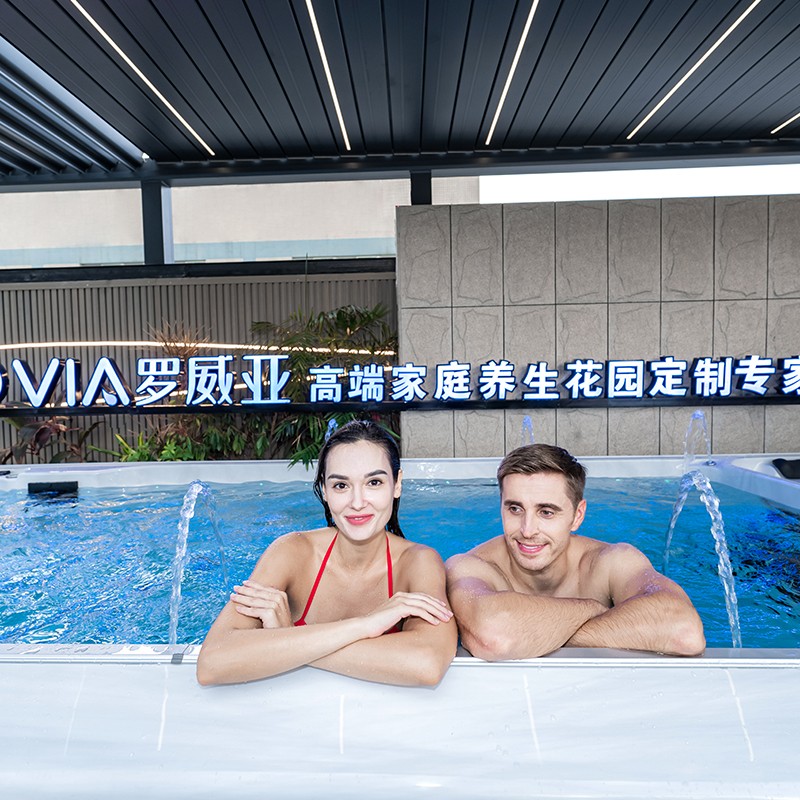
FAQ: Common Questions About High-Quality Outdoor Swim Spas
1. What are the most important features of a high-quality outdoor swim spa?
Key features include a stable and adjustable counter-current (swim-against-the-current) system, a robust pool structure, effective thermal insulation, a well-designed filtration system, and clear warranty and after-sales support. The priority of these features should be determined based on your intended use.
2. Are high-quality outdoor swim spas necessarily more energy-efficient?
Not necessarily. While effective insulation helps reduce heat loss, actual energy consumption depends on factors such as the local climate, the set water temperature, frequency of use, and the use of a thermal cover. It is best to compare energy consumption data under identical conditions.
3. How can I determine if a counter-current system is suitable for swim training?
Do not rely solely on pump power or the number of jets. Instead, assess whether the water flow is stable, whether it allows you to maintain a relatively fixed position while swimming, and whether the various intensity settings meet your specific training needs. If possible, try it out by swimming in the unit before purchasing.
4. How much space is required for an outdoor swim spa hot tub installation?
Space requirements depend on the dimensions of the unit, the installation method, and site-specific conditions. Beyond the footprint of the pool itself, you must account for delivery access, maintenance access, the clearance needed to open the thermal cover, and the requirements for power supply and drainage. Before purchasing, obtain the manufacturer’s installation diagrams and load-bearing specifications.
5. Are high-quality outdoor swim spas maintenance-free?
No. All such equipment requires regular water quality testing, filter cleaning, and system inspections. The advantage of a high-quality product lies in having a more straightforward maintenance process and components that are easier to access and service—not in being entirely maintenance-free.