


What causes a spike in alkalinity in jacuzzi outdoor spa hot tubs?
2026-10-21 15:30What is total alkalinity in an outdoor hot tub, and why does it suddenly rise?
Excessive total alkalinity is a common water quality issue in the routine maintenance of jacuzzi outdoor spa hot tubs. It can make stabilizing the pH level difficult, increase the risk of scale buildup, and lead to situations where users repeatedly add water treatment chemicals without successfully improving water quality.
Total Alkalinity (TA) refers to the buffering capacity provided by substances in the water that can neutralize acids; it is primarily associated with bicarbonates and carbonates. While it helps the hot tub resist sudden pH fluctuations, excessively high total alkalinity can actually make adjusting the pH level more difficult.
It is important to note that total alkalinity and pH are two distinct metrics. Total alkalinity reflects the water's buffering capacity, whereas pH reflects its acidity or alkalinity. Aeration from jets can raise the pH level without necessarily causing a significant increase in total alkalinity; therefore, the two should not be conflated.
For most backyard outdoor jacuzzi hot tubs sanitized with chlorine or bromine, the recommended range for total alkalinity is typically 80–120 ppm (measured as CaCO₃), while the pH level is usually recommended to be kept between 7.0 and 7.8. Specific target levels should adhere to the requirements set by the equipment manufacturer and the water treatment product guidelines.
When the total alkalinity of a jacuzzi outdoor spa hot tub suddenly spikes, you should first verify the test results, then investigate the water source used for refilling, chemical usage, and routine maintenance practices. Identifying the root cause is essential to avoid wasting time and money on repeated water quality adjustments.
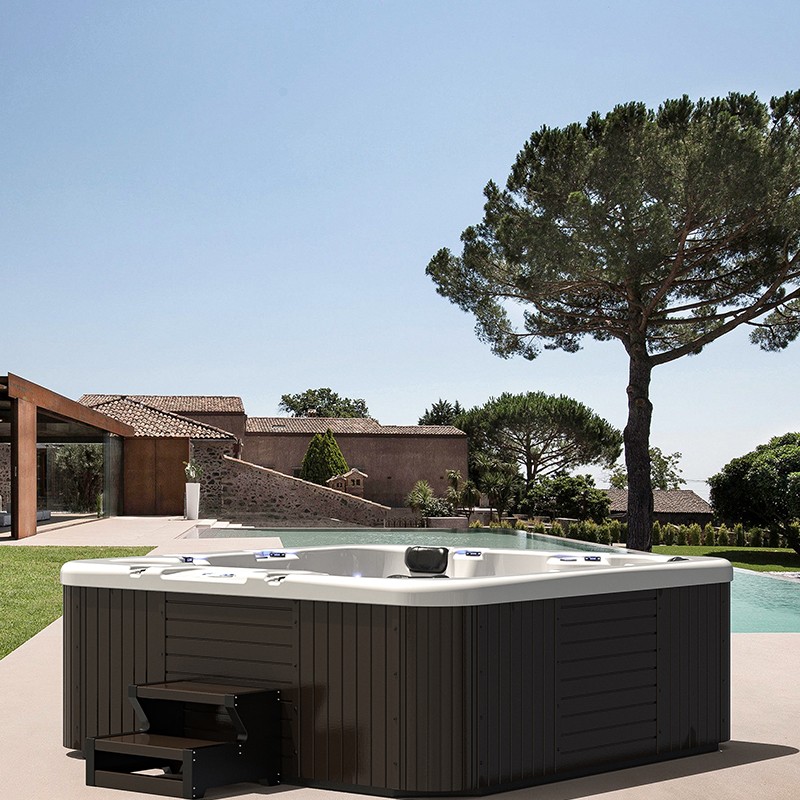
Six Main Reasons for Soaring Total Alkalinity in Outdoor Spa Hot Tubs
1. High Total Alkalinity of the Water Source
The mineral and bicarbonate content of tap water and well water can vary significantly between different regions. If the refill water itself has high total alkalinity, adding it to the hot tub can push the overall total alkalinity beyond the target range. For example, if the existing water has a total alkalinity of 90 ppm but the make-up water has a total alkalinity of 200 ppm, adding a large amount of make-up water could significantly raise the total alkalinity of the mixture. The actual outcome depends on the ratio of the two water sources and other water quality conditions.
Solution: Test the total alkalinity and pH of the water source before the initial fill, a water change, or adding a large volume of make-up water. If using high-alkalinity well water over the long term, consult a water treatment professional to assess whether pre-treatment is necessary. Do not add large amounts of acidic chemicals without testing first.
2. Excessive addition of total alkalinity increaser
Total alkalinity increasers typically contain sodium bicarbonate (baking soda). If a user notices a low pH and adds an increaser without first testing the total alkalinity, they might inadvertently raise the total alkalinity—even if it was already at a normal level.
For example, if a jacuzzi outdoor spa hot tub already has a total alkalinity of 140 ppm, continuously adding an increaser could eventually lead to excessively high alkalinity. In this case, the user should investigate the cause of the low pH rather than continuing to raise the total alkalinity.
Solution: Test total alkalinity and pH before adding any water treatment chemicals, and calculate the dosage based on the product label and the actual volume of water. After the chemicals have fully mixed, re-test after the time specified in the instructions to avoid repeated dosing within a short period.
3. Misuse of pH increaser
pH increasers often contain ingredients like sodium carbonate; while they raise the pH, they can also increase total alkalinity. If a user treats a pH increaser as a general-purpose water conditioner or adds it repeatedly without testing, both parameters may rise simultaneously.
Total alkalinity increasers and pH increasers serve different purposes and are not interchangeable. When maintaining a backyard outdoor jacuzzi tub, verify the active ingredients and intended use of the chemicals before deciding whether to use them.
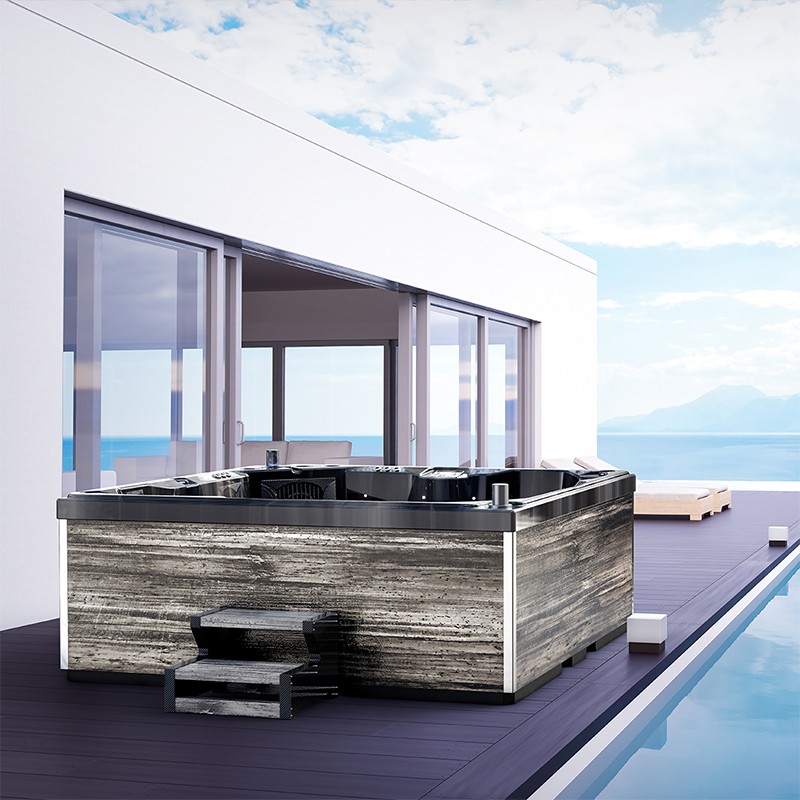
4. Accumulation of dissolved substances due to repeated make-up water additions following evaporation
During hot summer weather, jacuzzi outdoor spa hot tubs may lose water due to evaporation, splashing, and maintenance activities. Adding make-up water restores the water level, but evaporation primarily removes water molecules, leaving behind most dissolved minerals.
If the make-up water source has high total alkalinity, and the user consistently adds water without testing or performing a water change, alkaline substances may gradually accumulate in the water.
Solution: Regularly test the make-up water source, track changes in total alkalinity, and schedule water changes based on usage, water quality, and manufacturer recommendations. Adding make-up water restores volume but cannot replace comprehensive water quality maintenance.
5. Errors in water testing tools or procedures
Expired test strips, improperly stored reagents, incorrect timing for color readings, or uncalibrated testing instruments can all lead to inaccurate total alkalinity readings.
Testing immediately after adding chemicals or failing to follow sampling instructions can result in a misinterpretation of a sudden rise in total alkalinity, leading to the unnecessary addition of chemicals.
Solution: If readings show an abnormal spike, re-test using valid tools and strictly follow instructions for sampling and reading results. When necessary, use a reliable liquid titration test kit or have a water sample analyzed by a professional water treatment service.
6. Mistaking a rise in pH for a rise in total alkalinity
Outdoor hot tub jets and air injection systems increase aeration, promoting the escape of dissolved carbon dioxide. As carbon dioxide levels drop, the pH may gradually rise without a significant change in total alkalinity.
If a user notices a pH increase and immediately adds a total alkalinity reducer, they risk lowering the alkalinity too much without actually solving the problem of the rising pH.
Therefore, whenever water quality issues arise, both total alkalinity and pH should be tested separately, and adjustments should be made based on the specific results.

What are the effects of excessively high total alkalinity on an outdoor hot tub?
First, high total alkalinity can make pH adjustment difficult. Adding small amounts of pH adjusters may not yield the expected results, leading to repeated testing and dosing, which increases daily maintenance costs. Secondly, when total alkalinity is high—coinciding with elevated pH levels, high calcium hardness, and suitable temperatures—the risk of calcium carbonate scale formation increases. Scale can accumulate on components such as heaters, jets, and piping, making cleaning difficult and potentially impairing equipment efficiency in severe cases.
Additionally, issues such as cloudy water or increased surface deposits may be linked to water quality imbalances. However, these problems are not necessarily caused by total alkalinity alone; factors such as calcium hardness, the filtration system, and other contaminants should also be checked.
If pH levels remain consistently high, the effectiveness of chlorine disinfection may decrease. Therefore, maintaining an outdoor hot tub requires monitoring pH levels and sanitizer concentrations alongside total alkalinity.
How can you prevent total alkalinity from rising again in an outdoor hot tub?
Prevention is more effective than repeated adjustments. Hot tub owners should establish a routine for testing water quality and re-test after significant water top-ups, water changes, or the addition of treatment chemicals. Commercial facilities should implement stricter water quality management plans based on usage volume and local regulations.
Secondly, the source water used for refilling should be tested. If total alkalinity consistently rises after water changes, the quality of the tap water or well water should be investigated first, rather than simply increasing the dosage of alkalinity-reducing agents.
Thirdly, avoid overdosing with chemicals. Alkalinity increasers, pH adjusters, and sanitizers serve different purposes and must be used based on actual test results.
Fourthly, clean filters regularly and change the water periodically. While filters remove particulate matter, they cannot directly eliminate all dissolved minerals; therefore, the same water cannot be used indefinitely.
Clear water quality maintenance guidelines are equally important for backyard outdoor jacuzzi tub manufacturers and suppliers. Product manuals should clearly explain common water quality parameters, precautions for chemical usage, and procedures for handling abnormalities to help users minimize operational errors. When purchasing, factors such as the filtration system, ease of maintenance, availability of spare parts, and after-sales service should also be considered, as these influence long-term operating costs.
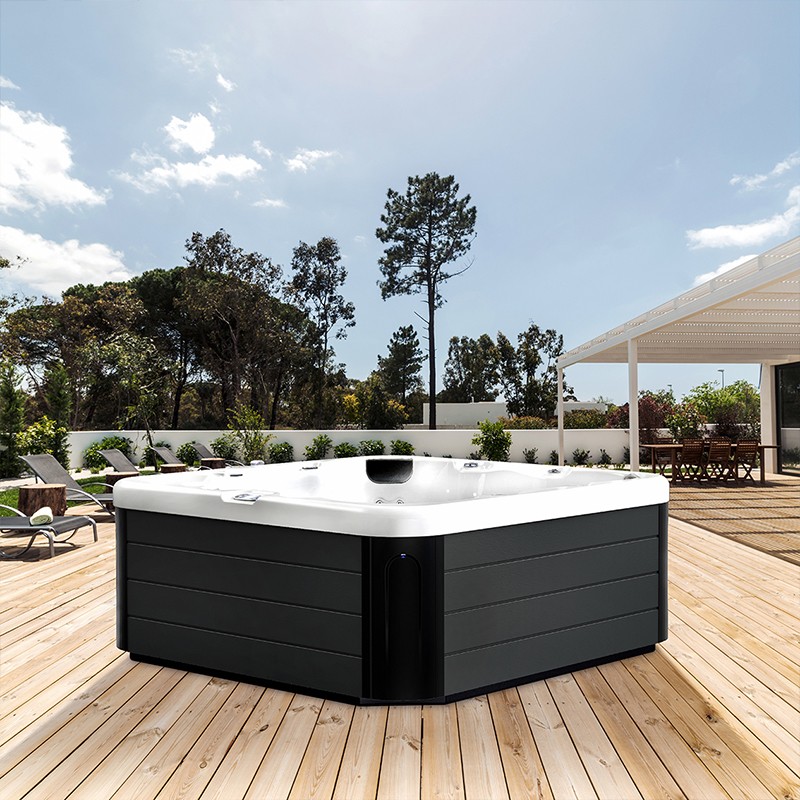
Frequently Asked Questions (FAQ)
FAQ 1: What is the normal range for total alkalinity in a backyard outdoor jacuzzi hot tub?
For most residential hot tubs, a range of 80–120 ppm (as CaCO₃) is typical, but you should adhere to the specific requirements provided by the manufacturer and the water treatment system.
FAQ 2: Can excessively high total alkalinity cause the pH level to rise in an outdoor hot tub?
The two are related but distinct. High total alkalinity can affect pH regulation, while factors such as aeration, carbon dioxide off-gassing, and the use of chemicals can also cause the pH level to rise.
FAQ 3: Does baking soda raise the total alkalinity of outdoor hot tub water?
Yes. Baking soda is primarily sodium bicarbonate, which is commonly used to increase total alkalinity. Adding too much can push the total alkalinity beyond the target range.
FAQ 4: Is it necessary to immediately change the water if the total alkalinity in an outdoor hot tub is too high?
Not necessarily. If the level is only slightly high, you can first attempt to adjust it according to product instructions. If water quality remains abnormal or cannot be restored despite repeated adjustments, then consider draining, cleaning, and refilling the tub.
FAQ 5: Can I still use the jacuzzi outdoor spa hot tub if the total alkalinity is too high?
You should first check the pH level and sanitizer concentration. If these parameters fall outside the acceptable range or the water quality appears abnormal, you should suspend use until the water quality is restored and confirmed to meet safety standards.