


Should I drain my outdoor whirlpool hot tub for the summer?
2026-10-20 15:35As temperatures rise with the arrival of summer, many outdoor whirlpool hot tub owners reduce their usage frequency. Consequently, a common question arises: Should the tub be completely drained for the summer and refilled only when autumn or winter returns?
The answer is: not necessarily. Whether or not to drain the tub depends primarily on usage frequency, water quality, local climate, and the manufacturer's maintenance guidelines. If you continue to use the hot tub regularly during the summer and can properly maintain water quality and the filtration system, there is usually no need to drain it simply because of the hot weather. However, if you plan to stop using it for several weeks or months, or if water quality cannot be maintained, you should consider draining, cleaning, and decommissioning the unit according to the manufacturer's instructions.
A key challenge with summer maintenance is that high temperatures, sunlight exposure, sweat, sunscreen, and environmental dust can all complicate water quality management. On the other hand, simply draining the water does not mean maintenance is complete; residual water may remain in circulation lines, jets, and pumps, requiring specific handling based on the equipment's design.
Therefore, summer maintenance plans for outdoor whirlpool hot tubs should be tailored to individual circumstances rather than applying a one-size-fits-all draining approach.

Why does water quality require extra attention for outdoor hot tubs in summer?
1. High temperatures and sunlight make disinfection management more difficult
Outdoor whirlpool hot tubs are frequently exposed to sunlight, and ultraviolet (UV) rays can accelerate the depletion of certain disinfectants. Frequent use, perspiration, and water splashing can also affect disinfectant levels and water quality stability. If maintenance frequency is reduced, the water may gradually lose proper sanitary control.
The U.S. Centers for Disease Control and Prevention (CDC) recommends that for whirlpool hot tubs using chlorine disinfection, free chlorine levels should be at least 3 ppm; for bromine disinfection, levels should be 4–8 ppm, with pH maintained between 7.0 and 7.8. Actual management should also comply with equipment instructions and applicable local regulations.
It is important to note that clear water does not necessarily mean the water is safe. Even if usage frequency is lower during the summer, you should continue to monitor disinfectant levels and pH values as required.
2. Sunscreen and sweat increase the filtration load
Outdoor activities are frequent in summer, and users may apply products like sunscreen or body lotion before entering an outdoor garden jacuzzi tub. When these substances—along with sweat, sebum, and environmental debris—enter the water, they can cause foaming, oily films, or cloudiness, placing an increased burden on the filtration system.
It is recommended to rinse off before soaking, clean the filter regularly, and promptly remove surface debris. If water quality continues to deteriorate, inspect the filtration and sanitization systems rather than simply increasing the dosage of sanitizers.
3. Lack of maintenance over time can increase hygiene risks
The warm water, circulation piping, and spray environment of a garden jacuzzi tub require reliable hygiene management. The CDC notes that *Legionella* bacteria can grow in water temperatures ranging from approximately 25°C to 45°C (77°F–113°F), and mist generated by contaminated hot tubs can pose health risks.
Therefore, if you do not plan to use the outdoor whirlpool hot tub throughout the summer, you should have a plan for decommissioning it. You should not simply turn off the equipment and leave it unchecked for long periods, nor should you assume that emptying the tub eliminates the need to clean the internal piping.
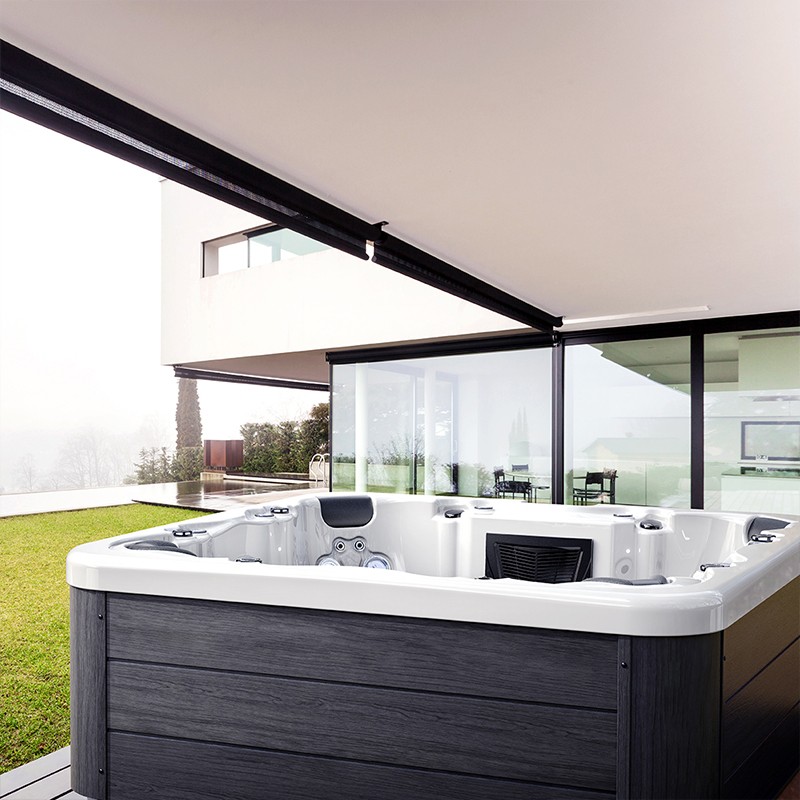
When is it unnecessary to drain the outdoor garden jacuzzi in summer?
If you plan to continue using the outdoor garden jacuzzi tub during the summer—or simply reduce the frequency of use for a short period—you can usually keep the water in the tub, provided you perform the following maintenance:
First, the equipment remains in regular use. If family members still soak regularly, you can lower the set temperature for comfort while maintaining the required filtration, circulation, and sanitization protocols. There is no need to frequently drain and refill the tub just because summer has arrived.
Second, water quality remains stable. If sanitizer levels, pH, and the filtration system are all within normal ranges, you can continue maintenance according to the manufacturer's recommendations. Adjust testing and cleaning schedules based on usage frequency rather than waiting until the water develops an odor or becomes cloudy.
Third, you are away for only a short time. If you plan to be away from home for a few days or about a week, follow the equipment's instructions for short-term absence maintenance—such as cleaning the filter, checking water quality, setting the appropriate operating mode, and securing the safety cover. Decisions regarding whether to turn off the heating function or adjust circulation times should be based on the equipment's design. Please note that operating requirements vary among different outdoor garden jacuzzi tubs. Some units support specific low-temperature or energy-saving modes, while others require the maintenance of specific circulation conditions. Do not arbitrarily disable filtration, circulation, or freeze-protection functions without understanding the product's requirements.
When should you drain your outdoor garden jacuzzi tub?
1. Long-term disuse during the summer
If you plan not to use the outdoor whirlpool hot tub for several weeks or months, consult the product manual to confirm whether the unit can remain filled with water during this period or if seasonal draining is required.
If the manufacturer permits leaving water in the tub, you must still maintain water quality, the circulation system, and the equipment's condition as specified. If you cannot consistently manage water quality, or if the manufacturer explicitly requires draining, you should proceed with draining, cleaning, and decommissioning the unit according to the guidelines.
Crucially, draining the tub shell does not mean all piping is empty. Residual water may remain in the jets, circulation lines, and pump housing; therefore, specific measures based on the equipment's design are necessary. If the unit might be exposed to freezing temperatures in the future, it is especially important to handle residual water according to the manufacturer's instructions to prevent pipe damage caused by freezing.
2. Severe deterioration of water quality
If the water remains cloudy, develops a noticeable odor, or has persistent foam—or if sanitizer levels and pH values repeatedly fail to return to normal ranges—you should stop using the tub and investigate the cause.
Begin by checking sanitizer levels, pH, the filter, and the circulation system. If water quality cannot be restored after following the product instructions, or if you suspect pipe contamination or biofilm issues, consider draining, deep cleaning, treating the plumbing lines, and refilling the tub. Do not attempt to mask the problem simply by adding more sanitizer.
3. Equipment requires repair or deep cleaning
If the pump, jets, piping, or other critical components require repair, you may need to drain the outdoor hot tub first. Follow the instructions provided by the manufacturer or service technician to avoid equipment damage or electrical safety hazards associated with performing repairs while the tub is filled.
Routine cleaning does not necessarily require draining the tub. Decisions regarding water replacement should be based on actual water quality, the level of contamination, and the equipment's maintenance schedule.
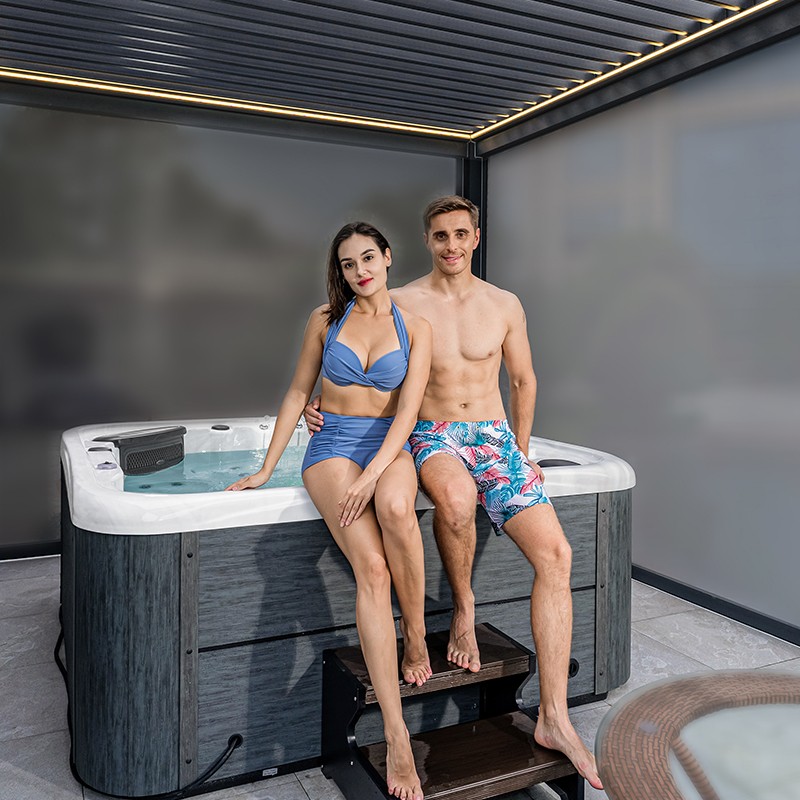
What should be considered when draining an outdoor hot tub in the summer?
After draining an outdoor whirlpool hot tub, the issues most easily overlooked are residual water inside the system and protection during prolonged periods of disuse.
First, use the drainage method specified for the equipment; do not dismantle piping without proper guidance or force the pump to run in order to drain the water. Once drained, address residual water in the jets, filtration system, pump housing, and piping according to the manufacturer's instructions, and clean the tub walls and related components.
Second, avoid using harsh cleaners, solvents, or unsuitable lubricants on the tub shell and seals. Since acrylic surfaces, piping materials, and sealing components vary by model, you should use cleaning products approved by the manufacturer.
Finally, secure the dedicated safety cover to prevent dust, fallen leaves, and debris from entering the tub, and to keep children or pets out. During long periods of disuse, continue to monitor the equipment's condition according to the product manual rather than assuming it requires no attention after draining.
When reactivating the garden jacuzzi tub, inspect the exterior, piping, seals, and electrical connections; clean the filtration system; refill the tub; and balance the water chemistry. Resume use only after the circulation, filtration, and heating systems are operating correctly and water quality parameters meet the required standards.
How should an outdoor hot tub be properly maintained during the summer?
If you decide to keep water in the tub during the summer, focus on the following tasks:
1. Test water quality regularly. Check sanitizer levels and pH based on usage frequency. Re-test promptly after heavy usage, heavy rain, or if the water quality changes. CDC guidelines for hot tubs recommend a minimum of 3 ppm free chlorine, 4–8 ppm bromine, and a pH level between 7.0 and 7.8.
2. Clean the filter regularly. Sunscreen, sweat, and debris can accelerate filter cartridge contamination. Clean or replace the cartridge according to the manufacturer's instructions to prevent reduced filtration efficiency from compromising water quality.
3. Adjust the water temperature as needed. If you continue to use the garden jacuzzi tub during the summer, you can lower the water temperature. Some users may prefer a water temperature of 30–35°C, but specific settings should take into account the equipment's operating range, local ambient temperatures, and personal preferences. If you intend to use the outdoor whirlpool hot tub as a cool-water plunge pool, first verify that the product supports this mode of operation.
4. Minimize environmental contamination. Whenever possible, use a dedicated cover to prevent fallen leaves, dust, and other debris from entering the water. Clean the cover regularly, inspect it for damage, and ensure adequate ventilation around the equipment.
5. Change the water as needed. The same water in an outdoor garden jacuzzi tub cannot be reused indefinitely. Dissolved contaminants may gradually accumulate with repeated use. The frequency of water changes should be determined based on tub capacity, the number of users, water quality, and manufacturer recommendations, rather than simply by the season.
Frequently Asked Questions (FAQ)
FAQ 1: Must I drain the outdoor garden jacuzzi tub in the summer?
No. If you continue to use it during the summer and the water quality and filtration system are functioning properly, you can keep the water in the tub. However, if the tub will be out of use for an extended period, water quality cannot be maintained, or the manufacturer requires draining, you should proceed according to the guidelines.
FAQ 2: How often should I change the water in an outdoor hot tub during the summer?
There is no universal schedule applicable to all equipment. The frequency depends on tub capacity, the number of users, contamination levels, and water quality management; you should follow the manufacturer's recommendations.
FAQ 3: Can I turn off the outdoor hot tub's filtration system in the summer?
It depends. First, check if the product supports specific shutdown or energy-saving modes; do not arbitrarily disable essential functions such as water circulation and freeze protection.
FAQ 4: Can I leave the outdoor hot tub empty for several months after draining it?
Leaving it empty for a long period without proper preparation is not recommended. You should clean internal components, clear residual water from the plumbing, and carry out storage and protective measures as specified by the manufacturer.
FAQ 5: What water quality standards should be met for an outdoor hot tub in the summer?
The CDC recommends a free chlorine level of at least 3 ppm, a bromine concentration of 4–8 ppm, and a pH level between 7.0 and 7.8. You should also adhere to the equipment's instructions and any applicable local regulations.