


What Does "Low Flow" Mean in an Outdoor Hot Tub? Causes and Solutions
2026-10-21 15:35When an outdoor whirlpool spa hot tub experiences reduced water flow, weak output from massage jets, a cessation of heating, or control panel alerts such as "FLO," "FL," or "LF," it usually indicates an issue with the water circulation system. Many users immediately assume the pump is broken; however, problems such as clogged filters, low water levels, air entering the plumbing, improperly closed valves, or faulty flow sensors can all cause low-flow issues. Replacing parts without identifying the actual cause not only increases repair costs but may also lead to recurring malfunctions.
So, what exactly does "low flow" mean in the context of an outdoor whirlpool spa hot tub? How does it affect the equipment, and how can it be diagnosed and prevented? Understanding the mechanics of the water circulation system helps users quickly pinpoint the root cause, minimize downtime, and extend the lifespan of the pump and heating system.
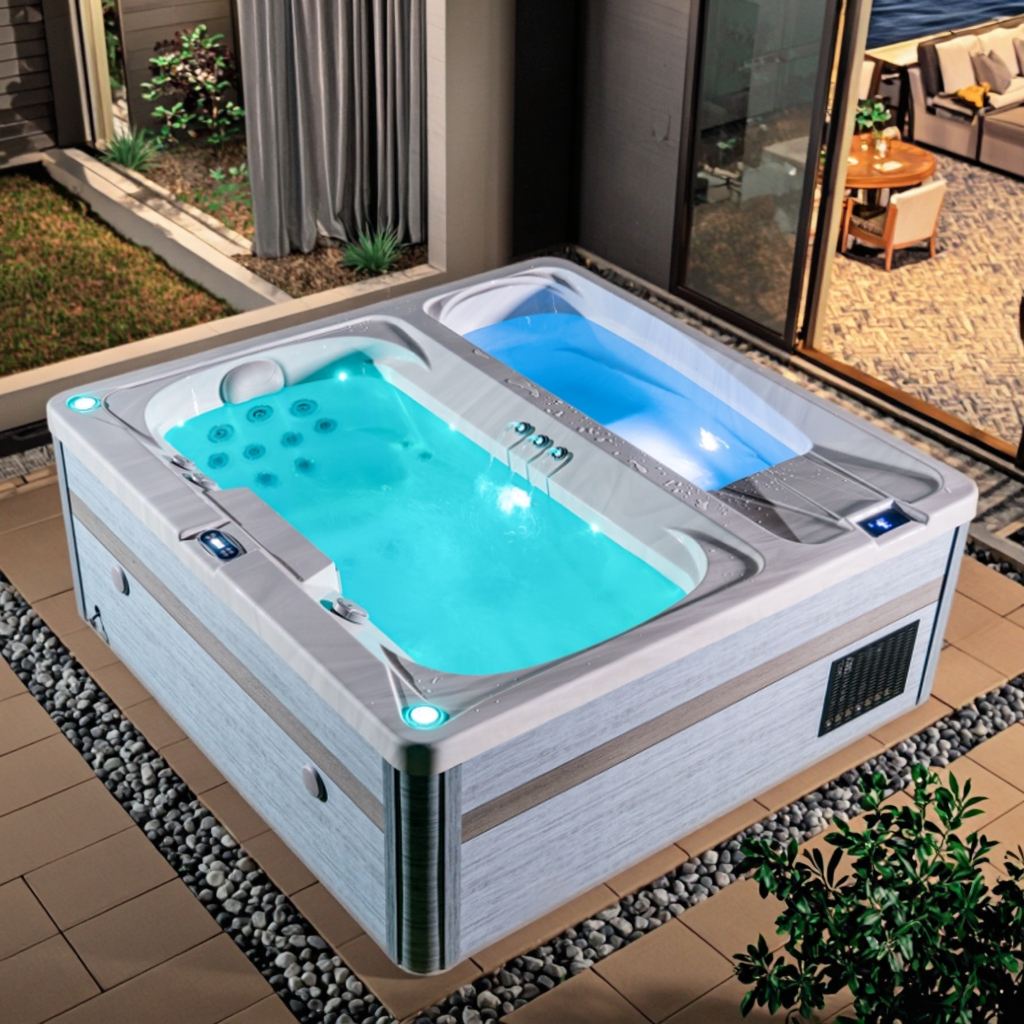
What Does "Low Flow" Mean in an Outdoor Hot Tub?
"Low flow" refers to a situation where the actual water flow within the whirlpool spa hot tub's circulation system is insufficient, or the control system fails to detect a flow rate that meets operational requirements. Under normal conditions, the pump moves water from the tub through the filter and heater before returning it via the plumbing, thereby completing the cycles of circulation, filtration, and heating. If the water flow is obstructed, the system may trigger a low-flow alarm.
Low flow does not necessarily mean a complete absence of water movement. In some cases, massage jets may still output water, even though the circulation loop responsible for filtration and heating is malfunctioning. Since some outdoor whirlpool spa hot tubs utilize separate circulation pumps and massage pumps, the fact that the massage function is working does not rule out a fault in the circulation system.
When the equipment detects insufficient flow, the control system typically suspends heating to prevent the heater from overheating due to a lack of adequate water flow. Error codes vary by brand and model; specific meanings for alerts like "FLO," "FL," or "LF" should be verified against the equipment manual, as a code alone does not confirm that a specific component is damaged.
What Are the Common Signs of Low Flow in an Outdoor Hot Tub?
Low flow typically manifests through issues related to water flow, temperature, and control panel indications. First, the water pressure from the massage jets drops significantly, or some jets may stop outputting water entirely. If all jets exhibit similar issues, the problem likely lies with the water pump, filter, or main plumbing lines; if only specific jets are affected, check whether they are clogged or turned off.
Second, the outdoor whirlpool spa hot tub heats up slowly or fails to reach the set temperature. Heaters require adequate water flow to dissipate heat; if circulation flow is insufficient, the unit may automatically stop heating. Third, the control panel displays a flow-related error code; even if the pump is running, the control system may be unable to verify that water flow is normal.
Additionally, the pump may produce a humming or sucking sound or operate intermittently. If there are signs of abnormal overheating, a burning smell, or water leakage, stop the unit immediately and contact a professional technician.
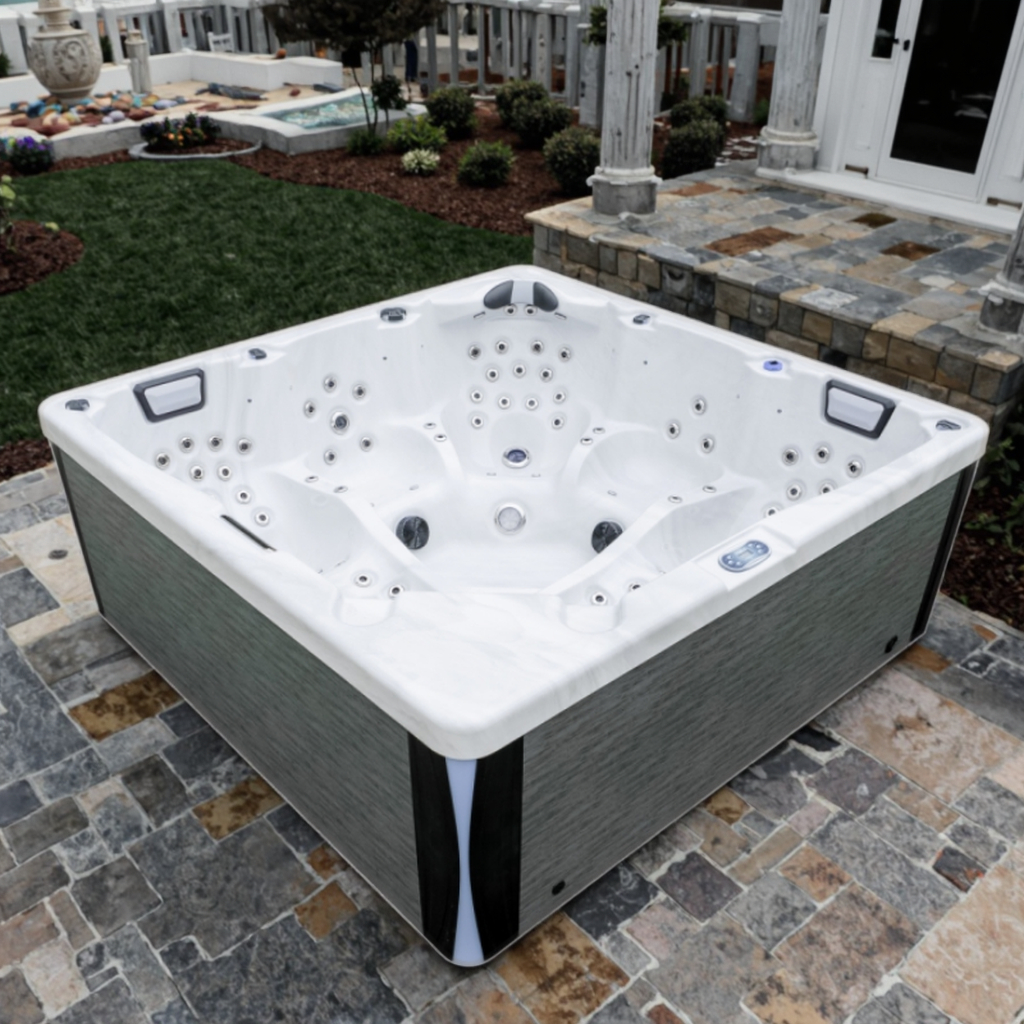
Primary Causes of Low Flow in Outdoor Patio Jacuzzi Tubs
1. Clogged Filter
A clogged filter is a common cause of low flow in outdoor patio jacuzzi tubs. Filter cartridges trap hair, skin cells, oils, dust, pollen, and leaf debris. As impurities accumulate, resistance to water flow through the cartridge increases, potentially preventing the circulation system from maintaining normal flow rates.
Compared to indoor environments, outdoor patio jacuzzi tubs are more susceptible to contaminants such as pollen, fallen leaves, and dirt. The risk of clogging increases with frequent use, consecutive use by multiple people, or failure to clean the filter cartridge for extended periods.
Solution: Remove the filter cartridge according to the equipment manual, rinse the pleats with clean water, and use a suitable filter cleaner if necessary. Replace the cartridge promptly if it is deformed, damaged, or cannot be thoroughly cleaned. Adjust the cleaning frequency based on usage intensity, environmental pollution levels, and manufacturer recommendations.
Some units allow for the temporary removal of the filter cartridge for diagnostic purposes; however, you must follow manufacturer instructions. Operating the tub without a filter cartridge should not be standard practice, as debris could enter the pump and plumbing lines.
2. Water Level Too Low
Outdoor hot tubs must maintain the specified water level. If the water level falls below the required threshold, the pump may fail to draw sufficient water continuously or even pull air into the circulation system, resulting in reduced or interrupted water flow.
Water levels can drop due to daily evaporation, splashing during use, cleaning and maintenance, or draining operations. Hot weather and frequent use may also increase the need for refilling.
Solution: Check the water level mark inside the tub and refill according to the manufacturer's specifications. Water level standards vary by model, so a "one-size-fits-all" height should not be applied. Observe whether circulation resumes after refilling; if the water level is normal but a low-flow alarm persists, further inspection of air locks, filters, and the pump is required.
3. Air lock after draining or refilling
An air lock occurs when air becomes trapped in the pump, heater, or circulation piping, obstructing normal water flow. This often happens after an outdoor patio jacuzzi tub has been drained, cleaned, serviced, or refilled.
Common symptoms include the pump running audibly while no significant flow emerges from the jets, or the flow being intermittent. Because air occupies space within the pipes, the pump may be unable to establish proper circulation.
Solution: First, ensure the water level is adequate and valves are in the correct positions, then follow the manufacturer's specific filling and air-purging procedures for your model. Do not arbitrarily disconnect fittings or open pipes without guidance, as residual pressure, hot water, and electrical components pose safety risks. If the air cannot be safely purged, contact a service technician.
4. Closed valves or blocked piping
Outdoor whirlpool spa hot tub circulation systems may include isolation valves, drain valves, and check valves. Water flow is restricted if valves are not returned to the correct position after maintenance or if intake ports are clogged with hair, leaves, or other debris. Deformed piping or the buildup of internal deposits can also cause similar issues.
Solution: After turning off the equipment, inspect accessible intake ports, visible piping, and valves; clear away obvious debris and verify that valves are set to the manufacturer's required positions. If the blockage is located inside the unit or in an area not directly visible, a professional technician should perform the inspection. Do not disassemble piping while the pump is running, and do not insert your hands into the suction inlet.
5. Reduced Pump Performance
The circulation pump is responsible for driving water through the filter and heater. If the impeller is jammed by debris, or if the motor or related electrical components malfunction, the pump may fail to provide adequate flow.
Typical symptoms include the pump failing to start, emitting only a humming sound while running, or running continuously while water flow is noticeably weak. If the issue persists after cleaning the filter cartridge, topping up the water level, and checking the valves, further inspection of the pump is required.
Solution: Have a professional inspect the pump's operation, impeller, and power supply, and determine whether repair or replacement is necessary based on equipment specifications. Do not assume the pump is damaged simply because it has been in use for a long time or the operating sound has changed.
6. Flow Sensor or Pressure Switch Malfunction
If water flow has returned to normal but the outdoor whirlpool spa hot tub still displays a low-flow error code, the problem may lie with the flow sensor, pressure switch, wiring, or control system.
Some units detect water flow via a flow switch, while others determine circulation status based on signals such as pressure. If the detection component is damaged or the feedback signal is abnormal, the controller may incorrectly register insufficient flow.
Solution: First, rule out issues with the filter, water level, piping, and pump, then have a professional test the sensor and related circuitry. Do not attempt to short-circuit the flow switch or bypass safety mechanisms yourself; doing so could allow the heater to operate without sufficient water flow, increasing the risk of equipment damage.
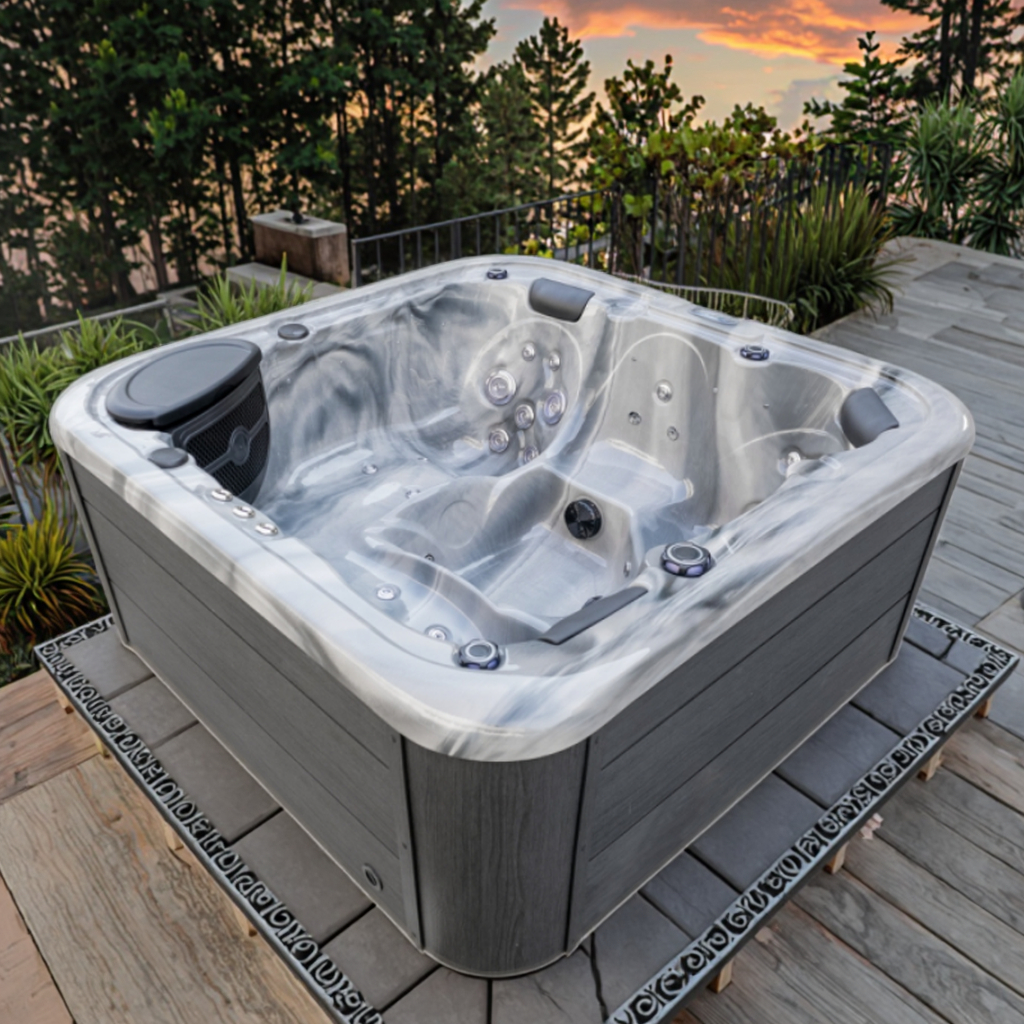
Proper Troubleshooting Steps for Outdoor Hot Tub Low-Flow Issues
When a low-flow alarm occurs, it is recommended to troubleshoot in order from simplest to most complex to avoid replacing parts unnecessarily.
Step 1: Record the symptoms. Note the code displayed on the control panel, confirm whether the issue arose after a water change, filter cleaning, or maintenance, and observe the operation of the pump and massage jets.
Step 2: Check the water level and suction inlet. Adjust the water level to the manufacturer's specified range and check the suction inlet and filter intake for debris blockages. If the water level is low, top it up first.
Step 3: Clean the filter cartridge. Clean the filter cartridge according to the manual, check for deformation or damage, and ensure it is correctly reinstalled.
Step 4: Check valves and piping. Confirm that valves are positioned correctly and that piping is not significantly crushed or blocked. If the issue arises after refilling the water, check for airlocks.
Step 5: Check the water pump and sensors. If the previous steps do not resolve the issue, or if the equipment exhibits abnormal noise, leaks, or repeated alarms, stop using the unit and contact a professional technician to inspect the pump, flow sensor, and control system.
During troubleshooting, do not force the heater to operate while the low-flow alarm is active, and do not repeatedly restart the unit to mask the problem. Resume normal use only after circulation is restored and safety protection functions are operating correctly.
FAQ: Common Issues with Outdoor Hot Tub Low Flow
Q1: What does "FLO" mean on the outdoor patio jacuzzi tub display?
"FLO" usually indicates that the unit has not detected the required water flow or pressure conditions. Common causes include a clogged filter, low water level, airlocks, closed valves, or pump malfunctions. Refer to the specific model's manual for the exact meaning.
Q2: Why does the hot tub still show a low-flow error even though water is flowing from the jets?
Water flow from the massage jets does not necessarily mean the heater's circulation loop is functioning correctly. If the unit uses a separate circulation pump or the flow sensor is faulty, the control panel may still trigger an alarm despite water flowing from the jets.
Q3: Can the whirlpool spa hot tub continue heating during a low-flow condition?
Forced heating is not recommended. Low-flow protection is designed to prevent the heater from overheating when water flow is insufficient. Troubleshoot and confirm normal circulation before resuming operation.
Q4: What should I do if the low-flow alert persists after cleaning the filter cartridge?
Continue checking the water level, suction inlets, valves, and piping. If the issue occurred after a water change, consider the possibility of an airlock. If these checks do not resolve the problem, contact a professional to inspect the pump and flow sensor.
Q5: Does a low-flow error mean the hot tub pump must be replaced?
Not necessarily. Clogged filters, insufficient water levels, and airlocks can all cause low flow; these issues should be investigated first. Repair or replacement should only be considered after confirming that the pump's performance is abnormal.