


What are the most important features when purchasing an outdoor hot tub?
2026-10-23 15:35As outdoor leisure lifestyles gain popularity, outdoor whirlpool spa hot tubs have evolved from exclusive luxury items into common features in residential gardens, villas, hotels, vacation rentals, and commercial leisure venues. When shopping, consumers are often presented with a multitude of technical specifications—such as pump power, jet count, heater wattage, capacity, insulation, filtration, and control systems. However, the user experience depends less on maximizing a single parameter and more on the balanced integration of the entire system.
Consumers often fall into two common traps when selecting an outdoor whirlpool spa hot tub: focusing solely on the number of jets (assuming more jets equal a better massage) or fixating on pump and heater power (assuming higher wattage means superior performance). In reality, an outdoor hot tub is a complex system comprising the tub structure, pumps, jets, heating, filtration, insulation, and electrical/control systems. A well-configured unit strikes a balance between comfort, energy efficiency, safety, maintenance costs, and longevity.
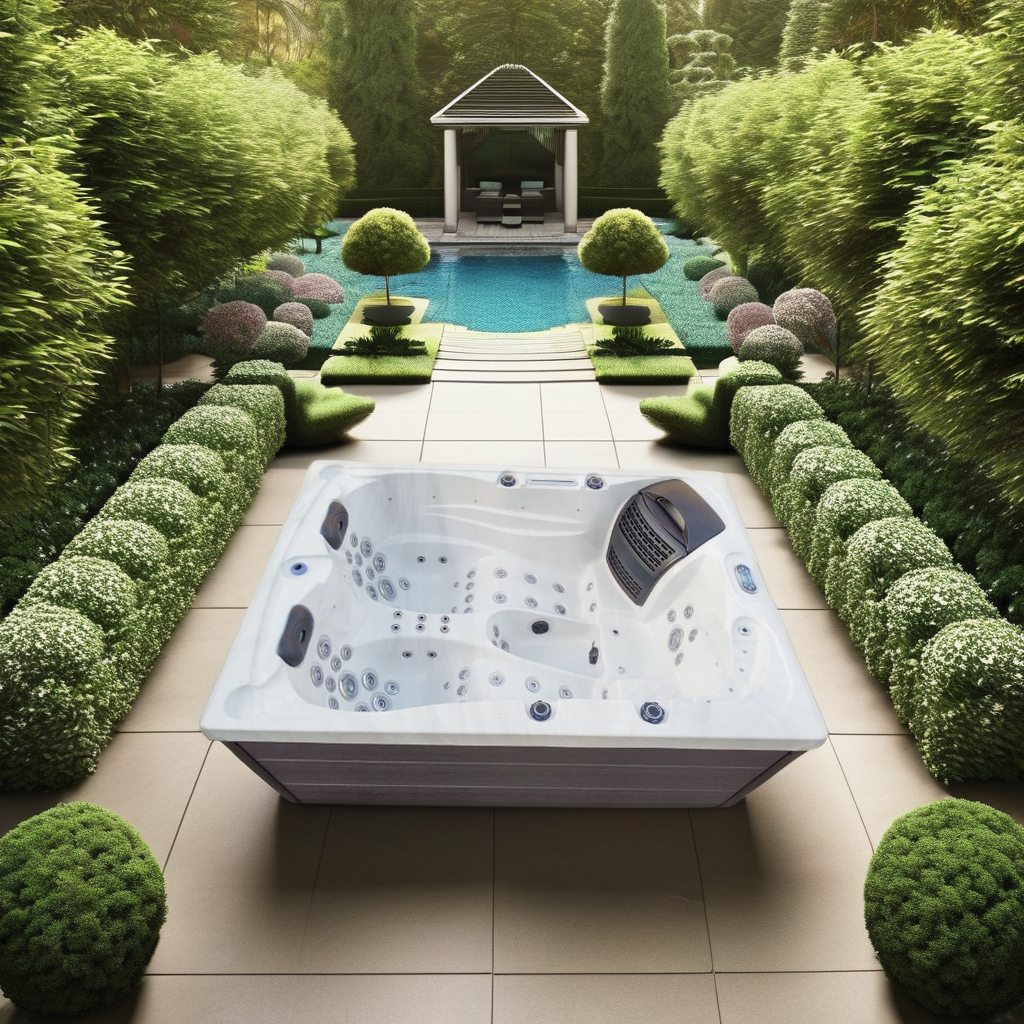
Size and Seating Layout: The Primary Determinants of User Experience
The first step in purchasing a modern outdoor jacuzzi tub is determining the size and seating layout. Common sizes for residential outdoor hot tubs range from approximately 1.8 x 1.8 meters to 2.3 x 2.3 meters; the specific dimensions should be chosen based on available garden space, the installation site, and the actual number of users. For instance, while a 2 x 2-meter model is a common choice for five people, the actual level of comfort can vary significantly between different products labeled as "5-person" tubs.
This is because the number of seats does not equate to comfortable capacity. Adequate legroom and shoulder space must be maintained between seats, and the seating positions must accommodate users of varying heights. Features like lounge seats take up more interior space, meaning a "5-seat" tub is not necessarily one that five people can use comfortably at the same time.
For residential users, it is recommended to first determine the actual number of users before selecting a seating layout. If the hot tub is primarily for use by 2–3 people, there is no need to purchase an oversized model just for the sake of greater capacity; however, if you frequently host family gatherings, you might opt for a model designed for 5, 6, or even more people.
Water Pumps: The Core Power Behind the Massage Experience
The water pump is a vital power source for an outdoor whirlpool spa hot tub. In residential models, the pump's power is typically matched to the tub's size, the number of jets, and the plumbing design, usually ranging from 2 HP to 5 HP. It is important to note that a higher horsepower rating does not necessarily mean better performance.
If a tub has few jets but is equipped with an oversized pump, it may result in excessive noise, high energy consumption, and overly intense water flow. Conversely, if there are many jets but the pump lacks sufficient power, the water flow from some jets may be weak.
Therefore, when purchasing an outdoor whirlpool spa hot tub, it is more important to consider whether the pump, jets, and plumbing have been systematically matched than to simply look at the horsepower rating. A high-quality product ensures relatively stable water flow across massage jets in different zones while keeping noise and energy consumption under control.
Jet Count: Don't Just Assume "More Is Better"
The number of jets is a feature that consumers often focus on; modern outdoor hot tubs can range from just over 20 jets to 50 or more. However, the number of jets is not the sole criterion for evaluating the massage experience.
What truly matters is the type of jet, its placement, the spray angle, and the water flow distribution. For instance, the massage needs for the waist, back, shoulders, and legs differ, and different types of jets—such as rotating, directional, and high-flow jets—provide distinct experiences.
An outdoor whirlpool spa hot tub with 30 strategically placed jets may offer a superior experience compared to a model with a large number of poorly positioned jets. Consequently, consumers should prioritize "massage zone coverage" and the "jet configuration" rather than simply comparing the total number of jets.
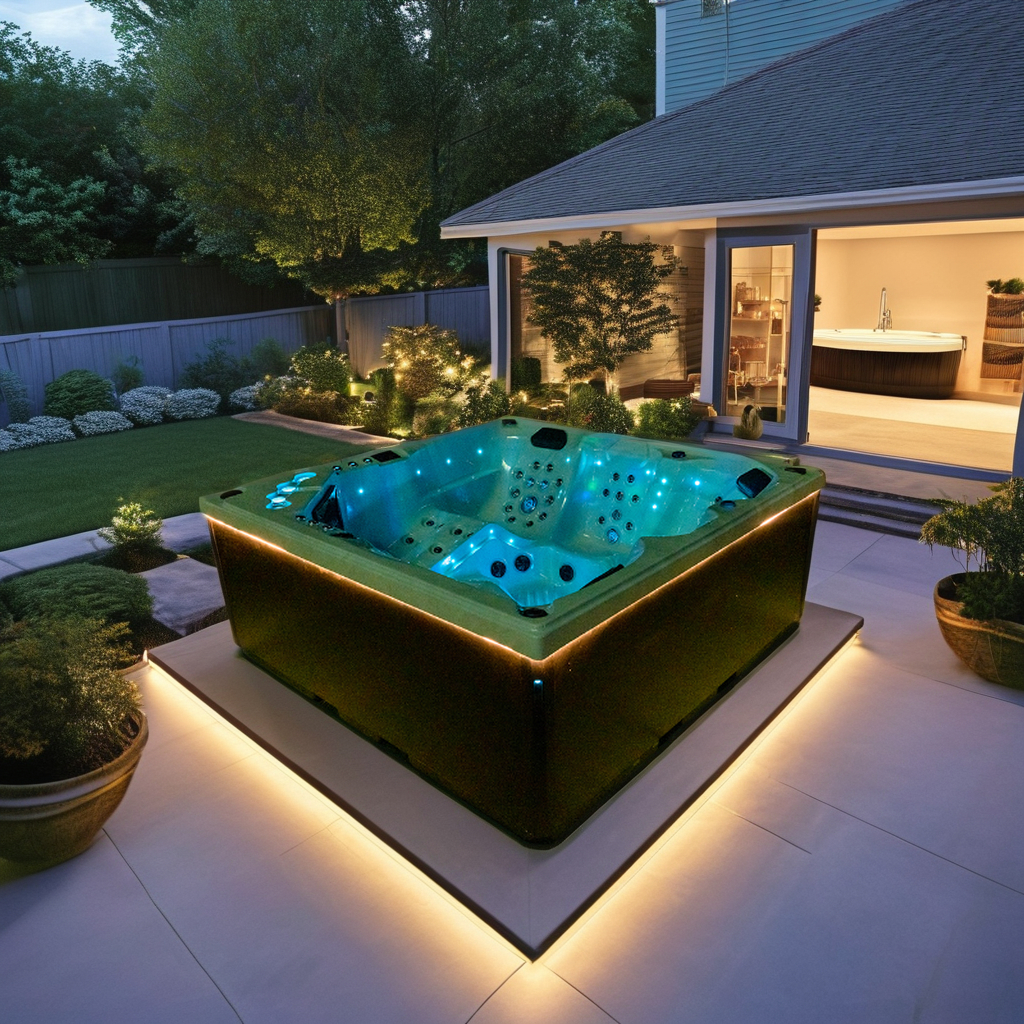
Heating System: Determining Heating Speed and Ongoing Operating Costs
The heating system directly impacts how quickly the outdoor whirlpool spa hot tub heats up and its overall operating costs. For residential models, heater power is typically matched to the hot tub's capacity and local environmental conditions; common configurations range from approximately 3kW to 6kW.
For instance, a 5-person outdoor hot tub with a capacity of 1,000–1,300 liters requires significantly higher heating capacity and thermal insulation performance when used in cold winter weather compared to summer. Therefore, one cannot rely solely on heater wattage; factors such as water capacity, ambient temperature, the tub's insulation structure, and usage frequency must all be considered.
If the heater power is too low, the time required to heat the water may be excessive; however, simply increasing the power does not necessarily reduce overall energy consumption. If the tub has poor insulation, substantial heat loss occurs continuously, forcing the heater to operate frequently.
Consequently, the heating system's true effectiveness depends on the combination of heating efficiency and thermal insulation capability.
Insulation System: Crucial for Outdoor Use
For modern outdoor jacuzzi tubs, insulation performance is often more critical than consumers realize. These tubs are constantly exposed to the outdoors—especially during autumn and winter—when there can be a significant temperature difference between the air and the water. If the insulation structure is inadequate, even a high-wattage heater may struggle with slow heating, rapid heat loss, and increased power consumption.
A comprehensive insulation design typically covers the tub base, the interior of the side panels, the plumbing areas, and the top cover. The top cover is particularly important, as the large surface area of the water makes it a primary source of heat loss.
Therefore, when purchasing an outdoor hot tub, do not simply ask if it has "insulation foam"; instead, inquire about the specific insulation materials, the areas covered, and the structure of the top cover. For households that use the tub frequently in winter, insulation performance should be a key factor in your comparison.
Filtration and Circulation Systems: Impact on Water Quality and Maintenance Costs
Outdoor hot tubs involve large volumes of heated water, making the filtration and circulation systems directly relevant to water quality management and daily maintenance.
A well-designed system typically includes a filter, a circulation pump, and necessary water treatment components to ensure continuous water circulation and filtration. A stable circulation system is more effective at maintaining water quality than simply opting for a high-power pump. According to guidelines from the U.S. Centers for Disease Control and Prevention (CDC), maintaining proper disinfectant levels and pH balance is crucial for hot tubs. The CDC recommends keeping free chlorine levels at a minimum of 3 ppm and pH levels between 7.0 and 7.8, with testing frequency increased based on usage.
This means that when purchasing an outdoor whirlpool spa hot tub, you shouldn't focus solely on the strength of the massage jets; you should also consider factors such as the ease of filter replacement, the maintainability of the circulation system, and the availability of replacement parts and consumables.
Water Capacity and Weight-Bearing Load: Important Parameters Often Overlooked
A modern outdoor jacuzzi tub becomes extremely heavy when filled with water. For instance, 1,000 liters of water alone weighs approximately 1,000 kg; when the weight of the tub itself, the equipment, and the users is added, the total weight can easily exceed 1,500 kg.
Take, for example, a 5-person outdoor hot tub with a capacity of about 1,100 liters. If the tub itself weighs 350 kg and five adults average 80 kg each, the fully loaded weight would be approximately:
1,100 kg (water) + 350 kg (equipment) + 400 kg (people) = 1,850 kg.
Therefore, if you plan to install the tub on a patio, deck, or rooftop, you must verify the surface's load-bearing capacity beforehand. For high-rise residences or rooftop installations, a professional should assess structural safety; installation feasibility should not be determined based on the tub's dimensions alone.
Control Systems: Smart Features Are a Bonus, Not Core Performance
Many modern outdoor whirlpool spa hot tubs come equipped with features such as touchscreens, Wi-Fi connectivity, mobile apps, LED lighting, and Bluetooth audio systems. While these features enhance convenience, they should not be the primary criteria for your purchase decision.
If you are on a limited budget, it is advisable to prioritize the tub's structural integrity, water pumps, jets, heating, insulation, and filtration systems. Features like Wi-Fi control, lighting, and audio systems can be selected based on personal preference. For hotels, vacation rentals, and commercial projects, smart control systems offer even greater value, as they enable managers to conveniently oversee equipment and monitor operational status.
Safety Features: A Top Priority
Outdoor hot tubs involve water, electricity, and high temperatures; therefore, safety features cannot be overlooked. When purchasing, pay close attention to earth-leakage protection, electrical safety measures, grounding, pump protection, suction inlet design, and temperature control.
Furthermore, water temperature should not be raised indefinitely. The CDC recommends that hot tub water temperatures do not exceed 104°F (40°C).
Consequently, a quality outdoor whirlpool spa hot tub must not only provide a comfortable massage and heating experience but also feature stable temperature control and robust electrical safety designs. Installation must strictly adhere to local electrical codes and the manufacturer's specifications.
Which features should take priority when working with a limited budget?
Consumers on a limited budget should prioritize "core performance" when making their selection.
Top priority should be given to the tub structure, seating design, water pumps, jets, heating, and insulation. Secondary priority goes to filtration and circulation, control systems, and ease of use. Entertainment features—such as lighting, audio systems, and Wi-Fi connectivity—rank third.
Crucially, do not sacrifice pump matching and plumbing design just to add dozens of extra jets, nor should you overlook insulation performance in pursuit of higher heating power. A modern outdoor jacuzzi hot tub's actual operating costs are often directly linked to the efficiency of the entire system.
When purchasing an outdoor hot tub, focus on checking the following specifications:
When consulting with manufacturers or brands, consumers can directly request a complete specifications sheet. This should include: external dimensions, actual seating capacity, water capacity, number and power of pumps, number and type of jets, heater power, filtration method, circulation system, insulation structure, electrical safety features, rated voltage, control method, total unit weight, and details regarding after-sales service and spare parts availability.
For a 5-person outdoor whirlpool spa hot tub, clarify whether the "5-person" rating refers to the theoretical seating capacity or the number of people who can use it comfortably. Also, inquire about the weight when filled with water and the load-bearing requirements for the installation surface. For bulk purchasers, hotel projects, or distributors, it is also important to consider whether the product supports OEM/ODM customization—such as dimensions, seating layout, jet configuration, control systems, color, aesthetics, branding (logos), and packaging.
FAQ: Common Questions About Buying Outdoor Hot Tubs
Q1: What is the most important feature of an outdoor hot tub?
No single feature determines the entire experience. Components such as pumps, jets, heating, insulation, filtration, and the tub structure must work in harmony. For products intended for long-term outdoor use, insulation, heating, and water circulation systems deserve special attention.
Q2: Is it better to have more jets in a modern outdoor jacuzzi?
Not necessarily. The number of jets is just one specification; jet type, layout, massage zone coverage, and pump compatibility are more important. A well-designed jet layout is usually more valuable than simply increasing the quantity.
Q3: What is the typical size of a 5-person outdoor hot tub?
In the residential market, a common size for a 5-person outdoor whirlpool spa hot tub is approximately 2 x 2 meters, though dimensions vary significantly by brand and design. When purchasing, consider the external dimensions, internal seating space, and actual water capacity.
Q4: Do modern outdoor jacuzzis consume a lot of electricity in winter?
Power consumption depends on factors such as water capacity, heater power, ambient temperature, insulation quality, usage duration, and the set temperature. Products with superior insulation minimize heat loss, thereby reducing the frequency with which the heating system needs to run.
Q5: What temperature should an outdoor hot tub be kept at?
The CDC recommends that whirlpool spa hot tub water temperatures do not exceed 40°C (104°F). In practice, the temperature should be adjusted based on individual preferences, duration of use, and the manufacturer's operating instructions.