


What kind of outdoor spa hot tub should you choose for hot regions?
2026-10-23 15:30From private courtyards and rooftop terraces to hotel pool areas and hot spring resorts, outdoor spa hot tubs serve not only as a means for relaxation, massage, and wellness but also as key features that elevate the quality of a space. However, many consumers harbor misconceptions when selecting hot tubs for hot regions—such as believing that heating equipment is unnecessary in a hot climate or assuming that all outdoor spa hot tubs are suitable for high-temperature environments. In reality, the design requirements for spa hot tubs in hot regions are far more complex; factors such as high temperatures, intense UV radiation, high humidity, salt spray, and prolonged exposure to the sun all impact material integrity, equipment operation, and operating costs.
A hot tub truly suited for hot regions requires more than just faster heating capabilities; it demands a balance of sun protection, heat dissipation, corrosion resistance, energy efficiency, water quality management, and smart control systems. This is particularly crucial in tropical, subtropical, and coastal areas, where ambient summer temperatures can consistently exceed 30°C or even 35°C, and surface temperatures—both on the ground and on buildings—can rise even higher under direct sunlight.
If material selection and structural design are inadequate, a low initial purchase price may lead to future issues such as shell degradation, equipment failure, increased energy consumption, and higher maintenance costs. Therefore, selecting a spa hot tub for a hot region requires considering the specific environmental conditions rather than relying on standard purchasing criteria used for temperate climates.
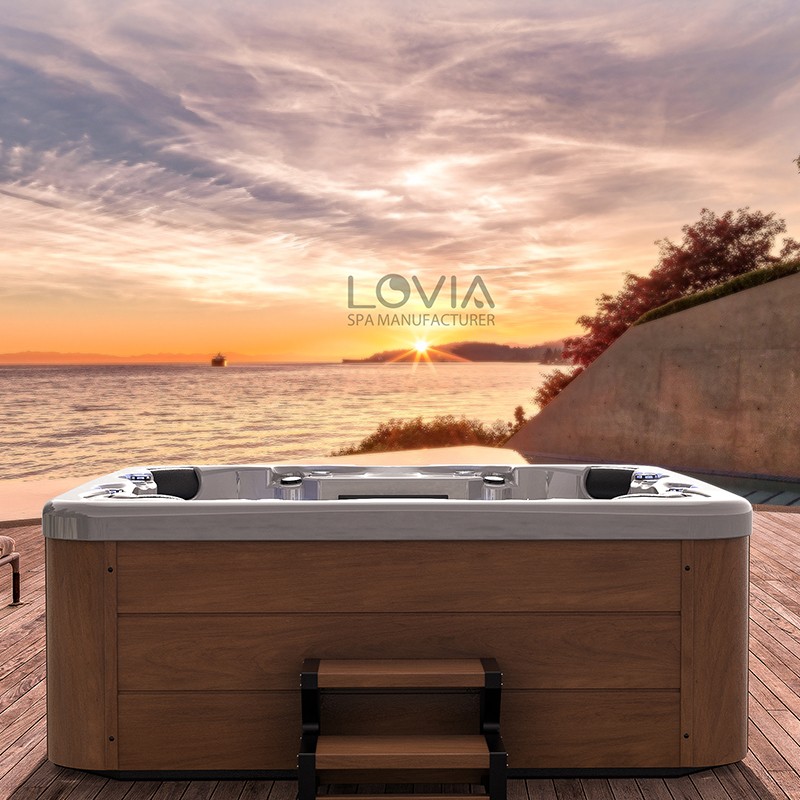
Material performance matters more than aesthetics when choosing a hot tub for hot regions
Many consumers prioritize visual design, color, and the number of massage jets when purchasing an outdoor spa hot tub; however, material performance is actually more critical for long-term outdoor use. This is because the outdoor environment tests the product not merely through a brief trial, but through years—or even decades—of continuous operation.
High-quality outdoor hot tubs on the market typically feature an interior shell made of UV-treated acrylic. This material offers excellent weather resistance, minimizing color fading caused by prolonged sun exposure. Additionally, the smooth acrylic surface is easy to clean and resistant to dirt accumulation, making it ideally suited for outdoor environments. When selecting an outdoor spa hot tub for hot climates, it is advisable to prioritize lighter-colored shells—such as white, light gray, or beige. While dark-colored models may offer a more modern, premium aesthetic, dark materials absorb solar radiation more intensely, potentially leading to elevated surface temperatures under prolonged sun exposure. For hot tubs installed on rooftops, in unsheltered courtyards, or beside swimming pools, color choice can indeed impact the user experience during the summer.
Beyond surface materials, the internal structure is equally important. High-quality outdoor spa hot tubs typically feature moisture- and corrosion-resistant frames and incorporate protective structures at the base to prevent ground moisture from seeping into the unit over time. Base protection is particularly critical in high-humidity regions, as many equipment failures stem not from the tub's interior components, but from issues with wiring, frames, and connections caused by prolonged exposure to damp conditions.
Do outdoor hot tubs in hot climates require heavy-duty insulation?
There is a common misconception in the market regarding hot tub insulation: the belief that thicker insulation equates to better performance. In reality, insulation requirements vary depending on the climate.
In cold regions, the primary challenge is rapid heat loss; consequently, thick, full-foam insulation structures are often used to minimize winter operating costs. In hot climates, however, the main challenge is not maintaining high heat, but rather managing water temperature fluctuations throughout the day. Therefore, what is needed is balanced insulation rather than simply increasing the thickness indefinitely.
For hot climates, an effective insulation system should serve three purposes:
First, it minimizes temperature drops overnight, thereby reducing the time required to reheat the water. Second, it reduces surface evaporation, lowering water consumption. Third, it prevents frequent equipment cycling, thereby improving energy efficiency.
The insulating cover is a crucial component of an outdoor spa hot tub. A high-quality cover typically features a waterproof outer layer and a high-density foam core; this design minimizes heat exchange while keeping out dust, leaves, and rainwater. In hot climates, the cover serves not only to retain heat but also to block sunlight and protect water quality. Therefore, when selecting an outdoor hot tub, consumers should not simply focus on the idea that "thicker insulation is better." Instead, they should consider the overall thermal management design—including the insulation, cover, ventilation structure, and smart temperature control system—to ensure it is suitable for the local climate.
Heat Dissipation Capability Determines the Stability of Outdoor Hot Tubs in Hot Regions
Many outdoor spa hot tub manufacturers emphasize heating speed and insulation performance, but for hot regions, heat dissipation design is equally important.
Outdoor hot tubs typically house components such as circulation pumps, massage pumps, heaters, and control systems. For instance, a medium-to-large hot tub might be equipped with a heater rated at 2kW to 3kW (or higher) alongside multiple continuously operating water pumps. If heat cannot be effectively vented from the equipment compartment, prolonged exposure to high temperatures can accelerate the aging of electronic components.
Consequently, hot tubs intended for hot regions require a well-designed equipment compartment that incorporates adequate airflow space, waterproof heat vents, moisture protection, and overheat protection features.
For residential users, effective heat dissipation extends the equipment's lifespan. For hotels and vacation rentals, this capability is even more critical; commercial settings involve higher usage frequencies, with tubs potentially running for several consecutive hours daily. If the equipment operates in a high-temperature environment for extended periods, maintenance costs will rise significantly.
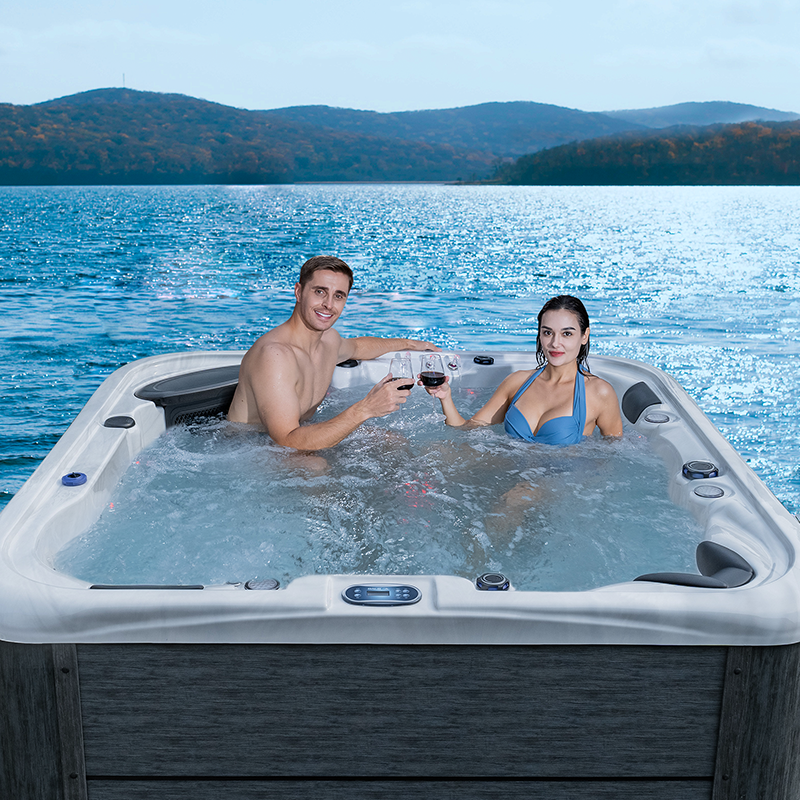
Corrosion Resistance Determines the Long-Term Lifespan of Outdoor Hot Tubs
In hot regions—particularly coastal areas—corrosion resistance is a crucial factor when selecting an outdoor spa hot tub.
A complete modern outdoor jacuzzi tub system comprises various components, including the shell, frame, plumbing, pumps, and electrical control system. Insufficient corrosion resistance in any single part can compromise the unit's overall lifespan.
Regarding the frame, it is advisable to choose 304 stainless steel or structural materials that have undergone anti-corrosion treatment. Stainless steel offers excellent corrosion resistance, making it ideal for humid environments. For the base structure, an ABS moisture-proof chassis can be selected to prevent ground moisture from entering the equipment.
Additionally, the quality of the plumbing is vital. Outdoor spa hot tubs are constantly exposed to fluctuating temperatures, meaning the piping must withstand the thermal expansion and contraction caused by these changes. If the piping is of poor quality, issues such as aging joints or water leaks may occur.
Therefore, when purchasing an outdoor spa hot tub for use in hot regions, one should look beyond the aesthetic appeal of the exterior and focus on whether the internal structure is capable of withstanding the outdoor environment over the long term.
How should one choose the capacity of an outdoor hot tub for hot regions?
Capacity selection directly impacts the user experience, energy consumption, and maintenance costs. Currently, the market offers a range of capacities, from small units holding around 600 liters to large commercial models exceeding 2,500 liters.
For the average household, a hot tub designed for 2 to 6 people is usually the most suitable choice. Models for 4 to 6 people typically have a capacity of 1,000 to 1,600 liters; this meets family leisure needs without imposing an excessive maintenance burden.
Choosing an oversized hot tub can lead to several issues:
First, heating times increase; second, water maintenance costs rise; and third, it occupies more space. In hot regions specifically, a large volume of water is more susceptible to solar heat, making temperature regulation more difficult.
While commercial projects like hotels and resorts might opt for larger capacities based on guest volume, household users are advised against blindly pursuing larger sizes.
What key specifications should be prioritized when buying an outdoor hot tub for hot regions?
When selecting an outdoor spa hot tub, focus on the following core specifications:
Regarding the heating system, a 2kW to 3kW heater is generally recommended for home use, with particular attention paid to temperature control precision. A high-quality control system can keep temperature fluctuations within ±1°C, thereby enhancing comfort.
Regarding the pump system, do not simply chase a high number of jets; instead, focus on the water flow design. An effective massage system should address the needs of different body areas, such as the back, waist, and legs.
Regarding the filtration system, higher water temperatures in hot regions facilitate microbial growth; therefore, it is advisable to choose a hot tub equipped with features such as circulation filtration, ozone sterilization, or UV disinfection.
Regarding smart controls, consider products that support smartphone app control, automatic constant temperature maintenance, scheduled circulation, and fault alerts to enhance convenience.
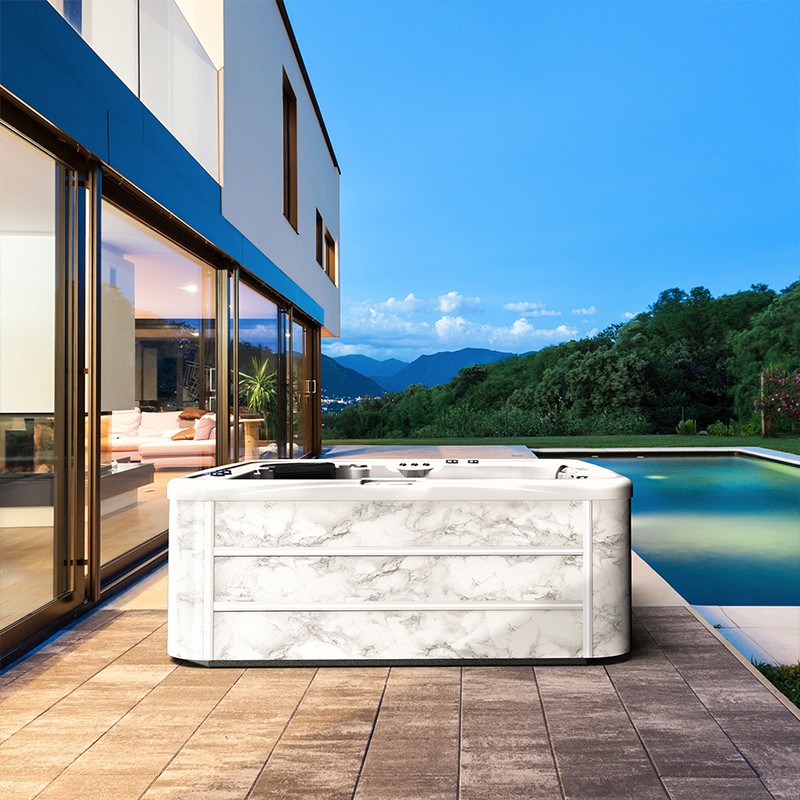
What are the installation requirements for outdoor hot tubs in hot regions?
Even with a high-quality outdoor spa hot tub, an improper installation location can shorten the equipment's lifespan.
First, avoid locations exposed to direct sunlight all day. Ideally, install the tub in a shaded area of the yard, near a gazebo, or under a dedicated shade structure. This helps lower the equipment's temperature and enhances the user's soaking experience.
Second, ensure good air circulation. Do not install the hot tub in a completely enclosed corner, as this hinders heat dissipation.
Additionally, consider the load-bearing capacity of the ground. Since one liter of water weighs approximately one kilogram, a 1,500-liter hot tub holds 1,500 kg of water alone; when combined with the weight of the unit and the users, the total load can exceed 2,000 kg. Therefore, if installing on a balcony, terrace, or rooftop, you must verify the building structure's load-bearing capacity beforehand.
Why are low-priced outdoor hot tubs more prone to problems in hot regions?
Some low-priced hot tubs on the market keep costs down by using cheaper materials—such as thinner insulation layers, standard plastic components, and lower-grade electronic control systems.
While these products may function fine in the short term, issues often emerge after prolonged exposure to hot outdoor environments. Common problems include shell fading, overheating of the equipment compartment, pump failure, plumbing leaks, and control system malfunctions.
Therefore, when purchasing an outdoor spa hot tub, do not focus solely on the initial price; consider the long-term cost of ownership. Although high-quality products have a higher upfront cost, they reduce long-term maintenance burdens through superior materials, lower failure rates, and greater energy efficiency.
FAQ: Common Questions About Outdoor Hot Tubs in Hot Regions
Q1: Is it still necessary to buy an outdoor hot tub with a heating function for the summer in hot regions?
Yes. The comfortable soaking temperature for an outdoor spa hot tub is typically between 37°C and 40°C, and the body's perception of water temperature differs from the ambient air temperature. Even when summer air temperatures are high, a constant temperature function is still needed to maintain a comfortable experience during the evening or rainy seasons.
Q2: Does prolonged exposure to the sun affect the lifespan of a modern outdoor jacuzzi tub?
Yes. If the shell lacks UV-resistant treatment, prolonged sun exposure can lead to fading, aging, and surface damage. Therefore, in hot regions, it is best to choose materials with UV protection capabilities.
Q3: Do outdoor hot tubs in hot regions require exceptionally high levels of thermal insulation?
Not necessarily. Hot regions require effective thermal management design—such as insulating covers, smart temperature control, and heat dissipation structures—rather than simply increasing insulation thickness.
Q4: Are modern outdoor jacuzzi tubs suitable for seaside villas?
Yes, but you need to select models with superior corrosion resistance. In a seaside environment, key considerations include the grade of stainless steel, salt-spray resistance, and the moisture resistance of the electronic control system.
Q5: What is the most important factor when buying an outdoor hot tub for a hot region?
The most important factor is the product's suitability for the local environment. Rather than focusing solely on aesthetics or the number of massage jets, you should prioritize materials, sun and corrosion resistance, water treatment, temperature control systems, and after-sales service capabilities. Only when these aspects are well-matched can a modern outdoor jacuzzi tub deliver a stable, safe, and comfortable user experience in a hot climate.