


How to Remove Foam from Outdoor Hydrotherapy Spa Tubs?
2026-10-06 15:35Outdoor hot tubs have become popular leisure amenities in modern residential backyards, resorts, wellness centers, and commercial spas, attracting increasing consumer interest thanks to their warm, soothing hydrotherapy, massage functions, and ability to promote relaxation. However, many users encounter a frustrating issue during prolonged use: the appearance of significant white foam on the water's surface. This foaming intensifies—sometimes even covering the entire surface—when massage jets or circulation pumps are activated.
For the average user, foaming not only detracts from the hot tub's aesthetic appeal and the overall experience but also raises concerns about potential water quality issues. In reality, foam does not necessarily indicate equipment failure or a malfunctioning sanitization system; rather, it is often caused by the accumulation of substances such as body oils, skincare products, detergent residues, and organic contaminants, or by an imbalance in water quality parameters. Unlike standard bathtubs, outdoor hydrotherapy spa tubs rely on a combination of filtration, circulation, and water treatment systems to maintain stable water quality. Therefore, correctly identifying the cause of the foam and implementing targeted solutions is crucial for ensuring the equipment's long-term, stable operation.
This article addresses the question of how to remove foam from outdoor hydrotherapy spa tubs by analyzing the principles of foam formation, common causes, quick remedies, long-term maintenance strategies, and professional water quality management. The goal is to help users maintain their hot tubs more effectively, enhance comfort, and extend the equipment's lifespan.
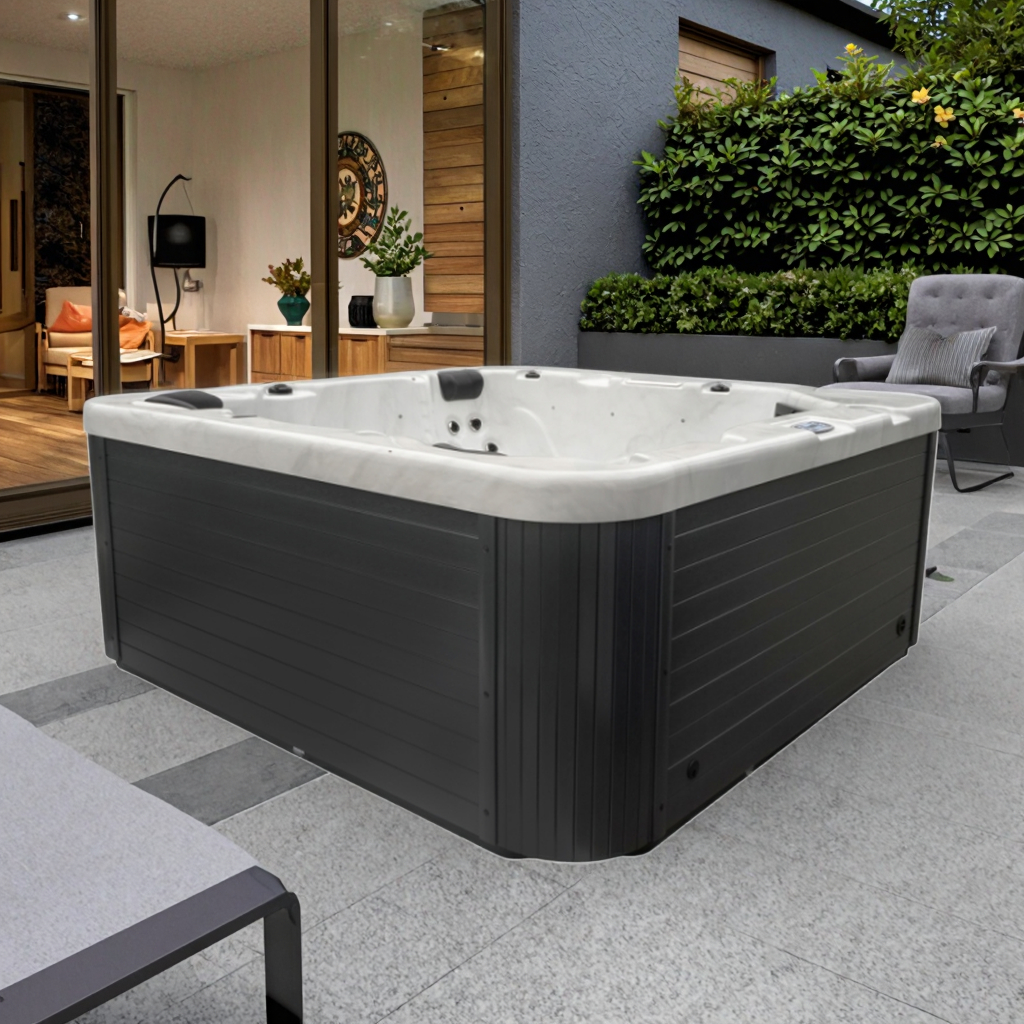
Why Does Foam Form in Outdoor Hot Tubs?
Many users believe that foam in outdoor hydrotherapy spa tubs is caused simply by the large volume of air introduced by the massage jets. In fact, the massage jets are merely a contributing factor to foam formation, not the root cause.
The massage systems in whirlpool outdoor spa hot tubs typically use pumps to drive water flow while mixing in air to create a vigorous, massaging stream. When air enters the water, bubbles usually burst quickly if the water is clean, preventing the formation of significant, stable foam. However, if the water contains substances that lower surface tension—such as body oils, cosmetics, bath product residues, or detergent components—these substances encapsulate the air bubbles, resulting in foam that persists for a longer period. Simply put, the formation of foam in an outdoor hot tub requires three conditions:
First, the presence of organic contaminants or surfactants in the water; second, the continuous introduction of air into the water via massage jets or the circulation system; and third, the inability of the filtration and disinfection systems to remove these contaminants in a timely manner. When these three conditions coexist, the foaming issue becomes more pronounced.
Therefore, the key to resolving foaming issues in outdoor hydrotherapy spa tubs is not merely turning off the massage function, but identifying the source of the contamination and addressing it through proper water quality management, equipment maintenance, and correct usage habits.
Main causes of foaming in whirlpool outdoor spa hot tubs
1. Body oils, sweat, and skincare products entering the water
Human factors are among the most common causes of foaming in outdoor hydrotherapy spa tubs. During use, sweat, oils, sunscreen, body lotion, perfume, and other skincare products on the skin's surface inevitably enter the water.
Once these substances enter the warm water, they gradually dissolve and mix with the circulating water. Some of these components act as surfactants, lowering the surface tension of water molecules and making it easier for air to form stable bubbles. When the massage function is activated, a large volume of air combines with these contaminants, resulting in visible foam.
The likelihood of foaming increases significantly in scenarios involving multiple users—such as family gatherings, hotel spa areas, or resort whirlpool outdoor spa hot tub facilities—due to the higher volume of contaminants introduced into the water.
The solution to this problem is relatively simple. Users can rinse off briefly before entering the hot tub to reduce residues of oils, sunscreen, and skincare products on their skin. Additionally, users should avoid applying large amounts of foam-prone substances, such as body lotions or sunscreens, before getting into the tub.
For commercial outdoor hot tubs, it is essential to establish usage guidelines—such as reminding guests to cleanse their bodies before use. This not only mitigates foaming issues but also helps reduce sanitizer consumption and improves overall water quality stability.
2. Detergent and fabric softener residues in swimwear
Many users overlook the impact swimwear has on hot tub water quality. In fact, residues of liquid detergent, laundry powder, and fabric softener trapped in swimwear fibers are significant sources of foam. Standard laundry detergents often contain high levels of surfactants. While these ingredients help remove stains, if swimwear is not thoroughly rinsed, residues can leach into the water during use.
This often manifests as persistent foaming in a whirlpool outdoor spa hot tub shortly after a fresh water refill, or a sudden increase in foam after changing into or washing swimwear.
To remedy this:
First, reduce the amount of detergent used on swimwear to prevent residue buildup from over-cleaning. Second, increase the number of rinse cycles after washing. Third, avoid entering the hot tub wearing swimwear that has just been washed with a large amount of detergent.
For households that frequently use outdoor hydrotherapy spa tubs, minimizing the introduction of contaminants is far more effective than repeatedly adding defoamers later on.
3. Foam buildup caused by water quality imbalances
Beyond external contaminants, abnormal water quality parameters are a major cause of foaming issues in outdoor hydrotherapy spa tubs.
Outdoor hot tubs typically operate at temperatures between 37°C and 40°C; high temperatures accelerate chemical reactions and the accumulation of organic contaminants. Consequently, outdoor hot tubs require stricter water quality management than standard cold-water pools.
Key parameters include pH, total alkalinity, and calcium hardness.
Generally, the pH level of a whirlpool outdoor spa hot tub should be maintained between 7.2 and 7.8. Consistently high or low pH levels can impair the effectiveness of sanitizers, preventing the efficient breakdown of oils and organic matter.
Total alkalinity is typically recommended to be kept within the 80–120 ppm range. Excessively low alkalinity can lead to significant pH fluctuations, making water quality unstable.
Calcium hardness is another frequently overlooked factor. Water that is too soft—with low calcium hardness—can compromise water stability and increase the likelihood of foaming. A calcium hardness level of 150–250 ppm is usually recommended, though the specific range should be adjusted based on equipment manufacturer guidelines and local water conditions.
Therefore, if foaming persists in an outdoor hydrotherapy spa tub, one should not only observe the water surface but also use professional testing tools to check water quality parameters.
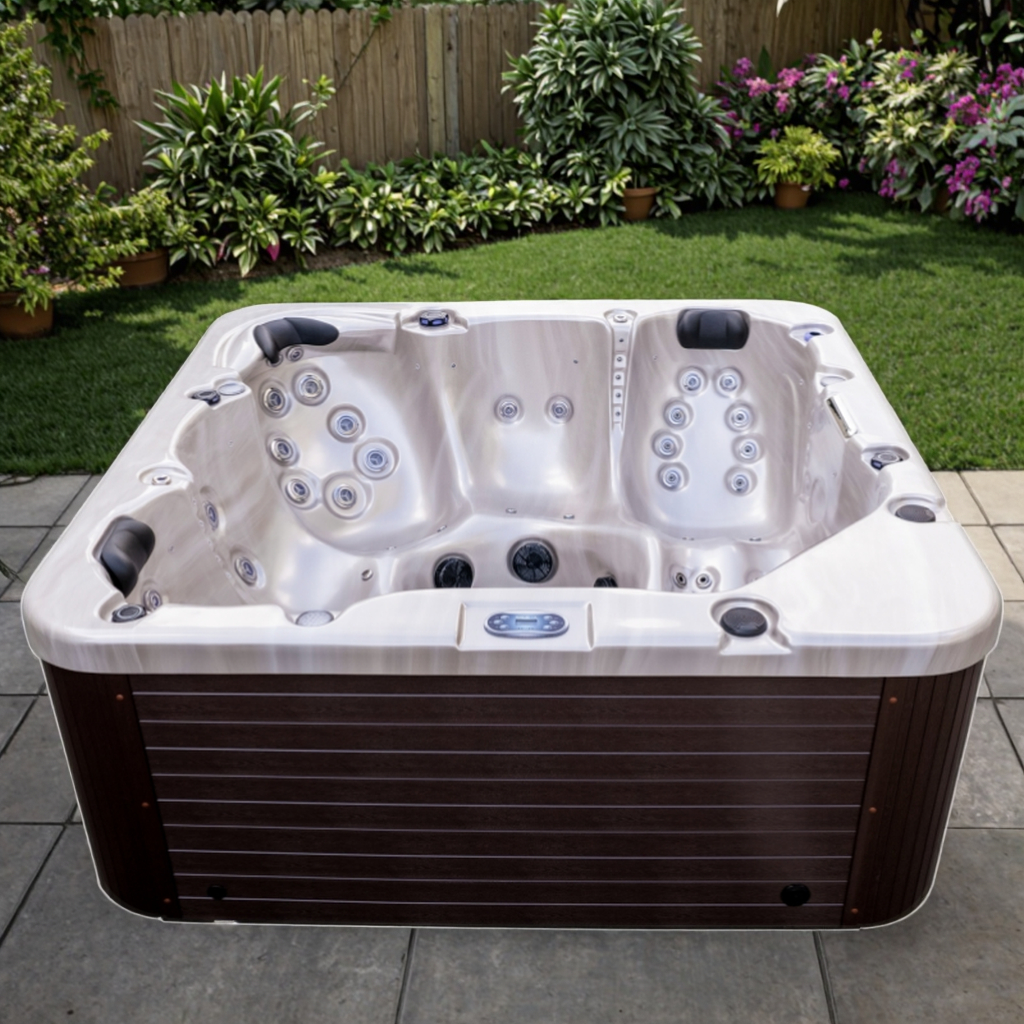
How can foam be quickly removed from an outdoor hot tub?
If excessive foam has already formed in your outdoor hydrotherapy spa tub, you can address the issue by following these steps:
First, turn off the massage jets and air system to observe how the foam changes. If the foam dissipates rapidly after the massage function is turned off, the primary cause is likely contaminants in the water reacting to the agitation of the air. If the foam persists in large quantities after the system is shut down, it indicates a higher level of water contamination, requiring further treatment.
Second, you can use a specialized outdoor hot tub defoamer for a quick fix. Defoamers rapidly destabilize the foam, causing bubbles to burst; they are ideal for temporarily improving the water's appearance—such as before a hotel guest arrives or for a one-off home use.
However, please note that defoamers only address surface foam and do not remove oils, detergent residues, or organic contaminants from the water. Relying on defoamers in the long term without improving water quality management will usually result in the foam returning.
Third, test the hot tub water and adjust chemical parameters based on the results. If the pH level is abnormal, adjust the acidity or alkalinity; if sanitizer levels are low, restore them to the proper range; if the water has significantly degraded, drain and refill the tub.
Fourth, step up maintenance of the filtration system. The filter is a crucial component for removing contaminants from the hot tub. If the filter cartridge is not cleaned regularly, large amounts of oil, dust, and organic matter accumulate in the filter media, reducing filtration efficiency.
For home users, it is generally recommended to give the filter cartridge a quick rinse weekly and perform a deep clean every few weeks or months, depending on usage frequency. Commercial hot tubs, which see heavier use, require more frequent inspections of the filtration system.
How can you prevent foam formation in your outdoor hot tub in the long run?
The most effective way to solve the foam problem is to establish a systematic routine for daily maintenance rather than waiting until foam appears to take action.
First, control the sources of contamination entering the water. A quick rinse before use can significantly reduce the amount of body oils and skincare products that end up in the water. Also, avoid using the hot tub while wearing swimwear that contains detergent residue.
Second, test the water quality regularly. An outdoor hydrotherapy spa tub is not merely a vessel for holding water over a long period; it is a circulating water treatment system. Proper maintenance includes regularly checking pH levels, sanitizer concentration, total alkalinity, and overall water cleanliness.
For typical residential use, the following maintenance schedule is recommended:
Check the water surface daily for debris;
Test water quality parameters and clean the filtration system weekly;
Change the water and clean the plumbing every 1–3 months, depending on usage frequency.
For commercial settings such as hotels and resorts, the frequency of water quality maintenance needs to be increased due to higher user volume.
Additionally, selecting an outdoor hot tub with superior filtration capabilities is crucial. High-quality models often feature multi-stage filtration, high-efficiency circulation pumps, and independent filtration systems; these components rapidly remove suspended contaminants and enhance water quality stability.
For manufacturers, factors such as filtration systems, water circulation structures, and smart water quality monitoring are just as important to product competitiveness as massage performance and aesthetic design.
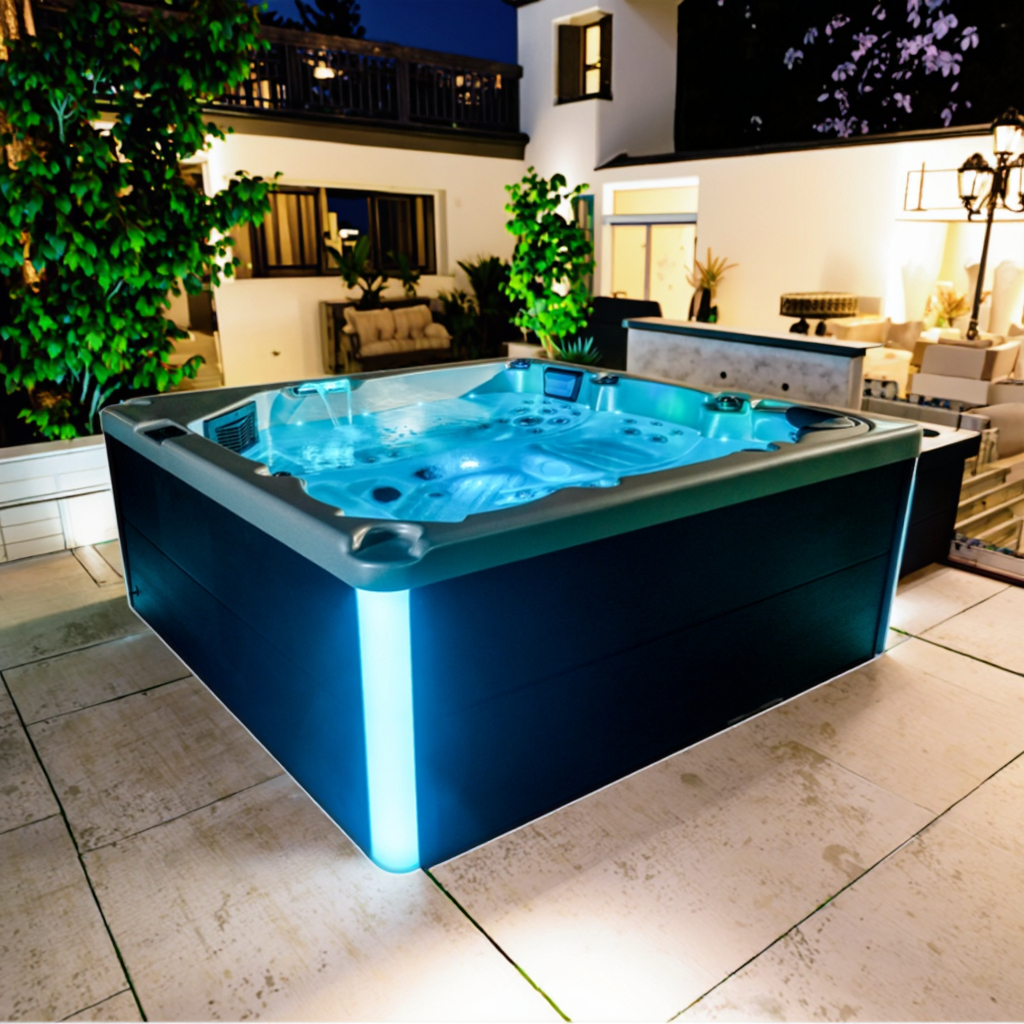
Why are commercial outdoor hot tubs more prone to foaming?
Compared to residential settings, commercial whirlpool outdoor spa hot tubs face greater challenges regarding water quality management.
First, commercial units serve a larger number of users. While a residential hot tub might be used by only a few people daily, units in hotels, fitness centers, or resorts may accommodate a continuous stream of users, leading to a significant increase in body oils, sweat, and skincare product residues entering the water.
Second, equipment in commercial settings operates for longer periods. Prolonged circulation accelerates the accumulation of contaminants; if filtration and disinfection systems are not properly maintained, issues such as foaming, cloudy water, and unpleasant odors are likely to arise.
Therefore, commercial outdoor hydrotherapy spa tubs require more robust maintenance protocols, including:
Regular water quality testing;
Timely cleaning of filtration equipment;
Limiting the number of daily users;
Establishing standardized disinfection procedures.
Only by implementing a comprehensive water treatment management system can a consistently high-quality user experience be ensured over the long term.
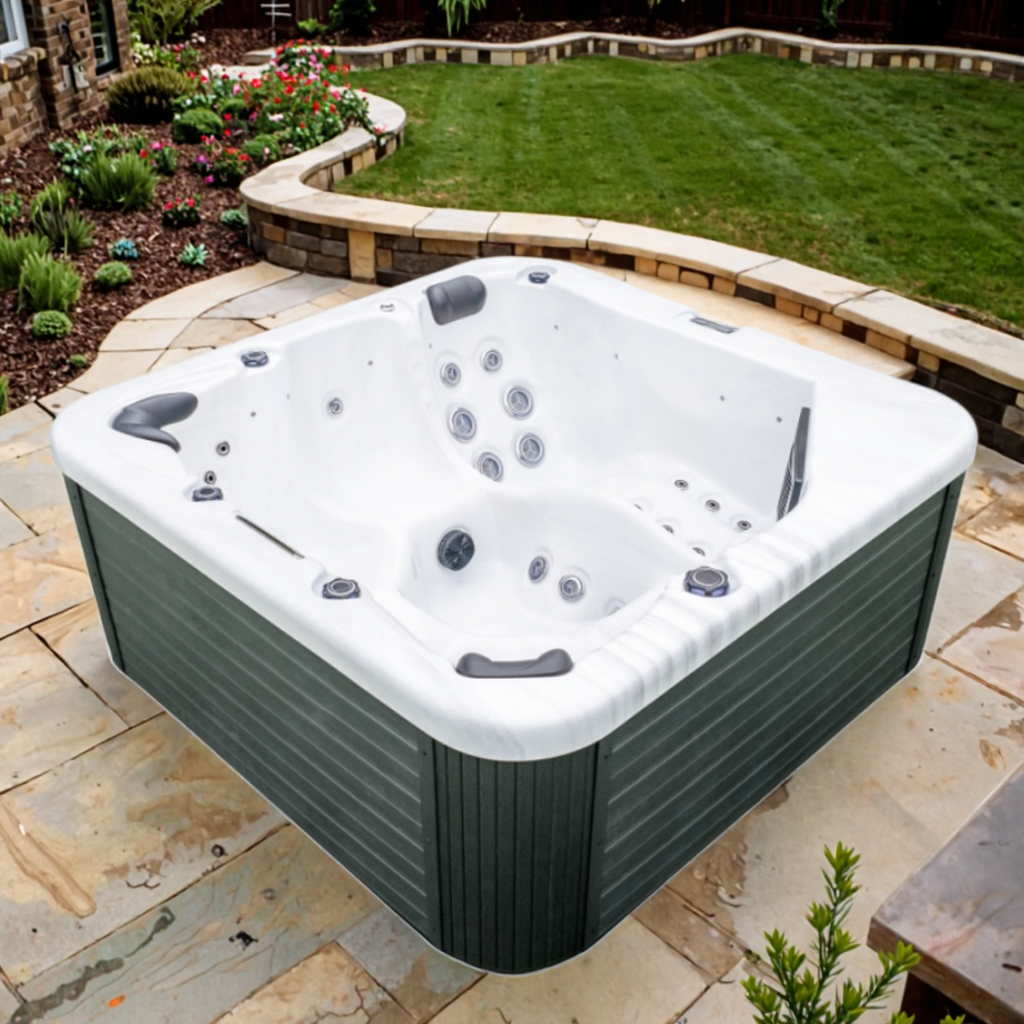
FAQ: Common Questions Regarding Foaming in Outdoor Hot Tubs
Q1: Is a small amount of foam in a whirlpool outdoor spa hot tub normal?
A small amount of foam is usually normal; brief bubbling may occur when massage jets are activated and air enters the water. However, if foam persists or accumulates heavily even after the massage function is turned off, the water quality should be checked.
Q2: Can defoamers completely solve the foaming problem in outdoor hot tubs?
No. Defoamers only reduce the amount of foam quickly and serve as a temporary solution. If root causes—such as oils, detergent residues, or water chemistry imbalances—are not addressed, foam may reappear.
Q3: Why does foam appear in an outdoor hydrotherapy spa tub even after a fresh water change?
Foam appearing after a water change is usually linked to detergent residue on swimwear, personal skincare products, insufficient water hardness, or residual contaminants in the plumbing; further inspection is required.
Q4: How often should the water in an outdoor hydrotherapy spa tub be changed?
The frequency of water changes depends on usage patterns, the number of users, and maintenance practices. Residential tubs with low usage frequency can go longer between changes, whereas hotels and commercial spas require more frequent water changes and maintenance due to high usage volumes.
Q5: Does the presence of foam indicate that the water quality is unsafe?
Foam alone does not directly determine whether the water is safe; however, persistent foaming usually indicates a high level of contaminants or chemical residues. When this occurs, water quality parameters should be tested promptly, and appropriate maintenance measures taken.