


Which fuse controls the heater of a whirlpool outdoor spa tub?
2026-10-06 15:30Compared to standard bathtubs, whirlpool outdoor spa tubs must not only provide massage, circulation filtration, and constant-temperature soaking capabilities but also rely on an electric heating system to maintain a comfortable water temperature over extended periods. Consequently, during daily use and maintenance, users often encounter electrical system-related questions, such as: "Which fuse controls the hot tub spa outdoor heater?", "Why is the water pump running, yet the water temperature isn't rising?", or "Which circuit breaker tripping would cause the tub to stop heating?" While these questions may seem simple, the answers actually involve various aspects of the hot tub's design, including power supply, safety protection, electrical codes, and equipment structure.
It is important to clarify that the heater in a whirlpool outdoor spa tub is typically not controlled by a small fuse found in standard household wiring; instead, it is protected and controlled by a circuit breaker on a dedicated circuit—most commonly a GFCI (Ground Fault Circuit Interrupter) breaker. For most residential hot tub spa outdoors, the system operates on 240V power and utilizes a dedicated GFCI breaker rated at 40A, 50A, or 60A, with the 50A double-pole GFCI breaker being a common configuration. However, the specific specifications must be determined based on the electrical parameters, heater wattage, and model details provided by the manufacturer.
This article addresses the core question—"Which fuse controls the whirlpool outdoor spat tub heater?"—by analyzing the heater's operating principles, circuit structure, and fuse types. The goal is to help users better understand the electrical systems of outdoor hot tubs and improve the safety of their operation.
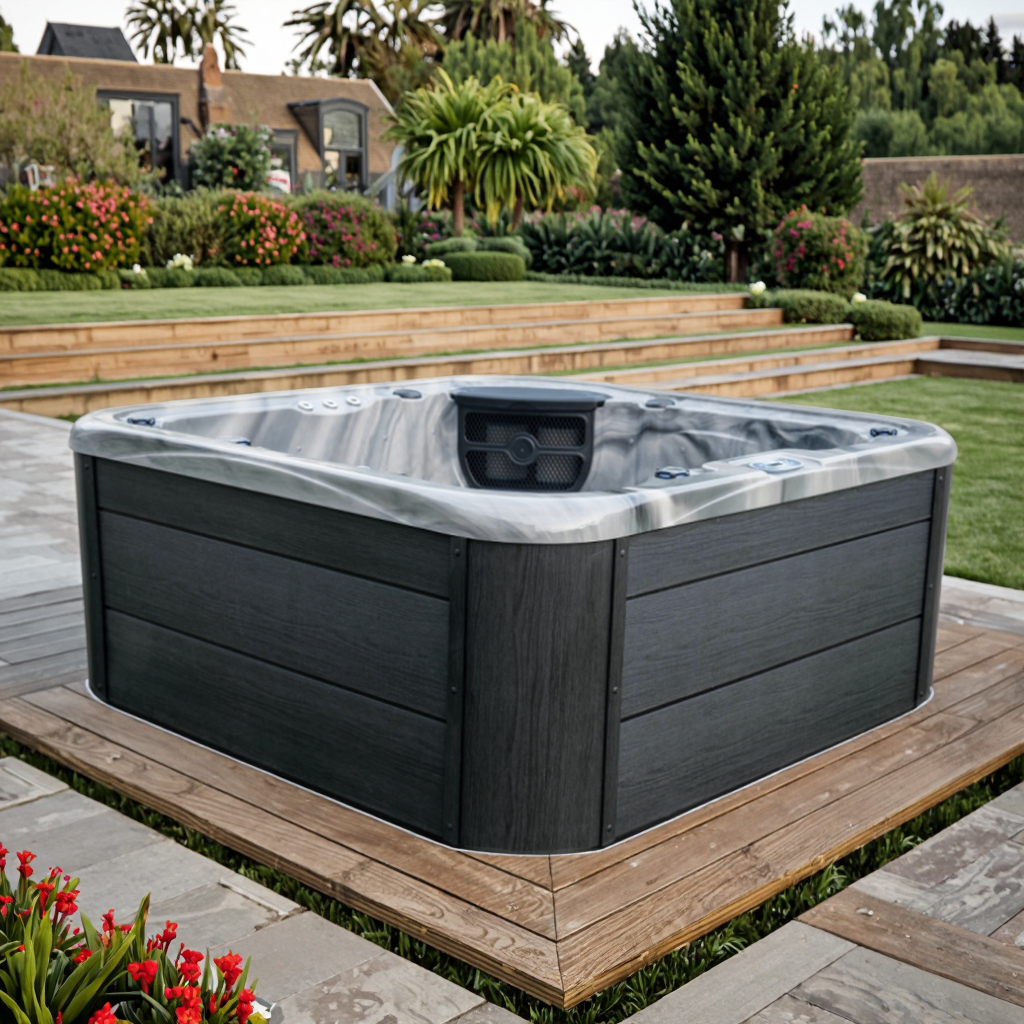
Why does an outdoor hot tub heater require control via an independent fuse?
Outdoor hot tubs are high-power appliances that operate in a wet environment. Their functioning requires the coordinated operation of multiple electrical components, including the heater, water pumps, circulation pumps, control board, lighting system, ozone purification equipment, and smart control modules. Among these, the heater typically represents the highest-wattage load in the entire system.
The heater power for a standard residential whirlpool outdoor spa tub generally ranges from 2kW to 6kW. For instance, a small outdoor hot tub might use a heater rated at approximately 1.5 kW to 3 kW, whereas a standard residential spa typically features a 4 kW to 5.5 kW heater; large, commercial-grade whirlpool outdoor spa tubs may even employ heating systems exceeding 6 kW.
Based on the formula for electrical power:
Power (W) = Voltage (V) × Current (A)
If an outdoor hot tub operates on 240V and is equipped with a 5 kW heater, the current for the heater alone is calculated as follows:
5000 W ÷ 240 V ≈ 20.8 A
However, during actual operation, the unit also requires power for water pumps, circulation systems, and control electronics. For example, a hot tub spa outdoor with multiple massage pumps might draw a total current of 40 A or even over 50 A when both heating and massage functions are active. Consequently, standard household 15 A or 20 A circuits are insufficient; a dedicated power supply line and specialized protective devices are required.
This is why most whirlpool outdoor spa tub installations mandate a connection to an independent circuit, rather than sharing a line with other high-power appliances such as air conditioners, washing machines, or electric heating units. A dedicated circuit breaker not only ensures stable operation but also cuts off power immediately in the event of a short circuit, overload, or ground fault.
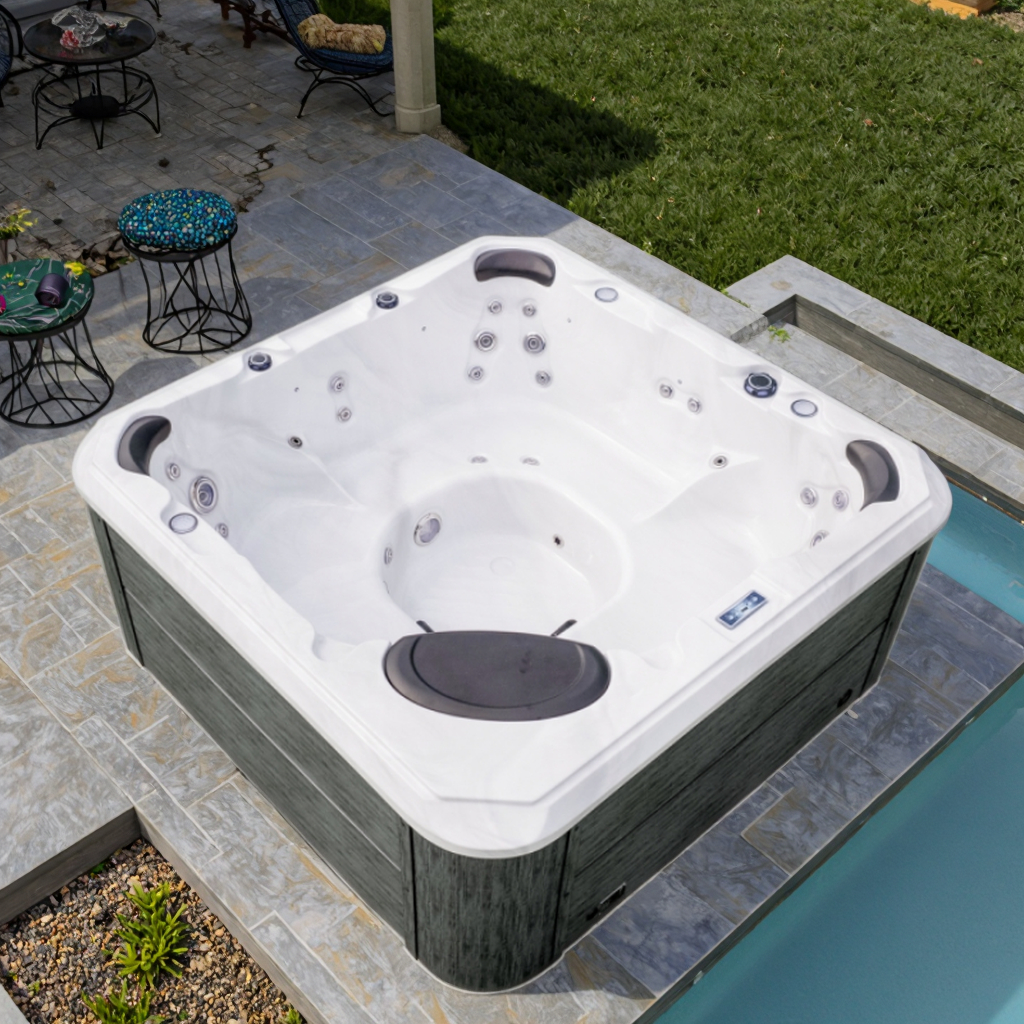
Which fuse actually controls the outdoor hot tub's heater?
In most outdoor hot tubs, the heater is controlled by a dedicated GFCI circuit breaker rather than a standard fuse labeled "Heater Fuse."
In a typical installation, the power supply configuration is as follows:
Main household distribution panel
→ Double-pole GFCI circuit breaker
→ Outdoor disconnect switch (Spa Disconnect)
→ Outdoor hot tub control box
→ Components such as the heater, pumps, and lights
The GFCI circuit breaker in the main distribution panel is the most critical component.
The GFCI circuit breaker performs three main functions:
First, it prevents circuit overload. When the operating current exceeds the rated value, the breaker cuts off the power to prevent the wiring from overheating.
Second, it prevents short circuits. If an electrical fault occurs within the unit, the breaker can rapidly disconnect the circuit. Third, preventing electric leakage. Since whirlpool outdoor spa tubs operate in a wet environment, users are more susceptible to the risk of electric shock upon contact with the water; therefore, leakage protection is crucial.
Circuit breaker specifications may vary depending on the type of outdoor hot tub:
Consequently, if a user finds that the hot tub is not heating, the first step should usually be to check the GFCI circuit breaker rather than immediately dismantling the heater.
How does the internal heating system of an outdoor hot tub work?
Many users mistakenly believe that simply powering the heater will cause the tub to heat up automatically. In reality, the heating systems of modern whirlpool outdoor spa tubs incorporate multiple safety control mechanisms.
Under normal conditions, the operating sequence is as follows:
First, the user sets a target temperature (e.g., 38°C) via the control panel.
Next, the main control board detects the current water temperature. If the temperature is below the set point, the system initiates the heating cycle.
Then, the circulation pump activates, driving water through the filtration system and the heating element.
The control board permits the heater to start only after confirming adequate water flow.
The heater engages, converting electrical energy into heat to raise the temperature of the circulating water.
The entire process is governed by several protection mechanisms, including:
•Water flow protection;
•High-temperature protection;
•Leakage protection;
•Overload protection.
Therefore, even if the fuse is intact, the heater may fail to start if there is insufficient water flow, a faulty temperature sensor, or a malfunction detected by the control board.
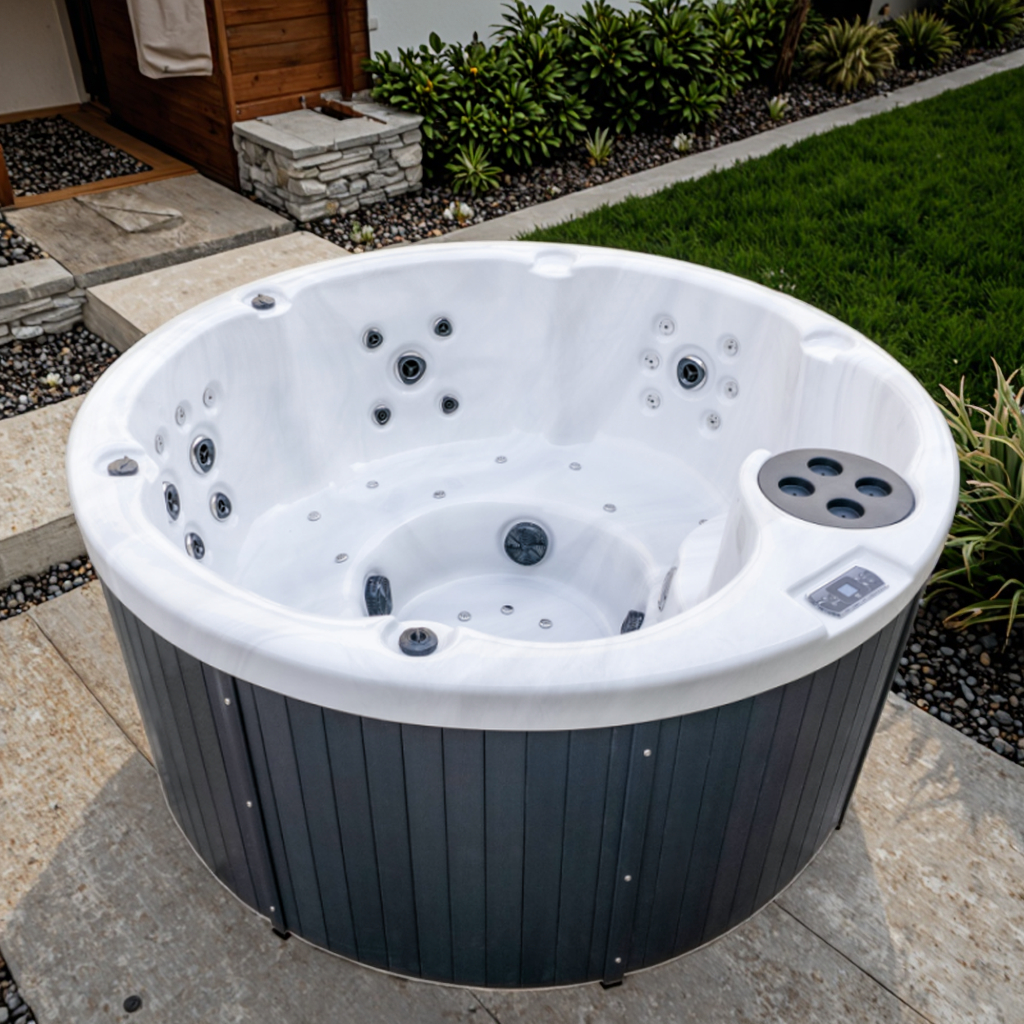
Why might the hot tub pump work normally while the heater fails to operate?
This is a very common issue encountered with whirlpool outdoor spa tubs. Many users assume the electrical system is fine because the massage jets are functioning, but the heating system itself may have developed a separate fault.
1. GFCI circuit breaker trip or partial protection
Some hot tub spa outdoors feature complex circuit designs where the control system remains powered, yet the heating circuit fails to operate.
For example:
The control panel displays normally;
The massage pump starts up;
However, the water temperature remains unchanged.
In such cases, you should check:
•The GFCI circuit breaker in the main distribution box;
•The outdoor spa disconnect box;
•The power supply status inside the control box.
If the GFCI cannot be reset, it usually indicates a leakage issue that requires further investigation.
2. Heater Relay Failure
The heater in an outdoor hot tub is typically controlled by a relay on the control board rather than being connected directly to the power supply.
After prolonged high-load operation, the relay may experience:
•Burnt contacts;
•Poor contact;
•Failure to output voltage.
In such cases, the external fuse remains intact, yet the heater fails to operate.
3. Insufficient Water Flow Triggers Heating Protection
Modern whirlpool outdoor spa tubs generally feature "dry-fire" protection (protection against heating without water).
If the following occur:
•Clogged filters;
•Insufficient water level;
•Circulation pump malfunction;
•Air entering the plumbing;
The system detects insufficient water flow and automatically shuts off the heater.
This prevents the heating element from continuing to heat up without water flow, which could damage the equipment.
4. Damaged Heating Element
Outdoor hot tub heating elements operate in high-temperature environments for extended periods and are susceptible to aging.
Common faults include:
•Broken resistance wire;
•Internal short circuit;
•Casing corrosion;
•Activation of earth leakage protection.
If testing confirms the power supply is normal but the heater produces no heat, the heating component itself must be inspected.
Pain Points Regarding Outdoor Hot Tub Electrical Installation
As the outdoor hot tub market grows rapidly, many users prioritize aesthetics, massage functions, and smart features, yet electrical installation and maintenance remain frequently overlooked aspects.
Pain Point 1: Users Do Not Know Which Fuse Controls the Hot Tub
Many households fail to document the circuit layout after installing a hot tub spa outdoor. When issues arise, users do not know:
•Which circuit breaker controls the hot tub;
•Which switch cuts off the power;
•Whether it is safe to reset the system.
The solution is to save the following information after installation:
•Equipment model;
•Electrical specifications;
•Circuit breaker location;
•Photos of the wiring installation.
This allows for quick troubleshooting during future maintenance.
Pain Point 2: Arbitrarily Replacing Fuses with Higher-Rated Ones to Prevent Tripping
This is a highly dangerous mistake. For example, if equipment specifications call for a 50A circuit breaker but a user installs a 60A (or larger) breaker to prevent tripping, the circuit's actual load-carrying capacity remains unchanged, even though nuisance tripping might decrease.
Over time, this can lead to:
•Wire overheating;
•Insulation degradation;
•Increased fire risk.
The purpose of a circuit breaker is not simply to keep the equipment running without interruption, but to protect the electrical circuit during abnormal conditions.
Pain Point 3: Outdoor environments increase the risk of electrical component degradation
Outdoor hot tubs are exposed to the elements, including:
•Rain;
•Humidity;
•UV radiation;
•Temperature fluctuations.
These factors can cause:
•Oxidation of wiring terminals;
•Compromised seals on waterproof enclosures;
•Cable degradation;
•Loose connections.
Therefore, in addition to monitoring fuses and circuit breakers, the entire electrical system requires regular inspection.
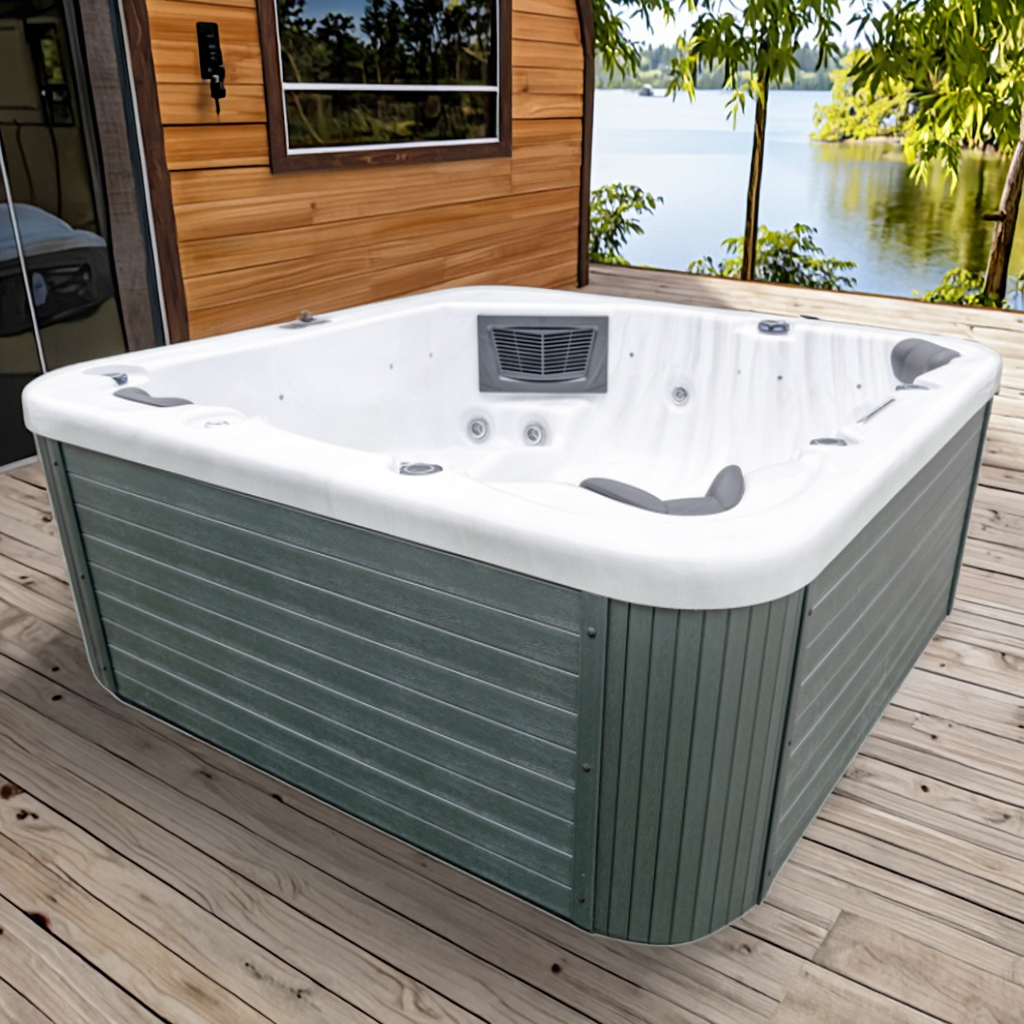
Troubleshooting Outdoor Hot Tub Heater Failures
If a hot tub spa outdoor fails to heat up, follow these steps to troubleshoot the issue.
First, check the control panel for error codes. Many modern hot tubs display codes such as:
FLO: Flow fault;
OH: Overheat protection;
HEATER ERROR: Heater malfunction.
Second, check if the GFCI circuit breaker has tripped. If it has, try resetting it once. If it trips again shortly after, do not continue using the unit.
Third, check the basic water circulation system:
•Is the water level normal?
•Is the filter clogged?
•Is the circulation pump operating?
Fourth, if the above checks are normal, further inspection is required for:
•Heater voltage;
•Heating element resistance;
•Control board relays.
Please note: Outdoor hot tubs involve 240V high-voltage circuits; users without professional experience should not attempt to disassemble electrical components themselves.
How do you correctly select the fuse specifications for an outdoor hot tub?
When selecting a circuit breaker for a hot tub spa outdoor, the most important step is to adhere to the manufacturer's specifications.
General guidelines are as follows:
Small units:
May utilize 120V, 15A–20A GFCI protection.
Standard residential hot tub spa outdoor:
Typically requires a 240V, 40A–50A GFCI circuit.
Large multi-function spa:
May require 50A–60A or even higher specifications.
However, the equipment's nameplate should always be the final authority.
The nameplate usually lists:
•Voltage;
•Maximum Amp Load;
•Required Breaker Size.
Do not make selections based merely on guesswork or past experience.
FAQs Regarding Outdoor Hot Tub Heater Fuses/Breakers
Q1: Which fuse/breaker controls the hot tub spa outdoor heater?
A: Most outdoor hot tub heaters are controlled by a dedicated GFCI circuit breaker—commonly rated at 40A, 50A, or 60A—depending on the specific model and power requirements.
Q2: Why do the hot tub's massage jets work, but the water isn't heating?
A: Possible causes include a tripped GFCI, a damaged heating relay, insufficient water flow, a clogged filter, a faulty temperature sensor, or a damaged heating element.
Q3: Can I use a standard fuse for an outdoor hot tub?
A: Generally, no. High-power hot tub spa outdoors require dedicated circuits and ground-fault protection devices (GFCI).
Q4: Why does the hot tub's circuit breaker trip frequently?
A: It could be due to current leakage, circuit overload, heater malfunction, or moisture in the wiring; repeatedly resetting the breaker is not recommended.
Q5: Is a 50A breaker suitable for all hot tub spa outdoors?
A: No. While 50A is a common configuration, the correct rating must be determined based on the equipment's nameplate and the manufacturer's specifications.