


How to Prevent Water in Outdoor Spa Hot Tubs from Turning Green?
2026-11-20 15:35Outdoor spa hot tubs are popular leisure and spa features found in residential gardens, on patios, and at hotels or resorts. Unlike standard bathtubs, outdoor hot tubs are designed to maintain a specific water temperature over extended periods, utilizing circulation pumps, filters, and jet systems to keep the water in motion. However, many users encounter a common issue: water that begins as clear and transparent gradually turns green, often becoming cloudy, developing a slippery surface, emitting unpleasant odors, or causing the filter to clog.
Green water not only detracts from the appearance and enjoyment of an outdoor whirlpool spa hot tub, but it may also indicate an imbalance in water chemistry, inadequate disinfection, or mineral contamination. If left unaddressed, microorganisms and biofilms can accumulate within the circulation piping, jets, and filtration system, making future cleaning and maintenance significantly more difficult.
So, why are outdoor whirlpool spa hot tubs prone to turning green? And how can you prevent this from recurring after cleaning? In reality, solving this problem requires more than just changing the water or adding disinfectants; it demands a comprehensive approach covering water quality testing, disinfection management, filtration and circulation, and routine maintenance.
This article provides a detailed look at the primary causes of green water in outdoor whirlpool spa hot tubs, how to treat it, and measures for long-term prevention.
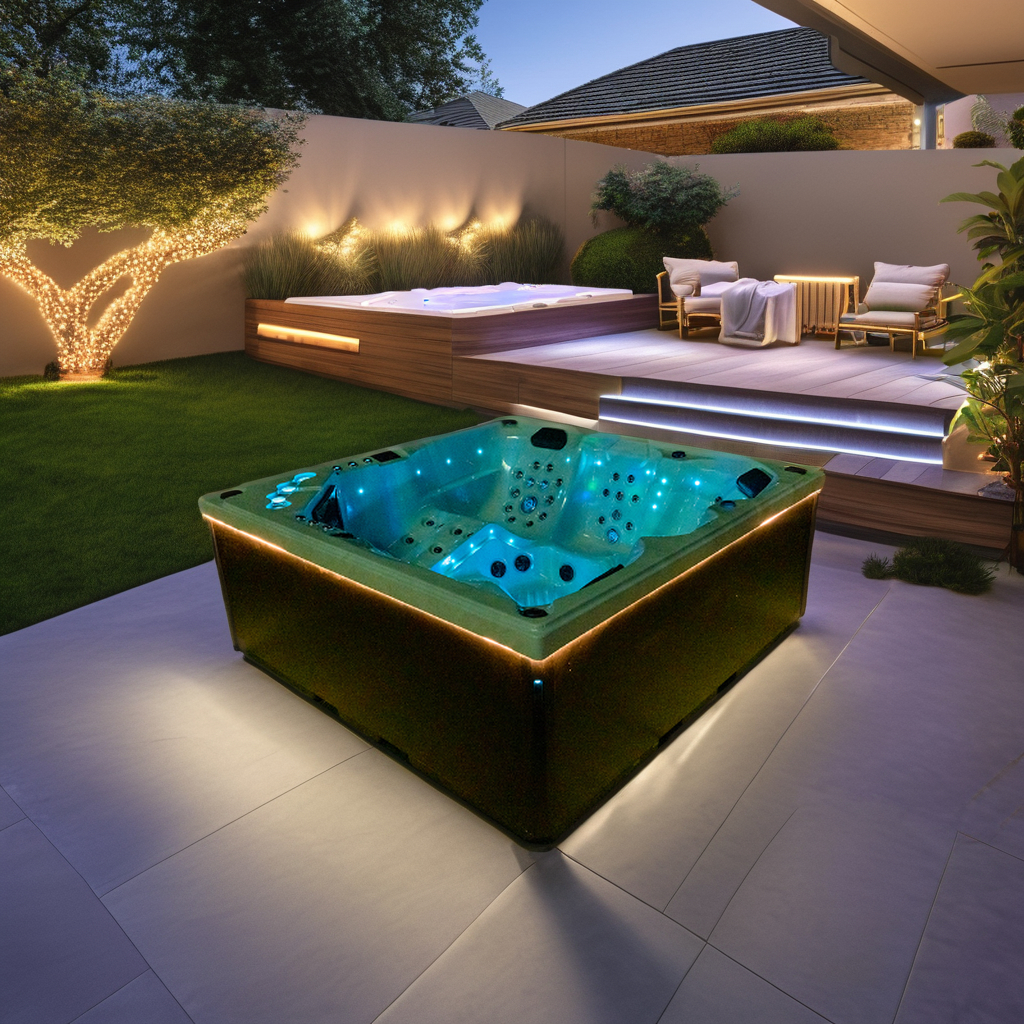
Why does water in outdoor hot tubs turn green?
Green water in an outdoor whirlpool spa hot tub does not necessarily mean that algae are growing. In practice, you should primarily investigate three potential causes: algae proliferation, metal ion contamination, and water chemistry imbalance.
1. Insufficient disinfectant, leading to the growth of algae and microorganisms
This is one of the most significant reasons for deteriorating water quality in outdoor spa hot tubs.
Outdoor environments are full of dust, leaves, pollen, and other organic pollutants. Furthermore, sweat, skin oils, and other residues from users also enter the water. These contaminants continuously consume the disinfectants present in the water.
If the concentration of chlorine or bromine falls too low, the water may lose its ability to be effectively disinfected. Under the combined influence of sunlight, appropriate temperatures, and nutrients, algae and other microorganisms can proliferate more easily, causing the water to gradually turn green, become cloudy, or even develop a slippery surface.
This risk is particularly high during the summer, especially if the water quality in an outdoor hot tub is not monitored regularly.
2. Discoloration caused by metal ions (such as copper or iron) in the water source
Not all green water is caused by algae.
If an outdoor spa hot tub turns green immediately after being filled, or suddenly changes color after the addition of a disinfectant, the presence of metal ions in the water source should be considered.
For example, copper ions can cause the water to take on a blue-green hue, while iron ions may result in a yellow-green, brown, or otherwise unusual color. When these metal ions come into contact with oxidizing disinfectants like chlorine, an oxidation reaction can occur, leading to noticeable color changes or the formation of sediment.
This is a particular concern for outdoor hot tubs supplied by groundwater, well water, or older metal piping systems.
3. Imbalance in pH levels and total alkalinity
Instability in water quality parameters can also cause an outdoor spa hot tub to exhibit abnormal coloration.
When the pH level is too high or too low, it not only affects the effectiveness of disinfectants but can also alter the solubility of metal ions, causing certain minerals to precipitate out of the water.
For instance, an excessively high pH can reduce the germicidal efficiency of chlorine-based disinfectants, while an overly low pH increases the risk of corrosion to metal plumbing and equipment components.
Therefore, assessing the health of the water in an outdoor whirlpool spa hot tub requires more than just observing its color; one must also consider the pH level, disinfectant concentration, and the nature of the water source.
How can you determine the cause of green water in an outdoor hot tub?
Before addressing the green water, you must first identify the underlying cause. Different causes require different solutions; simply adding large amounts of chlorine or other chemicals may fail to resolve the issue—or could even exacerbate the discoloration.
Scenario 1: The water appears cloudy and green. If the water appears opaque, the interior surfaces or steps of the spa hot tub feel slimy, and green deposits are visible on the filter, this may indicate algae growth or the accumulation of biofilm. In such cases, you should inspect the disinfectant concentration, the filtration system, and the circulation piping.
Second scenario: The water is clear but has a blue-green tint. If this occurs shortly after filling the tub with fresh water or adding disinfectant—and there is no noticeable sliminess on the interior surfaces—you should investigate the presence of metal ions, such as copper or iron.
Third scenario: The water is discolored and accompanied by an unpleasant odor or foam. This may be due to the buildup of organic contaminants, insufficient disinfectant, or improper water management. You should check the water’s disinfection capacity, the condition of the filter, and the total dissolved solids (TDS) level.
Please note that water color serves only as a preliminary indicator and cannot replace professional water quality testing. If you cannot determine the cause of the green discoloration, it is recommended to use a water testing kit and, if necessary, perform a test for metal ions.
Controlling Key Water Quality Parameters to Prevent Green Water in Outdoor Hot Tubs
For outdoor whirlpool spa hot tubs, maintaining stable water quality is the primary defense against the water turning green. Routine maintenance should focus on pH levels, disinfectant concentration, total alkalinity, and water temperature.
| Water Quality Parameter | Recommended Range | Primary Function |
| pH Level | 7.0–7.8 | Maintains water balance and sanitizer effectiveness |
| Free Chlorine | At least 3 ppm | Controls algae and harmful microorganisms |
| Bromine | 4–8 ppm | Provides continuous water disinfection |
| Total Alkalinity | Approximately 80–120 ppm* | Helps stabilize pH levels |
| Water Temperature | Typically 37°C–40°C | Maintains comfortable soaking conditions |
Note: Total alkalinity is a general maintenance reference. Actual requirements depend on the whirlpool spa hot tub manufacturer and water treatment system. The disinfectant and pH recommendations are based on CDC hot tub guidance.
1. Maintaining Proper pH Levels
It is recommended to keep the pH of an outdoor whirlpool spa hot tub between 7.0 and 7.8. Some equipment and water treatment protocols target a range of 7.2–7.6 for routine maintenance.
If the pH is too high, the effectiveness of chlorine as a disinfectant may decrease; even if a certain level of chlorine is detected, the water may not have sufficient disinfecting power.
If the pH is too low, there is an increased risk of corrosion to metal components. Therefore, you should use professional testing tools to monitor pH levels regularly and apply appropriate pH adjusters as needed.
2. Maintaining Adequate Disinfectant Concentration
Chlorine and bromine are the most common agents used to disinfect outdoor spa hot tubs. According to the U.S. Centers for Disease Control and Prevention (CDC), when using chlorine for disinfection in a spa hot tub, the free chlorine level should be at least 3 ppm; when using bromine, a range of 4–8 ppm is recommended.
Disinfectants help control algae, bacteria, and other microorganisms in the water, reducing the risk of a continuous buildup of contaminants.
It is important to note that disinfectant concentrations are affected by factors such as sunlight, human sweat, organic matter, and the number of users. Therefore, you should not simply add disinfectant once when filling the tub; instead, you should test and replenish it regularly based on usage.
3. Maintaining Stable Total Alkalinity
Total alkalinity influences the water's ability to resist changes in pH. For many outdoor whirlpool spa hot tubs, a range of 80–120 ppm is a common reference, though you should always follow the specific requirements provided by the equipment manufacturer and the water treatment product supplier.
If total alkalinity is too low, the pH level may fluctuate frequently; if it is too high, the pH level may become difficult to adjust.
Keeping total alkalinity stable helps ensure that the disinfection system functions properly and reduces issues caused by sudden changes in water quality.
How should you properly handle an outdoor hot tub if the water has turned green?
If the water in an outdoor hot tub has turned green, you should stop using it. Do not attempt to determine the amount of disinfectant to add based solely on the water's color; the appropriate treatment depends on the underlying cause of the green water.
1. Test the water quality to identify the cause
First, use a professional water testing kit to check the levels of free chlorine or bromine, pH, and total alkalinity. If you suspect metal contamination, you should also test for metal ions such as copper or iron.
If disinfectant levels are significantly low—accompanied by cloudy water and slippery surfaces—the primary focus should be addressing microbial and algal contamination.
If the water is clear but turns green suddenly after filling or adding disinfectant, you should investigate the presence of metal ions rather than blindly increasing the amount of chlorine.
2. Clean the filter and the interior surfaces of the hot tub
If the green water is linked to algae or biofilm, you must clean the interior surfaces, jets, and filter of the outdoor whirlpool spa hot tub. Filters can accumulate significant amounts of organic pollutants and microorganisms; simply replacing the water without addressing the filtration system may cause the fresh water to become contaminated again.
It is recommended to clean the filter cartridges according to the manufacturer’s instructions and replace them promptly if they are severely clogged or damaged. For deposits inside the plumbing, you can use specialized pipe-cleaning products designed for spa equipment.
3. Apply disinfection or metal-control treatments based on the root cause
If the issue is confirmed to be caused by algae or microbial contamination, perform a "shock treatment" following the instructions for your disinfectant product and equipment requirements. This helps oxidize organic pollutants and restores the water's sanitizing capacity.
During the treatment process, ensure proper water circulation. Wait for the duration specified in the product instructions, then re-test the disinfectant concentration and pH levels.
If the discoloration is caused by metal ions—such as copper or iron—use a metal-control agent or chelating agent specifically formulated for hot tubs. Depending on the water quality, you may also need to replace a portion of the water or drain and refill the tub entirely.
It is crucial to note that different problems require different solutions; shock disinfection cannot serve as a substitute for metal-ion control.
4. Consider draining and refilling in cases of severe contamination
If your outdoor spa hot tub becomes severely cloudy, develops visible biofilm, repeatedly turns green, or fails to return to good water quality despite treatment, consider draining it completely. Clean the plumbing and filtration system, then refill the tub with a fresh, tested water source.
After refilling, re-establish water balance and verify that the disinfectant concentration and pH levels are within the required range before using the spa hot tub again.
Throughout the treatment process, never mix different chemical agents, and do not use the spa hot tub if the disinfectant concentration exceeds the levels specified by the product manufacturer.
Establish a routine maintenance schedule to prevent your outdoor hot tub from turning green again
Establishing a consistent routine maintenance schedule is far more cost-effective and efficient than attempting to fix the water after it has already turned green.
(1) Daily checks: For frequently used outdoor whirlpool spa hot tubs, it is recommended to test the disinfectant concentration and pH levels at least once a day; increase the frequency of testing if the tub is used by many people or used very often. The CDC recommends testing hot tub water at least twice daily, with even more frequent testing required during periods of heavy use. Additionally, remove any leaves, insects, or other debris from the water surface.
(2) Weekly Maintenance: Check the filter based on usage frequency, clean the filter cartridge promptly, and ensure the nozzles and circulation system are functioning correctly. If the inner walls of the hot tub feel slippery, check for the presence of biofilm.
(3) Monthly Inspection: Perform a more comprehensive water quality test—monitoring total alkalinity, TDS (Total Dissolved Solids), and metal ion levels—and inspect the water pump, heater, and plumbing for any irregularities.
(4) Periodic Water Replacement: Water in an outdoor whirlpool spa hot tub cannot be used indefinitely. Over time, human-derived contaminants, minerals, and disinfection byproducts will accumulate. Establish a water replacement schedule based on the tub’s capacity, the number of users, and the condition of the water, rather than waiting until the water turns green.
Additionally, it is recommended to secure the thermal cover immediately after use to prevent dust, leaves, and other debris from entering the tub. The cover also helps minimize the loss of disinfectants caused by sunlight exposure, contributing to more stable water quality.
Frequently Asked Questions (FAQ) Regarding Green Water in Outdoor Hot Tubs
FAQ 1: Why does the water in an outdoor spa hot tub suddenly turn green?
Common causes include algae growth, contamination by metal ions (such as copper or iron), and water chemistry imbalances. If the water turns green immediately after filling or adding disinfectants, check for the presence of metal ions first. If the water appears cloudy and feels slippery, focus on checking disinfectant levels and the filtration system.
FAQ 2: Is it safe to use an outdoor spa hot tub if the water has turned green?
It is not recommended. Green water may indicate inadequate disinfection or other forms of contamination. You should test the water quality, perform the necessary cleaning and disinfection, and ensure that all water quality parameters have returned to normal before using the tub again.
FAQ 3: How often should the water quality in an outdoor spa hot tub be tested?
For residential whirlpool spa hot tubs in regular use, it is recommended to test disinfectant levels and pH at least once a day; increase the frequency if the tub is used heavily. The CDC recommends testing the water in hot tubs at least twice a day.
FAQ 4: Which is better for preventing green water in an outdoor hot tub: chlorine or bromine?
Both can be effective for controlling microorganisms. Chlorine typically provides rapid oxidation and disinfection, while bromine is often used in hot water environments. The key is not which one you choose, but rather ensuring a stable concentration of the disinfectant and regularly testing the water quality.
FAQ 5: Can algaecides prevent the water in an outdoor hot tub from turning green?
Algaecide products designed for spas can serve as a supplementary measure, but they cannot replace disinfection (using chlorine or bromine), filtration, or water quality testing. Before use, ensure that the product is suitable for whirlpool spa hot tubs and compatible with your existing disinfection system.