


How to Increase Water Hardness in a Spa Hot Tub?
2026-04-21 15:35In daily water quality maintenance, many people focus on disinfectants, pH levels, or water clarity, often overlooking an equally important indicator—water hardness.
In fact, in a spa hot tub, water hardness directly impacts equipment lifespan, water quality stability, and user experience.
When the water is too soft and has too low hardness, a series of problems often arise in the whirlpool spa hot tub. So, what exactly is water hardness? Why does a spa hot tub need appropriate hardness? And how can water hardness be scientifically increased?
This article will provide a comprehensive and professional analysis of these questions.
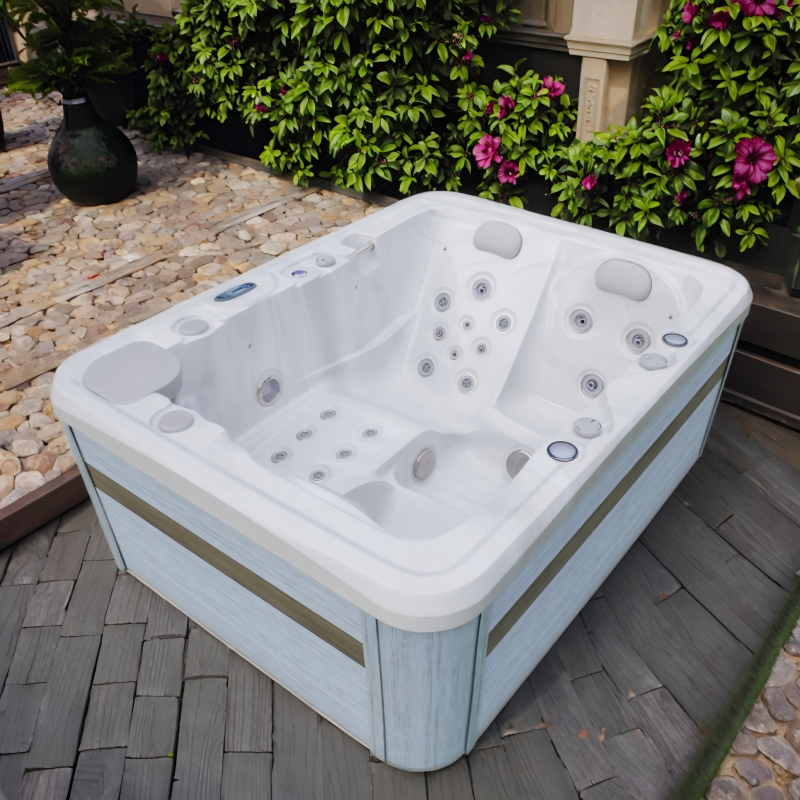
What is water hardness? How to distinguish between "hard water" and "soft water" in a spa hot tub?
Water hardness typically refers to the content of calcium and magnesium ions in the water, with calcium hardness being particularly critical in a spa hot tub.
In short:
• Low hardness: Water with low mineral content, considered "soft".
• High hardness: Water with high mineral content, considered "hard".
In the water quality management system for spa hot tubs, hardness is neither better the higher nor the lower the better; it needs to be maintained within a reasonable range.
Why does excessively low water hardness cause problems in spa hot tubs?
This is key to understanding "why increase hardness".
When the water hardness in a spa hot tub is too low, the water exhibits strong "corrosiveness," potentially leading to the following effects:
• Easily corrodes metal components
• Harmful to the heating system
• Affects the overall stability of water quality
• Makes it more difficult to maintain the balance of other parameters (such as pH value)
In other words, water that is too "soft" is not suitable for long-term use in whirlpool spa hot tubs.
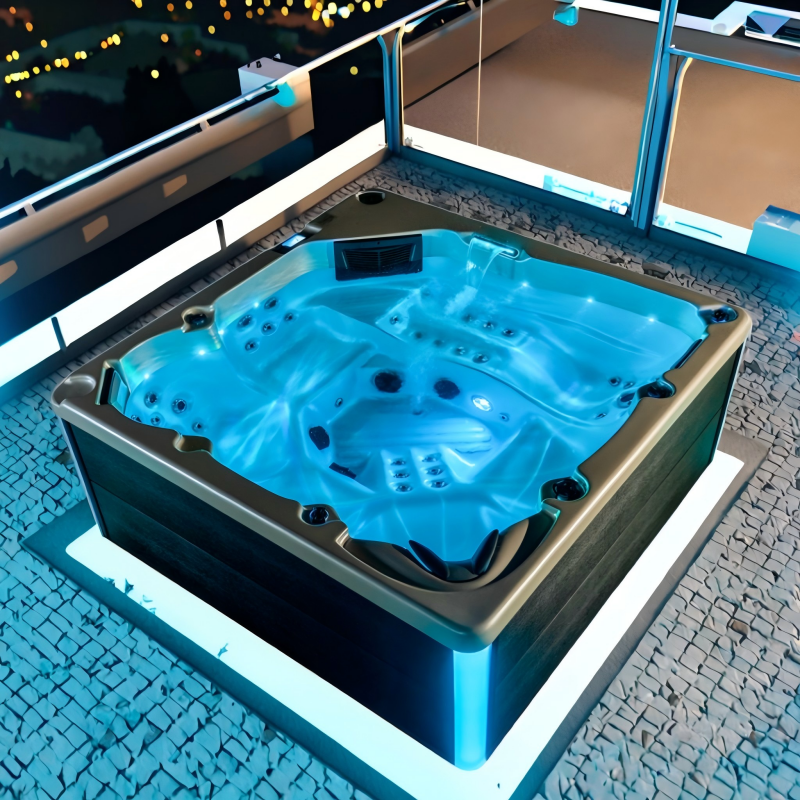
What is the ideal water hardness range for spa hot tubs?
For most whirlpool spa hot tubs, water hardness should be maintained within a moderate and stable range, neither too low nor too high.
This range can:
• Reduce potential damage to equipment
• Improve water quality stability
• Facilitate the normal operation of the disinfection system
Therefore, increasing the hardness of whirlpool spa hot tub water is not about "infinitely increasing," but rather about targeted adjustments to a reasonable level.
How to determine if the hardness of spa hot tub water is too low?
Accurate assessment is crucial before taking any measures.
Determining if the hardness of whirlpool spa hot tub water is too low can usually be done through the following methods:
• Using water quality testing tools to test calcium hardness
• Observing frequent fluctuations in water quality parameters
• The water body being overly sensitive to pH adjustments
Regular testing is one of the fundamental steps in managing whirlpool spa hot tub water quality.
What is the core principle of increasing spa hot tub water hardness?
Increasing spa hot tub water hardness essentially means:
Increasing the calcium ion content in the water.
In a spa hot tub, hardness is primarily determined by calcium hardness; therefore, all methods of increasing hardness ultimately revolve around the core principle of "supplementing calcium."
It is important to emphasize that increasing hardness should be a controlled, gradual process, not a one-time, drastic adjustment.
Can calcium hardness regulators increase the hardness of spa hot tub water?
The answer is: Yes, and this is the most common and direct method.
The main functions of calcium hardness regulators are:
• To replenish soluble calcium in the water
• To quickly increase the hardness level of the whirlpool spa hot tub
• The adjustment process is relatively controllable
In water quality management, these products are widely used for whirlpool spa hot tubs with low hardness.
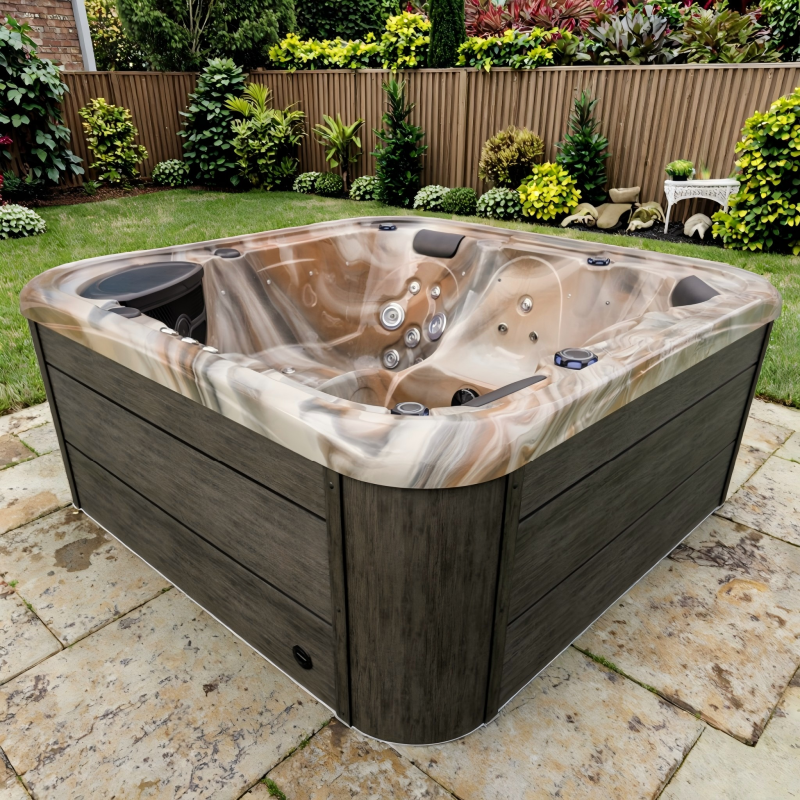
Why should increasing the hardness of spa hot tub water be done gradually?
This is a very important but easily overlooked question.
If the hardness of spa hot tub water is increased drastically in a short period of time, it may lead to:
• Short-term water quality imbalance
• Impact on other parameters (such as pH value)
• Decreased water adaptability
Therefore, when increasing hardness, the basic logic of "test—adjust—retest" should be followed to allow the water quality to gradually stabilize.
Can changing or adding water sources increase the hardness of spa hot tub water?
In some cases, adding water sources with higher mineral content can indeed affect the overall hardness of the whirlpool spa hot tub.
However, it's important to note the following:
• Water hardness varies significantly across different regions.
• Relying solely on water replenishment often leads to uncontrollable hardness changes.
• It's difficult to precisely adjust to the ideal range.
Therefore, this method is more of an auxiliary factor than a precise adjustment method.
What parameters should be monitored after increasing the hardness of spa hot tub water?
Water quality is a "holistic system."
After increasing the hardness of whirlpool spa hot tub water, it's usually necessary to re-evaluate the following aspects:
• Has the pH value changed?
• Is the disinfectant's effectiveness stable?
• Does the water remain clear?
This is because changes in hardness have a cascading effect on the overall water quality balance.
Why are spa hot tubs more prone to low hardness issues than regular swimming pools?
This is closely related to the operating environment of the equipment itself.
Spa hot tubs typically have the following characteristics:
• Smaller water volume
• High usage frequency
• Frequent replenishment with fresh water
These factors make minerals in the water more easily diluted, resulting in a more common occurrence of low hardness.
How to prevent the hardness of spa hot tub water from decreasing again during routine maintenance?
While this article focuses on "how to improve," long-term stability is equally important.
When maintaining a whirlpool spa hot tub, pay attention to the following:
• Regularly test water hardness
• Schedule water changes and top-ups appropriately
• Avoid neglecting hardness indicators for extended periods
Systematic management can reduce the need for frequent adjustments.

What are some common misconceptions about increasing water hardness in a spa hot tub?
In practice, common misconceptions include:
• Believing that harder water is always better
• Ignoring the relationship between hardness and other parameters
• Over-adjusting water hardness at once
These misconceptions can make whirlpool spa hot tub water quality management more complex, not simpler.
What is your payment method for orders?
Our company offers a standard and secure payment method for global buyers. Customers can place orders with a 30% deposit via T/T, and the remaining 70% balance is paid before shipment. This payment structure ensures smooth purchasing and protects both parties. As a professional supplier and manufacturer, we aim to provide transparent transaction processes, making it easier for customers to manage their purchasing budgets and plan wholesale orders efficiently.