


Early signs of aging in the plastic components of outdoor hot tubs
2026-07-13 15:35For many families, an outdoor spa hot tub is not only a piece of leisure and entertainment equipment, but also an important part of improving the quality of life. Whether enjoying a warm hydromassage on a cold winter day or relaxing on a summer evening, an outdoor whirlpool spa hot tub brings comfort, wellness and socializing to the home. As more and more homes, villas, boutique B&Bs and resort hotels install outdoor spa hot tubs, the issue of long-term maintenance of the equipment has gradually attracted consumer attention.
During daily maintenance, most users will focus on core components such as water quality management, filtration systems, heaters, circulating water pumps, and massage nozzles, but it is easy to ignore the aging of plastic components. In fact, an outdoor spa hot tub contains a large number of plastic components, both internally and externally, such as nozzle housings, control panel frames, filter components, PVC circulation lines, drain valves, handrails, decorative parts, pipe fittings, and some shell materials. Although these plastic parts have the advantages of light weight, corrosion resistance, and moderate cost, they will gradually age when exposed to ultraviolet rays, high temperatures, water vapor, chemicals, and alternating hot and cold environments for a long time.
Many users believe that plastic parts only need to be replaced when they break, leak, or become unusable. In fact, this is a common misunderstanding. In most cases, plastic aging will go through a long development process, and a series of relatively obvious early signals often appear before damage actually occurs. If these changes can be discovered in time and reasonable maintenance measures can be taken, not only can repair costs be reduced, but small problems can also be prevented from turning into equipment failures, and the overall service life of the outdoor whirlpool spa hot tub can be extended.
According to public information on the plastic materials industry and SPA equipment, most engineering plastics used in outdoor whirlpool spa hot tubs have good weather resistance. However, when exposed to the outdoor environment for a long time, ultraviolet radiation, oxidation reactions, temperature cycles and chemical disinfectants will still slowly affect the material performance. Especially in the case of high temperature exposure, cold areas or insufficient maintenance, the aging rate of plastics may be further accelerated.
So what are the early signs of aging plastic parts in your outdoor spa hot tub? Which phenomena are just signs of normal use, and which ones mean that they need to be inspected or replaced in time? This article will provide a detailed analysis of the causes of plastic aging, common manifestations, inspection methods, maintenance techniques and methods to extend life, etc., to help users maintain their outdoor whirlpool spa hot tubs more scientifically.
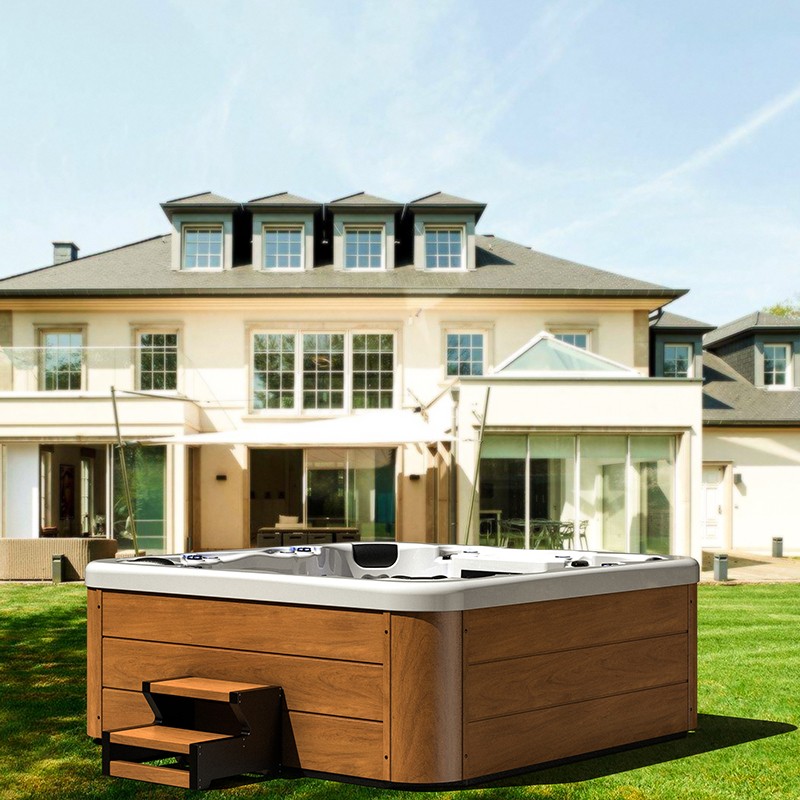
Why do plastic parts in outdoor spa hot tubs deteriorate?
Outdoor spa hot tubs are installed outdoors for a long time and need to face a more complex natural environment than indoor bathtubs. Daily sunlight, temperature differences between day and night, rain and snow, air humidity, and long-term working conditions that maintain a constant temperature will have a continuous impact on plastic materials.
Among them, ultraviolet rays are one of the important factors that cause plastic aging. While many of the plastic materials used in modern outdoor whirlpool spa hot tubs are fortified with UV-resistant additives, this protection gradually diminishes over time. Ultraviolet rays will slowly destroy the molecular structure of plastics, causing the material to lose its original toughness, resulting in color changes, surface chalking and even brittleness.
In addition, water treatment chemicals can also have an impact on plastics. To maintain stable water quality in outdoor whirlpool spa hot tubs, users often use specialized disinfectants, pH adjusters and descaling products. If chemicals with too high a concentration or inappropriate use are used for a long time, some plastic parts may be corroded and accelerate the aging process.
In addition, high temperature and hot and cold cycles cannot be ignored. Most outdoor whirlpool spa hot tubs maintain a water temperature of about 37°C to 40°C for a long time, while the external environment may range from minus ten degrees Celsius to over forty degrees Celsius in summer. Continuous thermal expansion and contraction will gradually affect the stability of plastic parts.
Signal 1: The color of the plastic begins to become noticeably lighter or yellow
Color changes are usually the easiest sign of aging in the plastic parts of your outdoor spa hot tub.
For example, the originally bright dark gray outer ring of the nozzle gradually turns to light gray, the frame of the white control panel begins to turn yellow, or the color of the black decorative parts gradually turns white. These may indicate that the plastic has begun to be affected by ultraviolet rays and oxidation.
It should be noted that not all color changes will affect normal use. Some are only slightly aged on the surface and have limited impact on structural strength. However, if the color change is accompanied by surface roughness, loss of gloss or even small cracks, it means that the material has entered a further aging stage and inspections should be strengthened.
For outdoor whirlpool spa hot tubs that are exposed to the sun for extended periods of time, the top plastic components often age faster than the interior of the unit, so regular visual inspections are recommended.
Signal 2: The surface loses its luster and appears powdery
Many users will find that the originally smooth plastic surface gradually becomes dull, and even leaves white powder when gently wiped with their hands.
This phenomenon, often referred to as "chalk", is a manifestation of the gradual decomposition of surface materials after long-term exposure to ultraviolet light. Although it will not affect the normal operation of your outdoor whirlpool spa hot tub initially, if it continues to develop, the strength of the plastic may gradually decrease and cracking may occur more easily.
For nozzle outer rings, control panel casings, and equipment decorative parts, chalking often means the need for enhanced maintenance, such as using special plastic care agents, reducing long-term exposure to sunlight, or considering replacing severely aged parts.
Signal 3: Small cracks appear
Small cracks are an important signal that plastic aging has entered the middle stage, and are also one of the most important issues worthy of attention.
These cracks usually first appear in locations that are subject to greater stress, such as the nozzle retaining ring, drain valve handle, around the control knob, or at the pipe connection. At first, the crack may be only a few millimeters long and does not affect normal use, so it can be easily ignored.
However, during the long-term high-temperature and high-pressure cycle operation of outdoor spa hot tubs, these micro-cracks may gradually expand, eventually leading to water leakage, breakage, and even affecting the normal operation of the equipment.
It is recommended that users carefully inspect the surface of plastic parts every few months, especially before and after seasonal changes. If cracks are found, they should consult professional maintenance personnel as soon as possible.
Signal 4: The plastic becomes brittle and lacks toughness when pressed
Healthy engineering plastics usually have a certain degree of elasticity and will not break easily even if they are slightly pressed.
If you find that some of the plastic parts of your outdoor whirlpool spa hot tub make a slight sound when lightly pressed, or feel noticeably hard or brittle, it means the material may have aged.
For example, if the filter housing, drain knob, nozzle frame and some PVC joints lose their original toughness, they will be more likely to break during disassembly and maintenance.
Therefore, during daily maintenance, it is also important not to judge the status of plastics solely by their appearance, but to properly observe their elastic changes.
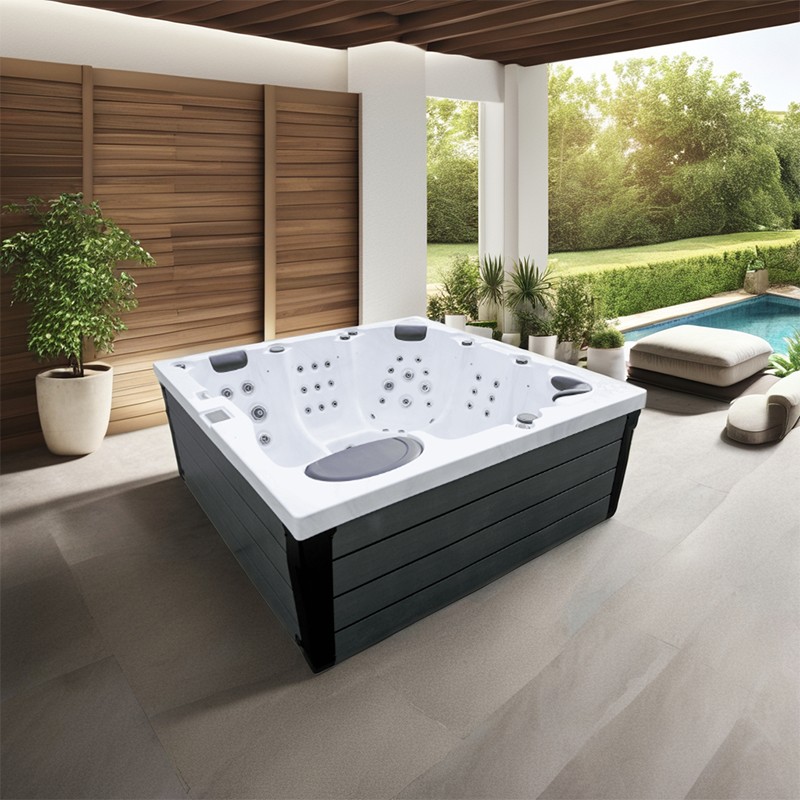
Signal 5: The nozzle or control component begins to loosen
Many users mistakenly believe that loose nozzles are just an installation problem. In fact, plastic aging may also cause the fixed structure to gradually lose stability.
As the plastic expands and contracts due to heat and cold over a long period of time, some of the buckles, retaining rings or threaded structures may gradually wear away, causing the nozzle to shake slightly, and the control knob may become insufficiently tight.
Although slight looseness will not immediately affect the use of your outdoor spa hot tub, if ignored for a long time, it may cause the sealing performance to deteriorate and increase the risk of water leakage.
Therefore, once you find that the plastic fasteners are getting looser, you should promptly check whether it is caused by material aging.
Sign 6: Water seepage around plastic joints
For outdoor spa hot tubs, PVC pipes and plastic joints are numerous and are an important part of the entire circulation system.
If it is found that some plastic joints have remained moist for a long time, or slight water droplets appear, it does not necessarily mean that the sealant has completely failed. It may also be that the size of the plastic has changed slightly after aging, affecting the sealing effect.
This situation is especially likely to occur after the equipment has been used for many years, so every time you perform maintenance, you should focus on checking whether there is abnormal moisture around the pipe interfaces and valves.
Sign 7: Plastic parts are prone to scratches
As aging progresses, plastic surface hardness may change.
Control panels, handrails or decorative parts that are originally relatively wear-resistant are prone to obvious scratches if they are slightly impacted, indicating that the surface protection ability of the material has been reduced.
While the scratches themselves will not affect the functionality of your outdoor whirlpool spa hot tub, deeper scratches can serve as sites for contaminants to accumulate and accelerate subsequent aging, so care should be taken promptly.
What areas of an outdoor hot tub are most susceptible to plastic deterioration?
Not all plastic parts throughout an outdoor whirlpool spa hot tub will age at the same rate.
Generally speaking, plastic accessories such as housing trim, control panel bezels, armrests, and insulation covers that have been exposed to sunlight for a long time age the fastest.
Secondly, there are nozzles, filter components and drain valves that are exposed to hot water and chemicals for a long time.
Although the PVC circulating pipe inside the equipment is less affected by sunlight, it needs to be regularly checked for signs of aging due to long-term high temperature and high pressure operation.
Therefore, when formulating a maintenance plan, different inspection frequencies can be adopted for different parts to improve maintenance efficiency.
How to extend the life of plastic parts in your outdoor spa hot tub?
In fact, the aging of most plastics can be effectively delayed through scientific maintenance.
First, long-term sun exposure should be minimized. For outdoor spa hot tubs installed in unshielded areas, it is recommended to use them in conjunction with gazebos, awnings or parasols, which will not only reduce the rate of plastic aging but also improve the overall user experience.
Secondly, it is important to maintain reasonable water quality. Avoid long-term use of high-concentration chemical treatment agents, and maintain appropriate pH values and disinfectant concentrations according to the manufacturer's recommendations to help reduce chemical corrosion of plastics.
In addition, cleaning the plastic surface regularly to avoid long-term adhesion of dirt can also reduce the oxidation rate. It is recommended to use special plastic care products when cleaning, rather than using cleaners containing strong solvents or abrasive particles to avoid damaging the material surface.
For outdoor whirlpool spa hot tubs that are not used for a long time, the insulation cover should be covered and the equipment should be kept clean and dry to reduce the impact of environmental factors.
Do outdoor hot tub plastic parts have to be replaced immediately after they age?
Not all signs of deterioration require immediate replacement.
For example, slight color changes or loss of surface gloss are usually normal signs of aging and require increased care.
However, if cracks have appeared, are obviously brittle, the fixed structure is loose, water leakage continues, or normal operation is affected, it is recommended to replace the corresponding parts in time to avoid larger maintenance problems caused by minor failures.
Especially when it comes to water systems and pressure-bearing components, they should be inspected and repaired by professionals to ensure the long-term safe operation of your outdoor whirlpool spa hot tub.
FAQ: Frequently Asked Questions About Aging of Plastic Parts in Outdoor Hot Tubs
How many years do outdoor spa hot tub plastic parts generally last?
Most high-quality engineering plastics can be used for more than 10 years under normal maintenance conditions. The specific life span will be affected by factors such as UV exposure, climate environment, frequency of use, water treatment methods, and maintenance levels. Proper maintenance often extends service life.
If the plastic parts of an outdoor spa hot tub are yellowing, do they necessarily need to be replaced?
uncertain. Slight yellowing is usually an appearance change caused by ultraviolet rays. As long as there are no cracks, brittleness or abnormal functions, you can generally continue to use it and maintain it with special care products.
How to tell if cracks in the plastic parts of your outdoor whirlpool spa hot tub are dangerous?
If the cracks only stay on the surface and do not expand, you can continue to observe them; if the cracks are located in nozzles, pipe fittings, valves or pressure-bearing connections and are accompanied by water seepage, loosening or a tendency to gradually expand, it is recommended to contact a professional for inspection or replacement as soon as possible.
Can I use regular household cleaners to clean the plastic parts of my outdoor hot tub?
Not recommended. Some cleaning agents containing strong acids, alkalis, alcohol or organic solvents may damage the plastic surface. It is recommended to use special cleaning and care products suitable for outdoor whirlpool spa hot tubs to reduce the risk of material aging.
How to slow down the aging of plastic parts in your outdoor spa hot tub?
It is recommended to take a variety of comprehensive maintenance measures, including avoiding prolonged exposure to the sun, reasonably controlling the concentration of water treatment chemicals, regularly cleaning plastic surfaces, maintaining water quality balance, using high-quality insulation covers, and inspecting key plastic components such as nozzles, pipe fittings, and control panels as planned. Through scientific maintenance, the aging rate can be effectively delayed and the overall service life of the outdoor spa hot tub can be extended.