


Can you use a tampon in an outdoor whirlpool hot tub?
2026-08-24 15:35For households, hotels, resorts, and wellness centers with outdoor whirlpool hot tubs, the question of whether women can use them during menstruation is a practical yet often overlooked issue. In private home settings, in particular, the concern is often not merely about *whether* one can soak, but rather whether the tampon will lose its effectiveness in warm water, whether hot tub disinfectants will affect the tampon, whether menstrual blood might contaminate the water, and whether prolonged soaking increases the risk of infection.
These questions arise because outdoor whirlpool spa hot tubs differ significantly from standard showers, bathtubs, and swimming pools. They are typically kept at temperatures comfortable for the human body—often between 37°C and 40°C—and are equipped with circulation pumps, filters, heaters, and massage jets. Although the water circulates continuously, it is not drained after every use; consequently, factors such as multiple users, sweat, sebum, cosmetics, and other organic matter can affect water quality. The CDC notes that maintaining water quality in hot tubs is more challenging than in standard pools due to the smaller volume of water, higher temperatures, and heavier user load; disinfectant levels can drop during use, potentially increasing the risk of bacterial transmission.
At the same time, menstruation is not an illness, nor does it mean women must completely avoid outdoor whirlpool hot tubs while on their period. The real focus should be on *safe usage*. Tampons—menstrual products designed to be inserted into the vagina to absorb flow—do not suddenly lose their effectiveness simply by coming into contact with warm water. Public information from the U.S. FDA and the American College of Obstetricians and Gynecologists (ACOG) recognizes tampons as a standard choice for menstrual care, emphasizing the importance of selecting the right absorbency, changing the tampon promptly according to instructions, and avoiding prolonged use.
Therefore, the answer to "Can you use a tampon in an outdoor whirlpool spa hot tub?" is not a simple "yes" or "no." For healthy individuals without specific medical issues, tampons are generally suitable for use when entering the water, including in outdoor whirlpool hot tubs; however, it is crucial not to equate "using a tampon" with "leaving a tampon in for an extended period without changing it." Why is the use of outdoor whirlpool hot tubs during menstruation a practical issue?
From an industry perspective, outdoor whirlpool hot tubs are evolving from mere leisure equipment into an integral part of home wellness, health, vacationing, and social life. Consumers who purchase outdoor whirlpool hot tubs often wish to use them year-round; consequently, female users naturally face the issue of their menstrual cycles coinciding with their hot tub usage.
Traditional sanitary pads have clear limitations when used in water. They function primarily by absorbing and retaining menstrual blood; however, upon immersion, external water rapidly contacts the absorbent layer, altering its structure and absorption capacity. Furthermore, pads are prone to shifting due to water currents, massage jets, or body movement. Therefore, sanitary pads are not the ideal menstrual product for use in outdoor whirlpool hot tubs.
Tampons function differently. Inserted into the vagina to absorb menstrual blood, they do not require attachment to underwear like pads do. Thus, in terms of usage scenarios, tampons are far better suited for water-based activities such as swimming, soaking in hot springs, or using outdoor whirlpool hot tubs. The ACOG (American College of Obstetricians and Gynecologists) explicitly defines tampons as internal menstrual products designed to absorb flow, noting that users can select different sizes and absorbency levels based on their flow volume.
However, outdoor whirlpool hot tubs present unique conditions: water temperatures are typically higher than in standard swimming pools, and the water is recirculated over extended periods. Therefore, the issue extends beyond the simple question of whether tampons are "waterproof"; one must also consider factors such as high temperatures, disinfectants, water quality, and the duration of wear.
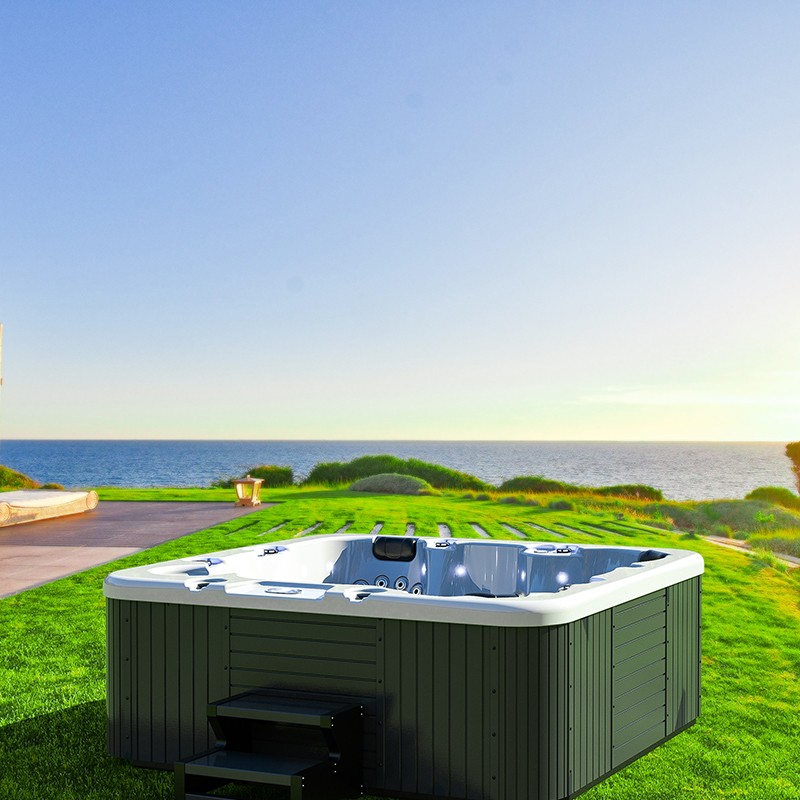
Do tampons lose their effectiveness in an outdoor whirlpool hot tub?
This is one of the most common questions.
Tampons are not strictly waterproof products; their primary function is to absorb menstrual blood internally rather than to block external water from entering. However, a correctly inserted tampon does not immediately lose its effectiveness upon brief immersion in water. For those wishing to swim or soak, tampons remain one of the menstrual products best suited for water-based activities.
When using an outdoor whirlpool hot tub, the exterior of the tampon may come into contact with the water, but this does not mean that large amounts of water will directly enter the vagina, nor does it mean the tampon will instantly reach its maximum absorption capacity. It is important to note that tampons may absorb some water after being submerged for a period of time; therefore, after leaving an outdoor whirlpool spa hot tub, it is usually best to replace the tampon with a fresh one if it is already nearing the time for a change.
There is a crucial concept to understand here: a tampon is a menstrual absorbent product, not a "waterproof plug." Consequently, one should not rely on a tampon to completely block water from entering the vagina, nor should one assume that using a tampon allows for an indefinite amount of time spent soaking in the water.
For typical use, inserting a tampon with the appropriate absorbency level before entering an outdoor whirlpool hot tub serves as a practical method of period management. After leaving the tub, the tampon should be changed promptly based on the situation, rather than continuing to wear one that has already been in use for some time.
Is it safe to use a tampon in an outdoor whirlpool hot tub?
Barring specific health issues and provided the product is used correctly according to the instructions, tampons are generally a suitable menstrual product for use in outdoor whirlpool hot tubs. However, "safety" in this context involves two aspects: the correct use of the tampon itself and the safety of the hot tub water quality.
First, regarding the tampon itself, the FDA recommends changing tampons every 4 to 8 hours and explicitly advises against using a single tampon for more than 8 consecutive hours; it also suggests using the lowest absorbency level necessary for one's flow. CDC guidelines on menstrual hygiene similarly state that tampons should be changed every 4 to 8 hours and not worn for longer than 8 hours.
This means that if a tampon has already been in use for several hours before entering the hot tub, the clock does not "reset" simply because you are about to soak. For example, if a person inserts a tampon at 9:00 AM and enters the hot tub at 1:00 PM, that tampon has already been in use for four hours. Once in the hot tub, it does not revert to being a "freshly inserted tampon" simply due to the water immersion.
Therefore, a more sensible approach is to decide whether to insert a new tampon before entering the hot tub, based on how long the current one has been worn and the heaviness of the flow. After the soak, if the tampon has clearly absorbed fluid, feels uncomfortably damp, or is nearing the time for a change, it should be replaced promptly.
Secondly, the outdoor whirlpool spa hot tub itself must maintain good water quality. The CDC recommends that residential hot tubs undergo regular testing and adjustment of disinfectant levels and pH. For chlorine-disinfected hot tubs, the CDC advises maintaining a pH of 7.0–7.8 and a chlorine level of at least 3 ppm; for bromine-disinfected tubs, the recommended range is 4–8 ppm with a pH of 7.0–7.8.
Therefore, the question of whether a tampon can be used is distinct from the question of whether it is appropriate to enter an outdoor whirlpool hot tub. Even if a tampon is used correctly, entering the water is not entirely risk-free if the water quality is uncontrolled, disinfectant levels are insufficient, or the equipment has not undergone regular cleaning and maintenance.
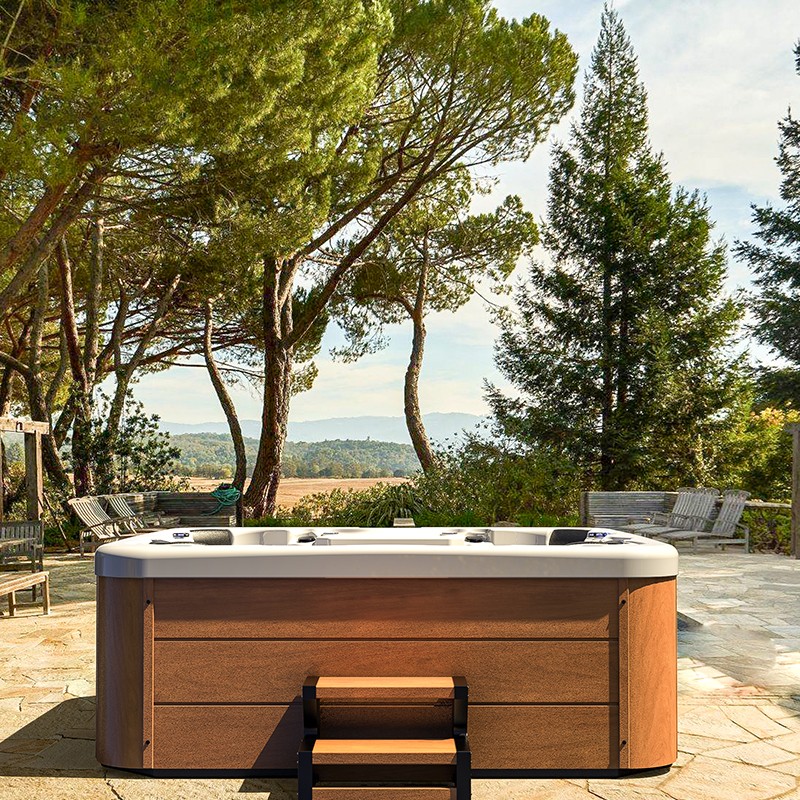
Can tampons contaminate outdoor whirlpool hot tubs?
Another concern for many outdoor whirlpool hot tub users is whether menstrual blood might contaminate the water.
Under normal circumstances, a correctly inserted tampon absorbs menstrual blood, significantly reducing the likelihood of blood leaking directly into the hot tub water. However, tampons cannot guarantee 100% prevention of leakage. Minor leakage can occur, particularly during heavy flow or when the tampon is nearing its maximum absorption capacity.
Consequently, from the perspective of hot tub operation and hygiene maintenance, using a tampon should not be viewed as a guarantee against any leakage of menstrual blood. If significant contamination occurs—especially in commercial outdoor whirlpool hot tubs, hotel spas, or public spa facilities—users should adhere to the facility's hygiene regulations.
For residential outdoor whirlpool hot tubs, the occasional introduction of small amounts of bodily fluids does not immediately render the water hazardous, as standard filtration and disinfection systems continuously process organic contaminants. However, this does not mean water quality can be ignored. The CDC explicitly states that sweat, urine, dirt, and other organic matter introduced by bathers affect disinfectant levels, necessitating continuous monitoring and maintenance of the hot tub.
From a manufacturer's perspective, this underscores the need for outdoor whirlpool hot tubs to be equipped with filtration systems, circulation pumps, and water treatment systems that possess adequate processing capacity. For residential units, water volume typically ranges from a few hundred to perhaps two thousand liters; however, when multiple people use the tub simultaneously, the pollution load per unit of water can be significantly higher than that of a large swimming pool. Consequently, effective circulation, filtration, and disinfection systems are particularly crucial for outdoor whirlpool spa hot tubs.
How long can a tampon be worn in an outdoor whirlpool hot tub?
The FDA recommends a wear time of 4 to 8 hours for a single tampon and explicitly advises against exceeding 8 hours. Therefore, when planning to use an outdoor whirlpool hot tub, the most important factor is not merely calculating the duration of the soak itself, but tracking the total time elapsed from insertion to removal.
For instance, if a user has just inserted a fresh tampon and then soaks in the hot tub for 20 to 30 minutes, the soak time alone does not exceed the recommended total usage duration. However, if the tampon has already been in place for 7 hours before the user enters the hot tub for a 30-minute soak, that soak period should not be viewed as a separate "safe window," as the total wear time is already approaching the FDA's upper limit.
A safer approach is to insert a fresh tampon before entering the hot tub and to change it promptly afterward, based on flow volume and the duration of use. For short hot tub sessions, this routine is generally more sensible than entering the water with a tampon that has already been worn for several hours.
Absorbency is also a key factor. The FDA recommends using the lowest absorbency level necessary for your flow, rather than intentionally choosing a high-absorbency product in the belief that it makes soaking "safer." If a tampon does not require changing for a full 8 hours during a normal flow, the FDA suggests this may indicate the chosen absorbency level is too high.
In short, bigger is not necessarily better when it comes to tampons and absorbency. You should select the appropriate size based on your flow and follow the instructions provided on the packaging.
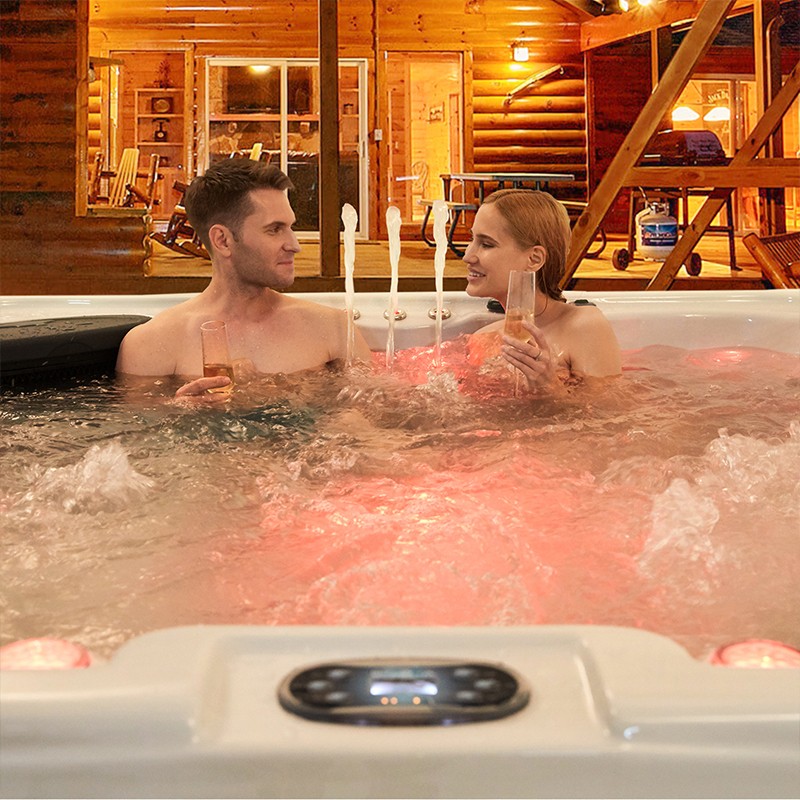
Do you need to change your tampon immediately after getting out of an outdoor whirlpool hot tub?
There is no absolute rule requiring an immediate change every time you exit an outdoor whirlpool hot tub. However, from the standpoint of hygiene and comfort, if the tampon has already been worn for some time or may have absorbed significant water during the soak, changing it promptly is generally the most sensible course of action. This is particularly important when a tampon has already been in place for close to the recommended 4–8 hour window; one should not continue wearing it for an extended period simply because a soak has just ended. The FDA explicitly states that a single tampon should not be worn for more than eight hours.
If you are only soaking briefly in an outdoor whirlpool spa hot tub and the tampon has just been changed, the decision to replace it immediately can be based on product instructions, personal comfort, and menstrual flow. What truly matters is the total duration of wear, rather than a rigid rule requiring a change after every soak.
Additionally, it is advisable to rinse off after leaving an outdoor whirlpool spa hot tub. CDC recommendations for preventing hot tub rash specifically suggest removing swimwear and showering with soap—while also washing the swimsuit—after use.
This is also practically relevant for menstruating users, as hot tub water may come into contact with the skin, swimwear, and the vulvar area; proper cleansing after a soak helps maintain overall hygiene.
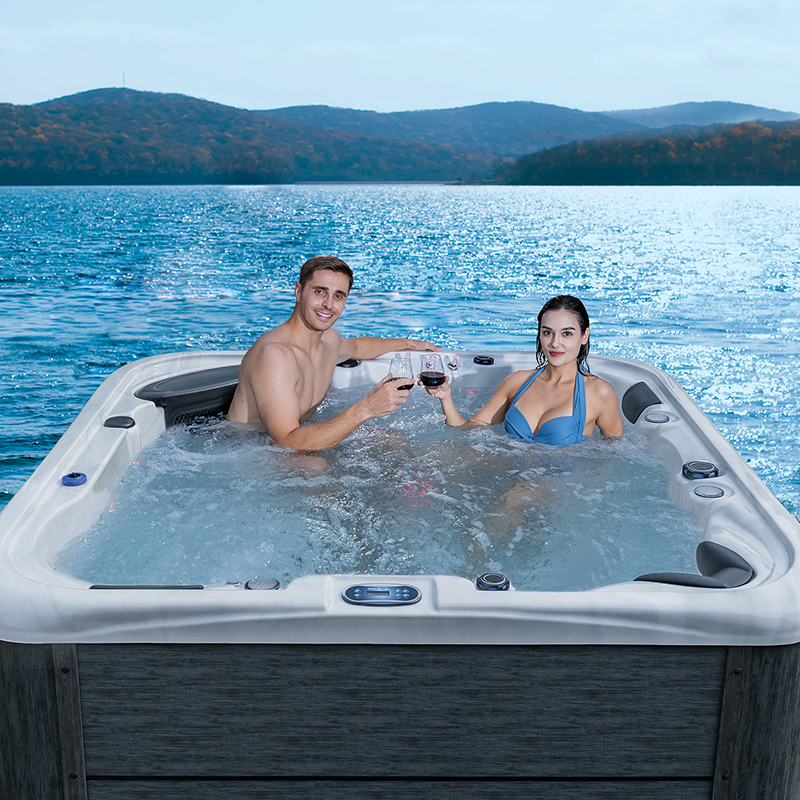
FAQ: Using Tampons in Outdoor Hot Tubs
FAQ 1: Can I use an outdoor hot tub while on my period?
If you are in good health, have no signs of infection or other abnormal symptoms, and the hot tub water is well-maintained, you can generally use it depending on your personal situation. Tampons are usually more suitable for water activities than sanitary pads, provided they are used correctly according to the product instructions.
FAQ 2: Will a tampon absorb water while in an outdoor hot tub?
Tampons are not completely waterproof; the outer layer may come into contact with and absorb some water, but a correctly inserted tampon will not immediately fail just from being submerged for a short time. After leaving the hot tub, you should decide whether to change it based on how long you have been wearing it, your menstrual flow, and your personal comfort.
FAQ 3: Do I have to change my tampon immediately after using an outdoor hot tub?
Not necessarily. The key factor is how long the tampon has been in place since insertion. If it is nearing the time for a change, or if it feels noticeably damp or uncomfortable, it is recommended to change it promptly. The FDA advises against using a single tampon for more than 8 consecutive hours.
FAQ 4: Will a tampon contaminate the outdoor hot tub?
Using a tampon correctly can reduce the likelihood of menstrual blood entering the water, but it cannot guarantee that leakage will not occur. Outdoor hot tubs should still be maintained with proper filtration and disinfection systems; one cannot rely on tampons as a substitute for proper water quality management.
FAQ 5: Is it safe to use an outdoor hot tub at a water temperature of 40°C?
40°C is the maximum temperature limit recommended by the CDC for hot tubs, so exceeding this temperature is not advised. If you experience dizziness, nausea, heart palpitations, or significant discomfort while soaking, you should leave the hot tub immediately.