


Bromides and Bromine in Outdoor Spa Hot Tubs: Are They the Same Thing?
2026-11-24 15:30In the routine maintenance of outdoor spa hot tub water, the choice of sanitizer directly impacts water hygiene, user comfort, and the performance of the equipment. Bromine is a common sanitizer for spa equipment, particularly well-suited for warm-water environments. However, many users often confuse two terms when purchasing and using bromine-based sanitizing products: "bromide" and "bromine."
While both contain the element bromine, they differ significantly in their chemical form, disinfecting capability, and practical application. Bromide is not the same as the active bromine species responsible for disinfection. Misunderstanding the relationship between the two can lead to inadequate sanitization in an outdoor whirlpool hot tub and may even make future water maintenance more difficult.
So, what exactly is the difference between bromide and bromine? Can bromide be used directly to sanitize an outdoor whirlpool hot tub? And why do some bromine-based sanitizing systems require the addition of bromide, followed by an oxidizing agent to "activate" it? This article explores these questions by examining the underlying chemical principles and disinfection mechanisms.
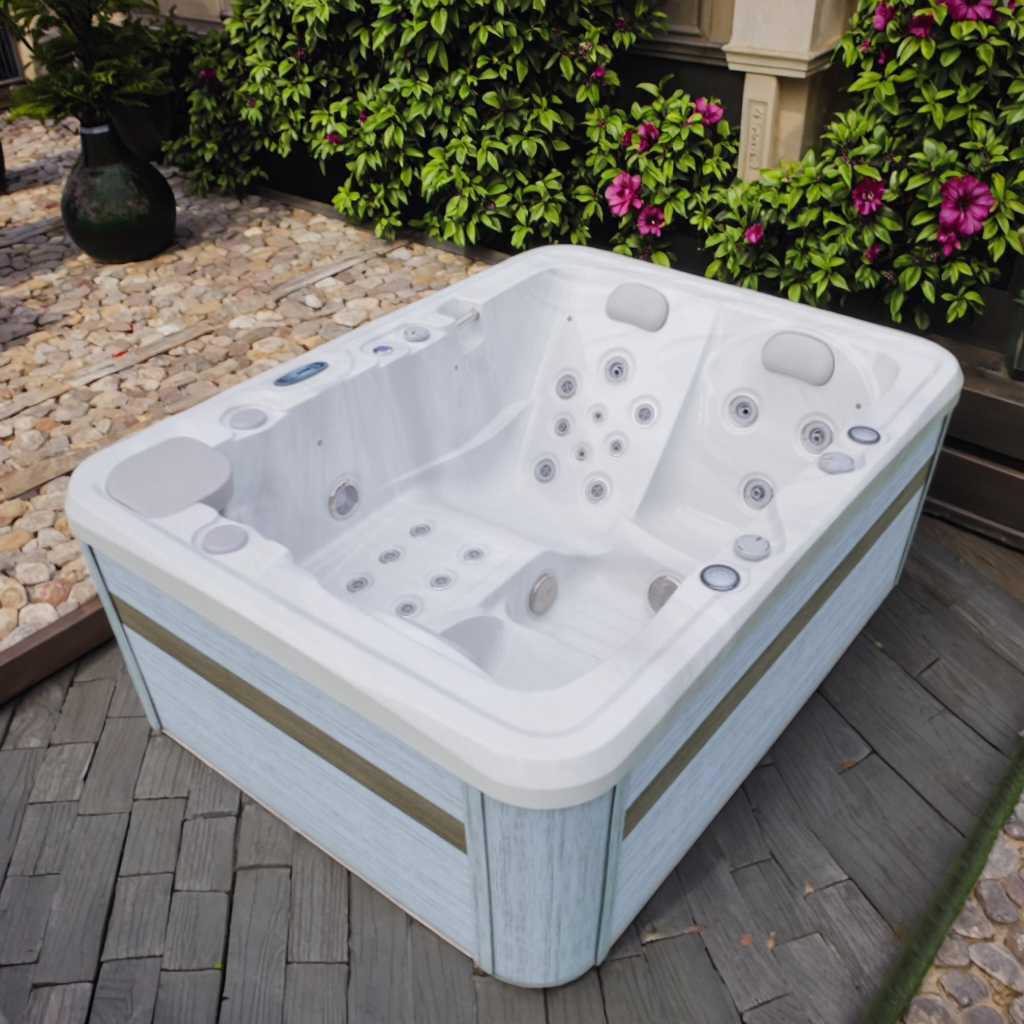
Are "bromide" and "bromine" the same thing?
The answer is no. Although both are related to the element bromine, they represent different chemical forms and serve distinct roles in an outdoor spa hot tub water treatment system.
1. What is bromine?
Bromine is a halogen element with the chemical symbol "Br" and an atomic number of 35. In the context of spa sanitization, the term "bromine sanitizer" generally refers to substances that form active bromine species in water—species capable of oxidation and disinfection.
When bromine enters the water, it forms active components such as hypobromous acid (HOBr). Hypobromous acid can destroy the critical biological structures of microorganisms like bacteria, thereby reducing the risk of microbial contamination in the water.
Bromine-based sanitizers offer specific advantages for outdoor spa hot tubs. Compared to chlorine, bromine typically retains better disinfecting efficacy at higher pH levels, making it well-suited for certain high-temperature spa systems.
2. What is bromide?
Bromides are compounds that contain the bromide ion (Br⁻).
Common examples include:
•Sodium bromide (NaBr)
•Potassium bromide (KBr)
When dissolved in water, these substances release bromide ions. Unlike hypobromous acid, bromide ions on their own are not effective for the routine disinfection of outdoor spa hot tubs.
The primary role of bromides is to serve as a reservoir for bromine-based disinfection systems. When bromide ions encounter an appropriate oxidizing agent, they undergo an oxidation reaction, converting into active bromine—a form capable of disinfection.
3. What is the difference between the two?
| Comparison Item | Bromine | Bromide |
| Chemical Form | Active bromine species | Bromide ion (Br⁻) |
| Common Forms | Hypobromous acid (HOBr) | Sodium bromide (NaBr) |
| Main Function | Water disinfection | Bromide ion supply |
| Disinfection Ability | Yes | No, under normal conditions |
| Oxidation Required | Depends on the product | Yes |
| Application | Sanitizing spa water | Supporting bromine systems |
Clearly, bromides and bromine should not be conflated. To determine whether a product can be used directly for disinfection, one must examine its active ingredients, product labeling, and the resulting concentration of active bromine.
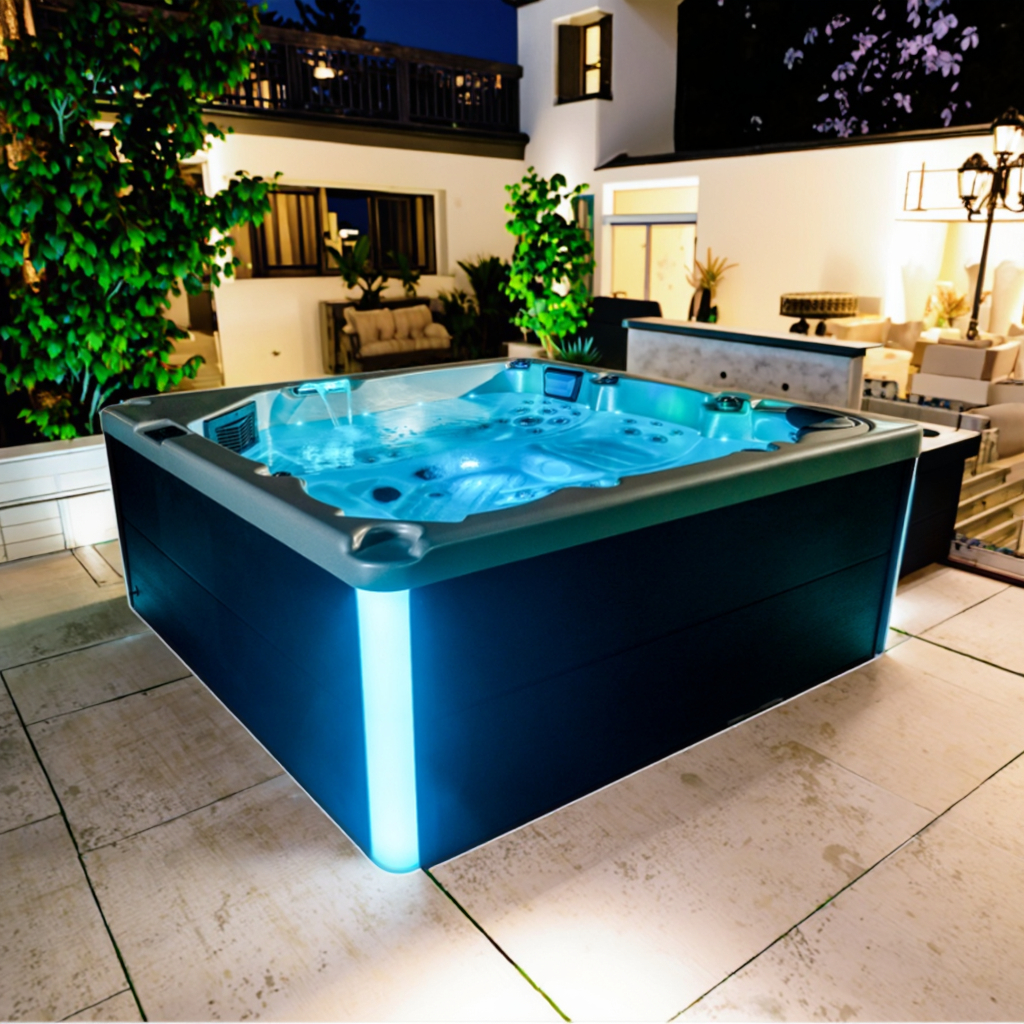
Why is it important to distinguish between bromides and bromine in the context of outdoor hot tubs?
Outdoor whirlpool hot tubs typically operate at high water temperatures and have a relatively limited water volume. Furthermore, during use, they tend to accumulate sweat, skin oils, cosmetics, and other organic contaminants—all of which make water maintenance more challenging.
1. High-temperature environments complicate water management
There is a significant difference between the operating environments of standard swimming pools and outdoor whirlpool hot tubs. Hot tubs are generally kept at high temperatures to provide a comfortable spa experience.
According to the U.S. Centers for Disease Control and Prevention (CDC), the water temperature in a spa hot tub should not exceed 40°C (104°F).
High temperatures and frequent use place greater strain on water quality management. If multiple people use the hot tub in succession, sweat and other organic pollutants continuously enter the water, depleting the disinfectant.
Therefore, it is essential to maintain an adequate concentration of active disinfectant in an outdoor spa hot tub; the mere presence of bromides in the water is not a sufficient indicator of proper water quality.
2. Bromides cannot directly replace active bromine
This is a common misconception among users.
For instance, while adding sodium bromide to an outdoor spa hot tub increases the concentration of bromide ions, these ions will not automatically convert into hypobromous acid without an appropriate oxidation process. Therefore, the mere presence of a certain concentration of bromide in the water does not mean the hot tub has sufficient disinfection capacity.
The correct approach is to use an oxidizing agent compatible with your specific bromine disinfection system and to verify the actual bromine concentration using professional testing tools.
3. Sunlight affects the stability of active bromine
When an outdoor whirlpool hot tub is exposed to sunlight for extended periods, ultraviolet (UV) rays can accelerate the decomposition of active bromine, leading to a drop in the concentration of the disinfectant.
Unlike some chlorine-based disinfection systems—which can be stabilized using cyanuric acid—bromine cannot be effectively stabilized by this substance.
Consequently, for outdoor spa hot tubs, the disinfection and maintenance plan must be adjusted based on factors such as sunlight exposure, frequency of use, and changes in water quality.
How are bromides converted into active, disinfecting bromine?
Understanding the relationship between bromides and bromine requires an understanding of oxidation reactions.
In certain bromine disinfection systems, sodium bromide is added to the spa hot tub water, where it dissolves to form bromide ions (Br⁻). Subsequently, an appropriate oxidizing agent converts these bromide ions into active bromine, which possesses disinfecting properties.
For example, hypochlorous acid (HOCl) can participate in this reaction:
HOCl + Br⁻ → HOBr + Cl⁻
Where:
•HOCl: Hypochlorous acid, which acts as an oxidizing agent.
•Br⁻: Bromide ion, derived from the bromide source.
•HOBr: Hypobromous acid, a key active bromine species responsible for disinfection.
•Cl⁻: Chloride ion, a byproduct of the reaction.
This process can be broken down into three stages:
Stage 1: Establishing a bromide ion reserve. Sodium bromide dissolves in the water, forming bromide ions that serve as the raw material for the subsequent disinfection process.
Stage 2: Oxidative activation. Upon the addition of an appropriate oxidizing agent, bromide ions are converted—via an oxidation reaction—into active bromine species, such as hypobromous acid.
Stage 3: Disinfection and the regeneration of bromide ions. As active bromine reacts with microorganisms and other reducing substances in the water, a portion of the bromine is converted back into bromide ions. Provided that an appropriate oxidizing agent is added, these bromide ions can be reactivated. This creates a cycle:
Bromide salts provide bromide ions → an oxidizing agent activates them → active bromine species are formed → disinfection takes place → a portion is reduced back into bromide ions.
This is the fundamental principle that allows some bromine-based disinfection systems for outdoor spa hot tubs to operate continuously.
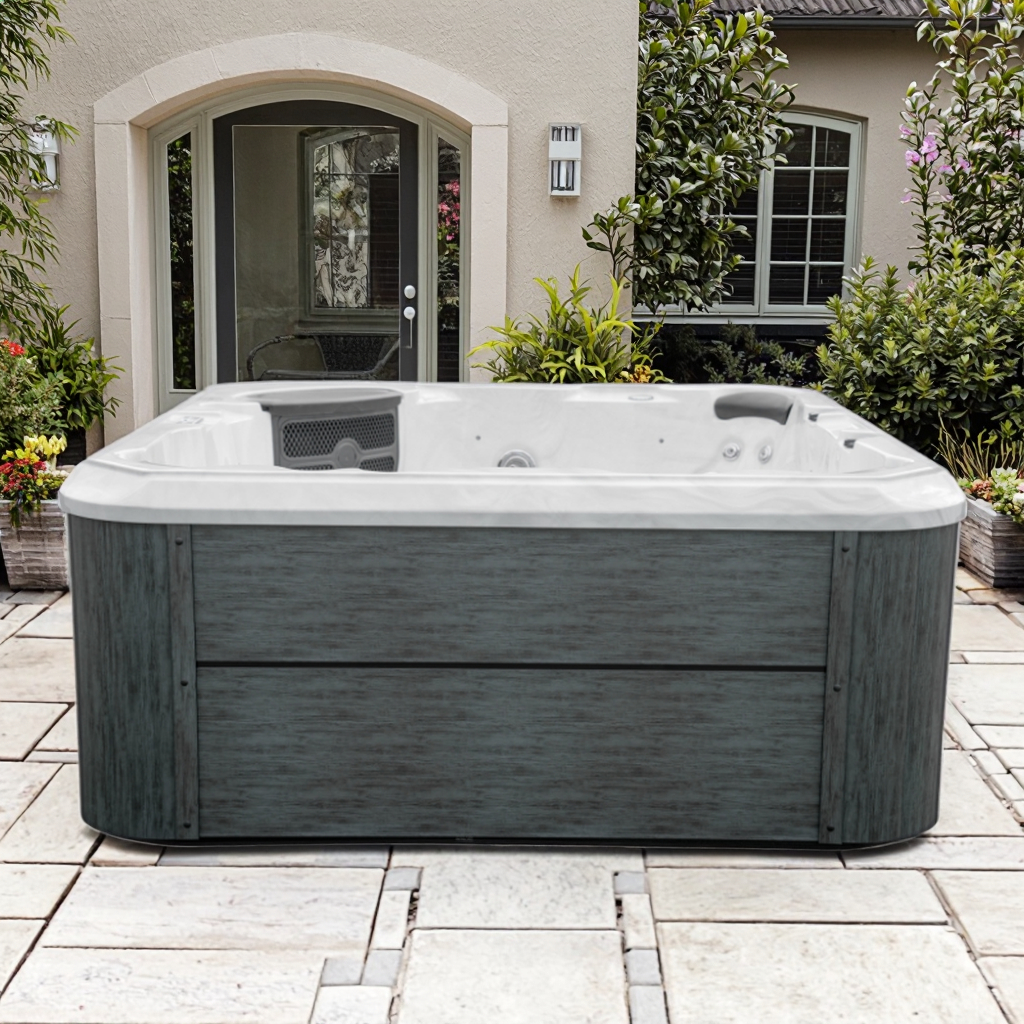
What are the common methods for bromine disinfection in outdoor hot tubs?
Depending on the product configuration and maintenance requirements, various bromine disinfection approaches can be used for outdoor whirlpool hot tubs.
1. Bromine Tablets
Bromine tablets are a common spa disinfectant. They typically release their active ingredients slowly, either through a dedicated dispenser or via a method specified by the manufacturer.
Some bromine tablets use BCDMH (1-bromo-3-chloro-5,5-dimethylhydantoin) as the active ingredient. In water, these compounds generate bromine species that provide disinfection, while also involving oxidative processes contributed by chlorine.
The primary advantage is a relatively stable release rate, which helps users maintain a consistent disinfectant concentration—making them well-suited for outdoor spa hot tubs that operate continuously.
However, because active ingredients and usage requirements can vary between brands, not all bromine-based products should be considered identical.
2. Sodium Bromide Combined with an Oxidizing Agent
Another approach involves adding sodium bromide to establish a reserve of bromide ions, followed by the use of a compatible oxidizing agent to convert them into active bromine.
This method allows for the separate management of the bromide reserve and the oxidation process; however, it places higher demands on water quality testing and chemical dosing.
If there is an insufficient amount of the oxidizing agent, the level of active bromine may fall below the required range. Consequently, users must follow product instructions for dosing and perform regular water quality testing.
3. Automated Bromine Disinfection Systems
Some high-end outdoor whirlpool hot tubs can be equipped with automatic dosing devices, water quality sensors, and circulation/filtration systems to assist in water quality management.
These automated systems reduce the need for manual dosing and help maintain a relatively stable disinfectant concentration.
Nevertheless, automation does not eliminate the need for manual maintenance. Users must still test water quality regularly and ensure that sensors, dosing equipment, and circulation systems are functioning correctly.
Which water quality parameters need to be monitored when using bromine disinfection in an outdoor hot tub?
Proper use of bromine disinfectants involves more than just adding the right amount of chemicals; it also requires managing pH levels, water temperature, and the filtration system.
| Water Quality Parameter | Recommended Range | Main Function |
| Bromine Level | 4–8 ppm | Disinfection |
| pH Level | 7.0–7.8 | Water balance |
| Water Temperature | Maximum 40°C | Safe operation |
| Total Alkalinity | Follow product and equipment guidelines | pH stability |
Note: The recommendations for bromine concentration, pH, and water temperature are based on CDC guidelines for whirlpool hot tubs. Total alkalinity should be determined according to the requirements of your specific equipment and water treatment products.
1. Bromine Concentration
The CDC recommends maintaining a bromine concentration of 4–8 ppm in whirlpool hot tubs.
If the concentration is too low, the water may lack sufficient disinfecting power—increasing the risk of microbial growth, especially when the hot tub is used by multiple people or contains high levels of organic contaminants.
If the concentration is too high, it may cause skin and eye irritation and potentially damage certain equipment components.
Therefore, users should employ test kits designed for bromine-based systems and adjust the dosage of the disinfectant based on the test results.
2. pH Level
The pH level is a critical factor affecting the efficacy of active bromine.
In water, bromine exists primarily in an equilibrium between hypobromous acid (HOBr) and the hypobromite ion (OBr⁻). Compared to chlorine, bromine generally retains better disinfecting activity at higher pH levels.
According to the CDC’s *2024 Model Aquatic Health Code Annex*, at a pH of 7.5, approximately 94% of the active bromine exists in the form of HOBr; at a pH of 8.0, this figure remains around 83%.
However, a higher pH is not necessarily better. An excessively high pH can increase the risk of scale formation, while an excessively low pH may increase the risk of corrosion to metal components and certain piping materials.
3. Water Temperature
Outdoor spa hot tubs typically require a heating system to maintain a stable temperature. Water temperature affects not only user comfort but also the rate at which disinfectants are consumed and the overall maintenance of water quality.
The CDC recommends that the water temperature in a spa hot tub should not exceed 40°C (104°F). Furthermore, it is essential to ensure that the heater, temperature sensors, and control systems are functioning correctly to prevent temperature anomalies that could compromise user safety.
Frequently Asked Questions (FAQ) Regarding Bromine Disinfection for Outdoor Hot Tubs
Q1: Can bromides be used directly to disinfect an outdoor spa hot tub?
Generally, no. Bromides primarily provide bromide ions, which must undergo an appropriate oxidation process to be converted into active bromine—the form capable of disinfection.
Q2: Is it still necessary to periodically change the water in an outdoor hot tub when using a bromine-based sanitizer?
Yes. While sanitizers can control microbial contamination, they cannot indefinitely remove the dissolved pollutants and chemical byproducts that accumulate in the water. Regularly changing the water, cleaning the whirlpool hot tub, and maintaining the filtration system remain essential.
Q3: What should the bromine concentration be in an outdoor spa hot tub?
The CDC recommends maintaining a level of 4–8 ppm; however, you should also follow local regulations, product label instructions, and the requirements provided by the equipment manufacturer.
Q4: Why does the bromine concentration in an outdoor hot tub drop so quickly?
Primary reasons include exposure to ultraviolet (UV) rays from sunlight, contamination from human sweat and body oils, high water temperatures, and frequent use.
Q5: Are there specific sanitizers better suited for outdoor whirlpool hot tubs?
Both options have their own advantages. Bromine retains better disinfecting activity at higher pH levels, making it well-suited for certain high-temperature spa systems, while chlorine benefits from a well-established application framework. The best choice depends on your specific equipment, usage environment, and maintenance costs.