


- Home
- >
News

In swim spa tubs, the algaecidal capability of sanitizers (especially chlorine) is directly linked to pH levels. If the pH is outside the ideal range, the actual disinfecting power drops drastically, even with high-intensity shock treatment.
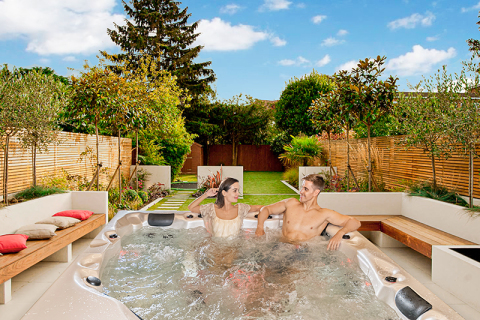
From a professional standpoint, swimming in a swim spa tub with insufficient or no free chlorine is generally considered unsafe. If free chlorine levels are too low, the swim spa may not be thoroughly disinfected, thereby increasing the risk of infection or waterborne diseases.
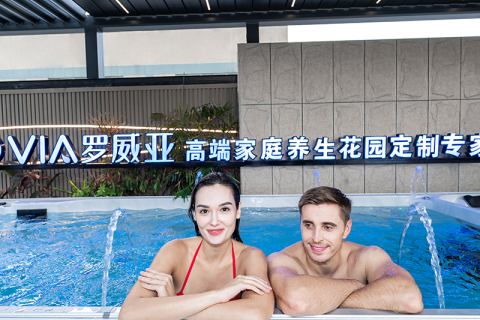
If the water quality is initially good, a swim spa tub typically won't turn green immediately after three days. However, in high-temperature environments or situations with insufficient sanitizer, the growth of algae and microorganisms accelerates significantly.
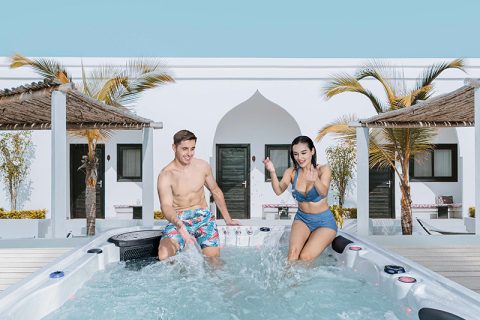
Dirt has a firmer feel. Algae has a different feel. If the walls or steps of a swim spa hot tub become slippery again shortly after cleaning, this is often a sign of algae growth.
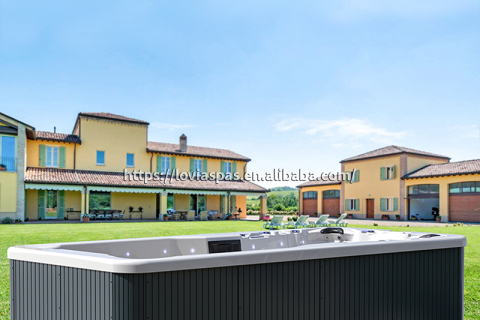
Swimming spa is essentially a standard aerobic exercise. 30 minutes daily helps to: • Improve heart pumping efficiency • Improve breathing rhythm • Enhance endurance In a swim spa hot tub, the stable environment makes it easier to maintain a comfortable heart rate.
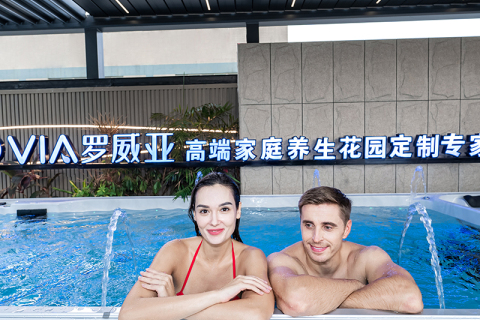
Outdoor swim spa hot tubs should be placed in structurally stable, environmentally suitable, and easily accessible outdoor areas for use and maintenance, not in arbitrarily chosen locations.
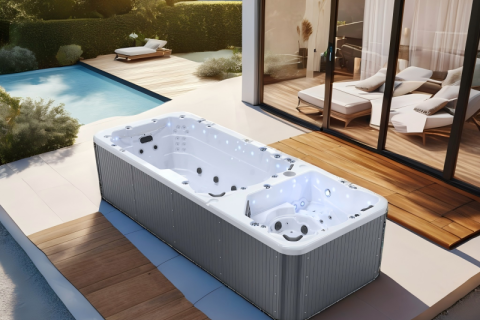
Yes, a swim spa hot tub can be heated. From a product definition perspective, a swim spa hot tub is not a simple water container, but a comprehensive spa device integrating: • A water circulation system • A water flow propulsion system • A filtration system • A water temperature control system

Speed in a swim spa hot tub is essentially the "ability to resist the water flow." In a swim spa hot tub: • The body maintains a relatively stationary position • The water flow propels the swimmer forward continuously • The swimmer generates a counter-propulsive force through arm strokes
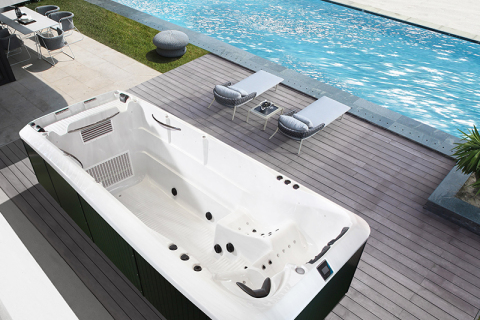
The water temperature in the swim spa hot tub is typically maintained between 37°C and 40°C. This temperature range intensifies the ion exchange between magnesium salts and metals, causing corrosion to accelerate exponentially.
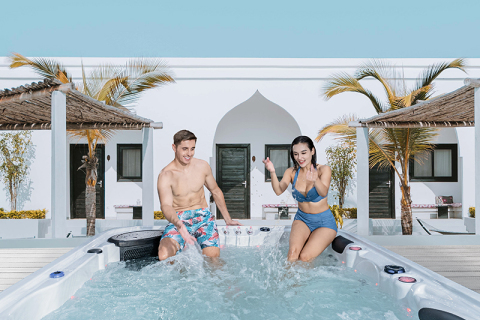
• Less than 10 minutes: This is a mild stimulation phase, aiding in skin circulation and initial relaxation. • 15-20 minutes: This enters the deep muscle relaxation and nerve soothing phase, the optimal range for therapy.
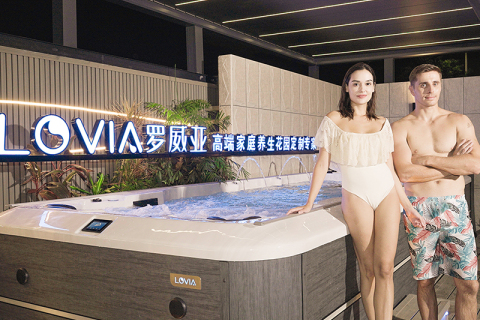
Bubbles are a common phenomenon during the normal operation of a swim spa hot tub. Simply put, bubbles are generated from the mixing of air and water. When the nozzles, pumps, and air channels in the system inject air into the water flow, bubbles form in the water.
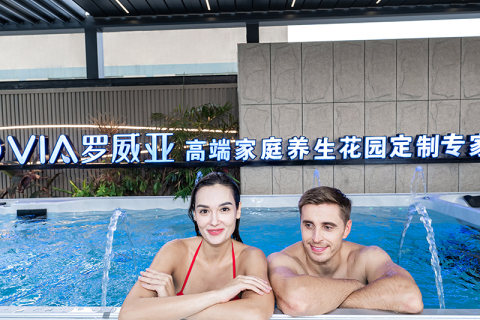
Bubbles and foam in a swim spa hot tub: Bubbles represent healthy circulation and a comfortable massage, a sign that the system is functioning properly; foam, on the other hand, is a signal of abnormal water quality, indicating organic contamination or chemical imbalance.