


Can a swim spa hot tub be heated?
2026-01-07 15:30When purchasing or using a swim spa hot tub, "Can it be heated?" is one of the most basic questions almost all users ask.
Some worry that a swim spa hot tub is just a "cold water pool" with flowing water, while others wonder if its heating capacity is stable and suitable for year-round use.
In fact, a swim spa hot tub can not only be heated, but its heating system is also one of its core components. This article will systematically analyze the heating logic, heating function, and relationship with the overall system of a swim spa hot tub from a professional perspective, comprehensively answering the question, "Can a swim spa hot tub be heated?"
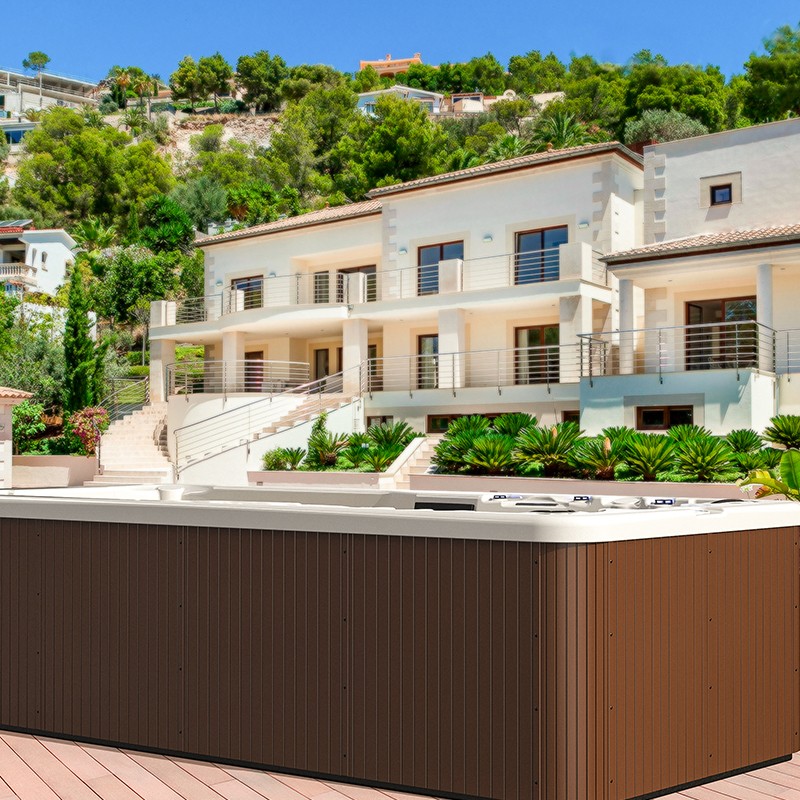
Can a swim spa hot tub really be heated?
The answer is very clear: Yes, a swim spa hot tub can be heated.
Why is "heating" a fundamental function of a swim spa hot tub?
From a product definition perspective, a swim spa hot tub is not a simple water container, but a comprehensive spa device integrating:
• A water circulation system
• A water flow propulsion system
• A filtration system
• A water temperature control system
The heating system is a crucial component ensuring user comfort and functional integrity.
Without heating capacity, a swim spa hot tub cannot meet the following needs:
• Constant-temperature swimming training
• Spa relaxation needs
• Stable use across different seasons
Therefore, from a design perspective, a swim spa hot tub is inherently a device that "heats water."
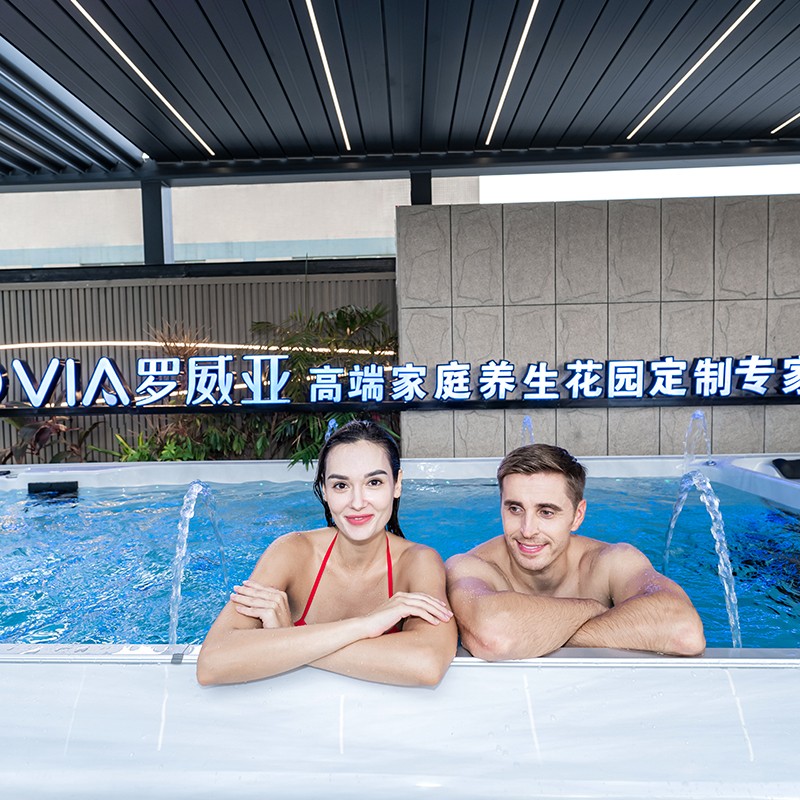
How does the heating system of a swim spa hot tub work?
To understand heating capacity, we must first understand its working principle.
The Location of the Heating System in a Swim Spa Hot Tub
In a standard structure, the heating system of a swim spa hot tub typically works in conjunction with the following components:
• Circulation pump
• Water piping system
• Temperature control module
Water circulates through the heating unit, is continuously heated, and then returned to the tub, thus creating a stable and controllable water temperature environment.
Why is continuous circulation necessary in conjunction with heating?
Swim spa hot tubs typically have a large water volume; if the water is stagnant, localized heating alone cannot achieve overall temperature stability.
By combining circulation and heating, the following can be achieved:
• Uniform water temperature distribution
• Avoidance of localized overheating or underheating
• Improved heating efficiency
This is also one of the key technical features that distinguishes the swim spa hot tub from ordinary bathtubs.
How hot can a swim spa hot tub be heated?
This is the next question users most frequently ask after understanding whether it can be heated.
The Reasonable Heating Temperature Range
From a professional usage perspective, the heating temperature of a swim spa hot tub is usually designed within a relatively wide but safe range to meet different needs, such as:
• Swimming training
• Relaxational spa treatments
• Rehabilitation activities
Different uses require different water temperatures, and the heating system of the swim spa hot tub is designed to accommodate these differences.
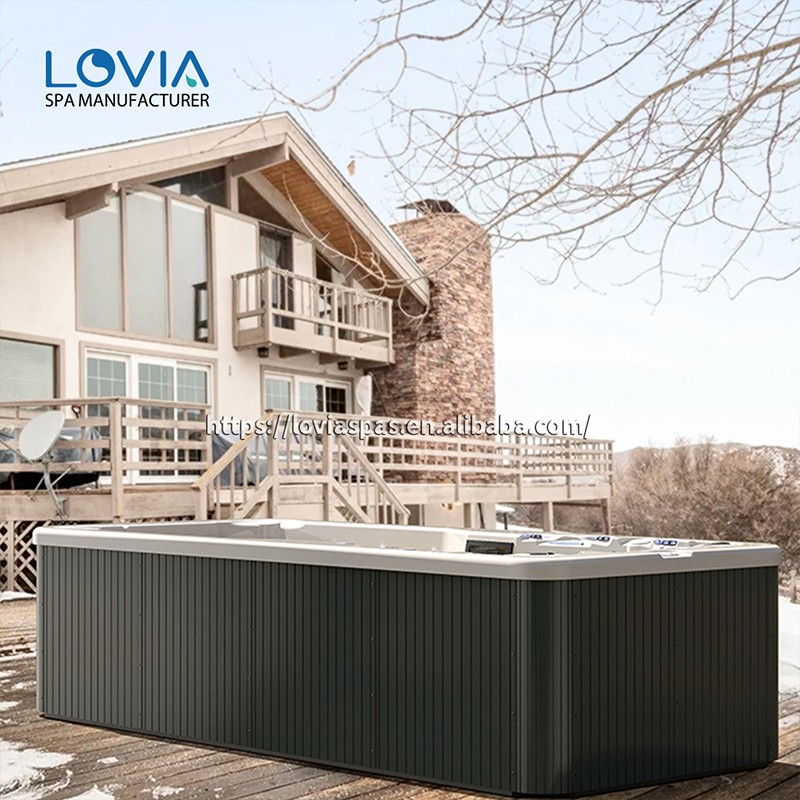
Why does a swim spa hot tub need precise temperature control?
Water temperature has a direct impact on the user experience and physical sensations:
• Too low a temperature affects comfort
• Too high a temperature increases physical burden
Therefore, the swim spa hot tub not only "can heat," but also emphasizes stable, controllable, and continuous heating capabilities.
Is the heating system in a swim spa hot tub suitable for year-round use?
The answer is still yes.
Why is a swim spa hot tub suitable for all seasons?
One of the core reasons why swim spa hot tubs are widely used in different regions and environments is that their heating system can:
• Resist changes in ambient temperature
• Maintain stable water temperature
• Provide a consistent user experience
Regardless of changes in the outside temperature, as long as the system is operating normally, the water temperature inside the swim spa hot tub can be maintained within the set range.
The significance of the heating system for seasonal changes
In environments with lower temperatures, the heating system is not only related to comfort but also to:
• Water stability
• System operational safety
• Continuous use. This is why heating is considered a "standard feature" of swim spa hot tubs.
Does heating in a swim spa hot tub affect water quality?
This is a very technical but often overlooked question.
The Relationship Between Heating and Water Quality
In a swim spa hot tub, heating itself does not directly damage water quality, but it does affect:
• The rate of disinfectant consumption
• The reaction rate of substances in the water
• The activity level of microorganisms
Therefore, water quality management is actually more important in a heated environment.
Why is constant temperature more beneficial for overall control?
Compared to frequent water temperature fluctuations, a stable heating state is more beneficial for:
• Maintaining balanced water quality parameters
• Ensuring the disinfection system functions continuously
• Avoiding stress changes in the water
This is also a key reason why swim spa hot tubs emphasize constant temperature rather than intermittent heating.
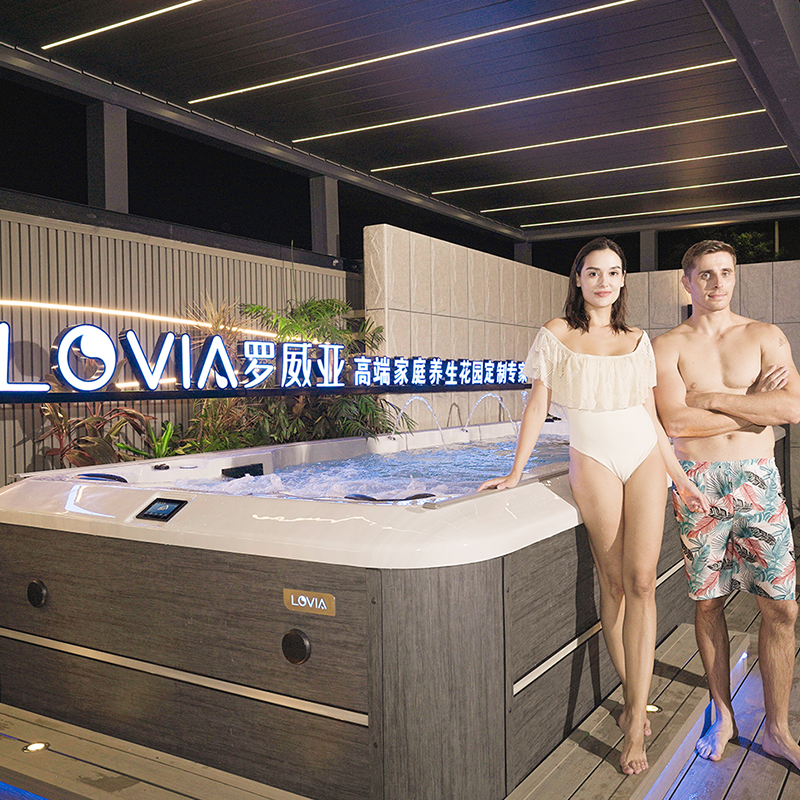
Does a swim spa hot tub consume more energy when heated?
This is a real concern for many users.
Heating Does Not Equal High Energy Consumption
From a system perspective, the energy consumption of a swim spa hot tub is not determined solely by whether heating is used, but is related to the following factors:
• Integrity of the insulation structure
• The synergistic efficiency of the heating and circulation systems
• Water temperature stability
If the insulation performance is good, the energy required to maintain the water temperature is relatively controllable.
Why does frequent heating consume more energy than maintaining a constant temperature?
In a swim spa hot tub, frequently raising or lowering the water temperature significantly consumes more energy than maintaining a stable temperature. This is why proper use of the heating system contributes to overall operational efficiency.
Can the swim spa hot tub continue heating when not in use?
This is a question closely related to usage habits.
Not in use ≠ No heating needed
Even in short-term periods of non-use, the swim spa hot tub may still need to:
• Maintain a base water temperature
• Ensure proper water circulation
• Prevent drastic changes in water conditions
Completely shutting off the heating is not always the ideal choice.
The significance of heating during "non-use periods"
A proper heating strategy helps to:
• Reduce system stress
• Improve stability upon reactivation
• Maintain overall operational status
This is why professional maintenance often emphasizes "stability over extremes."
What is the relationship between the heating of a swim spa hot tub and its spa functions?
From a functional perspective, heating is a crucial foundation for the spa experience.
The Impact of Water Temperature on the Spa Experience
In a swim spa hot tub, the right water temperature helps to:
• Relax muscles
• Improve comfort during water activities
• Enhance the overall experience
Without stable heating, the spa function itself cannot function to its full potential.
Why are both swimming and spa treatments inseparable from heating?
Whether it's continuous swimming or a relaxing spa activity, a comfortable and controllable water temperature environment is essential. This is the fundamental logic behind the design of the swimming spa hot tub's heating system.
Is the heating in a swim spa hot tub safe and reliable?
From a system design perspective, the heating function of a swim spa hot tub is not an "add-on option," but rather an integral part of the overall system.
The Relationship Between the Heating System and Overall Safety
In a complete system, heating typically works in conjunction with:
• Temperature control
• Water flow monitoring
• System protection mechanisms
to ensure operational stability.
Why can't heating be understood in isolation from the system?
While "heating" alone might raise concerns about risk, in the swim spa hot tub, heating is always under system monitoring and is part of the overall design, not an isolated source of risk.
What Customer Groups Commonly Purchase LOVIA SPA Products?
Our customers include homeowners, wellness centers, hotels, spa resorts, property developers, retailers, and importers. LOVIA SPA works with both small businesses and large distributors by offering customized solutions, wholesale discounts, and flexible ordering. As a manufacturer with global reach, we provide tailored quotes based on each customer’s purchasing goals.
Whether your market targets luxury buyers or budget-friendly consumers, LOVIA SPA offers a wide range of models at competitive prices.