


- Home
- >
News
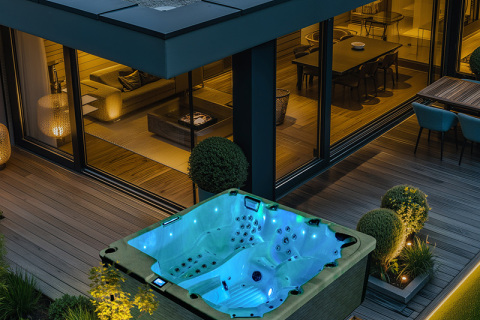
Take the L702 from LOVIA®, a Chinese manufacturer and supplier of outdoor spa equipment, as an example. This is a large outdoor spa hot tub that can accommodate nine people simultaneously. It features two lounges and seven seats, with overall dimensions of 3800×2250×920 mm.
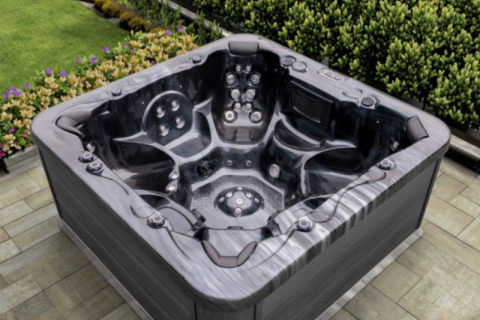
In fact, for a large outdoor hot bathtub, the frame structure is not simply an auxiliary structure, but rather the "skeleton" of the entire system. It undertakes many important tasks, including supporting the tub, distributing weight, securing equipment, protecting piping, reducing deformation, and extending the overall lifespan of the unit.
In some instances, adding just a few dozen milliliters of ordinary bath gel causes foam to cover the entire surface of the tub—and even spill over the edges—within minutes of activating the massage system. This not only detracts from the user experience but also complicates cleaning and maintenance.
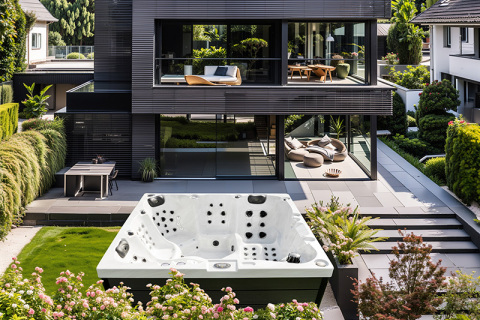
Sodium Thiosulfate: The most common bromine neutralizer In the pool and spa industry, sodium thiosulfate is widely used to neutralize both chlorine and bromine. It works through a reduction reaction, converting active bromine into bromide ions, which lack disinfecting capabilities.
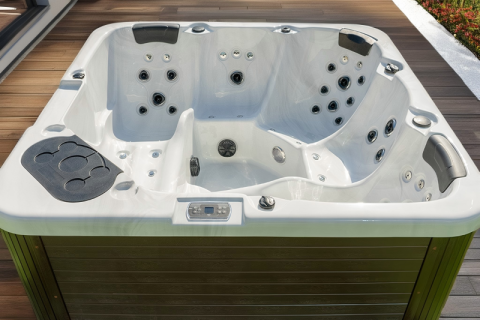
Replacing Aging Seals The rubber O-rings used in most outdoor spa hot tubs have a lifespan of approximately 3 to 5 years. Beyond this period, their elasticity and sealing performance deteriorate significantly, even if there is no visible damage.

In fact, the issue of limescale in spa hot tubs is not merely a simple matter of "cleanliness"; rather, it involves a complex interplay of factors such as water hardness, mineral content, temperature fluctuations, chemical balance, and equipment maintenance.
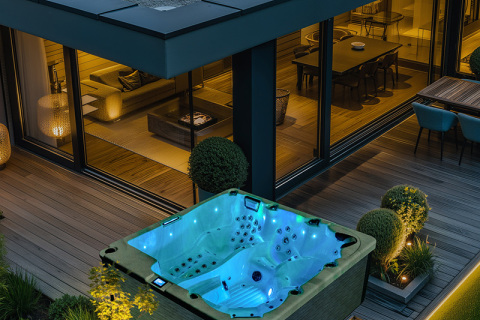
A clogged filter is one of the most common causes. Among all potential issues, a clogged filter in a spa jacuzzi tub is the easiest to overlook—yet it is also one of the most frequent culprits.
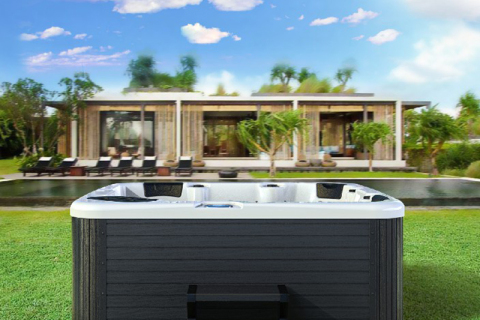
From a professional perspective, outdoor whirlpool bathtubs cannot be placed on just any ground. A suitable ground must meet the following basic conditions: • Sufficient load-bearing capacity • Level and stable ground • Not prone to subsidence or cracking • Good drainage conditions
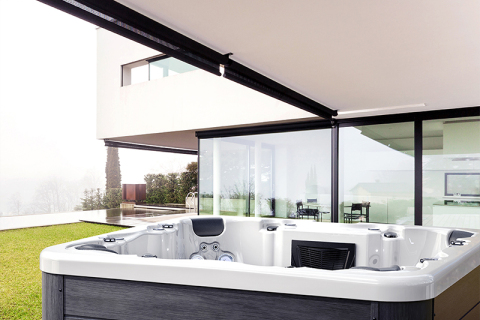
During the cold winters in most locations, residual water in your spa jacuzzi bathtub can freeze if not drained promptly, causing cracks or damage to pipes, showerheads, and other components. Draining the water is essential to prevent this problem.
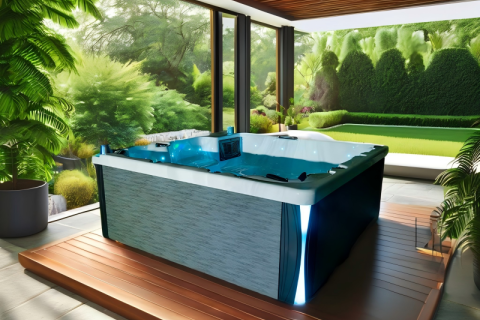
While hot tub use doesn't directly cause pacemaker malfunction, factors such as hot water, massage water flow, and electromagnetic interference may affect heart health. Therefore, the decision to use a spa jacuzzi bathtub should be based on individual health conditions and doctor's advice.

Some studies have shown that activities in a hot environment after a meal may cause a greater burden on the digestive system, especially when entering an outdoor jacuzzi bathtub. The digestive process in the body conflicts with the relaxing effect of hydrotherapy, which may cause slow digestion and even nausea or vomiting.
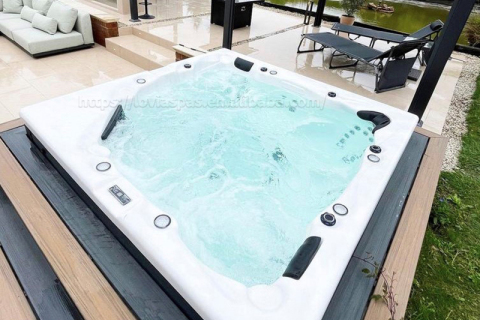
The 10×10 foot (about 3×3 meters) gazebo is a more common standard size, suitable for small and medium-sized outdoor jacuzzi bathtubs. This size of gazebo can provide enough coverage for a jacuzzi bathtub for 4 to 6 people, while leaving a proper amount of activity space around it, which is suitable for small families.