


- Home
- >
News
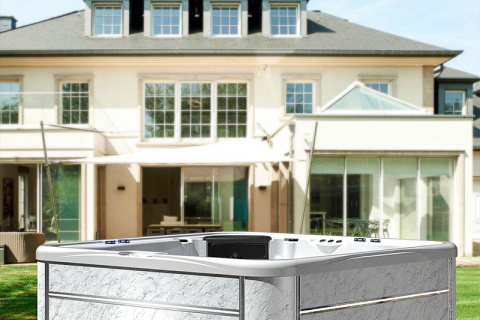
While hot tub massage jets are designed to run for long periods of time, they are not usually designed to work around the clock. Long-term operation will cause greater loads on the pump, motor, and filtration system, so leaving it on overnight may affect the life of the device.
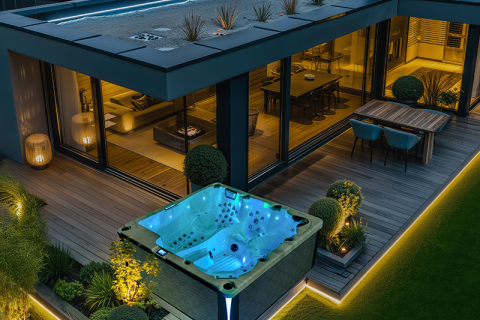
Heating efficiency is one of the most important factors that users are concerned about when heating a hot tub. When the jet is running, it can indeed help to distribute heat more evenly in the water by accelerating the water flow and promoting water agitation.
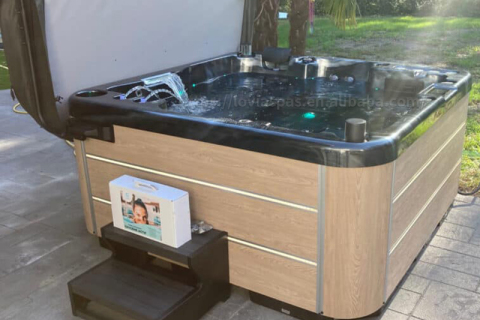
A hot tub without a cover will lose a lot of heat, and the heating system will have to start more frequently to maintain the water temperature. Even if the cover is not used for only a short interval, the heat loss is still significant. For those who want to save money on their electricity bills, always using a hot tub cover is a simple and effective energy saving measure.
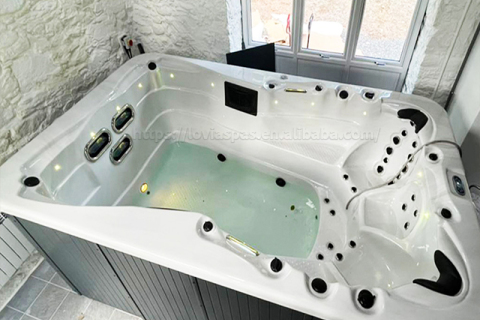
Since the hot tub heater is directly involved in the heating and circulation of water, it inevitably involves the water in the bathtub when replacing the heater. The replacement operation of the hot bathtub heater requires disconnecting the water pump and the pipe system, which usually means that the water needs to be drained to prevent water from overflowing or leaking during the operation.
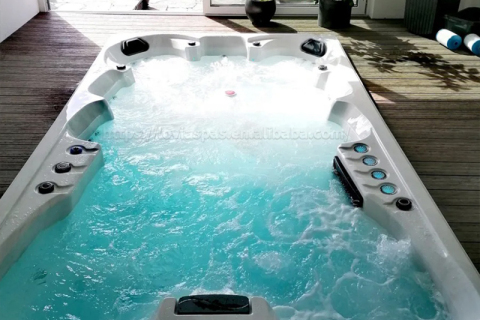
The growth of algae is often accompanied by changes in the chemical composition of the hot tub water, such as increased hot bathtub pH and turbidity. Contact with water containing algae may cause discomfort to the eyes and respiratory tract, especially when other harmful microorganisms are present in the water.
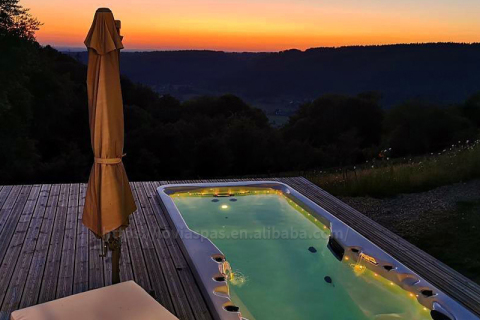
In outdoor hot tub systems, ozone generators are a very important water treatment equipment that can effectively improve water quality and reduce the use of chemicals.
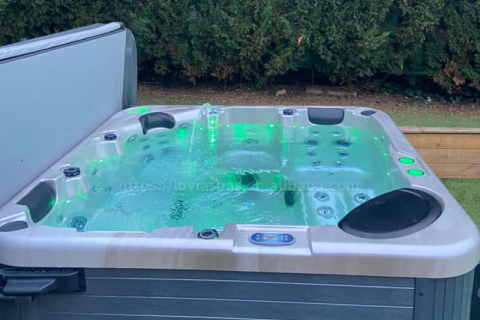
If chemicals are completely eliminated, the hot tub may quickly become a breeding ground for bacteria and algae. This will bring the following risks: Water turbidity and odor: Contaminants in the water cannot be removed, resulting in turbidity and unpleasant odors. Health hazards: Untreated water may cause skin irritation, eye infections, and even spread diseases (such as Legionella infection).
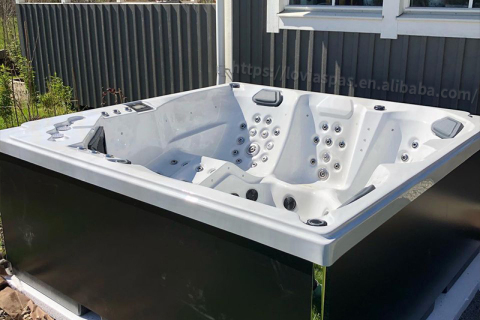
Generally, the life of a high-quality hot tub heater is between 5 and 10 years. If used properly, cleaned and maintained regularly, some high-end models can even last for more than 10 years. However, if the hot tub is often in a high-load working state or the water quality is poor, the service life of the heater may be significantly shortened.
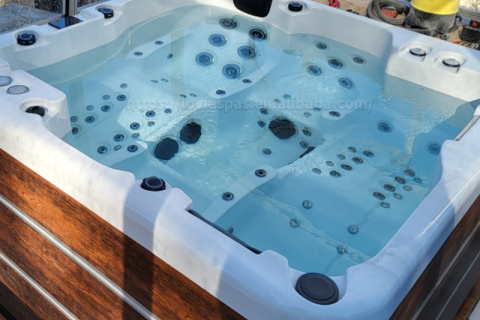
The biggest difference between a salt water hot tub and a regular hot tub is its water treatment system. Traditional hot tubs usually use chlorine or bromine to kill bacteria and disinfect, while salt water hot tubs use a salt water system to generate natural chlorine. The core of this system is a device called a Salt Chlorine Generator.
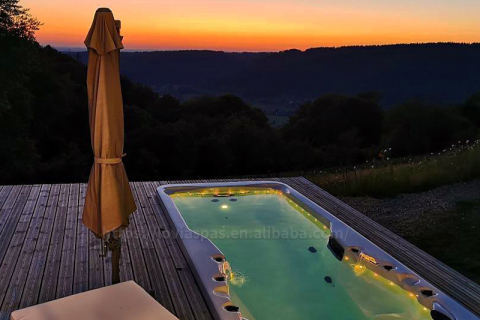
The heating system in a hot tub is controllable, meaning that the user can turn it off as needed. On hot summer days, it is perfectly acceptable to turn off the heating system and keep the water in the tub at natural ambient temperature.
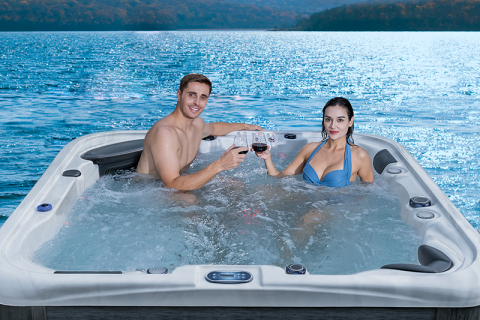
Water quality is one of the most important concerns for any hot tub user. The water in a hot tub must be clean and chemically balanced to provide users with a healthy soaking environment. If the water is not drained for a long time, water quality issues will be the first negative impact.
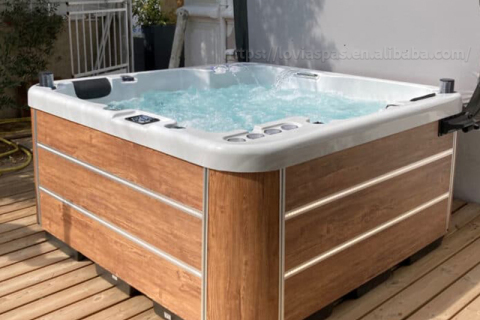
A standard built 10x10 deck can withstand a weight of about 5,000 pounds (about 2,268 kg). If we calculate the total weight of the hot tub to be 4,202 pounds (about 1,905 kg), then a deck of this size and design can theoretically withstand this weight, but it is close to its limit.