


Why are outdoor hot tubs prone to water quality issues in high-temperature environments?
2026-10-05 15:35In recent years, the outdoor leisure lifestyle has gained popularity, with outdoor hot tubs increasingly appearing in residential gardens, hotels, guesthouses, and vacation resorts. Particularly during the spring and summer months, soaking and enjoying a massage in an outdoor whirlpool spa hot tub while surrounded by the natural beauty of a garden or terrace has become a favored pastime.
However, as the usage of outdoor hot tubs increases, a specific issue has become more prominent: why do hotter weather conditions make these tubs more susceptible to problems such as cloudy water, unpleasant odors, excessive foaming, rapid sanitizer depletion, and unstable pH levels?
Many users instinctively attribute this to the summer heat, assuming that bacteria simply multiply faster. However, this explanation is incomplete. The water quality in outdoor hot tubs is actually affected by the simultaneous interaction of multiple factors: high temperatures, sunlight, human-introduced contaminants, relatively small water volumes, and environmental pollution.
The CDC recommends that whirlpool spa hot tub water temperatures not exceed 104°F (40°C) and advises maintaining free chlorine levels of at least 3 ppm (or 4–8 ppm for bromine) while keeping the pH between 7.0 and 7.8. For outdoor hot tubs, these parameters are not merely arbitrary figures; they are the essential foundation for maintaining stable water quality.
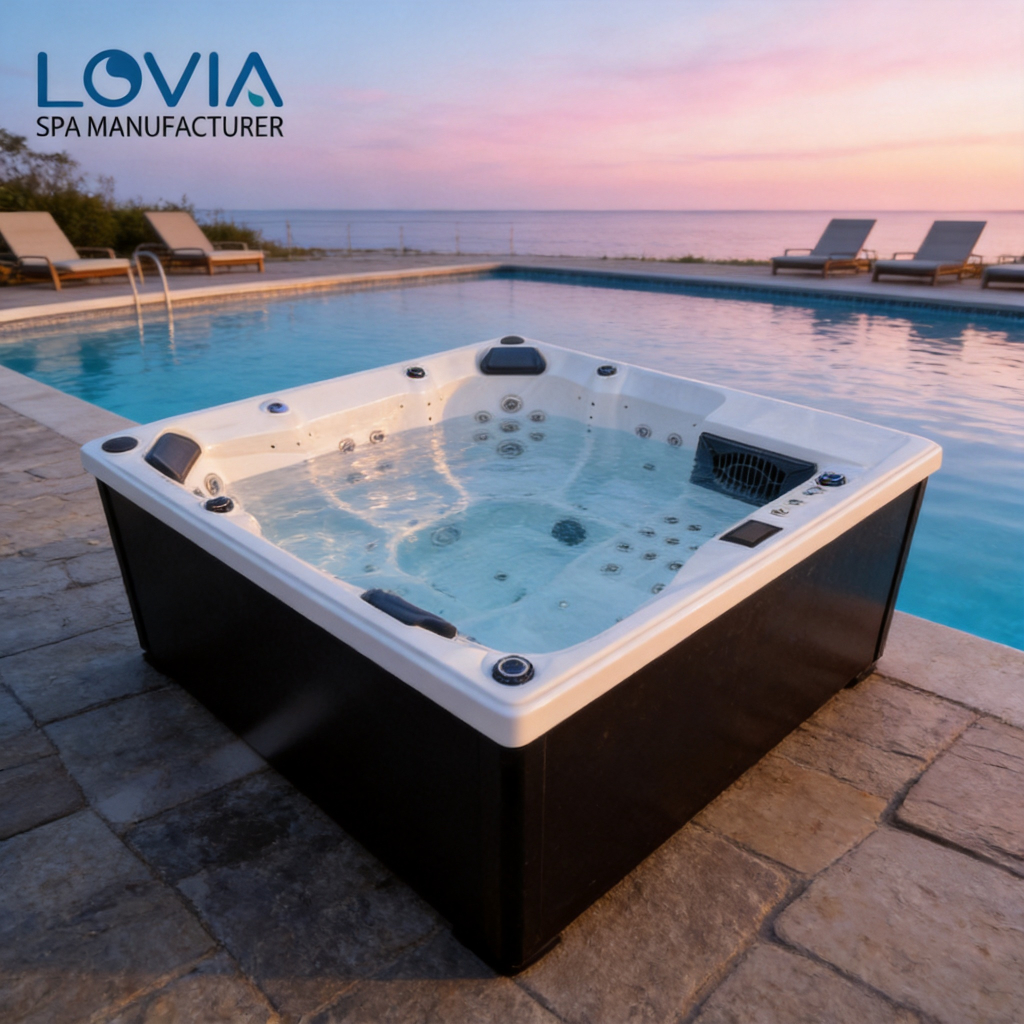
High temperatures make water quality management for outdoor hot tubs more challenging
One of the primary differences between an outdoor whirlpool spa hot tub and a standard swimming pool is the water temperature.
While a typical swimming pool might have a water temperature in the low-to-mid 20s (°C), an outdoor whirlpool spa hot tub usually needs to be maintained between 37°C and 40°C. Although this temperature range provides a comfortable soaking experience, it also creates more complex conditions for microbial growth and changes in water quality.
It is particularly important to correct a common misconception: high water temperatures do not necessarily kill all microorganisms in the water.
Data from the CDC indicates that *Legionella* bacteria can thrive in water temperatures ranging from approximately 25°C to 45°C—a range that encompasses typical hot tub operating temperatures. Furthermore, hot tub jets generate water droplets and aerosols; consequently, water quality management is not just about the water itself, but also about the potential health risks associated with user exposure.
High temperatures also accelerate water evaporation and certain chemical reactions, thereby exacerbating issues related to sanitizer levels and water balance. Therefore, outdoor hot tubs cannot rely on high temperatures to "self-sanitize"; instead, they depend on continuous filtration and disinfection.
Sunlight and UV Rays Accelerate Sanitizer Depletion
Outdoor whirlpool spa hot tubs face a factor that indoor units do not: sunlight.
Prolonged exposure to sunlight causes UV rays to accelerate the breakdown of chlorine. Simultaneously, human sweat, sebum, and other organic matter also deplete the sanitizer.
This explains a common scenario: a user balances the water chemistry in the evening, only to find a significant drop in free chlorine levels when testing the next day.
This does not necessarily indicate a problem with the sanitizer itself; rather, it is often the result of multiple combined factors. During hot summer weather—when intense sunlight, high water temperatures, and frequent usage coincide—the rate of sanitizer depletion in outdoor hot tubs increases even further.
Consequently, if an outdoor whirlpool spa hot tub is installed in a location with strong year-round sunlight, it is advisable to use a high-quality thermal cover and keep the tub covered when not in use. Installing shading structures can also help mitigate the impact of UV rays on water quality at the source.
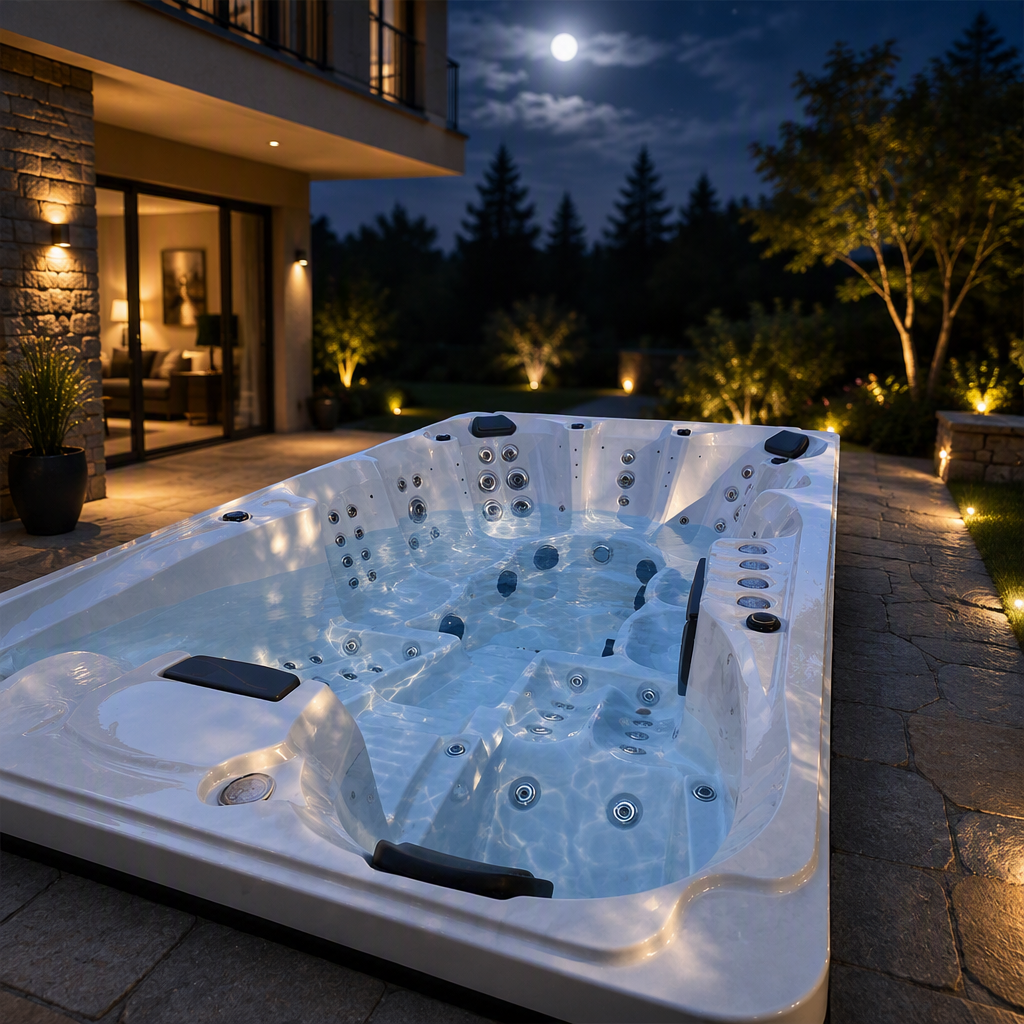
Small Water Volume Magnifies the Impact of Human Contaminants
This is one of the most frequently overlooked issues regarding outdoor hot tubs.
A typical residential outdoor hot tub holds only a few hundred gallons of water. For instance, a 400-gallon tub contains approximately 1,514 liters. If two or three people use it in succession, contaminants such as sweat, sebum, hair, skin cells, sunscreen, and body lotion inevitably enter the water.
In contrast, a residential swimming pool might hold 15,000 gallons or more. Contaminants from two people are heavily diluted in a pool, whereas in a 400-gallon hot tub, the pollution load per unit of water is significantly higher.
Therefore, one cannot simply assume that "only two people used it today, so the water shouldn't be dirty."
In reality, there is a direct relationship between the number of users, water volume, and duration of use for outdoor hot tubs. Generally, the smaller the water volume, the larger the number of users, and the longer the continuous usage time, the more rapidly water quality deteriorates.
The CDC has also noted that the low water volume, high temperatures, and heavy usage loads associated with hot tubs make maintaining water quality more challenging.
Why do sweat, sunscreen, and skincare products degrade water quality?
When using an outdoor whirlpool spa hot tub in summer, bathers often introduce more contaminants into the water than one might imagine.
Sweat and sebum are organic contaminants in themselves; products such as sunscreen, body lotion, and cosmetics also increase the organic load when they enter the water. These substances not only deplete chlorine or bromine levels but also tend to cause oily surface films, foam, and unpleasant odors.
Therefore, excessive foaming in an outdoor whirlpool spa hot tub does not necessarily mean there is simply a lack of sanitizer.
If users simply add more sanitizer whenever foam appears, the problem is usually only temporarily alleviated. A more effective approach is to minimize the introduction of contaminants into the water.
For example, take a quick shower before using the whirlpool spa hot tub; avoid applying heavy body oils or tanning oils before entering; and test the water quality promptly after use by multiple people, adjusting sanitizer levels based on the results.
In the long run, preventing contaminants from entering the water is more effective than constantly adding more chemicals.
pH imbalance directly affects sanitization efficiency
pH is another critical parameter in managing outdoor hot tub water quality.
The CDC recommends maintaining a hot tub pH level between 7.0 and 7.8.
Why is pH so important? Because the effectiveness of sanitizers is closely linked to pH levels.
Take chlorine, for instance: if the pH is too high, chlorine's disinfecting power diminishes. Conversely, while a low pH can enhance chlorine's effectiveness, it may also increase irritation to equipment, piping, and human skin.
Therefore, maintaining outdoor hot tub water requires monitoring pH levels alongside checking for the presence of chlorine.
If you encounter a situation where "chlorine is present but water quality remains unstable," you should check whether the pH is within the proper range.
For the average household user, it is advisable to keep reliable water testing tools on hand and regularly check pH and free chlorine or bromine levels, rather than relying solely on the water's color or odor to judge its quality.
Why does it often seem like "adding chlorine isn't enough" for outdoor hot tubs?
When sanitizer levels in an outdoor whirlpool spa hot tub drop rapidly, the causes usually fall into several categories: UV radiation from sunlight, high temperatures, increased bather load, the introduction of organic matter (such as sweat and skincare products), and contamination within the filtration system or plumbing lines.
Biofilm buildup within the plumbing is a particularly easy-to-overlook issue.
If an outdoor whirlpool spa hot tub’s plumbing has not undergone thorough cleaning for an extended period, organic matter and microorganisms can adhere to pipes and jets, forming biofilm. In this state, even with continuous sanitizer dosing, you may experience abnormally rapid sanitizer depletion and persistently unstable water quality.
Therefore, if you notice that chlorine levels drop significantly shortly after dosing, do not simply increase the dosage; instead, inspect the entire water circulation system.
When necessary, drain the tub, clean its surfaces, service the filter, and perform a plumbing flush according to the manufacturer's instructions.
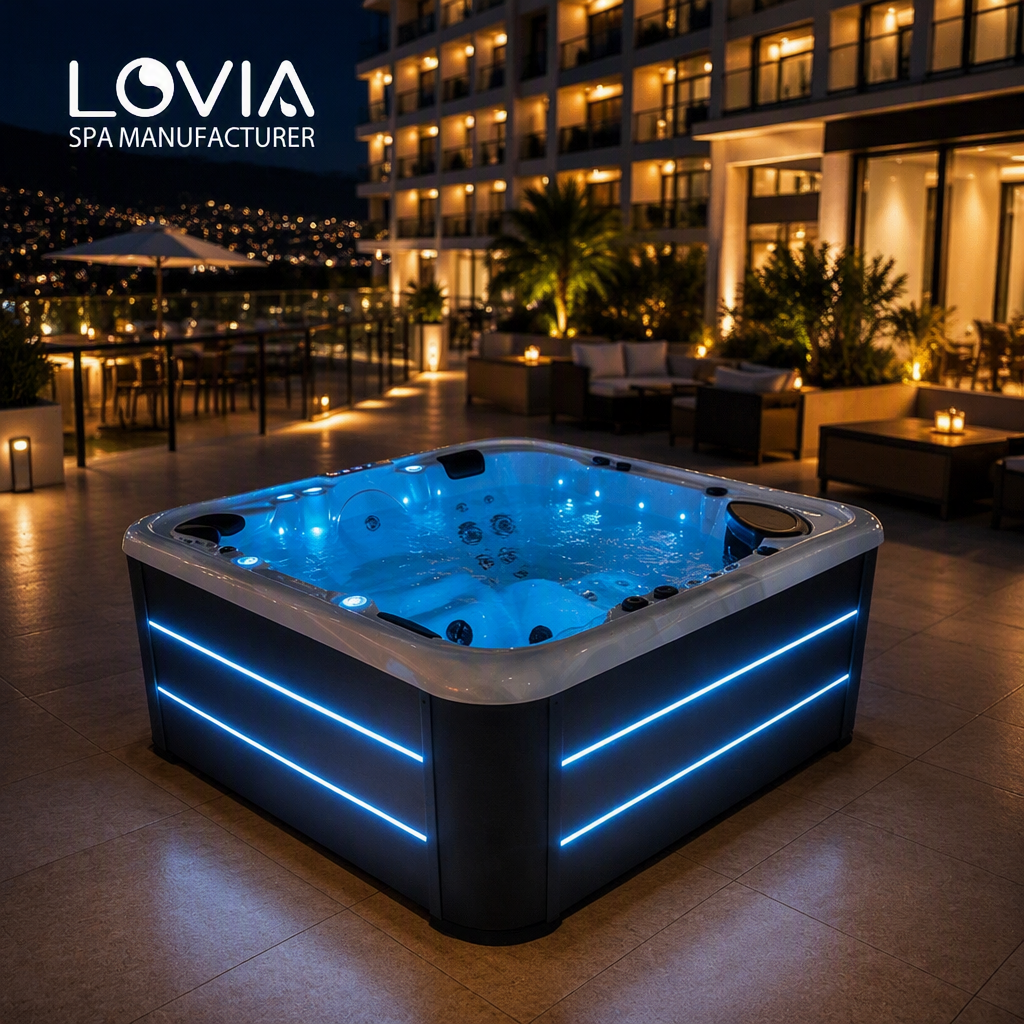
The filter is crucial for maintaining stable water quality in outdoor hot tubs
While sanitizers control microorganisms, the filtration system is primarily responsible for removing particulates and contaminants from the water; both are indispensable.
Outdoor hot tubs are constantly exposed to the elements, allowing dust, pollen, fallen leaves, and insects to enter the water. If the filter is not cleaned regularly, contaminants accumulate on the filter cartridge surface, reducing water circulation efficiency.
When the filter becomes clogged, the water may appear increasingly cloudy; users might mistakenly attribute this to insufficient sanitizer and continue adding chemicals.
Consequently, filter maintenance should be a priority when caring for an outdoor whirlpool spa hot tub. If you notice reduced water flow, decreased filtration efficiency, or a visibly dirty filter cartridge, clean or replace it promptly.
For whirlpool spa hot tubs that see frequent use, the frequency of filter maintenance should be increased accordingly.
Dust, pollen, and rainwater in the outdoor environment also affect water quality
Beyond contaminants introduced by bathers, the outdoor environment itself serves as a constant source of pollution.
If an outdoor hot tub is installed near trees, lawns, or gardens, the likelihood of pollen, fallen leaves, dust, and insects entering the water increases significantly. Summer thunderstorms can also introduce additional environmental contaminants.
Once these substances enter the water, they not only place a heavier burden on the filter but also consume a portion of the sanitizer.
Therefore, the installation location of an outdoor whirlpool spa hot tub directly impacts long-term maintenance costs. If conditions permit, choose a relatively clean location away from heavy leaf litter and airborne dust. Additionally, keeping the cover on when the hot tub is not in use significantly reduces the entry of external contaminants.
The cover serves not only to retain heat but also to protect water quality. The CDC recommends covering the whirlpool spa hot tub when not in use to minimize environmental contamination and the loss of sanitizers.
FAQ: Water Quality Management for Outdoor Hot Tubs
Q1: How often should I test the water quality of an outdoor hot tub in the summer?
For typical household use, it is recommended to test pH and sanitizer levels at least twice a day. Testing frequency should be increased during hot weather or when the tub is used by multiple people in succession.
Q2: What should the pH level be for an outdoor whirlpool spa hot tub?
It is recommended to maintain the pH between 7.0 and 7.8, adjusting as necessary based on the specific sanitization system and the equipment manufacturer's requirements.
Q3: What should the free chlorine level be for an outdoor hot tub?
The CDC recommends maintaining a free chlorine level of at least 3 ppm. If using bromine, a level of 4–8 ppm is recommended. Always follow local regulations and equipment specifications.
Q4: Why does the water in an outdoor whirlpool spa hot tub tend to foam?
Common causes include the introduction of organic substances—such as sweat, sebum, sunscreen, and body lotion—into the water. Foaming can also result from inadequate filtration system maintenance or water quality imbalances. Minimizing sources of contamination and improving filtration are generally more effective solutions than simply using anti-foaming agents.
Q5: Does the water still need to be sanitized if it looks clear?
Yes. Water clarity does not guarantee the absence of microbial risks. Proper water quality must be maintained through adequate sanitizer levels, pH control, filtration, and regular cleaning.