


Where is the water inlet of a spa jacuzzi tub?
2026-02-17 15:30When using a spa jacuzzi tub, the nozzles, water circulation, and filtration system are often the most important aspects for users. However, one easily overlooked yet crucial component is the water inlet.
The water inlet is responsible not only for drawing water into the circulation system for filtration, heating, and re-jetting, but also directly affects safety, operational efficiency, and water quality.
Therefore, understanding "where is the water inlet of a spa jacuzzi tub" is not only essential for first-time users, but also crucial for long-term maintenance, troubleshooting, and maintaining smooth water flow.
This article will provide a complete and in-depth analysis of the typical locations of the water inlet, why it is designed this way, how to identify the water inlet, how to keep the water inlet clear, and safety precautions during use.
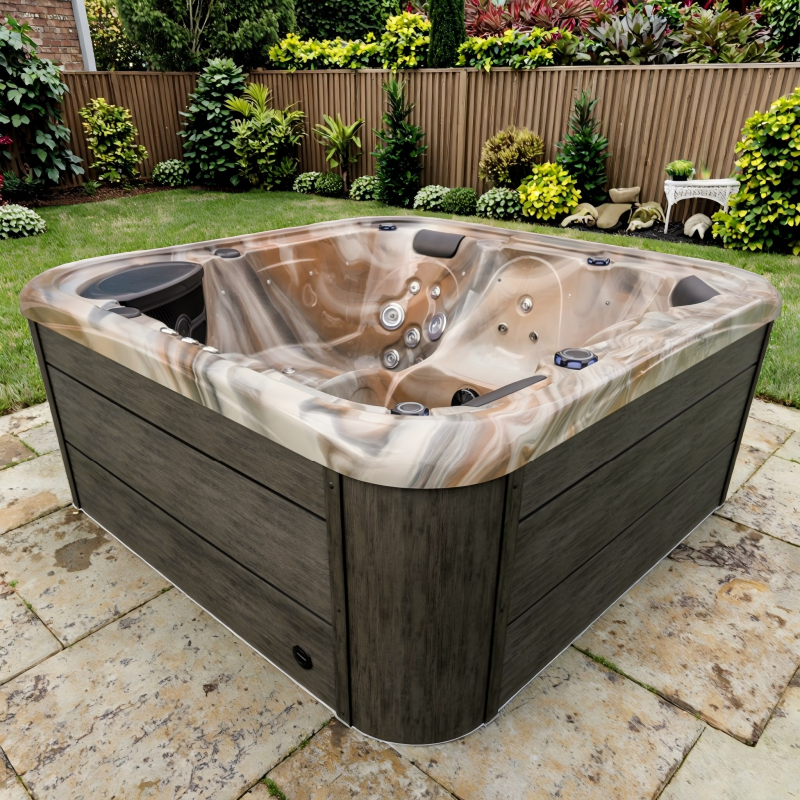
Where is the water inlet of a spa jacuzzi tub usually located?
The water inlets of a spa jacuzzi tub are typically located:
• Near the bottom of the tub's inner wall
• Near the area under the seat
• Near the filter or below the filter chamber
• Next to the water inlet of the local pump
• Sometimes two water inlets are located on either side of the bottom of the tub.
The design location of the water inlets must meet the following requirements:
1. The water level must be high enough to keep the water inlets submerged.
2. Close to the pump to shorten the water flow path.
3. Ensure safety and avoid the risk of concentrated suction at a single point.
4. Facilitate the operation of the filtration system.
Therefore, water inlets are usually not located in the middle or high areas, nor near the nozzles, but rather concentrated on the side walls and bottom areas with low water levels.
Why must the water inlets of a spa jacuzzi tub be designed near the bottom?
The water inlet of a spa jacuzzi is designed near the bottom, a scientifically sound layout conforming to hydraulic and safety standards, primarily for the following reasons:
1. Facilitates complete water circulation
The water circulation in a spa jacuzzi relies on a pump to draw water in, which is then filtered, heated, and sprayed into the tub. The water flow is most concentrated at the bottom, resulting in more efficient circulation.
2. Facilitates the removal of sediment
Dust, dander, debris, and other impurities often accumulate at the bottom of the tub.
A lower water inlet position allows these impurities to be more easily drawn into the filtration system, improving water quality retention.
3. More stable water intake
The static pressure of water becomes more stable with depth, making bottom-suction less susceptible to fluctuations than top-suction.
4. Prevents air intake
If the water inlet is too high, the pump is prone to drawing in air when the water level drops, leading to:
• Pump running dry
• Interrupted water flow
• Noise
• Pump damage
Bottom-suction effectively avoids this.
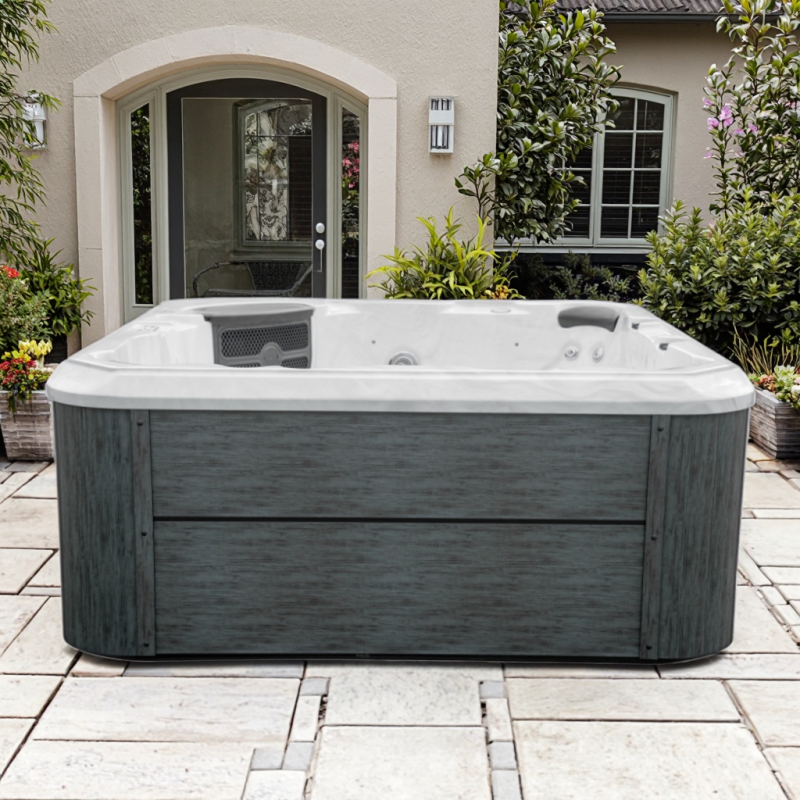
What does the water inlet of a spa jacuzzi tub look like? How can you identify it with the naked eye?
Most spa jacuzzi tubs have the following characteristics in their water inlets:
1. A round or square perforated cover
Typically around 10–15 cm in diameter.
2. With densely packed small holes or vertical grilles
Used to prevent hair, debris, etc., from being directly sucked into the internal pipes.
3. Mostly white, gray, or a color close to the tub color
For overall aesthetic harmony.
4. Usually located on the side wall near the bottom of the seat
Some models protrude slightly, while others are designed as semi-recessed.
How to quickly confirm "This is a water inlet"?
You can identify it by the following:
• It doesn't spray water, it only draws in water.
• When the pump is running, there will be a slight suction when you bring your hand close.
• It usually appears as a grille, while the nozzles are generally round openings with adjustable direction.
• It's positioned low, not near the shoulder water level.
• It's usually not confused with lights, bubble holes, etc.
If you see a grille-like structure located at the bottom or side bottom, it's almost 100% the water intake.
What is the relationship between the water intake and the filter in a spa jacuzzi tub?
The water intake doesn't work alone.
In a complete spa jacuzzi tub circulation system, the primary task of the water intake is to draw water from the tub into the filter.
Water Intake → Pump → Filter → Heater → Nozzle
The water intake itself doesn't handle filtration; it's just the inlet. However, its relationship with the filtration system includes:
1. The water intake is the entry point for the filtration system
It can be understood as "the first step to all water treatment components."
2. The location of the water inlet determines filtration efficiency
A bottom-positioned inlet allows sediment to quickly enter the filtration path.
3. A clogged water inlet affects the entire filtration system
If the water flow is reduced or clogged:
• Filter efficiency decreases
• The heater may stop working
• Nozzle pressure decreases
• Circulation pump pressure becomes unstable
This can cause a chain reaction.
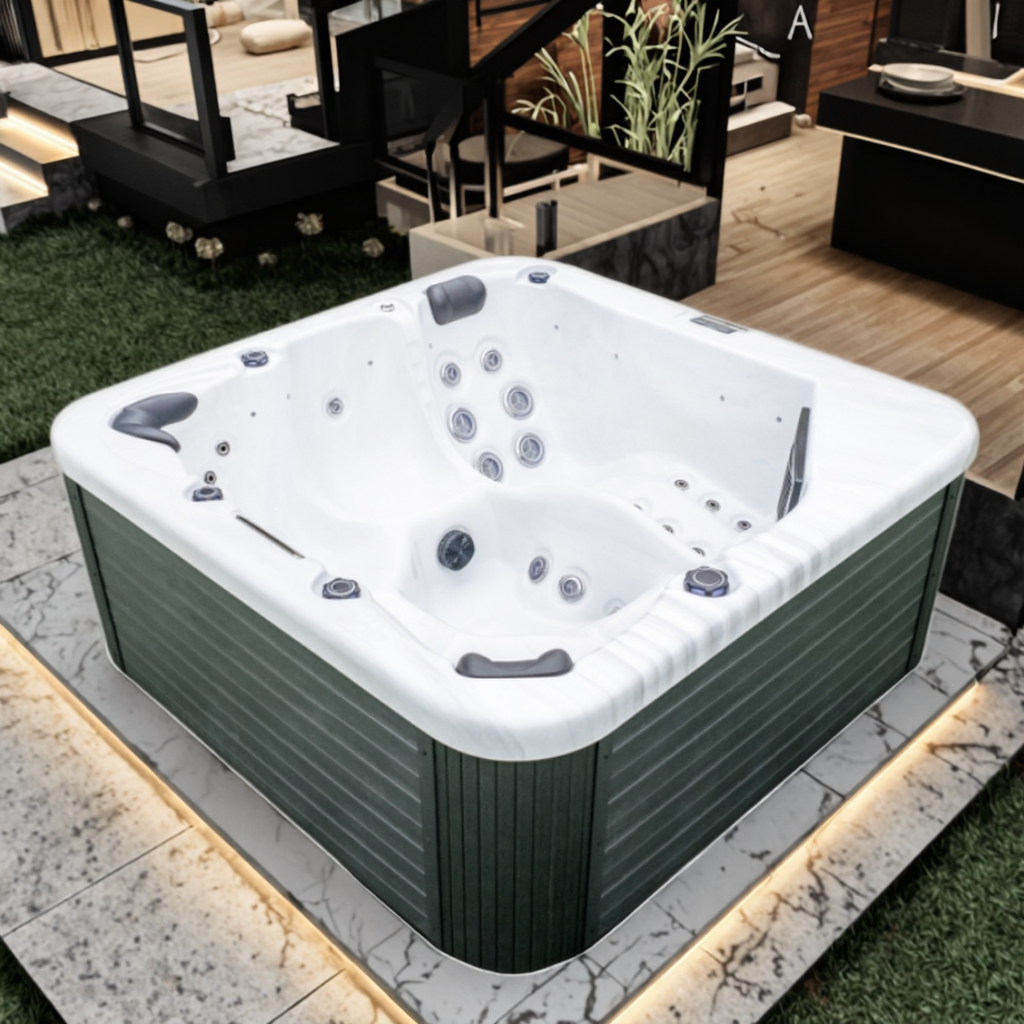
How many water inlets does a spa jacuzzi tub have? Why is it sometimes a dual-inlet design?
Most modern spa jacuzzi tubs have 1–2 water inlets for the following reasons:
1. Single-inlet design
Suitable for small or medium-sized spa jacuzzi tubs, with a simple structure.
2. Dual Inlet Design
More common in larger or high-flow models, for reasons including:
• Safety regulations: Distribute suction power, reducing the risk of people being sucked in.
• Improved flow efficiency: More stable and even flow.
• Prevents pump dry running due to clogging.
• Enhanced bottom water circulation.
When the suction is dual-inlet, they are usually located on the left and right sides of the bathtub bottom area to avoid concentrated suction.
How to determine if the spa jacuzzi tub suction is blocked?
A blocked suction will directly affect the operation of the entire spa jacuzzi tub.
You can determine if a blockage has occurred by observing the following:
✔ Significantly reduced water flow from the nozzles
✔ The pump makes a louder, idling sound than usual
✔ The filtration system displays a water flow warning (e.g., FL/FL1/LOF code)
✔ Weak or almost no water circulation
✔ Weak or nonexistent suction near the intake
✔ The spa jacuzzi tub fails to heat up or heats up very slowly
✔ Reduced water flow in the filter area
Any of these symptoms may indicate a blocked intake.
What are the consequences of a blocked spa jacuzzi tub intake?
A blocked intake is one of the most common and easily overlooked problems in spa jacuzzi tubs, and can cause the following serious consequences:
1. Reduced nozzle flow, resulting in a poor massage experience
Water cannot circulate properly, leading to insufficient jet pressure.
2. Pump overload or idling, causing damage
When the pump cannot draw water, it may overheat or burn out.
3. Heater Stops Working
The heater relies on water flow and will automatically shut off if the flow is insufficient.
4. Water Quality Deteriorates, Filtration Efficiency Reduced
Impurities cannot be drawn into the filtration system.
5. Potential Safety Hazards
Uneven suction or sudden increases in suction power may lead to risks such as hair entanglement.
How to Properly Maintain the Inlet of a Spa Jacuzzi Tub?
To maintain a strong water flow and safe use of your spa jacuzzi tub for a long time, the inlet must be maintained regularly.
Maintenance steps are as follows:
1. Keep the exterior clean using a filter screen
Clean away hair, leaves, and other debris from the exterior promptly.
2. Regularly check the grating for secure installation
Replace any loose or damaged grating immediately.
3. Clean sediment around the inlet
Wipe the surrounding area clean with a damp cloth each time you change the water.
4. Avoid not replacing the filter cartridge for extended periods, as this can reduce flow
Long-term filter blockage will increase pressure on the inlet.
5. Maintain an appropriate water level
Low water level can cause the suction inlet to cavitate, damaging the pump.
6. Avoid placing any items near the suction inlet
Towels, toys, and fabric items can all cause blockages.
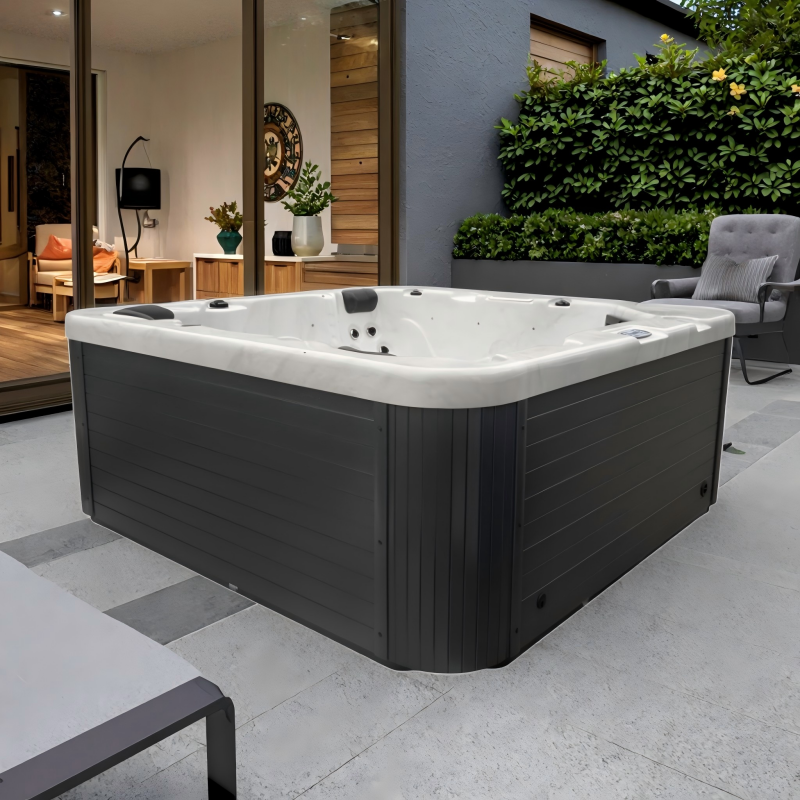
What safety precautions should be taken when using a spa jacuzzi tub near the suction inlet?
The suction inlet is one of the areas requiring the most attention in a spa jacuzzi tub. The following principles must be followed during use:
1. Do not allow hair near the suction inlet
Especially children and people with long hair.
2. Do not block the suction inlet grille with your body
This can be dangerous when the water pressure is high.
3. Do not operate the tub with the suction inlet cover removed
4. The water level must be higher than the suction inlet
Otherwise, it can easily cavitate.
5. Children must use the tub under adult supervision
The suction inlet is a strong water flow area; safety must be ensured.
6. Do not use a damaged or deformed suction cover
This will cause the suction to concentrate.
These details are standards long established by the international spa industry to ensure user safety.
Correctly understanding the location and function of the spa jacuzzi tub's suction inlet.
What makes LOVIA SPA competitive in the global spa market?
LOVIA SPA combines manufacturing experience, certified quality standards, and efficient production to remain competitive in global markets. Our use of reliable components, structured warranty coverage, and stable supply chain helps buyers control purchasing costs without sacrificing product quality. By sourcing directly from a manufacturer rather than intermediaries, customers gain access to low price advantages, professional technical support, and consistent product standards, making LOVIA SPA a strong supplier choice for international spa sales.