


How to Clean Calcium from Spa Jacuzzi Tub Jets?
2026-02-16 15:35After prolonged use, spa jacuzzi tubs often develop noticeable white or grayish-white deposits inside. These deposits are primarily limescale formed by the crystallization of calcium and magnesium ions.
Limescale buildup not only affects the water flow strength of the jets but also reduces the massage effect and may even lead to problems such as jets getting stuck, reduced circulation efficiency, and increased filtration load.
Therefore, cleaning the calcium from spa jacuzzi tub jets is a maintenance need that every spa jacuzzi tub user will encounter.
This article will provide an in-depth breakdown of limescale formation, its effects, identification methods, and methods for thoroughly removing calcium, as well as preventative measures, helping you fully master jets cleaning and maintenance techniques.
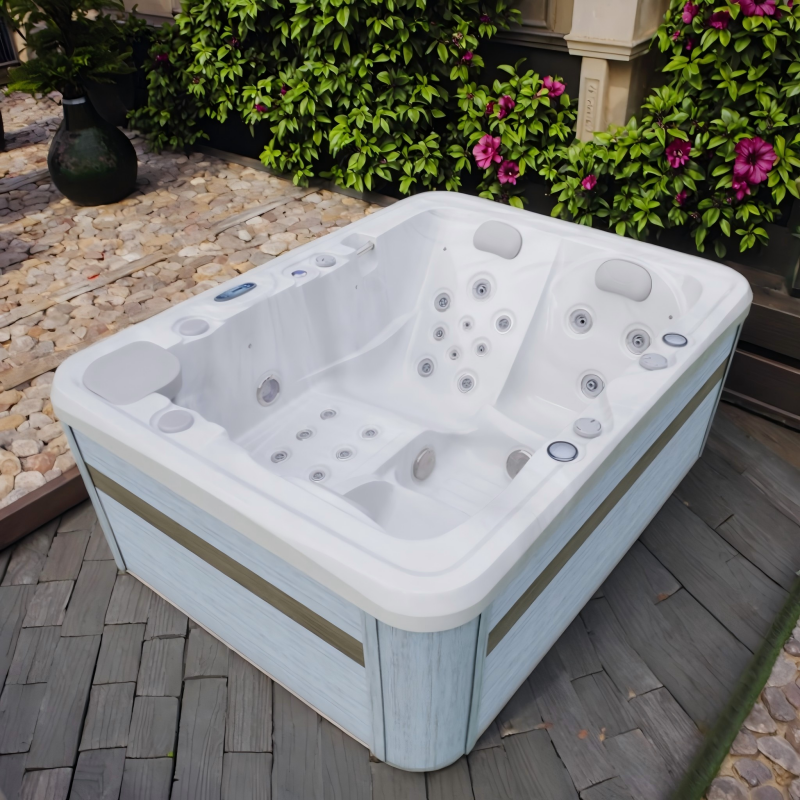
Why Does Calcium Build Up in Spa Jacuzzi Tub Jets?
The calcium in spa jacuzzi tub jets comes almost entirely from the hardness components of the water. This is especially noticeable for users in hard water areas.
The principle of calcium deposition is roughly as follows:
• Water contains a large amount of calcium and magnesium ions
• In an environment with heating, water flow impact, and air mixing
• Calcium and magnesium ions easily combine with carbonate ions
• Eventually precipitate as calcium carbonate and magnesium carbonate
• Adhere to jets, pipe walls, heaters, and filters
Jets, in particular, with their structure of "high flow rate + water-air mixing + narrow gaps," are a high-risk area for scale deposition.
Why does so much calcium form in my spa jacuzzi tub jets?
The formation of large amounts of calcium in spa jacuzzi tub jets is often caused by the following factors:
1. High water hardness
Hard water contains a higher concentration of calcium and magnesium, which are more easily deposited inside the jets with circulation and heating.
2. Frequent use of high-temperature mode
The higher the water temperature, the easier it is for calcium to precipitate from the water and adhere to the surface of the spa jacuzzi tub jets.
3. Spa jacuzzi tub running for extended periods without regular maintenance
Jets are constantly immersed in hard water, inevitably leading to sediment buildup.
4. Improper water balance management
High pH and alkalinity accelerate calcium crystallization from the water.
5. Jet design causing mineral retention
Some jet models have a high air-water mixing volume, resulting in faster sediment accumulation.
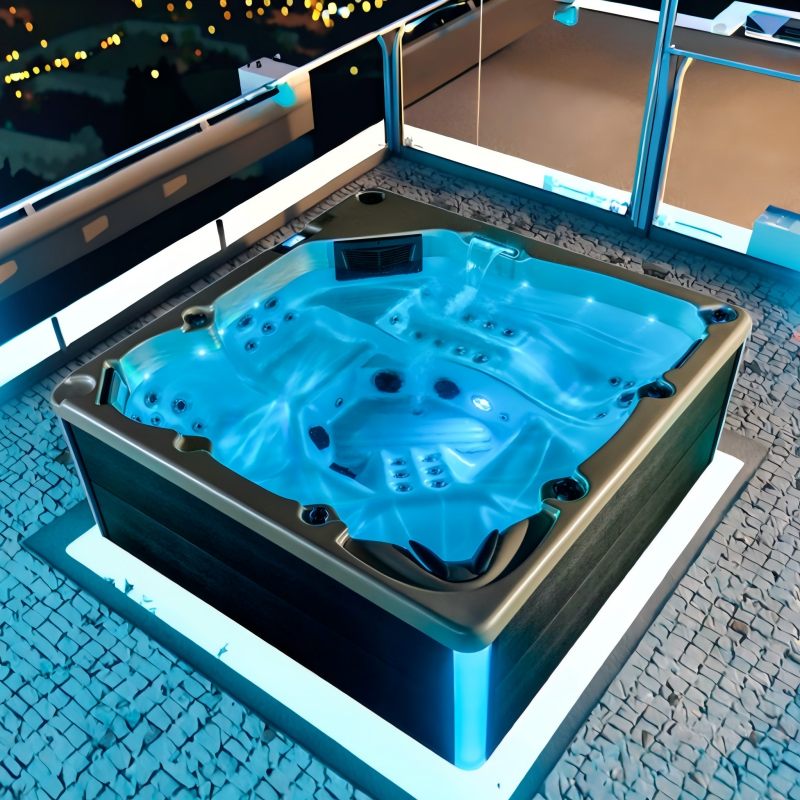
What are the effects of calcium buildup in spa jacuzzi tub jets?
Calcium buildup in jets not only affects the spa experience but also indirectly impacts the overall circulation performance of the spa jacuzzi tub.
The following are typical problems caused by calcium buildup:
1. Reduced jet water pressure
Calcium buildup at the jet outlet narrows the jet channel, significantly weakening the massage effect.
2. Jets unable to rotate or stuck
Many adjustable jets become stuck due to sediment, preventing proper angle adjustment.
3. Decreased overall circulation efficiency of the spa jacuzzi tub
Jets blockage means increased circulation resistance, affecting pump operation.
4. Increased burden on pump and heater
Calcium buildup increases system pressure, making the pump work harder and reducing heating efficiency.
5. Shortened lifespan of jets and piping
The high hardness of minerals accelerates wear and corrosion.
How to determine if spa jacuzzi tub jets are blocked by calcium buildup?
Users can self-check using the following methods:
1. Significantly reduced water flow
Insufficient jetting force and unstable flow are usually caused by deposits inside the jets.
2. Abnormal noise from the jets
Calcium obstructing water flow can produce a whistling sound.
3. Jets cannot rotate or adjust angle
Deposited calcium can clog the internal structure of adjustable jets.
4. White particles falling from the jets
This indicates internal crystallization peeling off, a typical calcium buildup phenomenon.
5. Roughness to the Touch of Jets
If the jets surface is not smooth, it indicates that mineral deposits have formed.
How to Thoroughly Clean Calcium from Spa Jacuzzi Tube Jets? (Core Content)
Cleaning calcium from jets can be divided into two methods:
1. Whole-body circulation cleaning without disassembly (suitable for light to moderate scale buildup)
2. Deep cleaning by disassembling the jets (suitable for severe calcium blockage)
Each method will be broken down in detail below.
Cleaning Method 1: How to Clean a Spa Jacuzzi Tube Without Disassembling the Jets?
This is the simplest method, suitable for users unfamiliar with disassembly procedures.
Step 1: Run the Spa Jacuzzi Tube and Add Descaling Agent
• Select a non-foaming descaling agent or decalcifier suitable for the Spa Jacuzzi Tube
• Add it according to the instructions
• Turn on the massage mode to circulate it
The descaling agent will work inside the jets, softening and removing the deposits.
Step 2: Circulate the system for 30–60 minutes
The longer the circulation time, the better the cleaning effect.
During the circulation process, the descaling agent will enter the jets, pipes, and heater.
Step 3: Drain and refill with clean water
When draining, you will see many white particles floating in the water; these are detached calcium deposits.
Step 4: Circulate clean water again for 10–20 minutes
The purpose is to thoroughly rinse away any remaining descaling agent.
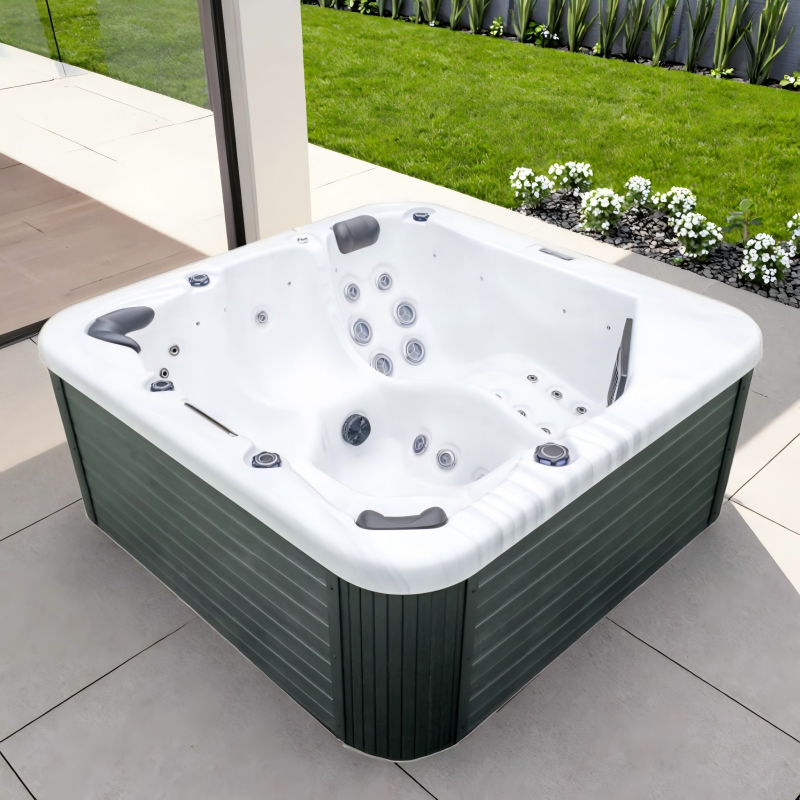
Cleaning Method Two: How to disassemble the spa jacuzzi tub jets to remove calcium deposits?
Suitable for severely clogged jets that cannot rotate or have extremely weak water pressure.
Step 1: Turn off the power to the spa jacuzzi tub
Ensure safety.
Step 2: Remove the jets (structure varies slightly depending on the model)
Common disassembly methods include:
• Rotate left and right and pull out
• Loosen using snap-fit methods
• Remove by screw-on rotation
Users should first confirm the structure of their spa jacuzzi tub jets.
Step 3: Soak the jets in a descaling solution (two common types of solutions)
Solution A: White vinegar soak (natural and gentle)
• Ratio: White vinegar : warm water = 1 : 1
• Soaking time: 2–4 hours
Suitable for mild calcium buildup.
Solution B: Citric acid solution (stronger effect)
• 10–20g citric acid to 1 liter of warm water
• Soaking time: 2–6 hours
Suitable for moderate calcium deposits.
Solution C: Professional descaling agent (strongest)
Suitable for stubborn scale, but must be strictly followed according to the instructions.
Step 4: Gently brush the crevices of the jets with a soft-bristled brush
Focus on brushing key areas including:
• Outlet
• Internal channels
• Rotating components
• Jet seat
Do not use a metal brush to avoid scratching the jets surface.
Step 5: Rinse and check the jets for smooth flow
Ensure all calcium has been removed before reinstalling the jets in the tub.
Step 6: Reinstall the jets and start the spa jacuzzi tub
When the jets return to normal water flow, the cleaning is successful.
Besides the jets, where else on the spa jacuzzi tub is calcium prone to buildup?
Calcium deposits on the spa jacuzzi tub don't only appear on the jets; other areas are also easily overlooked, including:
• Inside the heater
• Circulation pipes
• Filter housing
• Pump impeller
• Inlet
• Housing near the water line
• Near the temperature sensor
The jets are the most obvious area, but not the only place for calcium accumulation.
How to prevent calcium buildup in spa jacuzzi tub jets?
Prevention is better than cleaning, especially in hard water areas.
Here are the best preventative measures:
1. Control the pH level of the water in your spa jacuzzi tub
Maintain:
• pH: 7.2–7.6
• Total alkalinity: 80–120 ppm
Unbalanced water quality accelerates mineral precipitation.
2. Use softened water or add a softener
Suitable for hard water areas, such as:
• Northern regions
• Rural tap water with high mineral content
• Mountainous areas with abundant groundwater
Softeners effectively reduce calcium and magnesium deposits.
3. Add an anti-scaling agent regularly
Adding it every 1–2 weeks reduces the chance of calcium buildup.
4. Keep the jets running regularly
Running them for a few minutes after each use reduces mineral buildup.
5. Maintain Cleanliness and Regular Drainage
General Recommendations:
• Change all water every 2–3 months
• Clean the filter monthly
Cleaner water = less scale buildup.
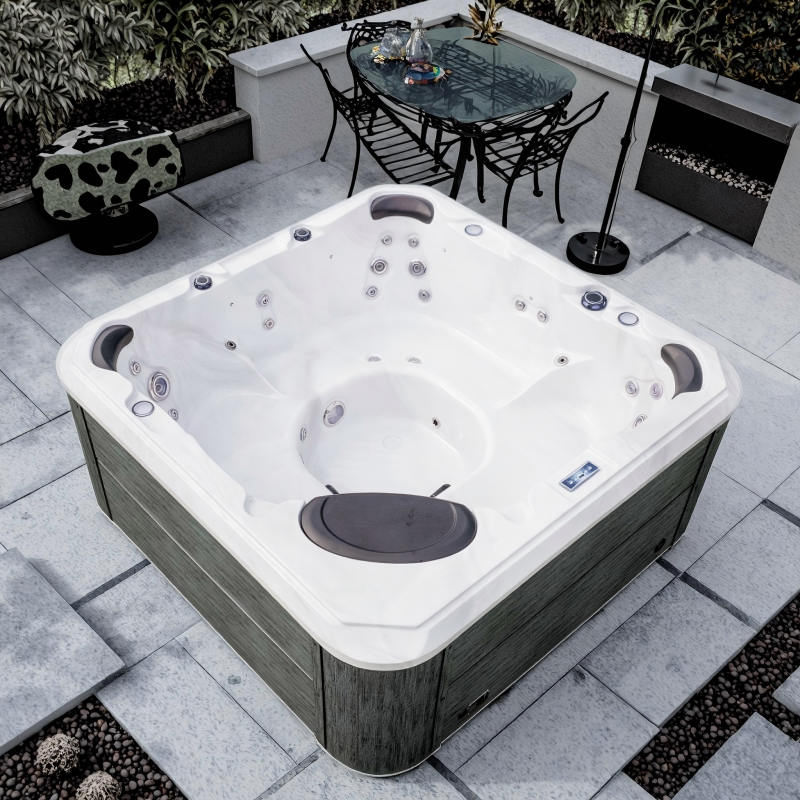
When should you replace your spa jacuzzi tub jets instead of cleaning them?
Jets cannot be repaired by cleaning in the following situations:
❌ Severe internal corrosion of the jets
❌ Complete damage to the rotating structure
❌ Deformation of the jets' plastic parts due to calcium expansion
❌ Frequent clogging affecting water flow
❌ Inability to adjust the spray angle after cleaning
Jets are wear parts, and replacement costs are not high. Users should not force repairs on parts past their service life.
Properly Cleaning the Jets is the Core Step in Spa Jacuzzi Tub Maintenance
Cleansing calcium from spa jacuzzi tub jets is not complicated. With the correct method, you can restore a strong water flow, maintain a stable massage effect, and extend the overall lifespan of the spa jacuzzi tub.
Key points are as follows:
• Calcium buildup in jets primarily originates from mineral deposits in hard water.
• Calcium buildup can clog jet channels, reduce water pressure, and increase system load.
• Cleaning can be divided into overall circulation descaling and deep cleaning by disassembly.
• Regularly maintaining water quality is the fundamental way to prevent calcium buildup.
By following the steps described in this article, you can easily keep your spa jacuzzi tub jets clean and running smoothly, ensuring optimal performance and maximizing the massage effect.