


How to Secure an Acrylic Freestanding Hot Tub?
2026-02-16 15:30An acrylic freestanding hot tub is a modern, stylish, and flexible bathroom fixture. Its attractive appearance, lightweight design, good insulation, and ease of maintenance have made it increasingly popular with families.
However, a common concern before installation is:
"How can I secure the acrylic freestanding hot tub safely and stably?"
To prevent the tub from wobbling, shifting, or making noise during use, while ensuring smooth drainage and a secure underbody structure, unlike built-in bathtubs, acrylic freestanding hot tubs require proper securing methods to ensure stability.
This article will explain in detail the principles, methods, steps, and key precautions for securing the tub, helping you avoid mistakes during renovation and installation and achieve the best user experience.
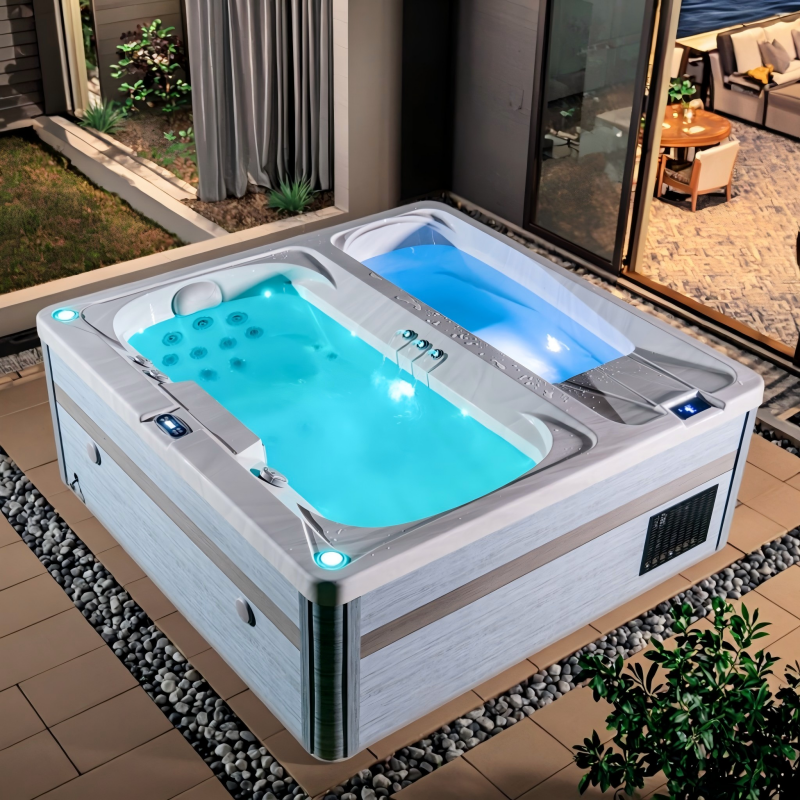
Why Does an Acrylic Freestanding Hot Tub Need to Be Secured?
Acrylic freestanding hot tubs are lightweight, especially when empty, typically weighing around 35–50 kg. While this lightness facilitates transportation and installation, it also means that the tub cannot be stably positioned on its own like a cast iron bathtub.
Therefore, securing an acrylic freestanding hot tub serves several crucial purposes:
1. Preventing the bathtub from shifting during use
When the bathtub is full of water, its weight increases. If not properly secured, it may still shift, tilt, or wobble, affecting the experience and posing a safety hazard.
2. Protecting the stability of the drain pipe connection
There are risks associated with the drainage system and a moving bathtub:
• Shifting may cause the drain pipe to twist.
• Loose connections may cause leaks.
• Properly securing the tub may shorten its lifespan.
Proper securing prevents these problems.
3. Enhancing the overall user experience
A stable, quiet, and stable bathtub improves immersion and comfort, elevating the overall quality of the bathroom space.
4. Protecting the bathtub's bottom structure
The bottom frame needs a stable base. Without proper securing, shifting centers of gravity can lead to uneven structural stress.
5. Preventing damage to the floor waterproofing layer
Even slight movement of the bathtub can damage the floor seal, affecting the waterproofing system.
Therefore, securing an acrylic freestanding hot tub is not only for aesthetics but also a safety concern.
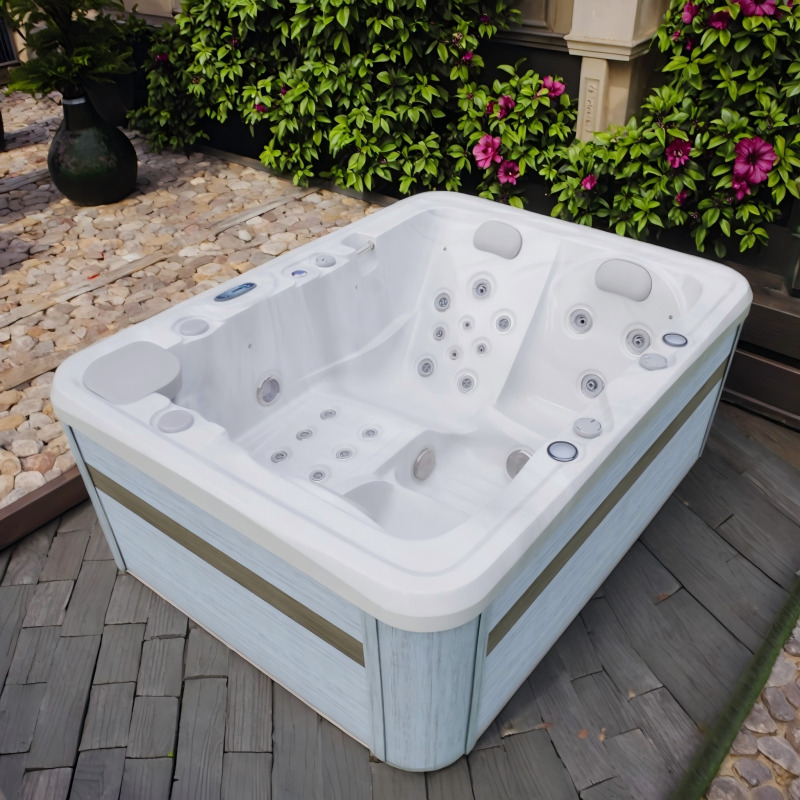
Three Core Principles for Fixing an Acrylic Freestanding Hot Tub
Fixing an acrylic freestanding hot tub doesn't rely on a single method, but rather on the combined effect of multiple structures.
Principle 1: Bottom Frame Load-Bearing + Ground Friction
Most acrylic freestanding hot tubs have:
• Steel frame structure
• Adjustable legs
• Long, narrow base structure
These designs allow the tub to bear weight more evenly on the floor; friction itself is a form of fixation.
Principle 2: Drain Pipe Connection's "Restrictive Fixation"
Drain flanges, hoses, and rigid pipes all provide limited fixation.
However, the drain pipe cannot be the primary fixation method, so additional methods are needed to enhance stability.
Principle 3: Edge Sealant as Auxiliary Fixation
The sealant between the bottom of the tub and the floor, and between the sides of the tub and the wall (if placed against a wall), provides:
• Waterproofing
• Resistance to minor displacement
• Structural stability
Especially when the bathtub is lightweight, the silicone sealant acts as a "hidden bond."
How to Fix an Acrylic Freestanding Hot Tub? (Detailed Steps)
The following is a standard, professional, and commonly used fixing method by installers.
Suitable for most commercially available acrylic freestanding hot tubs.
Step 1: Confirm the Subfloor is Level
Acrylic freestanding hot tubs have a limited contact area at the bottom. Uneven subfloor can cause:
• Bathtub wobbling
• Deformation at weight concentration points
• Squeaking during use
• Poor drainage
Therefore, a water level must be used to test the level before installation.
Step 2: Adjust the Bathtub Feet
Many acrylic freestanding hot tubs are equipped with adjustable feet, which can:
• Correct the level
• Enhance stability
• Distribute pressure
The correct method is:
1. Place the bathtub in the intended position.
2. Adjust all feet so that the bottom of the bathtub is completely flush with the ground.
3. Ensure the height is consistent around the tub.
4. Check the level again.
Leveling the feet will significantly improve the bathtub's stability.
Step 3: Connect the Drainage System and Ensure No Pulling
Properly installing the drain pipe can prevent damage after the bathtub is moved.
Precautions:
• Flexible drain hoses are easier to keep stable.
• Rigid hoses require allowance for expansion.
• Drain outlet height must be precisely aligned.
• Drain flanges must be well sealed.
The drain connection should not "hold" the bathtub; allow it to settle naturally.
Step 4: Secure the bottom with silicone (crucial)
For acrylic freestanding hot tubs, silicone is the most common and effective method:
• Apply continuous silicone to the bottom edge of the bathtub.
• Seal the edge against the wall.
• The silicone acts as an "adhesive layer" to stabilize the bathtub's position.
• After curing, it provides a strong hold.
Silicone is not only a waterproof material but also provides tensile and displacement resistance after curing, making it a core step in securing the bathtub.
Step 5: Press the bathtub into its final position
Before the silicone cures, gently press the bathtub down to ensure:
• Even contact of the silicone.
• Complete fit of the bottom frame.
• Overall stability.
Avoid moving the bathtub back and forth at this stage, as this will damage the seal.
Step 6: Wait for the silicone to fully cure
Generally requires:
• 24 hours for basic curing
• 48 hours for complete curing
Do not fill with water, enter the bathtub, or move the tub before curing, as this may affect the final result.
Step 7: Test stability and drainage
After installation, you need to:
• Stand in the bathtub to test for shaking
• Fill with a small amount of water to test drainage
• Check for leaks at the bottom
• Check that the silicone seal is intact
Once everything is normal, it can be used.
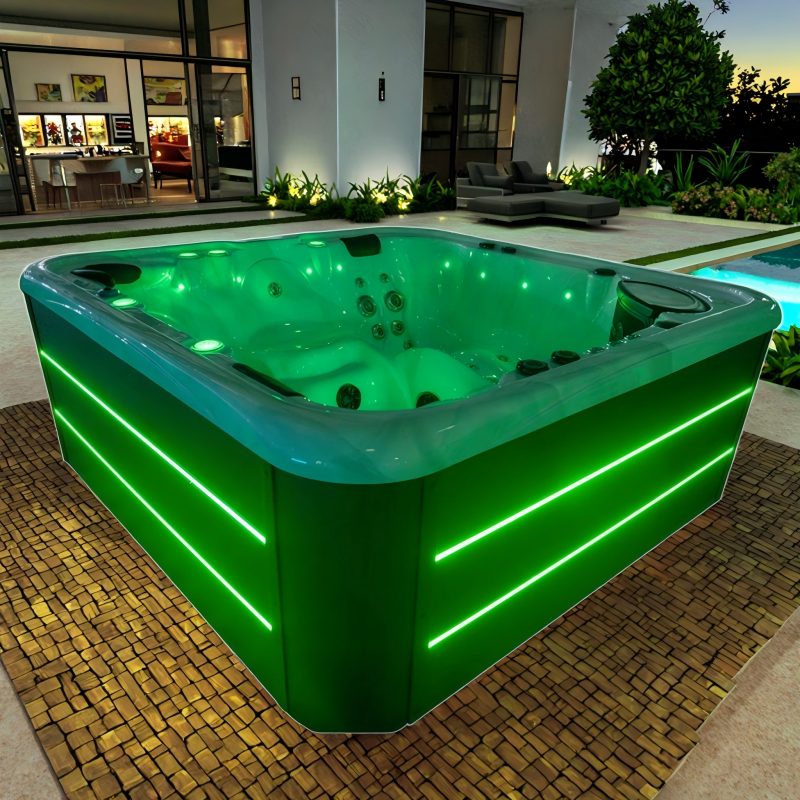
Does an acrylic freestanding hot tub need expansion screws for fixing?
The answer is:
❌ In most cases, no!
The reasons are as follows:
• The bathtub itself does not require drilling for fixing
• Damaging the floor or wall will create potential hazards
• Screw fixing will affect future relocation or repair
• Acrylic material cannot withstand direct tightening of screws
Therefore, from both a safety and material stability perspective, expansion screws are not a suitable method.
Can an acrylic freestanding hot tub be fixed with strong glue or construction adhesive?
Theoretically, yes, but it is not recommended.
Reasons:
• Strong adhesive becomes almost immovable after curing.
• Repairs require damaging the bathtub or floor.
• May harden and crack over time.
• Less flexible than silicone.
Therefore, the most recommended methods are:
✔ High-quality anti-mildew silicone
✔ Adjustable bottom feet
✔ Natural drainage system support
How to determine if an acrylic freestanding hot tub is securely fixed?
Check the following:
• Gently push left and right to check for stability.
• Sit in the tub to check for wobbling.
• Tap the bottom to check for hollowness and instability.
• Ensure smooth drainage and no pulling sensation in the pipes.
• Check if the silicone edges around the tub are smooth and intact.
If all the above checks pass, the bathtub is securely fixed.
What are some common mistakes when fixing an acrylic freestanding hot tub?
The following mistakes must be avoided:
❌ Using the drain pipe as a fixing method
❌ Installing on an uneven floor
❌ Unleveled legs
❌ Using strong adhesive instead of silicone sealant
❌ Using the tub before the silicone sealant has cured
❌ Insufficient bottom support causing the bathtub to sink in the middle
❌ Not checking stability after installation
Avoiding these mistakes will result in a longer lifespan and greater stability for your bathtub.
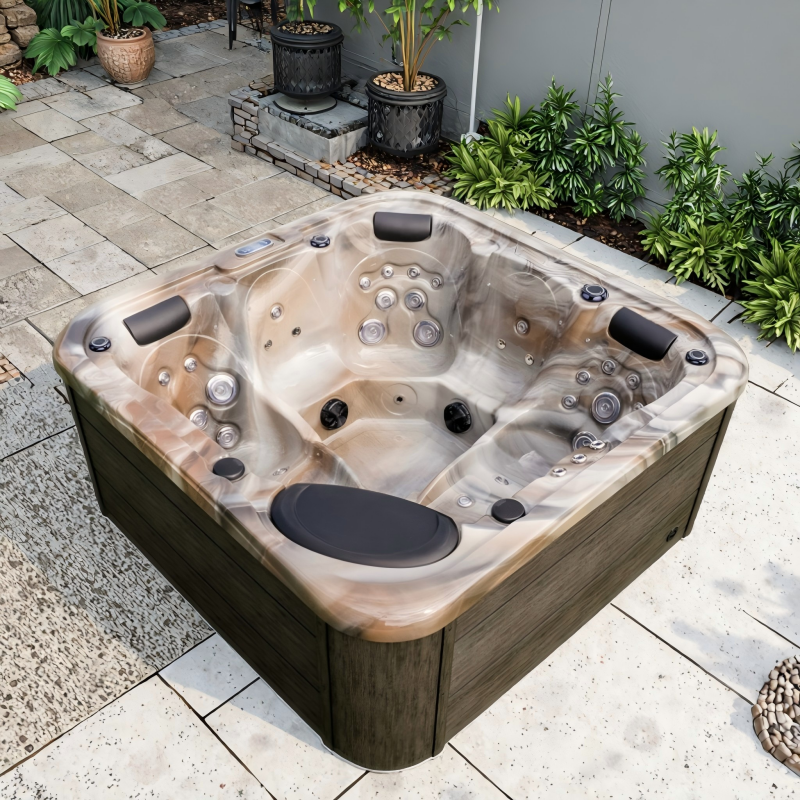
The Method for Fixing an Acrylic Freestanding Hot Tub is Simple But Must be Followed Correctly
In summary, the core principles for fixing an acrylic freestanding hot tub include:
✔ A level floor is fundamental
✔ Adjusting the legs is crucial
✔ The drain connection must be natural and without pulling
✔ Silicone sealant fixing to the bottom and sides is the primary method
✔ Checking stability after curing is essential.
A properly installed acrylic freestanding hot tub is stable, aesthetically pleasing, and durable; it will not shift or wobble, providing a long-term comfortable user experience.