


What material is used for outdoor freestanding hot tubs?
2026-06-22 15:30In recent years, an increasing number of consumers have been transforming their backyards, terraces, vacation homes, and even short-term rental properties into relaxation zones that offer both leisure and therapeutic benefits. Among the various upgrades available, the freestanding hot tub is undoubtedly one of the most popular choices. Compared to built-in models, freestanding hot tubs offer greater installation flexibility; they do not require complex construction work and can be positioned to suit the specific layout of a space, making them highly favored by both residential and commercial users.
However, when shopping for one, many consumers ask the same question: What materials are outdoor freestanding hot tubs typically made of, and which is best suited for long-term outdoor use? Faced with a vast array of products—ranging from fiberglass, wood, and stainless steel to PVC composites and stone—one common thread emerges among mainstream products in the global mid-to-high-end market: a large number of high-quality freestanding jacuzzi tubs are made of acrylic. Acrylic hot tubs have become the industry standard, particularly in North American and European markets, commanding a market share far greater than that of other materials.
Why has acrylic become the primary material for outdoor freestanding hot tubs? What exactly is acrylic, and is it truly suitable for long-term outdoor exposure to sunlight, rain, and temperature fluctuations? The answers to these questions involve not only materials science but also the consumer's long-term user experience and maintenance costs.
This article provides a comprehensive analysis of why acrylic hot tubs dominate the outdoor freestanding hot tub market, examining factors such as industry trends, material properties, manufacturing processes, performance advantages, and purchasing recommendations.
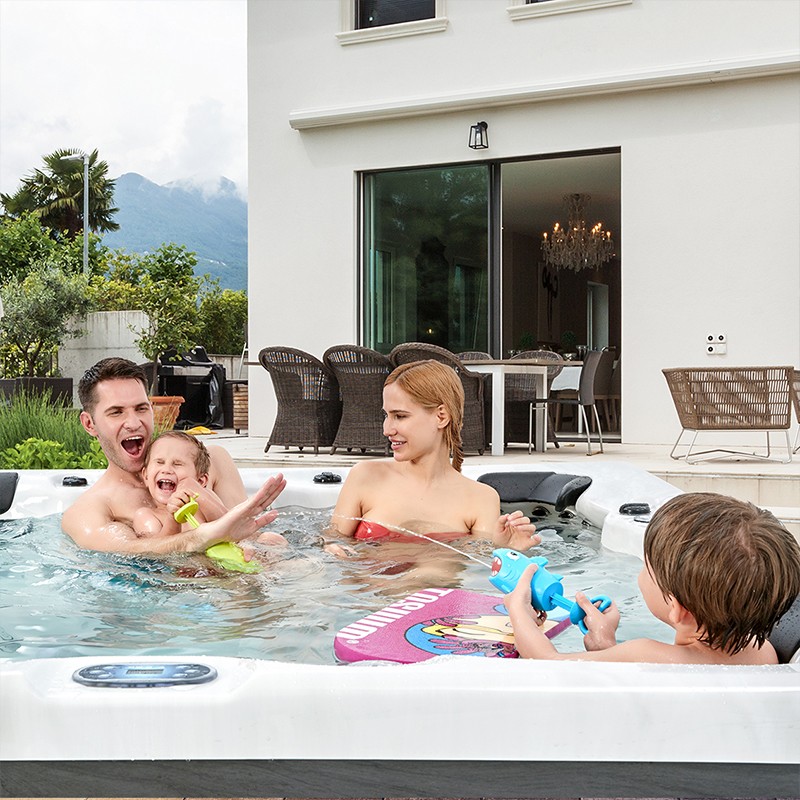
Why are outdoor freestanding hot tubs becoming increasingly popular?
In terms of consumer trends, outdoor leisure equipment is shifting from a "niche luxury item" to a "mainstream lifestyle upgrade." Data from industry research institutions indicates that the global hot tub market exceeded $5.2 billion in 2024 and is projected to approach $8 billion by 2030, maintaining a compound annual growth rate (CAGR) of 6% to 7%. Outdoor applications account for over 60% of this market demand, with freestanding hot tubs emerging as one of the fastest-growing product segments.
This trend did not emerge by chance. First, modern consumers' expectations regarding living quality have evolved from basic functionality to a focus on the overall lifestyle experience. In the past, the focus was on floor area, décor style, and furniture layout; today, however, more families are prioritizing wellness, stress relief, and social interaction. Hot tubs—which offer both physical relaxation and mental rejuvenation—perfectly meet these needs. Research indicates that soaking in water heated to 38°C–40°C for 15 to 30 minutes can effectively relieve muscle tension, boost blood circulation, and improve sleep quality.
Furthermore, freestanding jacuzzi tubs are better suited for outdoor environments than traditional built-in models. Built-in units typically require structural embedding, channeling, complex drainage planning, and high installation costs, whereas freestanding hot tubs offer greater flexibility. Whether placed in a courtyard, by the poolside, on a terrace, or at a mountain villa, a freestanding hot tub can be quickly installed and put to use. This versatility has made freestanding hot tubs the preferred choice for an increasing number of users.
However, outdoor settings place higher demands on materials. A high-quality freestanding hot tub must not only withstand significant water pressure and the weight of users but also endure long-term exposure to UV radiation, rain and snow, cycles of heat and humidity, and extreme temperature fluctuations between seasons. Consequently, material selection is a critical factor determining both product longevity and the user experience.
What are the common materials used for freestanding hot tubs?
Freestanding hot tubs on the market are primarily made from the following materials: fiberglass, wood, stainless steel, stone, and acrylic. Each material has unique characteristics, yet their performance varies significantly in outdoor applications.
1. Fiberglass
Fiberglass is a relatively common material for hot tubs; its advantages include light weight and low manufacturing costs, making it a frequent choice for mid-to-low-end products. While the initial user experience with fiberglass hot tubs is satisfactory, their surface durability and resistance to aging are merely average. Prolonged outdoor exposure often leads to surface fading, roughness, and even the development of hairline cracks.
2. Wood and Stainless Steel
Wooden hot tubs possess a unique, natural aesthetic and are commonly found in settings such as Japanese-style hot spring resorts or high-end vacation rentals. However, wood requires frequent maintenance and carries risks of warping, mold growth, and corrosion after prolonged exposure to water. In contrast, while stainless steel boasts exceptional strength and corrosion resistance, it conducts heat rapidly—resulting in poor heat retention—and feels cold to the touch, which detracts from the comfort of the bathing experience.
Among these materials, acrylic has increasingly stood out as the most common choice for modern, freestanding outdoor hot tubs.
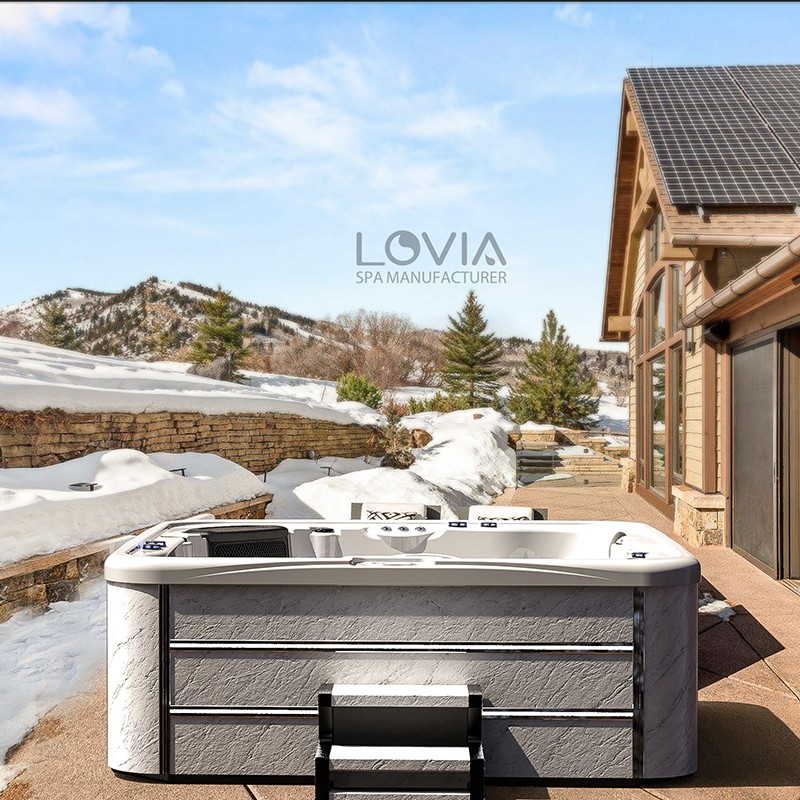
What is acrylic, and why has it become the mainstream material for freestanding hot tubs?
Acrylic is chemically known as polymethyl methacrylate (PMMA). As a polymer material, it is widely used in the construction, automotive, medical, and high-end bathroom fixture industries. Due to its exceptional transparency, brilliant surface gloss, and excellent moldability, it is often referred to as "plastic crystal."
In hot tub manufacturing, acrylic is rarely used in its transparent form; instead, it undergoes dyeing, surface treatment, and structural reinforcement to create a sturdy, attractive, and durable tub shell. Modern, high-quality acrylic hot tubs typically feature a composite structure: an acrylic surface layer backed by a fiberglass-reinforced layer to enhance overall load-bearing capacity and impact resistance.
1. Material Properties of Acrylic
Acrylic is well-suited for freestanding hot tubs primarily due to its excellent overall performance. First, it has low thermal conductivity, meaning heat is not easily lost—a factor that directly impacts heating efficiency and energy costs. Second, the acrylic surface is extremely smooth and resistant to dirt accumulation, making cleaning and maintenance easier. Additionally, acrylic offers good UV resistance, making it suitable for long-term outdoor use.
2. Manufacturing Process of Acrylic Hot Tubs
The production process for freestanding acrylic hot tubs typically involves heating and softening, vacuum forming, cooling and setting, and back reinforcement. First, the acrylic sheet is heated until it becomes pliable; next, a mold is used to shape it into the freestanding jacuzzi tub's profile; then, layers of fiberglass and resin are applied to the back to increase structural strength; finally, the tub undergoes sanding, polishing, and assembly.
This manufacturing process allows for complex, streamlined designs, which is why freestanding acrylic hot tubs on the market often feature elegant curves and ergonomic seating structures.
What are the key advantages of acrylic hot tubs?
Acrylic has become the mainstream material for freestanding jacuzzi tubs not merely due to cost advantages, but because it strikes a balance across multiple dimensions, including heat retention, weather resistance, comfort, and aesthetics.
Advantage 1: Excellent heat retention
The primary function of a freestanding hot tub is to maintain a stable water temperature. If the tub loses heat too quickly, the heating system must activate frequently; this not only compromises the user experience but also increases energy consumption. Acrylic is a material with low thermal conductivity, meaning it loses heat significantly more slowly than metal tubs.
Industry tests show that, given the same insulation configuration, acrylic freestanding hot tubs can experience 20% to 30% less heat loss than metal ones. This means users can enjoy a stable water temperature for longer periods—even when using outdoor freestanding hot tubs in cold weather—while also saving on electricity costs.
Advantage 2: Superior weather resistance
Outdoor freestanding hot tubs must withstand intense sunlight, rain, snow, and significant day-night temperature fluctuations. If the material lacks weather resistance, it is prone to fading, cracking, or structural degradation.
High-quality acrylic offers excellent UV resistance, maintaining its surface gloss and color stability even after prolonged exposure to sunlight. Under normal usage conditions, many high-end acrylic hot tubs have a lifespan of 10 to 15 years or more.
Advantage 3: Comfortable feel and aesthetic appeal
Users come into direct contact with the tub's interior walls, making the material's tactile quality crucial. Acrylic surfaces are smooth and fine-textured, offering a warm, pleasant feel rather than the cold sensation associated with metal. This is particularly noticeable in winter, as acrylic provides a gentler, more comfortable experience when entering an outdoor freestanding jacuzzi tub.
Visually, acrylic boasts a high-gloss finish and allows for a wide range of design effects, such as pure white, pearlescent, and stone-like patterns. This is why so many high-end freestanding hot tubs utilize acrylic as their primary material.
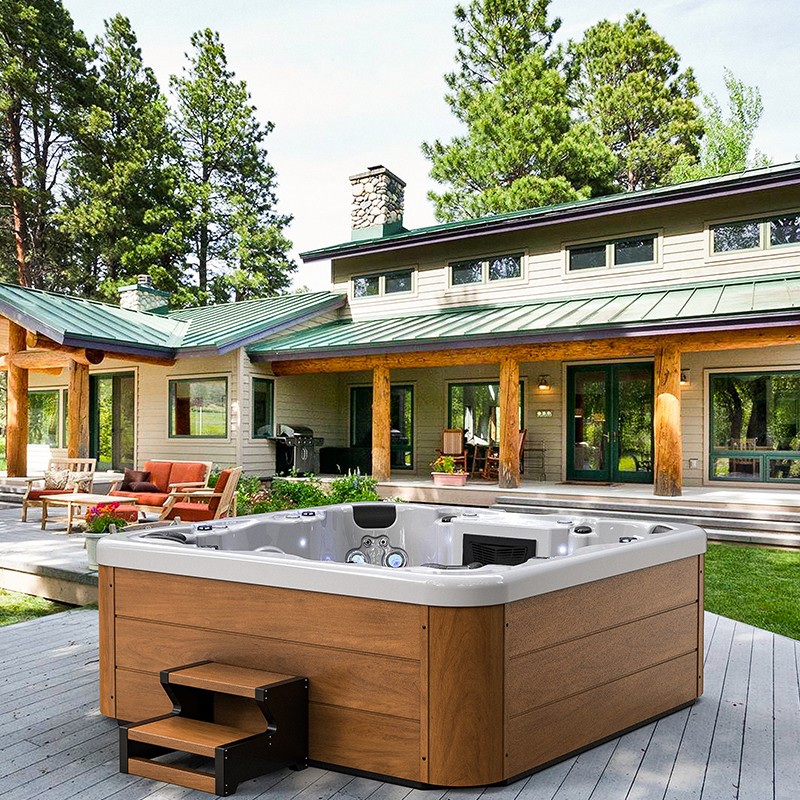
Are acrylic hot tubs suitable for long-term outdoor use?
The answer is a resounding yes—provided the product is made using high-quality acrylic sheets and mature manufacturing processes. While low-quality products may also be labeled as "acrylic," they might utilize thin sheets or inferior composite layers, resulting in insufficient structural strength. High-quality acrylic hot tubs typically feature sufficient sheet thickness, a uniform fiberglass reinforcement layer, comprehensive insulation foam coverage, and a stable bottom support structure. These factors collectively determine whether a freestanding jacuzzi tub can withstand long-term outdoor use.
Acrylic is an especially suitable material for users in cold regions. Its low thermal conductivity minimizes heat loss, ensuring good energy efficiency even in low-temperature environments.
How can you tell if a freestanding hot tub uses high-quality acrylic?
For consumers, simply seeing "acrylic" on the product label isn't enough. When assessing quality, focus on a few key indicators. First is sheet thickness; high-quality acrylic layers are generally thicker, so the surface won't deform noticeably when pressed. Second is surface finish; a truly high-quality acrylic hot tub has a uniform, smooth surface free of visible air bubbles or impurities. Third is the bottom support structure; high-quality freestanding hot tubs usually feature a full-frame support system to prevent deformation under long-term weight-bearing.
Additionally, consider the warranty policy. Premium brands often offer structural warranties of 5 to 10 years, which serves as a key indicator of product quality.
FAQ
Are acrylic hot tubs prone to cracking?
Not under normal circumstances. High-quality acrylic hot tubs typically feature a fiberglass reinforcement layer that provides high structural strength, allowing them to last over 10 years with proper use.
Why is acrylic commonly used for freestanding hot tubs?
Acrylic is a material with excellent all-around performance, combining thermal insulation, weather resistance, a comfortable feel, and an attractive appearance.
Are acrylic hot tubs suitable for cold regions?
Yes, they are highly suitable. Acrylic's low thermal conductivity reduces heat loss, making it particularly advantageous in cold climates.
What should I do if there are scratches on the surface of an acrylic freestanding jacuzzi tub?
Minor scratches can usually be repaired through professional polishing, making it relatively easy to restore the surface's luster.