


What is the ideal enzyme cleaner for a spa hot tub?
2026-03-21 15:30Many users encounter these problems when maintaining the water quality of their spa hot tubs:
The water looks clear, but it foams easily;
The disinfectant dosage is normal, but there is still an odor;
The filtration system is working well, but the water quality is unstable.
These problems often cannot be completely solved by simply using chlorine or bromine, which is where enzyme cleaners play a key role in spa hot tub maintenance.
So, what exactly is the ideal enzyme cleaner for a whirlpool spa hot tub?
It's not about "the more expensive, the better," nor is it about "the more functions, the better," but rather whether it truly matches the operating characteristics and type of contamination of the whirlpool spa hot tub.
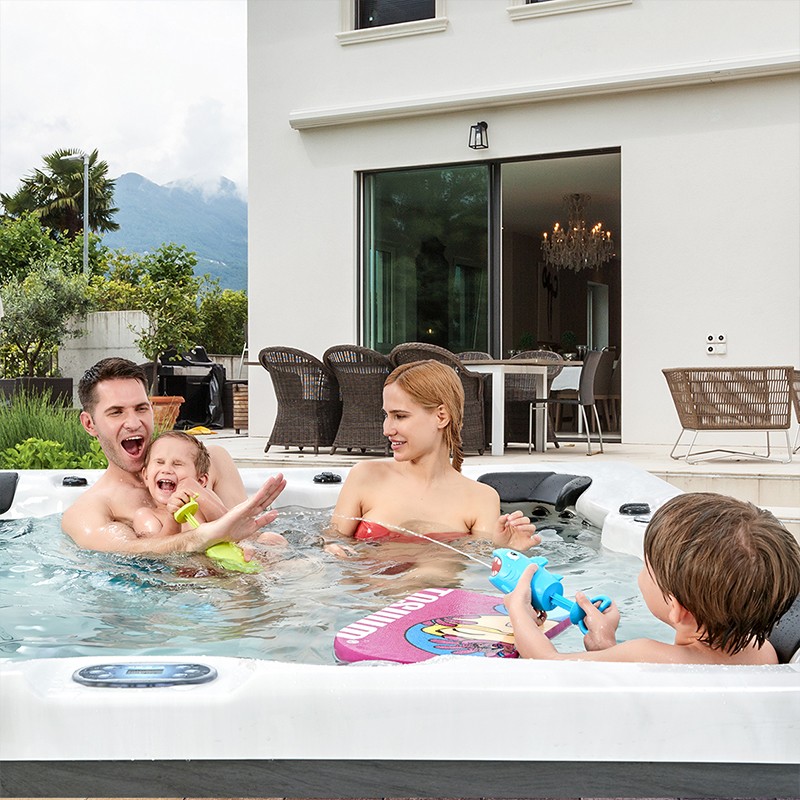
Why do spa hot tubs need enzyme cleaners?
To understand the ideal enzyme cleaner, we must first clarify one question: What exactly are the contaminants in the spa hot tub?
Unlike regular swimming pools, spa hot tubs have the following characteristics:
• High water temperature
• Small water volume
• High usage frequency
• Longer direct contact time with the human body
This means that the following substances are more likely to accumulate in the water:
• Sebum
• Skincare product residue
• Cosmetic ingredients
• Organic sweat components
These substances are not entirely bacteria, but rather a large number of organic pollutants, and enzyme cleaners are specifically designed to address these issues.
How do enzyme cleaners in spa hot tubs work?
Enzymes are not chemical disinfectants, but rather biocatalysts.
In spa hot tubs, the main mechanism of action of enzyme cleaners is:
• Decomposing organic matter
• Accelerating the degradation of pollutants
• Reducing the "food source" for bacterial growth
Unlike chlorine or bromine, enzymes do not work by "killing" microorganisms, but by improving water quality by eliminating their living environment.
What are the essential characteristics of an ideal spa hot tub enzyme cleaner?
Not all enzyme products are suitable for spa hot tubs.
An ideal enzyme cleaner should possess at least the following basic characteristics:
• Stability in high-temperature water environments
• Effectiveness within the common pH range of whirlpool spa hot tubs
• No adverse reactions with common disinfectants
• Minimal or no foaming
These conditions determine whether an enzyme cleaner is truly suitable for long-term use in whirlpool spa hot tub systems.
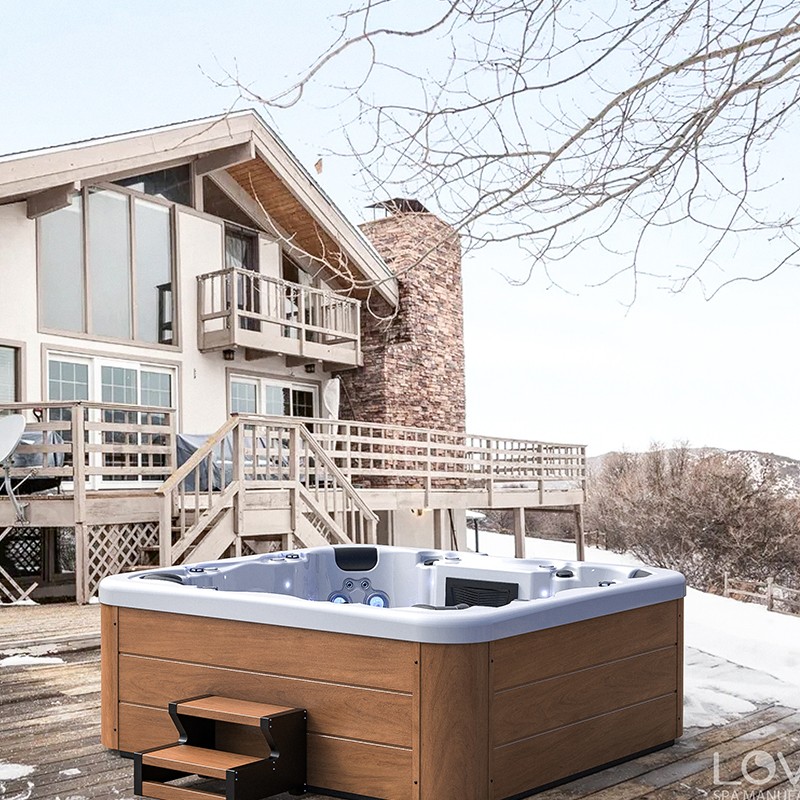
Why aren't all "multi-purpose cleaners" suitable for spa hot tubs?
Many products are labeled "multi-purpose" or "all-around cleaner," but these may actually cause problems in spa hot tubs.
The reasons are:
• Multi-purpose formulas often contain surfactants
• Surfactants easily cause foaming
• Foam is more difficult to dissipate in high-temperature whirlpool spa hot tubs
An ideal spa hot tub enzyme cleaner should focus on the decomposition of organic matter, not just surface cleaning.
Which contaminants do spa hot tub enzyme cleaners primarily decompose?
Understanding this helps in determining whether an enzyme is "ideal."
In spa hot tubs, enzymes primarily target the following types of contaminants:
• Oily substances
• Protein residues
• Cosmetic and skincare product ingredients
• Natural human secretions
If these substances are present for a long time, they can lead to:
• Turbidity
• Increased foaming
• Abnormal disinfectant consumption
Will an ideal enzyme cleaner affect the disinfection effect of a spa hot tub?
This is a question many users are concerned about.
In principle, a qualified enzyme cleaner will not weaken the effectiveness of disinfectants.
On the contrary, it often:
• Reduces ineffective reactions between disinfectants and organic matter
• Allows more disinfectant to be used for actual disinfection
• Improves overall water quality stability
This is why enzyme cleaners are often considered "auxiliary maintenance tools" for whirlpool spa hot tubs.
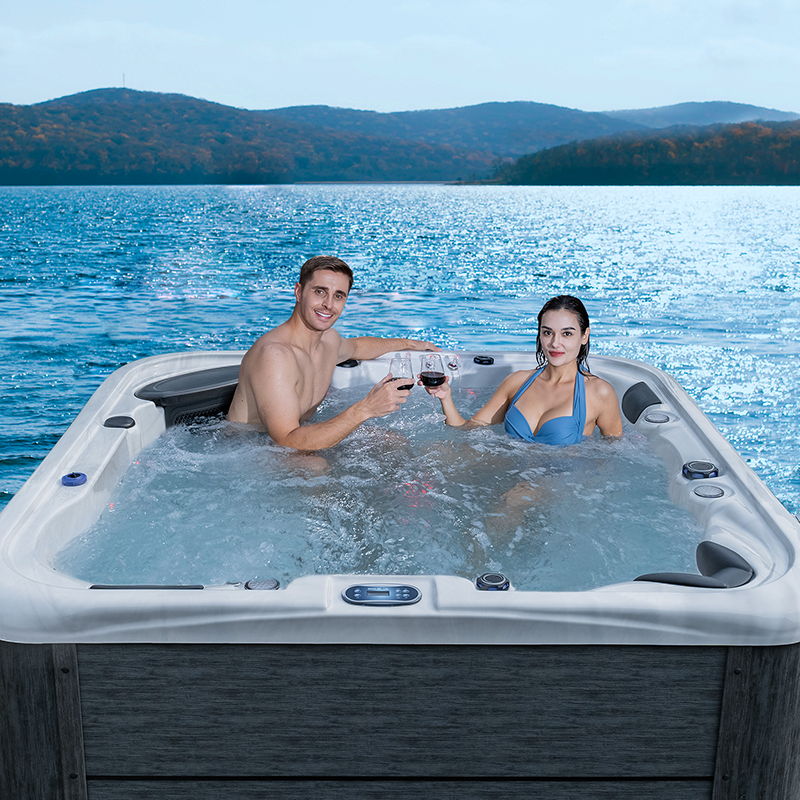
Does an ideal enzyme cleaner for a spa hot tub need to be odorless?
Ideally, yes.
Reasons include:
• Spa hot tubs are used in close proximity to the water source.
• Odors are more easily amplified in hot water.
• Fragrance does not indicate cleaning effectiveness.
An ideal enzyme cleaner should have as little irritating odor as possible to avoid masking water quality issues.
Why can't enzyme cleaners replace disinfectants in spa hot tubs?
This is an important understanding that needs to be clarified.
Enzyme cleaners:
• Do not have bactericidal function.
• Cannot replace chlorine or bromine.
• Cannot maintain water quality safety on its own.
In a spa hot tub, the role of enzymes is:
To reduce the burden of organic contamination, not to directly disinfect.
An ideal whirlpool spa hot tub maintenance plan always involves multiple methods working together.
Should an ideal enzyme cleaner be filtration system friendly?
The answer is yes.
Spa hot tubs rely on a filtration system to circulate water. If an enzyme cleaner:
• Easily produces sediment.
• Reacts with filter media.
• Increases the burden on the filter.
Then it is not suitable as a long-term product.
An ideal enzyme cleaner should:
• Circulate with the water supply
• Not clog the filtration system
• Not affect the operation of the water pump
Is the frequency of enzyme cleaner use important for spa hot tubs?
From a maintenance perspective, enzyme cleaners are not "one-time solutions."
The ideal usage emphasizes:
• Continuous decomposition
• Stable maintenance
• Prevention of organic matter buildup
Therefore, an ideal whirlpool spa hot tub enzyme cleaner is often more suitable for regular use than a one-time, powerful cleaning.
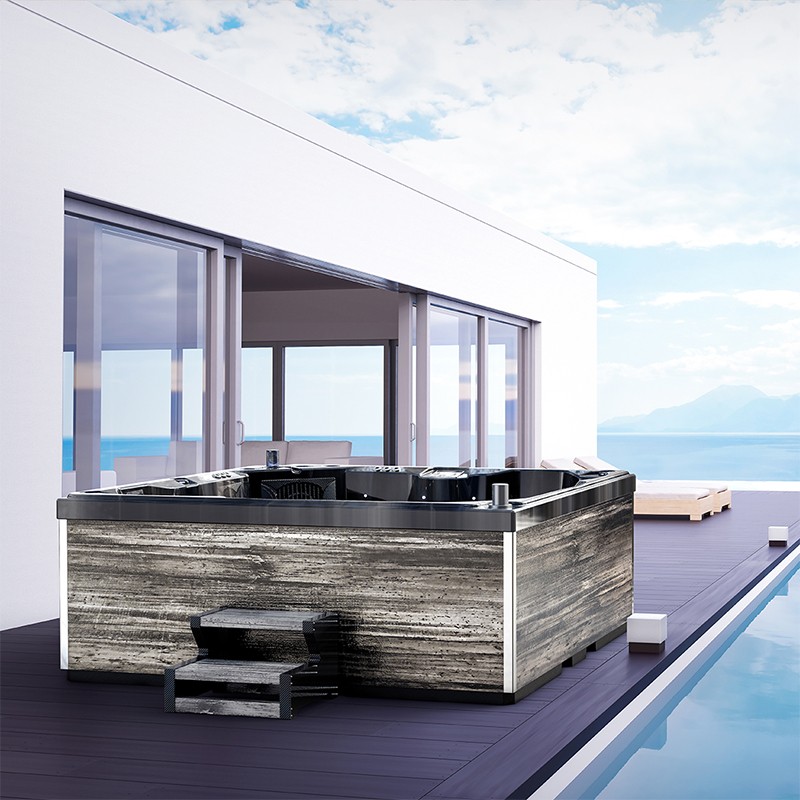
How to determine if an enzyme cleaner is suitable for a spa hot tub?
Without relying on brand claims, you can judge from the following aspects:
• Does it clearly state that it is suitable for spa hot tubs?
• Does it state that it is suitable for high-temperature environments?
• Does it emphasize organic matter decomposition rather than foaming cleaning?
• Does it state compatibility with disinfection systems?
This information is more valuable than "effect descriptions."
What safety characteristics should an ideal spa hot tub enzyme cleaner possess?
Spa hot tubs are high-contact environments, therefore safety is paramount.
Ideal enzyme cleaners should:
• Be low in skin irritation
• Be free of highly corrosive ingredients
• Not release irritating gases
• Not alter the basic chemical balance of the water
These properties ensure their suitability for long-term use in spa hot tub environments.
Why are enzyme cleaners becoming increasingly common in spa hot tub maintenance?
The reasons are not complicated:
• Spa hot tub contaminants are primarily organic matter
• Relying solely on disinfectants is more expensive
• Higher standards are required for water quality
Enzyme cleaners fill this gap in maintenance.
Can LOVIA SPA Provide Customized Outdoor Spa Solutions?
LOVIA SPA supports customized manufacturing for outdoor spa and whirlpool spa hot tub products. Customization options allow buyers to adapt configurations, component selections, and functional layouts based on market needs. As a factory supplier, LOVIA SPA manages customization efficiently while maintaining quality standards. Customized outdoor spa solutions help distributors and brand owners differentiate products while benefiting from professional manufacturing and stable supply capacity.