


What are the acceptable chlorine levels in jacuzzi tubs?
2025-12-30 15:35For any home or commercial establishment using spa equipment, water quality management is one of the most critical maintenance aspects. Among all water quality control indicators, "chlorine content" is a crucial parameter for ensuring a clean, safe, and sterile environment.
So, what is the acceptable chlorine content in a spa jacuzzi tub? Why must it be maintained within a specific range? And how should it be tested and adjusted?
This article will help you truly understand this core indicator by covering the chlorine content standards for spa jacuzzi tubs, the mechanism of chlorine's action, the consequences of excessively high or low chlorine levels, and daily management methods.
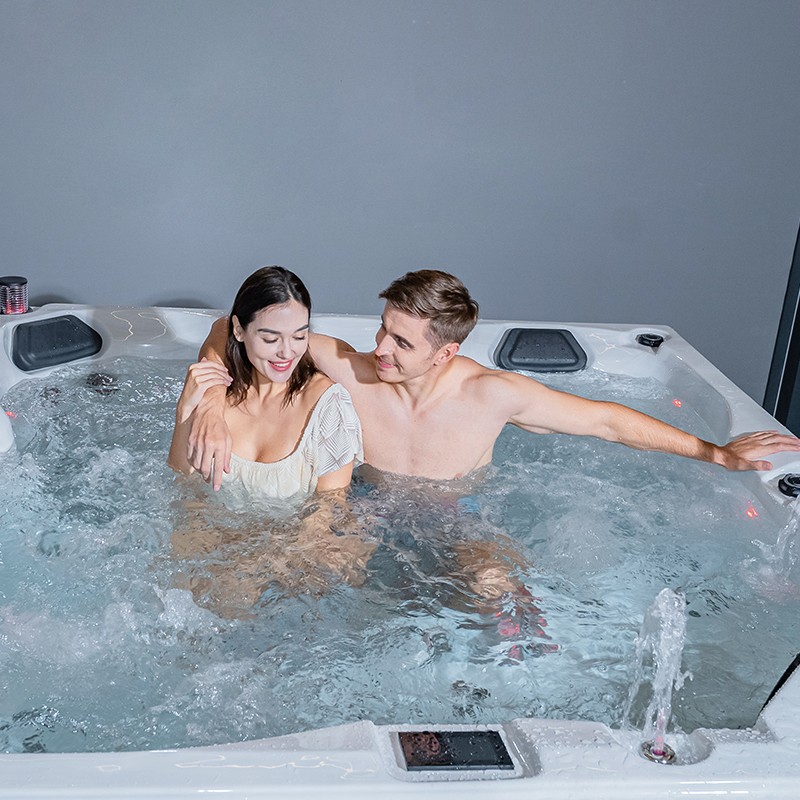
Why must the chlorine content of a spa jacuzzi tub be controlled?
Spa jacuzzi tubs are constantly exposed to warm water, with a relatively fast water flow in the circulation system. They may also come into contact with human skin, sweat, oils, and microorganisms in the air. To ensure that users enjoy a safe and healthy water environment in their spa jacuzzi tubs, the disinfectant content must meet the standards.
Chlorine, as the most common, effective, and cost-effective disinfectant, is used in the vast majority of spa jacuzzi tub systems. However, the chlorine content cannot be increased indefinitely, nor can it be too low, otherwise it will affect the user experience and the condition of the equipment.
What is the standard chlorine content range for spa jacuzzi tubs?
According to industry standards, the acceptable free chlorine concentration in spa jacuzzi tubs should be maintained between 2–4 ppm (mg/L). This is the safe range generally recognized by most international spa equipment manufacturers, water quality management agencies, and health departments.
• Below 2 ppm: Insufficient disinfection ability, easily leading to the growth of bacteria, microorganisms, and algae.
• Above 4 ppm: May irritate skin, eyes, and respiratory tract, and accelerate corrosion of spa jacuzzi tub components.
Therefore, maintaining a concentration of 2–4 ppm is the balance point to ensure safety and comfort.
Why must spa jacuzzi tubs maintain a chlorine concentration of 2–4 ppm?
To understand the necessity of standard ranges, it's essential to grasp the mechanism of chlorine's action in spa jacuzzi tubs.
1. Chlorine effectively kills bacteria and viruses
Chlorine achieves rapid sterilization by disrupting the cell walls and protein structures of microorganisms. Especially in warm water environments (typically 36–40°C), microorganisms multiply extremely rapidly, and a stable chlorine concentration is crucial for maintaining safe water quality in spa jacuzzi tubs.
2. Warm water environments accelerate chlorine consumption
High temperatures are a key characteristic of spa jacuzzi tubs, but they also cause chlorine to evaporate and be consumed more quickly. Therefore, a relatively stable and moderate concentration must be maintained.
3. The number of users affects chlorine demand
Home spa jacuzzi tubs are typically small in size. If multiple people use them daily, organic matter in the water (sweat, cosmetics, skin flakes) will rapidly consume chlorine. Therefore, the chlorine concentration must be maintained at a level that ensures continuous disinfection.
4. Increased water flow in the circulation system accelerates chlorine consumption
The spray system of a spa jacuzzi tub constantly agitates the water, making chlorine evaporate more easily. Low chlorine levels can lead to inadequate disinfection.
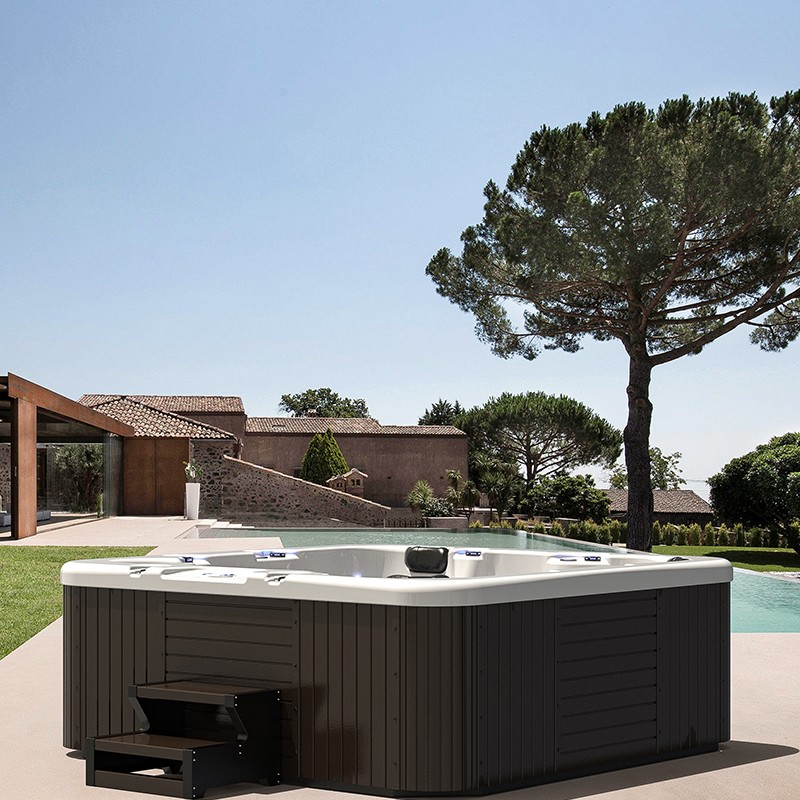
What happens with a spa jacuzzi tub with excessively low chlorine levels?
When chlorine levels fall below 2 ppm, the water loses its effective disinfection ability, causing several problems:
1. Rapidly becomes cloudy
Excessive microorganisms can cause the water to turn white and cloudy, severely impacting the user experience.
2. Slippery texture and unpleasant odor
Biofilm can grow in the tubing of a spa jacuzzi tub, producing a slippery feel and an unpleasant smell.
3. Algae growth and green water
Insufficient chlorine allows algae to multiply rapidly, turning the water in the spa jacuzzi tub green or even causing filamentous algae to form.
4. Increased Health Risks
Low chlorine levels can lead to bacterial growth, including bacteria that can cause skin irritation.
5. Reduced Equipment Lifespan
Microorganisms and sediment can clog nozzles, filters, and pipes, increasing maintenance costs for spa jacuzzi tubs.
Insufficient chlorine is the most common cause of water quality problems in spa jacuzzi tubs.
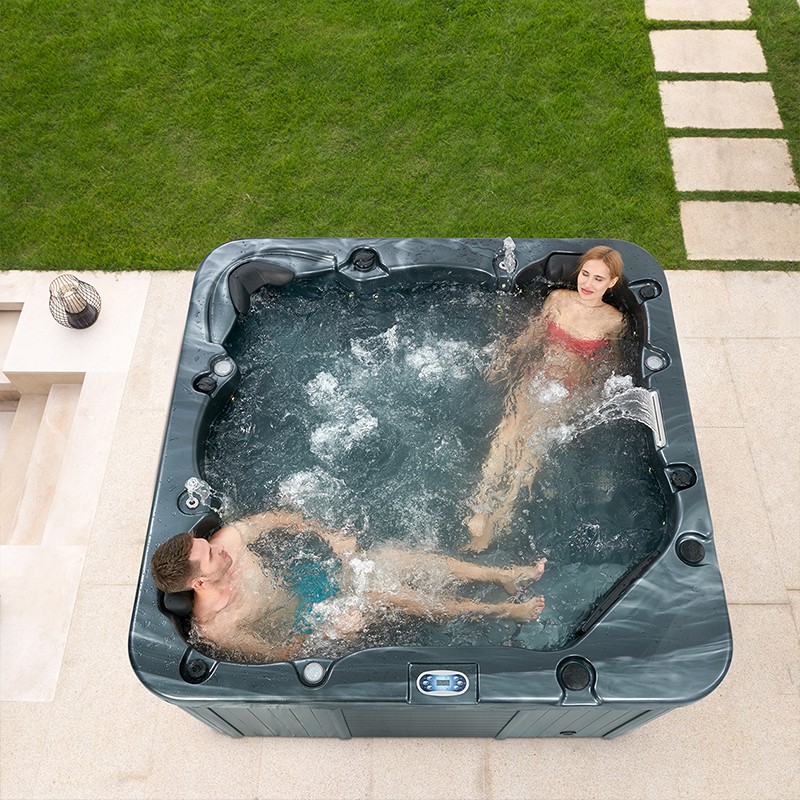
Is too much chlorine in a spa jacuzzi tub dangerous?
While chlorine is necessary, levels exceeding 4 ppm are not safe.
Here are common problems caused by excessive chlorine:
1. Skin and Eye Irritation
High chlorine concentrations are very unfriendly to sensitive skin, causing redness, swelling, and itching.
2. Respiratory Irritation
Chlorine vapors can irritate the nasal passages and throat, especially when using a spa jacuzzi tub in enclosed spaces.
3. Wasted Disinfectant
Long-term excessive use significantly increases maintenance costs, especially in commercial settings.
4. Corrosion of Spa Jacuzzi Tube Internal Components
Chlorine is corrosive and accelerates the aging of pipes, heaters, nozzles, and hardware.
5. Disruption of Water Balance
Excessive chlorine can affect pH and alkalinity, leading to further water quality problems.
Therefore, more chlorine is not necessarily better; maintaining it within a reasonable range is crucial.
How to Test the Chlorine Content in a Spa Jacuzzi Tube?
To ensure the chlorine content in the spa jacuzzi tub remains stable at 2–4 ppm, regular testing is necessary.
How Often Should the Chlorine Content of a Spa Jacuzzi Tube Be Tested?
Recommended Frequency:
• Home Use: Test before and after each use
• Frequent Use by Multiple Users: Test 2–3 times daily
• Commercial Environment: Test at least every 2–4 hours
Primary Testing Methods Include:
1). Test Strips
The most common, simple, quick, and inexpensive method. Simply immerse the test strip in water for a few seconds to obtain a reading.
2). Liquid reagent titration method
Higher accuracy, commonly used by professional maintainers.
3). Digital water quality analyzer
Higher price, but provides accurate and reliable data, a good choice for high-end spa jacuzzi tub users.
4). Intelligent monitoring system
Some high-end spa jacuzzi tub models have built-in real-time monitoring functions, displaying chlorine content and pH value.
How to increase the chlorine content of a spa jacuzzi tub?
When the chlorine content is low, you can do the following:
1. Add an appropriate amount of chlorine tablets or instant chlorine granules.
2. Perform a rapid shock treatment.
3. Clean the filter to enhance chlorine effectiveness.
4. Ensure the pH is within the ideal range (7.2–7.8) to improve the sterilization efficiency of chlorine.
How to decrease the chlorine content of a spa jacuzzi tub?
If chlorine levels are too high, you can:
1. Stop chlorination and allow it to evaporate naturally.
2. Open the lid and run the spray system to accelerate evaporation.
3. Add a chlorine neutralizer.
4. Replace a portion of the water to dilute the chlorine concentration.

What else should you pay attention to when managing chlorine levels in a spa jacuzzi tub?
Maintaining chlorine levels is only one part of water quality management. The following key points are equally important:
1. pH Management
Both excessively high and low pH levels affect chlorine efficiency, resulting in chlorine being present but unable to kill bacteria.
2. Water Temperature Management
High temperatures accelerate chlorine consumption, therefore more frequent monitoring is necessary.
3. Filter Cleaning
Clogged filters can impede water circulation, preventing even chlorine distribution.
4. Regular Water Changes
Even if chlorine levels are normal, not changing the water for an extended period will degrade water quality.
General Recommendations:
• Home spa jacuzzi tub: Change every 2–3 months
• Frequent use: Change monthly
5. Rinse your body before and after use
Reducing skin oils and contaminants entering the water helps maintain stable chlorine levels.