


Is soaking in an outdoor hot tub beneficial for a meniscus tear?
2026-08-15 15:30Because of the growing popularity of physical fitness, exercise indoors and outdoors, and health-related programs, knee injuries have become increasingly prevalent. A typical knee injury that can happen to anyone is the tear of the meniscus that causes pain, disability, limitations when bending knees, walking, or climbing stairs.
Knee meniscus tear treatment is typically conservative treatment plus surgery. A meniscus surgery will not get everybody, for instance, people with slight injuries or degenerative injury usually benefit from rest, gentle exercises, physiotherapy or muscle-strengthening, and exercise modifications. Yet during the slow healing process, many patients seek ways to make themselves feel more comfortable naturally and without much effort to relieve their joint pain and bring their life back to normal. Thus, hot springs, water therapy, hot compresses in the form of wet towels and outdoor whirlpool hot tubs have become favorites among those with knee joint problems.
Pretty much everyone has been misled as to what really happens to torn meniscus after having a soak in a whirlpool hot tub of any kind outdoors. For instance, some people are convinced that soaking a joint in an outdoor hot tub is able to fix a tear on the spot or even to skip having the operation and doing the rehabilitation altogether after an injury to the knee, while still others are scared to death of using any hot water at all after such an injury as a means of making the inflammation worse.
At present, neither of these opinions are completely wrong nor right.
A professional medical rehabilitation opinion would be that meniscus tear can not be fixed through an outdoor whirlpool hot tub, nor can it be restored in terms of the damaged structure of the meniscus. Nevertheless, if the use of an outdoor spa hot tub is limited and the warm water atmosphere together with water massage in the right proportion are involved, then the knee muscles surrounding the joint may gradually relax while the discomfort experienced while one is active gets eased a little. This could be another environment which may be used alongside with a proper rehabilitation program for the comfort of the user.
To put it simply, whirlpool hot tub is not an instrument that would be prescribed or recommended by a physician nor a physiotherapist in case there is a meniscus tear, but a spa hot tub is quite good for supporting the rehabilitation of meniscus in the right way. As a matter of fact, the most crucial thing is to know how to make use of it in the best possible way to serve its role and use it with a professional and certified recovery plan without having any doubt.
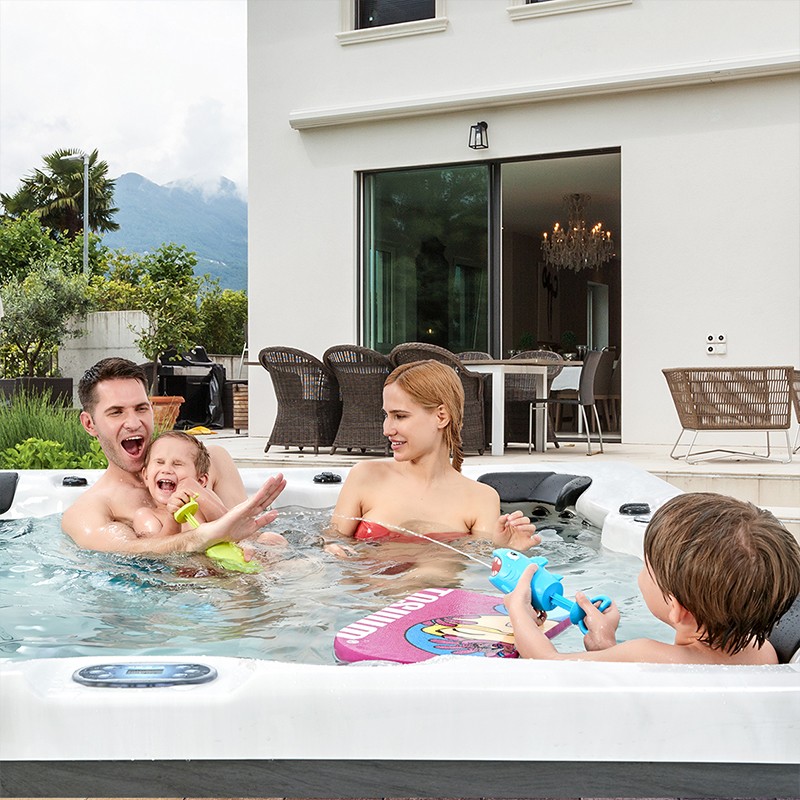
Why does a torn meniscus affect knee joint function?
The meniscus is located inside the knee joint, between the femur and tibia, and is a crescent-shaped fibrocartilaginous structure. Each knee joint has two menisci: the medial meniscus and the lateral meniscus. They play crucial roles, including cushioning impacts from movement, distributing joint pressure, improving knee joint stability, and reducing direct friction between bones.
During normal walking, the knee joint bears some pressure, while running, jumping, and rapid turns further increase the joint load. For example, the pressure on the knee joint during running can reach 3 to 5 times the body weight, and sports requiring rapid changes of direction, such as basketball and soccer, place even higher demands on the menisci and other stabilizing structures of the knee joint. When the knee joint is suddenly twisted or subjected to repetitive pressure over a long period, the meniscus may tear.
Meniscus injuries are generally classified as acute injuries and degenerative injuries. Acute injuries are common during sports, such as when a soccer player suddenly turns and their foot is fixed on the ground while the body rotates rapidly, easily leading to meniscus injury. Degenerative injuries are more common with age; as tissue elasticity decreases, the meniscus is more prone to wear and tear.
Common symptoms after a meniscus tear include:
• Knee pain, especially noticeable when going up and down stairs, squatting, or rotating;
• Knee swelling;
• Decreased range of motion;
• Instability while walking;
• Clicking or popping sounds inside the knee.
Many patients reduce activity after experiencing pain, but prolonged lack of exercise can lead to decreased quadriceps strength, further reducing knee stability. Therefore, maintaining safe and moderate activity during the recovery phase is crucial.
Outdoor whirlpool hot tubs provide a low-impact environment, which is a key reason for their popularity among those recovering from meniscus tears.
What are the auxiliary benefits of soaking in an outdoor whirlpool hot tub for meniscus tears?
I. The warm environment helps relieve muscle tension around the knee joint
After a meniscus injury, the body usually exhibits a protective response. When the knee is painful, the surrounding muscles automatically increase tension to reduce further irritation to the joint. The quadriceps femoris on the front of the thigh, the hamstrings on the back of the thigh, and the calf muscles may all experience varying degrees of tightness.
Chronic muscle tension can lead to a decreased range of motion in the knee joint, causing stiffness in the legs and affecting normal movement.
The warm water environment of an outdoor whirlpool hot tub can help relax the body through thermal stimulation. When the body is immersed in warm water at approximately 34°C to 38°C, the skin and superficial tissues are stimulated by the temperature, which may improve blood circulation and reduce muscle tension. Therefore, some patients with chronic knee discomfort feel more relaxed around their joints and experience greater comfort after using an outdoor whirlpool hot tub.
However, it is important to clarify that this effect primarily acts on the soft tissues around the knee joint, not directly on the meniscus itself. The meniscus is fibrocartilage tissue, especially the internal areas which have less blood supply; therefore, it cannot be simply assumed that soaking in an outdoor spa hot tub can "heal the meniscus."
II. The buoyancy of water reduces pressure on the knee joint
One of the biggest advantages of outdoor spa hot tubs for meniscus recovery is the buoyancy provided by the water environment.
When standing or walking on land, the knee joint bears the body's weight. When submerged in water, buoyancy helps reduce this burden, decreasing the pressure on the joint.
Related hydrotherapy studies have shown that when the water depth reaches approximately chest level, the body's weight-bearing pressure can decrease by about 70% to 80%. This means that for an 80 kg person, performing light activities in deeper water will experience a significant reduction in the mechanical load on the knee joint.
This low-impact environment is particularly valuable for patients recovering from meniscus tears. For example, in an outdoor whirlpool hot tub, simple movements can be performed:
• Slowly extend the knee joint;
• Slightly flex and extend the leg;
• Perform low-intensity exercises.
Compared to performing the same movements on land, the resistance and buoyancy in the water reduce joint impact, making the training process more comfortable.
Therefore, many rehabilitation facilities utilize hydrotherapy environments to help patients gradually regain their mobility.
III. Water Massage Can Help Relax Surrounding Muscle Tissues
Modern outdoor whirlpool hot tubs are typically equipped with Hydro Massage Jets, which use water pressure to massage different parts of the body.
For patients with meniscus tears, it is not recommended to use strong water jets directly on the painful area of the knee, especially during the acute injury phase. However, gentle water flow can be used to massage the areas around the knee joint, such as:
• Front of the thigh;
• Back of the thigh;
• Calf muscles.
This is because knee stability depends not only on the meniscus but also on the surrounding muscles and ligaments. Prolonged tension in the leg muscles can increase the burden on the knee joint.
Moderate water massage helps improve muscle relaxation and overall comfort.
What is the proper way for meniscus tear patients to use an outdoor whirlpool hot tub?
I. Control Water Temperature and Soaking Time
It is an oft-repeated myth that the hotter the water the faster the healing will occur. In fact, for patients with meniscus tear, an excessively hot water temperature will not result in an enhanced healing but may cause the body more damage.
Usual advised:
• Maintain water temperature between 34º C and 38º C;
• Each soak lasting 15-30 minutes is the recommended soaking time;
• Regulate frequency with respect to body reactions;
Excessively hot water, higher than 40º C, may result in physical fatigue, an increased heart rate, and the fluctuation of blood pressure through prolonged submersion. Elderly should exercise extra caution in this case to a greater degree.
Outdoor whirlpool hot tubs provide the most useful element not by exposing people to heat but by giving a safe warm water environment where one can truly relax.
II. Choose the correct sitting posture to protect the knee joint from an increase in load
Meniscus tear patients should be mindful of their posture when using an outdoor whirlpool hot tub.
Instructions:
Keep the natural sitting posture, bend the knee comfortable;
Avoid bending down;
The body's quick rotation must be avoided;
Don't be so stubborn that you force yourself to a position that is uncomfortable.
Taller outdoor whirlpool hot tubs provide more room so customers can find and hold a better posture more easily especially when the spa hot tub has more seats like the 6 or 8 models.
III. Using the Outdoor Hot Tub as an Auxiliary, not a Sole Treatment
Your muscle recovery process during meniscus injury treatment will be greatly affected by how well you do your exercise, the muscle strengthening is vital.
In addition to that, your muscle groups, for example, the quadriceps muscles, become strengthened, and consequently, your joint stability improves, and the stress that you feel is also reduced. This can further make you do less harm during your daily activities.
The most reasonable way a person gets well is by exercising and then taking a rest using some means of relaxation.
E.g., you finish with your doctor or rehabilitation therapist recommended exercises in the morning, then go for a whirlpool hot tub and relax your muscles.
Therefore, it turns out that a combination approach is very effective and you should not rely only on the therapy of immersion in hot springs.

What meniscus tears can benefit from the use of outdoor whirlpool hot tubs?
In some cases, an outdoor spa hot tub is used along with other therapies, for instance as a supplementary means of recovery for the following situations:
First, non-surgical patient cases of meniscus injury, for instance, where patients are treated through conservative or non-invasive methods, the warm water may help ease their discomfort during the recovery.
Second, people with persistent knee pain, those who suffer from degenerative meniscus injury can get their joints stuck for years; the regular hot water therapy might help make their daily activity better.
Third, athletes in recovery phase. They might use outdoor whirlpool hot tubs between trainings as the whirlpool hot tub is an excellent way to release the body from the tension after an intense training session.
When is soaking in an outdoor whirlpool hot tub not suitable?
Although outdoor whirlpool hot tubs help relieve pain and relax muscles among a host of other benefits, there are certain meniscus injuries for which they are not suitable.
If the injury is of an acute nature and the area around the injured part has very swollen, there is heat locally or the pain is severe, then the priority is to control the inflammation and see a doctor rather than immediately putting one's leg into hot water.
Also, if the user has undergone meniscus repair surgery, they will have to follow the doctor's advise about post-operative care as they should not go near hot water until the wound is completely healed by their body.
Besides, open wounds on the knee joint or cases of possible infection or severe inflammation are also situations where outdoor hot tub immersion is not advised.
Choosing a Suitable Outdoor Hot Tub for Rehabilitation Purposes
Suppose the person buying an outdoor whirlpool hot tub intends mostly for health recovery and family wellbeing, there are several main points the buyer should focus on.
Space planning should be the main consideration first. Choosing a whirlpool hot tub that allows the user to naturally extend their body and a space for 2 to 6 people would usually be ideal for regular family wellness sessions.
Detailed temperature control is a second point. The water should be at a stable and accurate temperature because large thermal variations may happen quite quickly in a natural environment, resulting in not only less pleasant but also potentially unsafe conditions.
Another point is the system of massage nozzles. Although more massage jets would seem to result in more effective massage, it is actually the spatial arrangement of the jets as well as their pressure and type of massage that count. Therefore, a good arrangement of nozzles is one that will allow maximum comfort to the back, waist, and legs.
Lastly, water circulation and filtration are factors you must never underestimate.
FAQ: Meniscus Tear and Common Issues with Outdoor Hot Tubs
1. Can I take an outdoor whirlpool hot tub every day if I have a meniscus tear?
If my physical condition allows and my doctor has not given any specific restrictions, I can use it regularly. However, it is recommended to limit the time to about 15 to 30 minutes each time and observe the knee joint response.
2. Can an outdoor spa hot tub cure a torn meniscus?
No. An outdoor whirlpool hot tub cannot repair torn meniscus tissue, but it can be used as an adjunct to help improve muscle tension and restore comfort.
3. How long after meniscus surgery can I use an outdoor whirlpool hot tub?
This depends on the type of surgery, wound healing progress, and the doctor's advice. Generally, you should wait until the wound is fully healed before considering hydrotherapy.
4. What should I do if my knee hurts while soaking in an outdoor whirlpool hot tub?
If significant pain occurs, stop using it immediately and assess whether your posture is incorrect, the water temperature is too high, or if heat therapy is not suitable during the recovery phase.
5. What type of outdoor spa hot tub is more suitable for knee rehabilitation?
It is recommended to choose an outdoor whirlpool hot tub with a spacious interior, stable temperature control, gentle water massage, and a complete filtration system. For home rehabilitation, comfort and safety are usually more important than simply pursuing the number of massage nozzles.