


How to Properly Use Outdoor Spa Hot Tub Pipe Flushing Agent?
2026-08-14 15:30With people becoming more familiar with outdoor leisure lifestyles, and with the growing popularity of hot tubs, it is evident that these water heaters are increasingly being used outside of traditional luxury settings. These outdoor whirlpool spa hot tubs now appear in villa courtyards, hotel resorts, health centers, commercial spas, and high-end guesthouses.
When buying an outdoor hot tub, consumers usually look at the number of massage jets, the power of the water pump, the heat preservation effect, the intelligent control system, and the appearance of the whirlpool spa hot tub as main deciding factors but in the course of long-term usage, many of them tend to overlook a very important point: the need to clean the tub's internal piping system.
Outdoor whirlpool spa hot tubs are very different from regular bathtubs in that the hot water system of the former includes various water paths like the outlet and inlet pipes, massage jet pipes, filter system, heating system and several pipe joints inside the casing. A standard size spa hot tub can contain a several tens of meters of PVC circulation pipe. These pipes are under constant pressure and are also surrounded by hot and damp water which makes for an environment very conducive for the growth of microorganisms. If not cleaned and maintained, these pipes will soon become a place for the accumulation of biofilms, bacterial growths, soap scum, remaining human oil, and mineral deposits.
Our spa equipment maintenance experience has taught us that outdoor spa hot tubs are usually set at a water temperature of around 37°C to 40°C (about 98°F to 104°F). Though, this temperature may feel extremely comfortable to people, from a microbilogical perspective it is a favorable environment. A change in surface water only will not suffice and if we leave out the cleaning of interior pipes, microbe and contaminant particles from the hidden areas might come back into the water system causing unpleasant water odor, foaping, and water-quality decline, as well as the reduction of the filtration system.
Multipule of hot tub users who use outdoor tubs regularly have seen such issues: the water remains dull and cloudy several days after the water was just changed, black pieces get stuck to the jets after the massage mode is used, and after being shut off for a long duration, the whirlpool spa hot tub is turned on only to be greeted by large amounts of particles floating in the tank. Replacing the filter or putting a little bit more disinfectant into the water will not necessarily clear away the problems, because the contaminants are most likely originating from the pipes.
Hence, it is of critical importance to get the usage of an outdoor whirlpool spa hot tub pipe cleaner (pipe cleaner, spa plumbing cleaner) spot on in order to keep the equipment in good shape, to guarantee consistent water quality, and to save on maintenance expenditures.
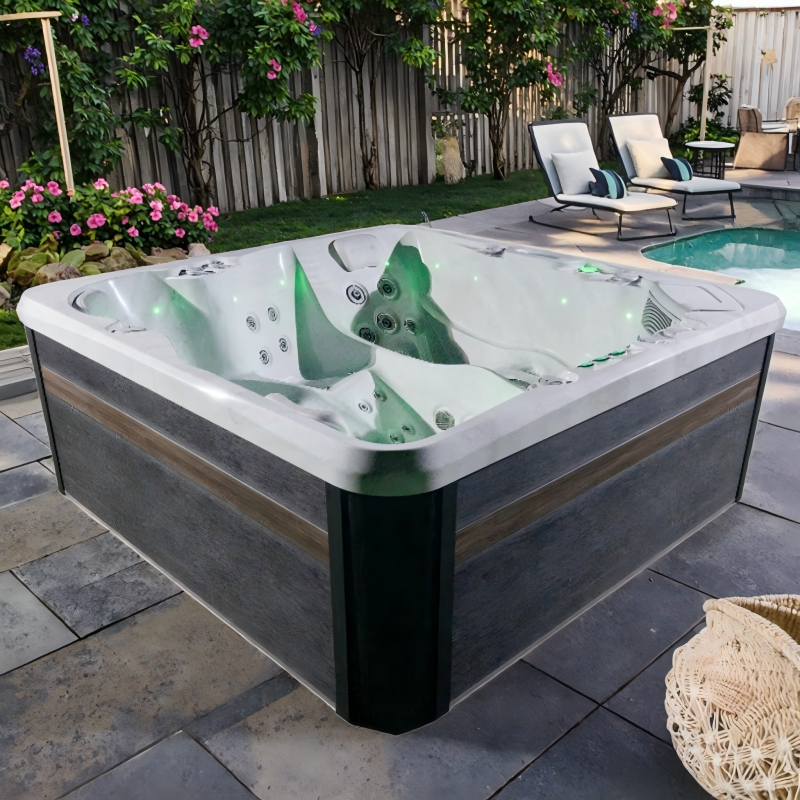
What is outdoor spa hot tub pipe cleaner? What is the core problem it solves?
Outdoor whirlpool spa hot tub pipe cleaner is a chemical agent intended to be used on spa water circulation systems. The chemical in the cleaner reacts with the dirt inside the pipes, and as a result, they become soft and fall off the surfaces or get washed away.
Bathing disinfectants are mostly meant to kill bacteria and microbial organisms, whereas pipe cleaners mainly target the layer of dirt that is stuck on the inside wall of the pipe.
Different types of contaminants may build up in the pipes of a hot tub during its normal operation:
The first type is biofilm. It is a layer of biofilm, bacteria, fungi, and other microbes on the inner surface of pipes. It is the hardest of all to treat. Normal disinfectants only penetrate the very surface of this microbe colony, they don't get rid of the whole colony. As long as this layer of microorganisms persists, we might have bad-smelling water, and fluctuations of water quality even though the water test results are all fine.
The second type of problem is the residue from users’ oils, skin-care products, sunscreens, and sweat. Users of public and personal pools and whirlpool spa hot tubs usually enter them naked or in a swimsuit. During relaxation period in such bathing facilities, some body lotion, sunscreen, hair shampoo or body oil may get onto their skin, and after bathing in hot tub and then swimming pool or spa these products may enter the water system. This water containing these substances then mixes with minerals forming a sort of greasy mud.
The third problem is the buildup of hard water deposits (calcium and magnesium) on the pipe surfaces. This happens especially where the hardness of water is high, i.e. in parts of Europe, the Middle East, and North America. Water rich in minerals and being circulated for long periods and/or heated causes a lot of mineral scaling. Scale buildup has many negative effects, such as reducing heating efficiency and overloading the pump.
The fourth type of problem is water that has been in a pipe for a long time. If we do not clean the spa for quite a long time and we are forced to change the water, then there will be a little amount of dirty water left in the piping system and it becomes an additional point on which contamination may develop.
So, the purpose of pipe flush agents is not merely to "clean the tub," it is to clean the whole water circulation system and return it to a hygienic condition.
Why are just changing the water and cleaning the filter not sufficient reasons for the maintenance of an outdoor spa hot tub?
Most owners think that only by regularly changing their water and replacing the cartridges the filter they keep their outdoor whirlpool spa hot tubs clean. This kind of maintenance deals quite well with a large part of the issue but leaves out the other half.
Filters mostly catch big particulate matter which is suspended in water, for example, dust, hair, and micro-particulate contaminations. These things are quite easy for them. However, they will not remove well the pollutants already in the pipes or stuck to the pipe walls, and these contaminants will continue coming out as they circulate with the water.
If, for instance, after changing the water entirely, you find that in fact underneath a sludge layer is still present in the pipeline of a 1500-liter outdoor whirlpool spa hot tub, hidden dirt could be released again during massage circulation and as the water of the new system gets into the system.
The industry maintenance recommendation states:
Domestic backyard Jacuzzi spas should have a thorough system cleaning every 3 or 4 months; the same task will have to be done sooner, like every 1 to 3 months, for busy resort spas and hotel jacuzzis. In case of machinery which has been lying idle, it is advised to take the chance to do a full pipe cleaning prior to restarting.
Of course the frequency is also influenced by the factor of water hardness, disinfection methods, number of bathers and the construction of the equipment.
The pipe cleaning becomes more vital where the spa has a multitude of jet outlets, dual-pump, a waterfall feature or a complicated water recirculation design system.
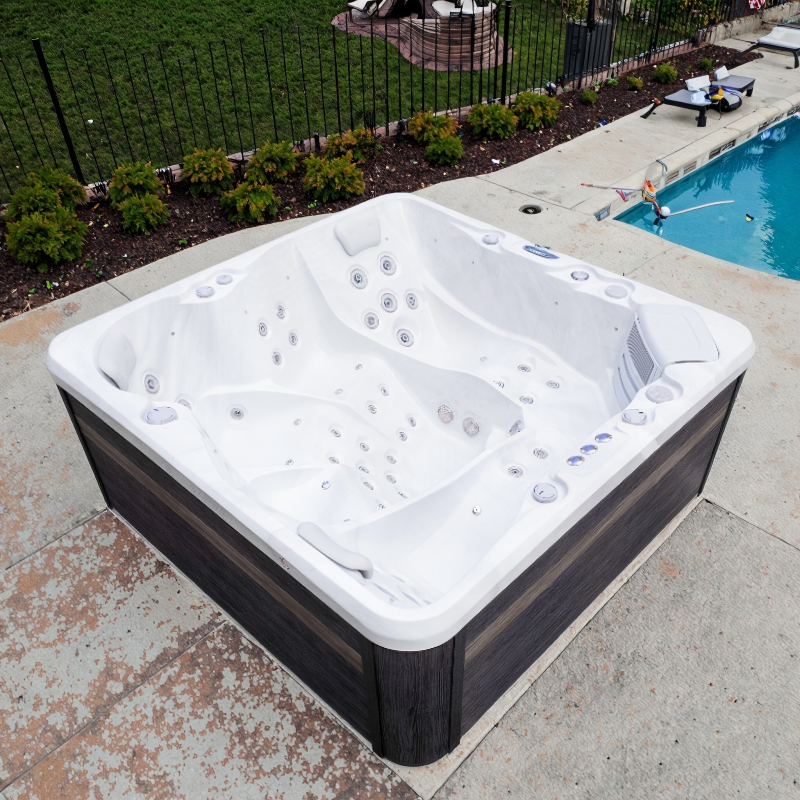
The Complete Steps for Correctly Using Outdoor Hot Tub Pipe Flushing Agents
Correctly using pipe flushing agents requires following a specific procedure. Many users' problems are not due to ineffective products, but rather incorrect usage. For example, insufficient dosage, insufficient cleaning time, or inadequate circulation will all reduce cleaning effectiveness.
Step 1: Choose the appropriate pipe flushing agent and confirm its applicability
When purchasing outdoor spa hot tub pipe flushing agents, choose products clearly labeled as suitable for Spa, Hot Tub, and Swim Spa systems.
Different product formulations vary; some are geared towards grease removal, some target biofilm, and some are enhanced with mineral deposit removal.
It is recommended to pay attention to the following parameters:
Applicable water capacity range: e.g., 500L, 1000L, 1500L and above;
Main cleaning functions: grease decomposition, biofilm removal, scale softening;
Compatibility with PVC pipes, acrylic tubs, and filtration systems;
Suitability for acrylic surfaces and ABS bottom shells.
For large commercial outdoor whirlpool spa hot tub projects, it is recommended to select products according to the equipment manufacturer's maintenance recommendations and avoid using overly corrosive cleaning agents.
Step 2: Prepare and Check Equipment Condition in Advance
Before using pipe flushing agents, the heating function needs to be turned off to maintain the water temperature within a suitable range.
Generally recommended:
Water temperature controlled at approximately 35℃-40℃;
Turn off the air injection function;
Remove or bypass the filter cartridge (follow the product instructions).
This is because some pipe contaminants need to be released in a warm water circulation environment. If the temperature is too low, grease and grease may be difficult to soften; if the filter continues to operate, the large amount of released contaminants may quickly clog the filter cartridge.
Step 3: Add Pipe Flushing Agent and Start the Circulation System
Add the appropriate amount of flushing agent according to the product instructions.
For example: For an outdoor whirlpool spa hot tub with a capacity of approximately 1000 liters, the common dosage is about 250ml-500ml, but the concentration varies between brands; refer to the manufacturer's instructions.
After adding the flushing agent, you need to start:
The massage pump;
The circulation pump;
All nozzles;
The air control system (if permissible).
This ensures that the cleaning agent enters all concealed pipes.
The circulation time is generally recommended to be 20-60 minutes or more. Some deep-cleaning products recommend letting them stand for several hours or even overnight to fully break down contaminants on the pipe walls.
Step 4: Drain and Thoroughly Flush the System
This is a crucial step.
Many users believe that cleaning is complete after draining, but in reality, cleaning agent and contaminants may still remain inside the pipes.
Correct procedure:
1). Completely drain the old water;
2). Refill with clean water;
3). Turn on the circulation system for 10-20 minutes;
4). Drain again;
5). Check the nozzles for any residue.
If the drained water still has noticeable foam, abnormal color, or particulate matter, it is recommended to repeat the rinsing process.
For outdoor spa hot tubs that have not been maintained for a long time, the first deep cleaning may require more than two rinsing cycles.
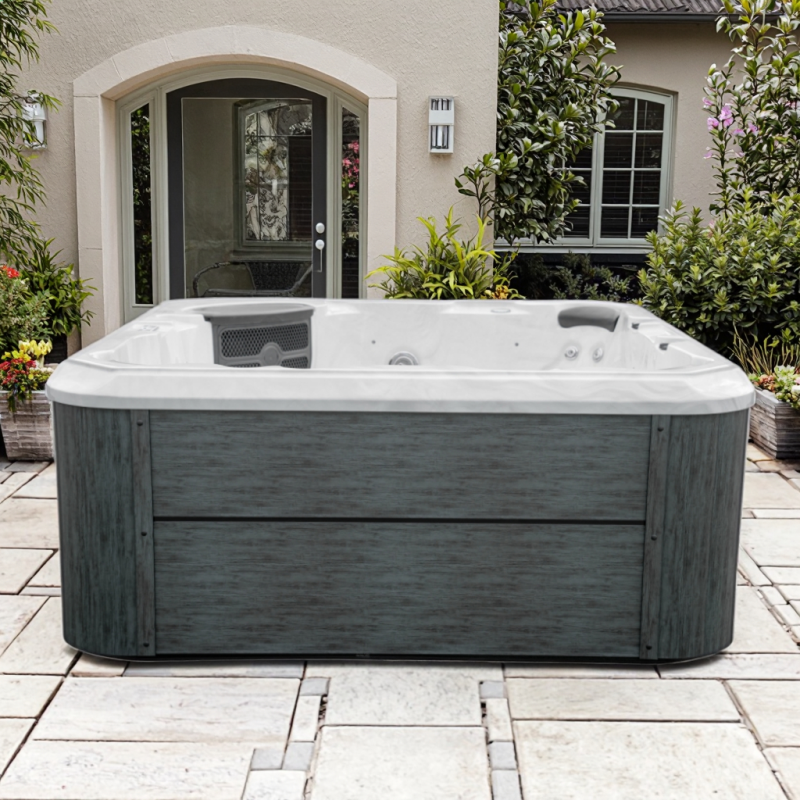
What are the common mistakes in the application of a outdoor spa hot tub drain cleaner?
Although the way to use the drain cleaner isn’t really complicated, mistakes happen frequently when it comes to using it practically.
The biggest mistake is not calculating the correct amount of cleaner needed based on the volume of the tub.
As the amount of your tub water can be huge to small, you need to adjust the amount of cleaner for better results.
A small home whirlpool spa hot tub may have about 700 - 900 liters of water, while a large pool-style whirlpool spa hot tub could have more than 5,400 liters (3,000 liters).
Not having enough cleaner means that the cleaner will not get rid of the dirt, while getting over cleaned may make the job of rinsing harder because of the extra layer of cleaner.
A mistake in the first step is just cleaning the surface of the tub without turning on the circulation system.
As far as drain cleaner is concerned, it is only when it goes through the inside water passages that it becomes effective.
By turning on the water pump and the massage system, the cleaning agent can get to areas other than the obvious ones that were visible without running the system.
The third common mistake is neglecting cleaning and maintenance of the filters.
You will be surprised to see how much the filter is loaded when you start cleaning.
A good tip is to check the condition of the filter elements after washing off the cleaner. Clean or change them if necessary since you do not want your tub to get dirty again after the efforts of cleaning.
Repeating fourth mistake is using chemical cleaners too much on regular basis.
Outdoor hot tubs are supposed to have a chemical free environment.
If it is normally used without being overly dirty, the regular checks are only for the chemical balance of the water.
Too much chemical usage may disrupt the chemical balance of the water.
Why do outdoor hot tub manufacturers insist on a consistent maintenance for the piping?
The experts in the field of outdoor whirlpool spa hot tub manufacturing usually advise owners to implement a complete maintenance program and not only limit themselves to water quality tests only.
Besides the quality of the acrylic tub, there are internal components of an outdoor spa hot tub which determine its longevity such as the water circulating pump, heater, etc., and these factors are determined largely by the environment in which the whirlpool spa hot tub is operated.
Long period of pipe cleaning negligence may lead to:
Low pump efficiency;
Heating time gets longer;
Nozzle pressure drops;
Ambiance gets smelly;
Filter is blocked;
More money is spent on water.
For instance, if one outdoor spa hot tub is built with lifespan of 10 years or more, its heater, pump seal, and control system will get a lot of extra stress if the hot tub is continuously used in an extremely polluted circulating water environment without periodic maintenance.
For the purposes of a hotel, a hotel’s resort, a resort or a wellness center, if you think that the costs associated with maintenance of the equipment is less than the benefits of being able to offer a fully functional whirlpool spa hot tub then it is even more important that the cleaning procedures are standardised and followed.
Major manufacturers usually advise:
Daily water testing;
Weekly filter cleaning;
Monthly check-up of the equipment conditions;
Quarterly deep pipette flushing.
This cleaning program enables a whirlpool spa hot tub to be a long-time asset and can significantly reduce the total running costs over the period.
How can daily maintenance be combined to keep outdoor spa hot tubs clean in the long term?
Pipe flushing agents are only part of deep maintenance and cannot replace daily water management.
A complete outdoor whirlpool spa hot tub maintenance system should include:
Properly controlling water chemistry indicators.
Generally recommended:
Maintain a pH level of approximately 7.2–7.8;
Chlorine content should be controlled according to product requirements;
Total alkalinity should be kept within a stable range.
Maintain the filtration system in proper working order.
Filtration time needs to be adjusted according to usage frequency. Household use typically involves several hours of circulation per day, while commercial projects may require longer intervals.
Reduce sources of contamination. Rinse your body before use to avoid getting cosmetics and sunscreen in the water; clean the bathtub lid regularly to prevent dust from entering.
Keep the area around the equipment clean.
Outdoor installations are susceptible to damage from leaves, mud, and pollen, all of which increase water treatment stress.
LOVIA® Outdoor Hot Tub Manufacturer Sharing Tips on How to Maintain Piping
LOVIA® as an outdoor hot tub manufacturer understands that a good outdoor whirlpool spa hot tub product should not only deliver a great massage experience and keep water hot easily but also be a pleasure to maintain.
Outdoor spa hot tubs today usually feature optimized designs of the water circuits that limit areas in the piping where the water gets stagnated thus the flow gets improved. Top quality hot tub brands would be ones that make use of corrosion-resistant materials and also combine filtration, water treatment, and smart control to create a more reliable whole system.
Home users are advised to create a maintenance schedule that corresponds with the frequency of their usage of hot tub; the commercial customers such as Hotels, Resorts, and Spas on the other hand are advised to keep equipment maintenance log with details such as dates of last water changes, last cleaning, water quality parameters, and the status of the equipment during inspection.
A well-applied outdoor whirlpool spa hot tub drain cleaner makes the tub clean right away and, most importantly, protects the tub pump, tub heating element, and tub circulation system from deterioration. Thus, by doing all that, the tub lifetime is greatly increased.
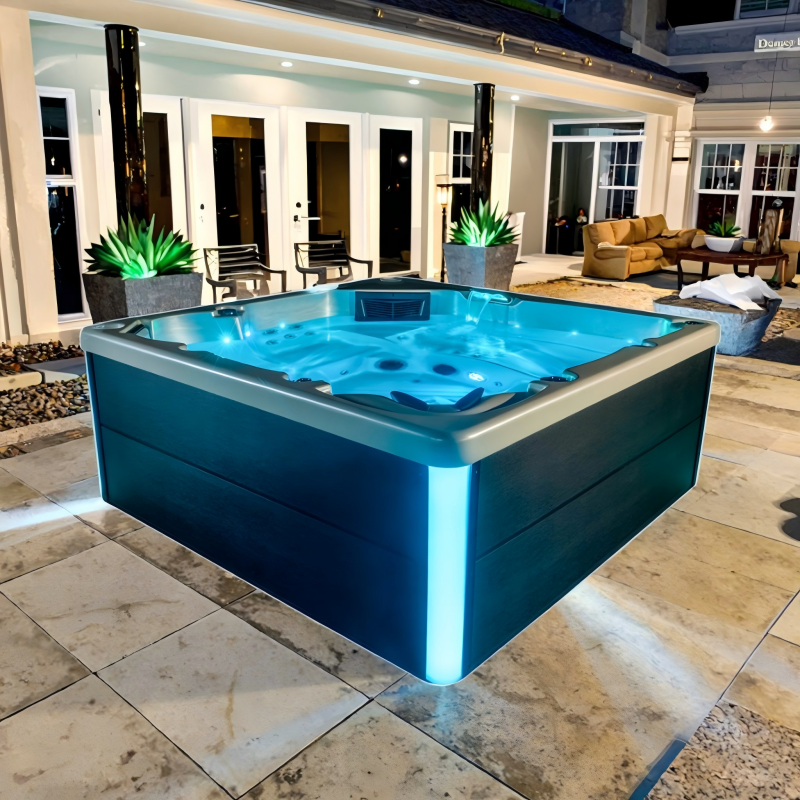
FAQ: Frequently Asked Questions about Outdoor Hot Tub Drain Cleaners
Q1: When is the right time to use drain cleaner for an outdoor whirlpool spa hot tub?
The use of the drain cleaner at a frequency of once in every 3 to 4 months is ideal for the general household users. The drain cleaner application schedule for multi-users or commercial facilities can be shortened to one or two months between deep cleanings.
Q2: Should a whirlpool spa hot tub be filtered again after a deep clean?
You do not necessarily have to, but, nevertheless, you should go ahead and look at the filters. As is often the case, the dirt from the cleaning procedure may have stuck to the surface of the filters. If filters have either been getting old or have been very much clogged, then you had better replace them.
Q3: Would a drain cleaner be needed if the outdoor tub will be idle for quite a while?
Yes. In preparation for a season with little or no use, it is a good idea to have the whole line of the spa hot tub's piping system thoroughly cleaned. That will minimize the likelihood of leftover impurities which can come in contact with other elements of the whirlpool spa hot tub. Moreover, a water flushing before putting it in use again is also a good idea.
Q4: Is it safe to use an ordinary home bathtub cleaner for my whirlpool spa hot tub?
Absolutely not. The bathtub cleaner is not formulated to get rid of dirt that has built up in hard-to-reach places of the hot tub. So, not only will your whirlpool spa hot tub have to be cleaned much more thoroughly after using a standard bathtub cleaner, you might also risk breaking the delicate balance between the whirlpool spa hot tub's water chemistry and its equipment if you don't follow it up with a hot tub water balancing procedure. And, by the way, using the wrong cleaner really could do your hot tub a favor. But not the way a drain cleaner would, that is sure.
Q5: When I refill my outdoor spa hot tub after using the cleaner, is it normal that there is still some amount of foam?
Probably the foam is made out of the remnants of cleaner, fat, or whatever was released during the cleaning process by the pipes. You can safely flush again with clean water until water stability is reached.
Q6: Will outdoor whirlpool spa hot tub drain cleaner work as disinfectant also?
A drain cleaner is meant to carry out a deep clean, and a disinfectant is for everyday water quality control. Thus, both must be kept and used separately, and not substituted for one another.