


How to Whiten Yellowed Spa Hot Tub Jets?
2026-04-25 15:35Many whirlpool spa hot tub users encounter a frustrating problem over long-term use: their originally white and shiny jets gradually turn yellow, even appearing old and unclean.
Even when the water appears clear and odorless, the jets in spa hot tubs may still change color. This yellowing not only affects appearance but also often raises concerns about water quality, hygiene, or equipment aging.
So, why do whirlpool spa hot tub jets turn yellow? Can these yellowed jets be whitened? How can their appearance be restored scientifically and safely?
This article will systematically answer the question "How to whiten yellowed whirlpool spa hot tub jets" from multiple professional perspectives, including material principles, water chemistry, daily usage environment, and maintenance logic.
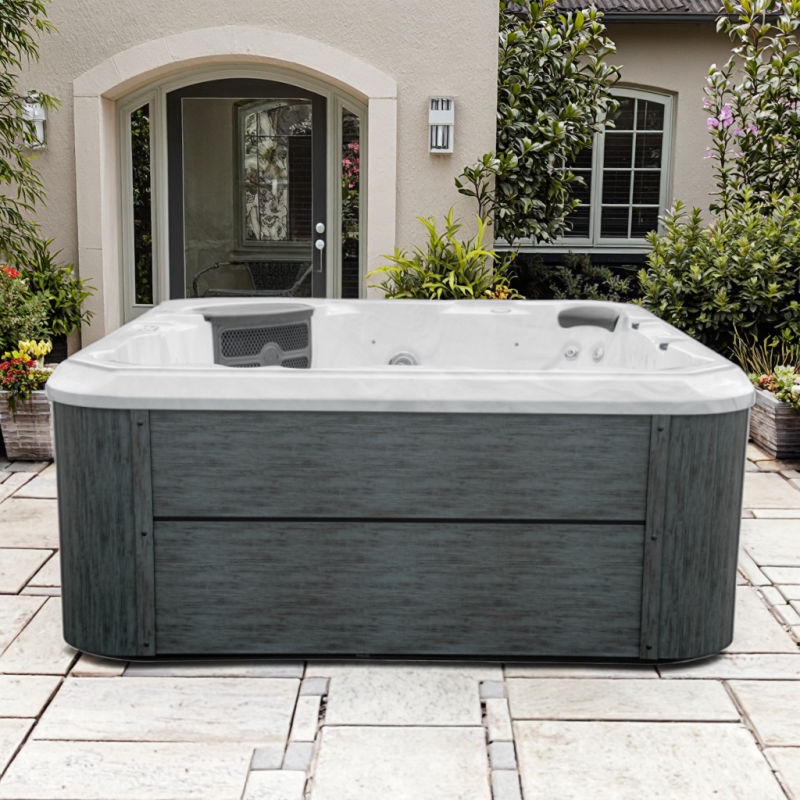
Why Do Spa Hot Tub Jets Turn Yellow?
To solve the problem of yellowed jets, we must first clarify a core premise: Yellowing does not equal dirt, nor does it necessarily mean damage.
Spa hot tub jets are typically made of high-strength plastic or composite materials, and their color changes mainly stem from the following reasons:
• Long-term deposition of minerals in the water
• Oxidation from chemical disinfectants
• Changes in the material surface caused by high temperatures
• Adsorption of organic matter by surface micropores
These factors are often the result of slow, cumulative, long-term effects, rather than a sudden occurrence in a short period.
Is yellowing of jets a quality problem with the spa hot tub?
This is a very common misconception.
In fact, yellowing of spa hot tub jets does not directly equate to a quality defect. Even high-quality spa hot tubs may experience color changes in the nozzles after prolonged use.
The reasons are:
• Jets are constantly exposed to high-temperature water environments
• The nozzle surface is constantly in contact with disinfectants
• The impact of water flow makes the surface more prone to adsorbing deposits
Therefore, yellowing is more of a maintenance and environmental issue than a manufacturing defect.
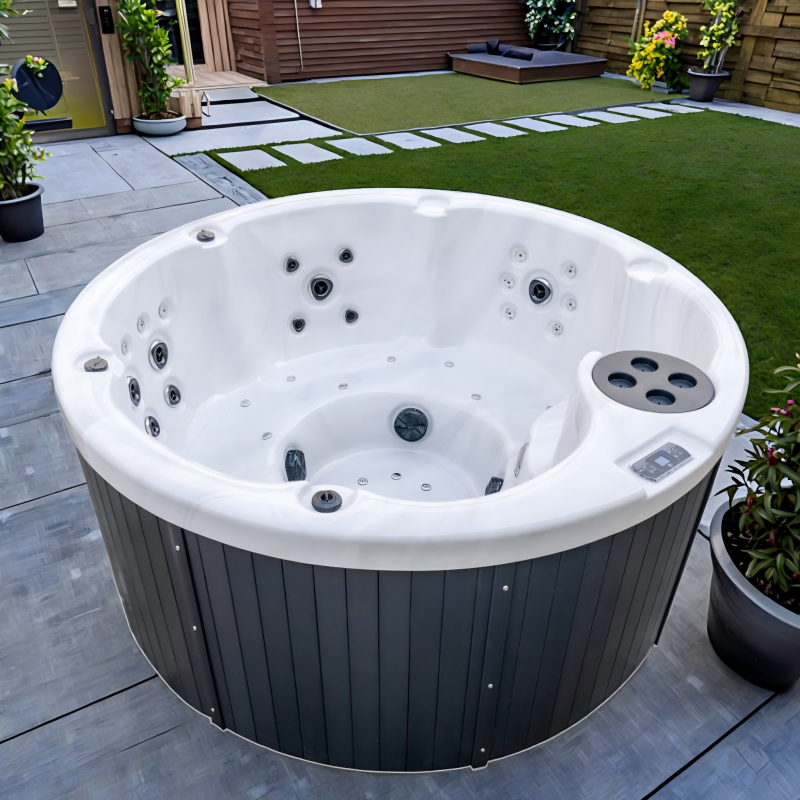
Do minerals in the water cause spa hot tub jets to turn yellow?
The answer is: Yes, and it's very common.
In hot tubs used in spas, the water often contains a certain amount of:
• Iron
• Calcium
• Magnesium
• Manganese
When these minerals repeatedly come into contact with the jets' surface under high temperature and circulating conditions, they may form:
• Metal oxide deposits
• Staining effect of hard water scale
These deposits do not necessarily exhibit obvious crystalline forms, but they can cause the originally white jets to gradually turn yellow and darken.
Do disinfectants cause hot tub jets in spas to change color?
Hot tubs in spas rely on disinfection systems, and disinfectants themselves have a certain degree of oxidizing properties.
During long-term use:
• Chlorine-based disinfectants
• Bromine-based disinfectants
Both may undergo a slow oxidation reaction with the materials on the jets' surface, thus changing the surface color.
It is important to emphasize that this change is usually:
• Surface color change
• Not structural damage
Therefore, color change does not mean the jets have lost their function.
Does high temperature accelerate the yellowing of hot tub jets in spas?
The high-temperature environment of hot tubs in spas can indeed accelerate material aging and color change to some extent. The effects of high temperatures include:
• Accelerating chemical reactions
• Enhancing mineral deposition efficiency
• Increasing the adsorption capacity of organic matter on surfaces
This is why jets are more prone to yellowing in whirlpool spa hot tubs than in cold water.
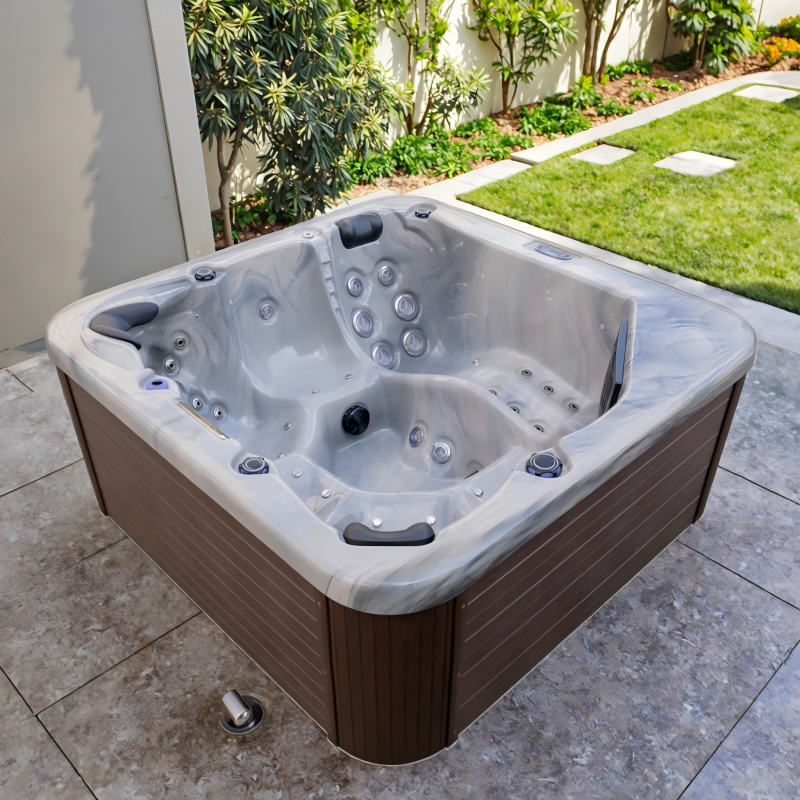
Can yellowed spa hot tub jets be whitened?
From a professional perspective, the answer is:
In most cases, yellowed jets can be whitened to some extent or their appearance can be significantly improved.
However, it's important to understand that:
• Not all yellowing can be completely restored to "factory white."
• The improvement depends on the cause and extent of the yellowing.
Understanding this helps in setting reasonable expectations.
What types of yellowing should be distinguished before cleaning a hot tub?
Before trying any methods, you must first determine the type of yellowing your spa hot tub jets have:
1. Surface Deposition Yellowing
Primarily caused by minerals, scale, and organic matter.
2. Chemical Oxidation Yellowing
Caused by long-term exposure to disinfectants.
3. Material Aging Yellowing
Irreversible changes occur on the surface.
The first two types can usually be significantly improved, while the third type has limited improvement potential.
How to Improve Yellowing in Spa Hot Tub Jets Using Physical Methods?
The core goal of physical cleaning is:
Removing deposits adhering to the jets' surface, not damaging the material itself.
Feasible approaches include:
• Using soft tools to remove surface deposits
• Avoiding any operations that could scratch the surface
• Focusing on nozzle gaps and water outlets
Physical methods are suitable for mild to moderate surface deposition yellowing.
What role does chemical cleaning play in improving jet color?
Chemical cleaning doesn't "bleach" the jets; rather, it:
• Dissolves mineral deposits
• Breaks down organic deposits
• Cleans residue from the micropores of the nozzle surface
In whirlpool spa hot tub maintenance, proper chemical cleaning can significantly improve the appearance of jets, making them look cleaner and brighter.
Why shouldn't you use strong corrosive cleaners indiscriminately?
A common misconception is:
Yellowed jets can be quickly whitened with a stronger cleaner.
In fact, strong corrosive cleaners may:
• Damage the surface smoothness of the jets
• Cause irreversible surface roughness
• Make the jets more prone to re-adsorbing dirt
For whirlpool spa hot tubs, this "short-term whitening, long-term worsening" approach is not recommended.
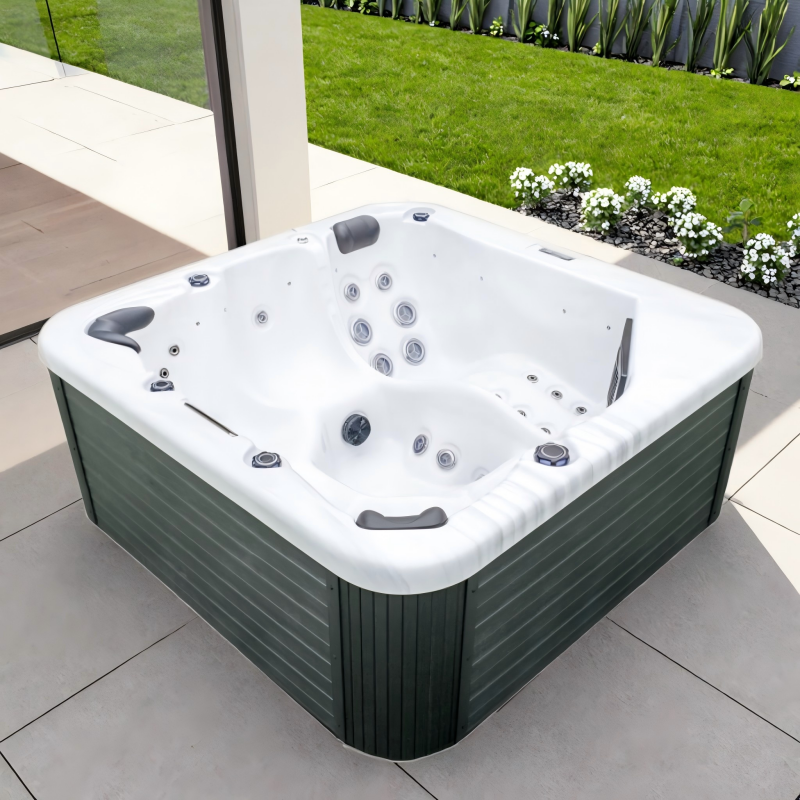
Do you need to disassemble spa hot tub components when cleaning jets?
Whether you need to disassemble the jets depends on:
• The nozzle structure design
• Whether the yellowing is concentrated in accessible areas
In most cases, basic cleaning can be completed without completely disassembling the whirlpool spa hot tub jets. However, if the deposits are concentrated inside the nozzles, disassembly and cleaning will be more thorough.
How to prevent spa hot tub jets from yellowing again quickly?
Improving the appearance is only the first step; the real key is slowing down the rate of re-yellowing.
From a spa hot tub maintenance perspective, the core principles include:
• Controlling the mineral content in the water
• Maintaining a stable water quality balance
• Avoiding excessive disinfectant use
• Regular and gentle cleaning
These measures cannot completely prevent yellowing, but they can significantly slow down the process.
Does yellowing jets affect the safe use of a spa hot tub?
In most cases, yellowing jets only affect appearance and do not directly impact safety.
As long as:
• The nozzle structure is intact
• The water flow function is normal
• There are no cracks or damage on the surface
Then yellowing itself will not hinder the normal use of the whirlpool spa hot tub.
When should you pay special attention to the condition of your spa hot tub jets?
If your spa hot tub jets exhibit any of the following in addition to yellowing, it warrants attention:
• Noticeably rough surface
• Cracks or looseness
• Abnormal water flow
These issues go beyond mere color change and require evaluation from an equipment maintenance perspective.
What kind of company is Lovia Spa in the global spa industry?
Lovia Spa is a professional manufacturer and supplier specializing in high-quality spa hot tubs, spa jacuzzi tubs, and swim spa tub solutions for global markets. With decades of industry experience, our company operates as a reliable factory supporting wholesale purchasing, customized production, and long-term supply partnerships. Buyers seeking durable and modern spa products can rely on Lovia Spa for competitive prices, stable supply capacity, and consistent product quality that meets international expectations.